Davis, CA homeowners choose quartz for low maintenance, granite for natural variation, and porcelain slab for heat and UV resistance in sunny kitchens or outdoor spaces. Quartz requires no sealing and offers consistent patterns. Granite is a natural stone with one-of-a-kind veining that needs occasional sealing. Porcelain slab resists fading and cracking under direct sun, making it a common choice for Davis's hot, dry summers. The right material usually comes down to how much upkeep a household wants and how the space will be used.
Choosing a countertop material is rarely a quick decision, and that's understandable. A countertop is one of the most-touched surfaces in a home, and it's also one of the most visible. For Davis homeowners weighing quartz, granite, and porcelain, the right answer usually comes down to how the material fits daily life in this part of the Central Valley, not just how it looks in a photo. Many Davis homeowners start by visiting our Sacramento showroom to see full slabs and samples in person before making a final decision.
Understanding the Three Materials
Before comparing them side by side, it helps to know what each material actually is.
Quartz is an engineered stone made from crushed natural quartz combined with resins and pigments. Because it's manufactured rather than quarried, quartz offers a wide range of colors and patterns, including options that mimic marble or granite. It's non-porous, which means it doesn't require sealing.
Granite is a natural stone quarried from the earth and cut into slabs. Every granite slab is unique, with mineral veining and color variation that no two pieces share exactly. Granite is porous to some degree, so it benefits from periodic sealing to resist staining.
Porcelain slab is made from clay and mineral compounds fired at very high temperatures, similar to porcelain tile but produced in large slab format. It's dense, non-porous, and resistant to UV fading, which makes it a material worth considering for both indoor kitchens and outdoor cooking areas.
What Matters Most to Davis Homeowners
Davis has its own set of practical considerations that shape which countertop material makes sense for a given household.
Summer Heat and Sun Exposure
Davis summers regularly bring extended stretches of high heat, and many homes have kitchen windows or outdoor living spaces that see direct afternoon sun. Porcelain slab holds up well under UV exposure and doesn't fade or discolor over time in bright rooms or on covered patios, and natural stone tends to perform well under similar conditions too. Granite and quartz also tolerate heat well, though quartz can be more sensitive to prolonged direct sunlight over the years, since the resin binders in engineered stone can shift in color with heavy UV exposure.
Home Style and Age
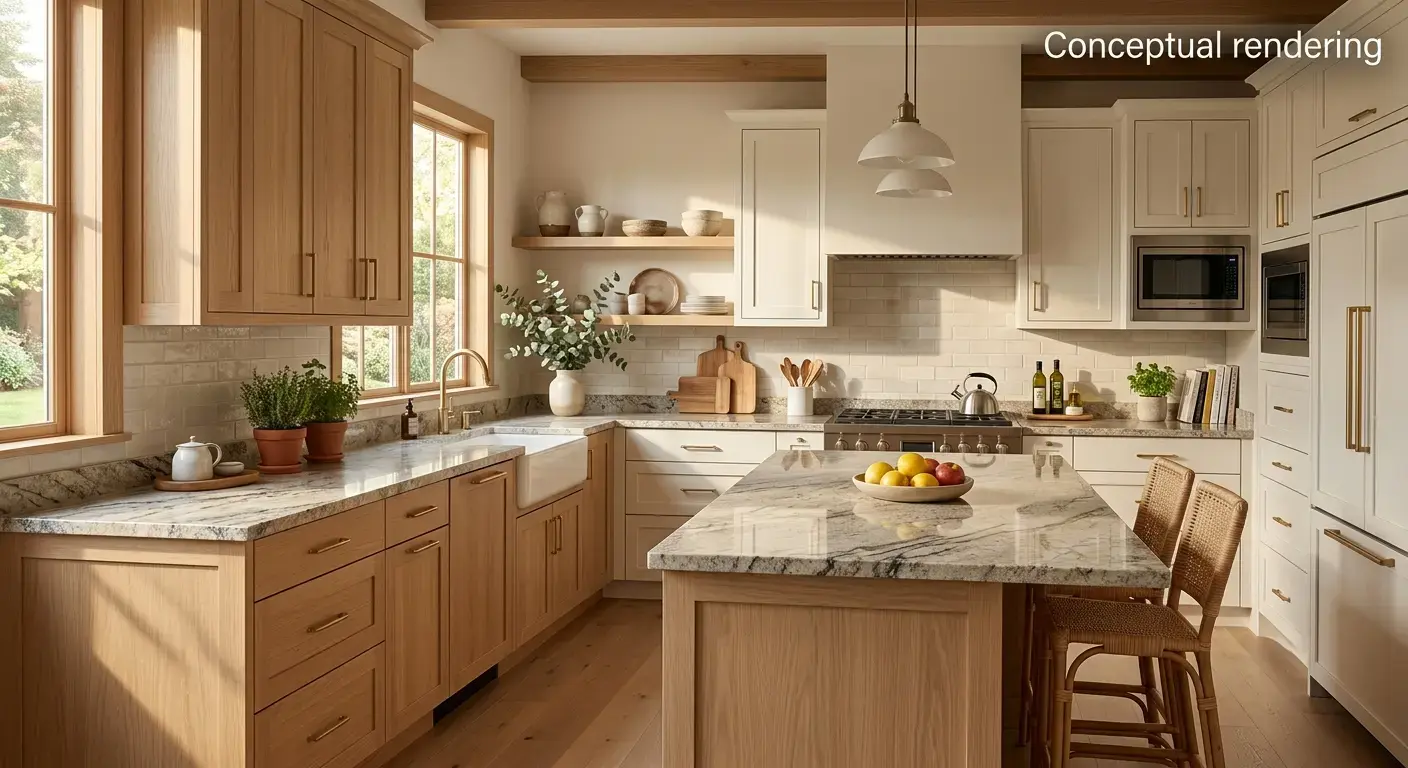
Davis has a mix of housing stock, from older craftsman and bungalow homes near the downtown core to newer construction in neighborhoods like Mace Ranch and Wildhorse. In older homes, the individual character of a quarried stone slab often complements original woodwork and period details. In newer or more contemporary builds, quartz's clean, consistent patterning tends to suit open-concept kitchens and minimalist cabinetry. Porcelain slab works across a range of styles because it can be manufactured to resemble concrete, marble, or natural stone while keeping a slim, modern profile.
Renters, Students, and Turnover
As a university town, Davis has a higher share of rental properties and multi-generational households than some neighboring cities. For rental units or homes that may see frequent turnover, quartz is often a practical choice because it doesn't need resealing and holds up consistently under varied use. Granite can work well in these settings too, provided sealing is kept on schedule. Property managers and contractors handling multiple units across Davis may also want to look into a trade account for ongoing material needs.
Families and Everyday Use
For households with children or home cooks who spend a lot of time at the counter, all three materials perform reasonably well, but the day-to-day care differs. Quartz resists staining without extra effort. Granite handles daily wear well once sealed, but spills from acidic foods like lemon juice or wine should be wiped promptly. Porcelain slab resists scratching and staining and can tolerate hot pans directly on the surface better than the other two options, though a trivet is still a good habit for any material.
Comparing Maintenance
Maintenance is often the deciding factor once homeowners narrow down their aesthetic preferences.
- Quartz requires no sealing. Routine cleaning with mild soap and water is typically enough to keep it looking consistent.
- Granite benefits from sealing roughly once a year, depending on the specific stone and how it's used. Resealing is a straightforward process, and many homeowners do it themselves with a sealant made for natural stone.
- Porcelain slab requires no sealing and resists staining from common kitchen substances, including oils, acids, and pigments from food and drink.
Comparing Cost
Cost varies by slab, thickness, and edge profile, so it's worth getting a quote based on the exact material rather than relying on general price ranges. As a general pattern, granite and quartz are often comparable in cost depending on the specific stone selected, while porcelain slab pricing depends heavily on the manufacturer and finish. Fabrication and edge details also affect the final price more than most homeowners expect, so it helps to compare full quotes rather than per-square-foot estimates alone.
A few cost factors are worth keeping in mind while comparing quotes. Slab size matters, since larger islands or perimeters with fewer seams generally cost more regardless of material. Edge profile also plays a role, as a simple straight edge is less expensive than a rounded or beveled edge on any of the three materials. Rare or highly patterned granite slabs can run higher than more common colors, while quartz pricing tends to track with the manufacturer's product line rather than individual slab variation. Because porcelain slab is a newer product in many markets, availability of specific colors and finishes can also affect price and lead time. Homeowners comparing quotes across materials often find it helpful to request a quote for the same square footage and edge style so the numbers reflect the material itself rather than differences in project scope.
Comparing Appearance
Appearance is personal, but there are some general differences worth knowing.
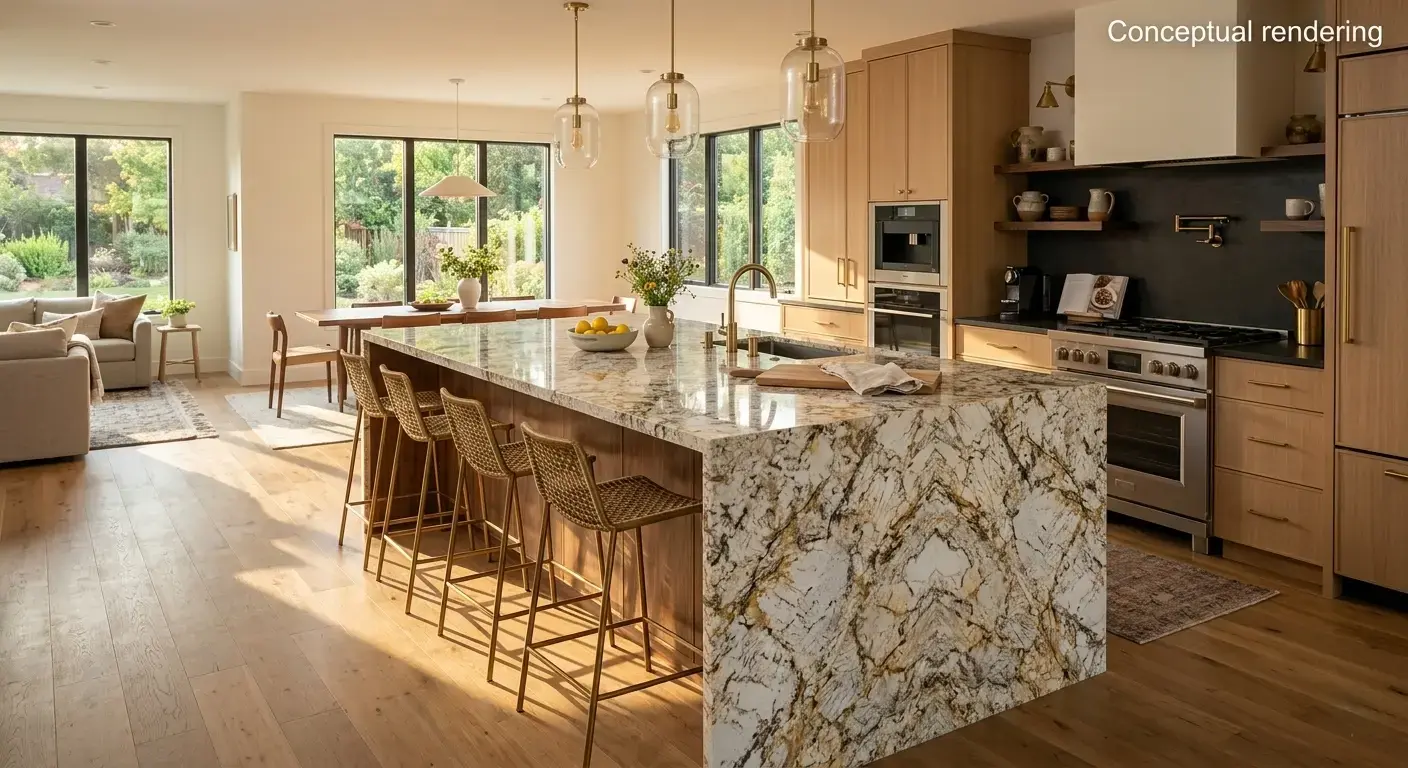
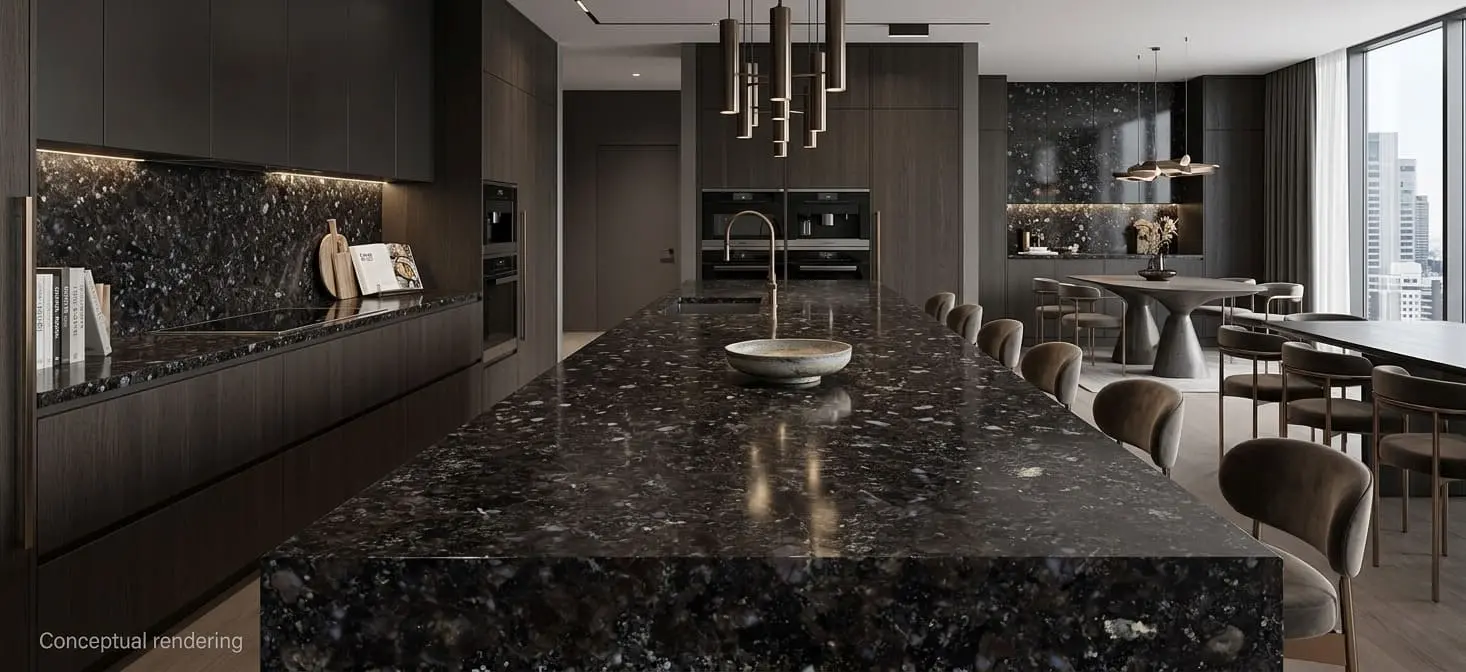
Granite offers the most natural variation, since every slab is one of a kind. This appeals to homeowners who want a countertop that feels organic and specific to their home. Quartz offers more predictability, which is useful for homeowners matching multiple slabs across a kitchen island and perimeter counters, since batches can be selected for consistency. Homeowners comparing granite or porcelain slab options can browse our live slab inventory to see current colors and patterns. Porcelain slab can replicate the look of marble or concrete while offering a different set of practical benefits, which makes it a flexible option for homeowners who like a particular look but want different maintenance characteristics than the natural material would require.
Indoor-Outdoor Living
Many homes in Davis are built with covered patios or outdoor kitchen areas that get regular use during the long stretch of warm weather from late spring through early fall. For these spaces, material choice matters even more than it does indoors, since the countertop is exposed to direct sun, temperature swings, and sometimes moisture. Porcelain slab is often the preferred option for outdoor counters because of its resistance to UV fading and its ability to handle temperature changes without cracking. Granite also performs well outdoors and is a common choice for built-in grill stations. Quartz is generally not recommended for uncovered outdoor use, since prolonged sun and heat exposure can affect both its color and its resin binders over time.
A Simple Way to Decide
If low maintenance is the top priority, quartz is usually the easiest fit. If natural variation and a one-of-a-kind slab matter most, granite tends to be the better match. If UV resistance, heat tolerance, and a slim modern profile are the priority, particularly for sun-exposed kitchens or indoor-outdoor spaces, porcelain slab is worth a close look. Homeowners who want to talk through their specific kitchen can book a free design consultation with our Sacramento team.
Many Davis homeowners find it useful to see all three materials side by side before deciding, since photos and small samples online rarely capture how a slab looks under actual kitchen lighting or how it feels underhand.
Conclusion
Quartz, granite, and porcelain slab each bring something different to a Davis kitchen. Quartz offers consistency and low upkeep, granite brings natural character with simple periodic care, and porcelain slab holds up well against sun and heat while offering a wide range of looks. The right choice depends on how a household uses its kitchen, how much maintenance feels manageable, and which look fits the home. Visiting our showroom to see full slabs in person, rather than relying on small samples, makes the decision much easier. Our team is available to walk through the options and help match a material to a specific kitchen and budget, along with flooring, tile, and other surfaces for the rest of the project. Our Sacramento showroom is located at 6100 Warehouse Way, Sacramento, CA 95826, and can be reached at (916) 913-6682. Get directions to plan a visit.
Note: Some images on this page may be conceptual renderings created to illustrate design possibilities and may not depict actual installations.
Frequently Asked Questions
It depends on priorities. Granite offers natural variation and one-of-a-kind veining, while quartz offers a more consistent pattern and does not require sealing. Both hold up well under everyday kitchen use.
No. Porcelain slab is dense and resistant to scratching, staining, and heat, which makes it a practical option for busy kitchens and outdoor cooking areas.
Most granite countertops benefit from sealing about once a year, though this can vary depending on the specific stone and how heavily the counter is used.
Quartz can be sensitive to extended, direct UV exposure over time because of the resin used in its manufacturing. For sun-heavy kitchens or covered outdoor spaces, porcelain slab or granite may hold color more consistently.
Quartz is often chosen for rental properties because it does not require sealing and holds up consistently under varied use from different tenants over time.