Hardwood flooring is milled from real wood and can be sanded and refinished repeatedly, giving it a lifespan of 50 to 100 years or more. Luxury vinyl plank (LVP) is a synthetic multi-layer product with a waterproof plastic composite core and a wear layer rated in mils that protects against scratches. For Reno homeowners, the deciding factor between the two is often humidity: Reno's high desert climate regularly drops below 30% relative humidity, the lower threshold for stable hardwood performance, making moisture management a real planning consideration that LVP avoids entirely.
What Reno's Climate Does to Wood Floors
The National Wood Flooring Association sets the stable performance range for hardwood at 30% to 50% relative humidity, and Reno's summers regularly undercut that floor.
Afternoon humidity in the Truckee Meadows regularly drops to 24–36% during the summer months, with July and August typically at the driest end of that range, according to Western Regional Climate Center data for Nevada. Add winter heating, when outdoor air is already dry and forced-air systems strip additional moisture from living spaces, and Reno homes can sit below 30% RH for extended periods.
Wood is hygroscopic: it absorbs and releases moisture in response to its surroundings. When indoor humidity falls below roughly 30%, solid hardwood contracts. Boards narrow slightly, gaps open between planks, and in prolonged dry spells, surface checking or cracking can develop. The reverse happens during wetter months: wood swells, and floors can cup if moisture absorption is uneven across the width of the board.
Hardwood performs well in Reno in homes that maintain consistent climate control. That means planning ahead: a whole-home humidifier through winter, a hygrometer to monitor conditions, and stable HVAC use year-round.
Engineered hardwood, a real-wood veneer bonded over a plywood or HDF core, handles wider humidity swings than solid wood, because the layered core is dimensionally more stable. For Reno specifically, engineered hardwood is often the more practical choice if you want real wood but cannot guarantee tight humidity control throughout the year.
LVP cores are made from stone plastic composite (SPC) or wood plastic composite (WPC), materials that do not absorb or release moisture the way wood does. The result is dimensional stability regardless of seasonal humidity changes: no gapping in summer, no swelling in spring, no humidity monitoring needed. For a rental property, a home on a concrete slab, or a household without consistent HVAC discipline, that stability has real practical value.
Durability: What the Specs Tell You
Hardwood
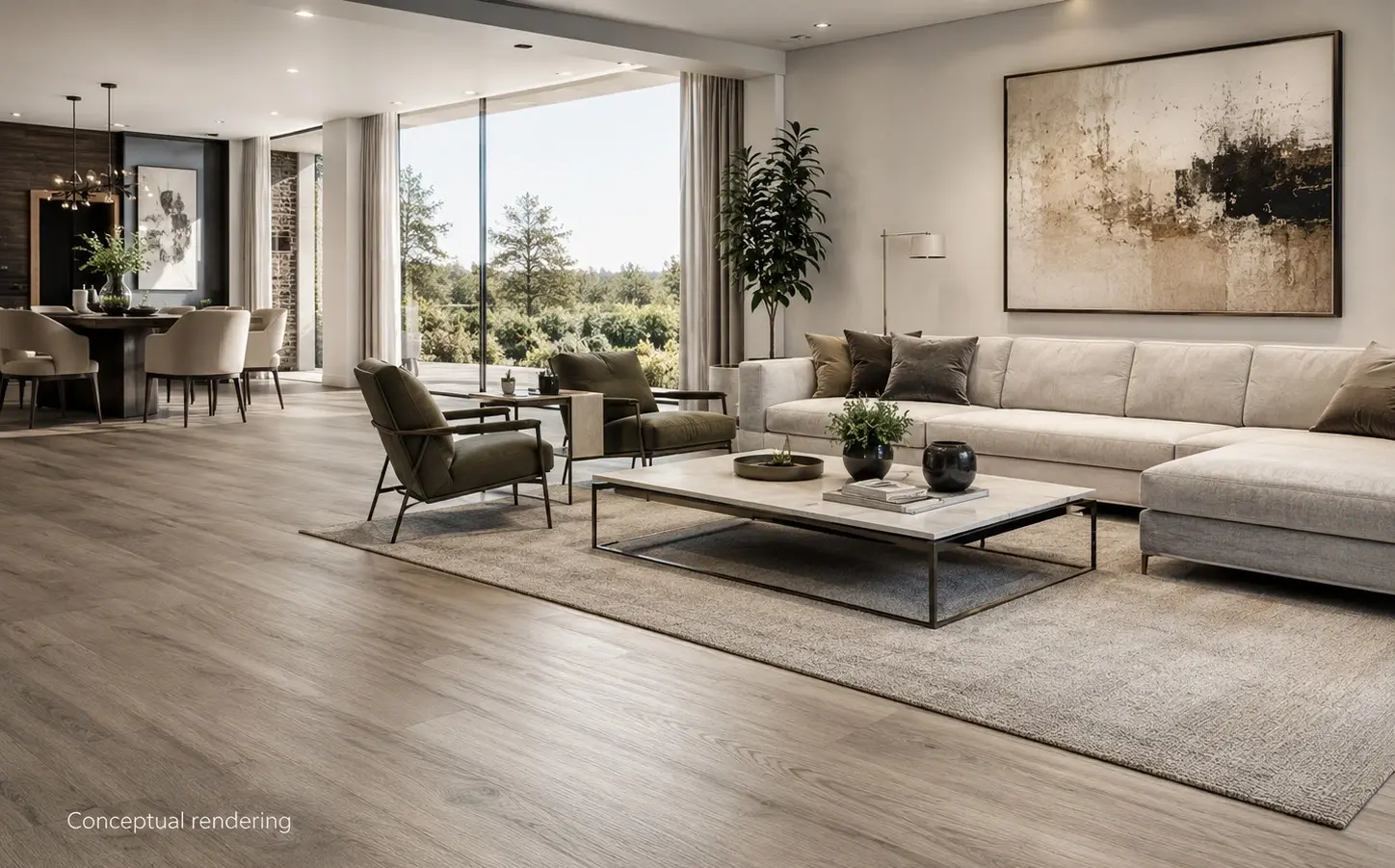
Species hardness is commonly measured on the Janka scale, which tests the force required to embed a steel ball halfway into a plank. White oak, currently one of the most widely specified domestic species, rates around 1,360 lbf. Hickory is harder at roughly 1,820 lbf. Softer domestic species like pine vary widely: Eastern white pine sits around 380 lbf, Southern yellow pine around 690 lbf, and both dent more readily under furniture and foot traffic.
The central durability advantage of hardwood is refinishing. Surface wear, scratches, and color shifts from sun exposure can all be addressed by sanding to bare wood and applying fresh stain and finish. Solid hardwood in good structural condition can be refinished multiple times across its life, a renewal cycle that no synthetic flooring can match.
Engineered hardwood can also be refinished, but veneer thickness limits how many times. Once the veneer is sanded through, the floor requires replacement. If you're comparing hardwood species and finishes in person, visit our Reno showroom to see how different options perform visually and discuss which flooring best suits your home.
LVP
The spec that actually determines how long an LVP floor holds up is wear layer thickness, measured in mils (thousandths of an inch), not total plank thickness in millimeters. A thicker plank feels more solid underfoot and tolerates minor subfloor imperfections, but it has no bearing on scratch and scuff resistance. A 6mm plank with a 6-mil wear layer will lose its surface much faster than a 5mm plank with a 20-mil wear layer.
Practical guidance by use:
- 6–12 mil: light residential use, guest bedrooms, low-traffic spaces
- 12–20 mil: standard residential use, living areas, bedrooms
- 20 mil and above: high-traffic households, kitchens, entryways, homes with pets
Quality LVP at a 20-mil wear layer or above typically carries a residential lifespan of 15–25 years. When the wear layer is depleted, the floor is replaced. Unlike hardwood, it cannot be refinished back to new. If you would like help comparing hardwood and LVP options side by side, schedule a design consultation with the Nova Tile and Stone team.
Installation Considerations
Hardwood is available in nail-down, glue-down, and click-lock floating formats. LVP installs via click-lock floating or glue-down; it is not nailed to the subfloor. Their installation requirements differ in ways that affect project complexity.
Hardwood needs time to acclimate in the installation space before cutting and fitting. This typically takes at least a few days, sometimes longer, depending on how far the wood's current moisture content is from equilibrium with the room. Installation over concrete subfloors requires moisture testing; the NWFA recommends that moisture content between the hardwood and the subfloor not differ by more than 2–4%, and a vapor barrier is typically required below grade.
LVP installs over a wider range of subfloor types with fewer precautions. It goes directly over concrete, floats over existing tile or vinyl in sound condition, and does not require the same moisture testing protocol. For Reno homes on concrete slab construction, typical in South Reno, Double Diamond, and most master-planned communities developed over the past two decades, LVP is generally the simpler installation.
Neither material is suited to full wet areas like shower floors. LVP handles spills and incidental moisture without damage, but sustained standing water or moisture intrusion from below can cause problems at seams or beneath the floor over time.
Cost and Resale Value
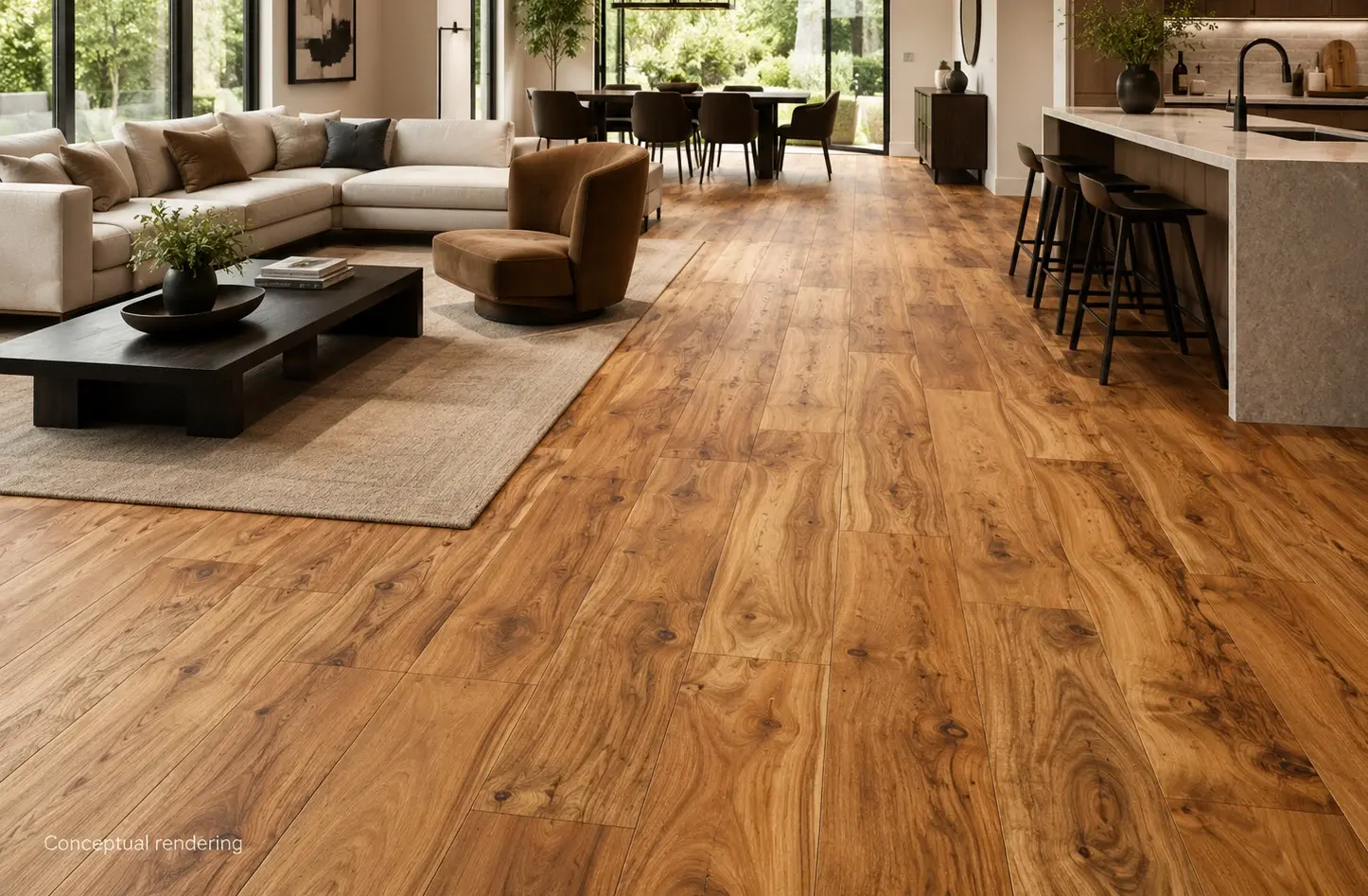
Installed costs vary by material quality, species selection for hardwood, and project scope. As a general rule, hardwood carries a higher installed cost than LVP, and the gap widens further for premium species and complex layout patterns. At the quality end of the LVP market, however, the price difference between the two narrows considerably; quality LVP costs more than most homeowners expect when they first start shopping.
On resale, industry data from the National Association of Realtors consistently shows hardwood returning a greater share of its installation cost than LVP. That gap is partly due to buyer preference and partly because appraisal practices have been slow to catch up with how realistic high-end LVP has become. Younger buyers increasingly cannot distinguish quality LVP from real wood by sight, but appraisers in most markets still treat solid or engineered wood as the more premium finish.
One useful caveat: condition matters more than material on most transactions. Worn, damaged hardwood will underperform well-maintained LVP at resale, which is an argument for building refinishing into the long-term plan.
Thinking Through Each Space
The hardwood vs. LVP question rarely has a single answer for an entire home. Most projects benefit from treating each space on its own terms.
Main living areas and dining rooms are where hardwood has traditionally carried its resale premium. Real wood in a great room responds to light differently than printed vinyl; the depth of grain and material authenticity register with buyers even when they cannot immediately explain why. For homeowners planning to sell within the next decade, that distinction still matters. In Reno's mid-to-upper price tiers, buyers tend to treat real wood floors as a visible signal of quality.
Bedrooms are lower-stakes. LVP performs well there, feels warmer underfoot when installed with attached underlayment, and reduces noise transmission in multi-story homes. Budget-conscious homeowners often use hardwood in shared living areas and LVP in secondary bedrooms.
Kitchens are where wood's moisture vulnerabilities matter most. Dishwashers, sinks, and pet water bowls create ongoing incidental moisture; LVP handles that environment more reliably than hardwood.
Basements and below-grade spaces favor LVP without much debate. Even in Reno's dry climate, moisture can wick through a concrete slab. Solid hardwood is not appropriate below grade. LVP's waterproof core handles those conditions reliably.
Entry areas and mudrooms tend to benefit from LVP's scratch and moisture resistance, particularly in Reno households that deal with dusty, windblown conditions.
Making the Call
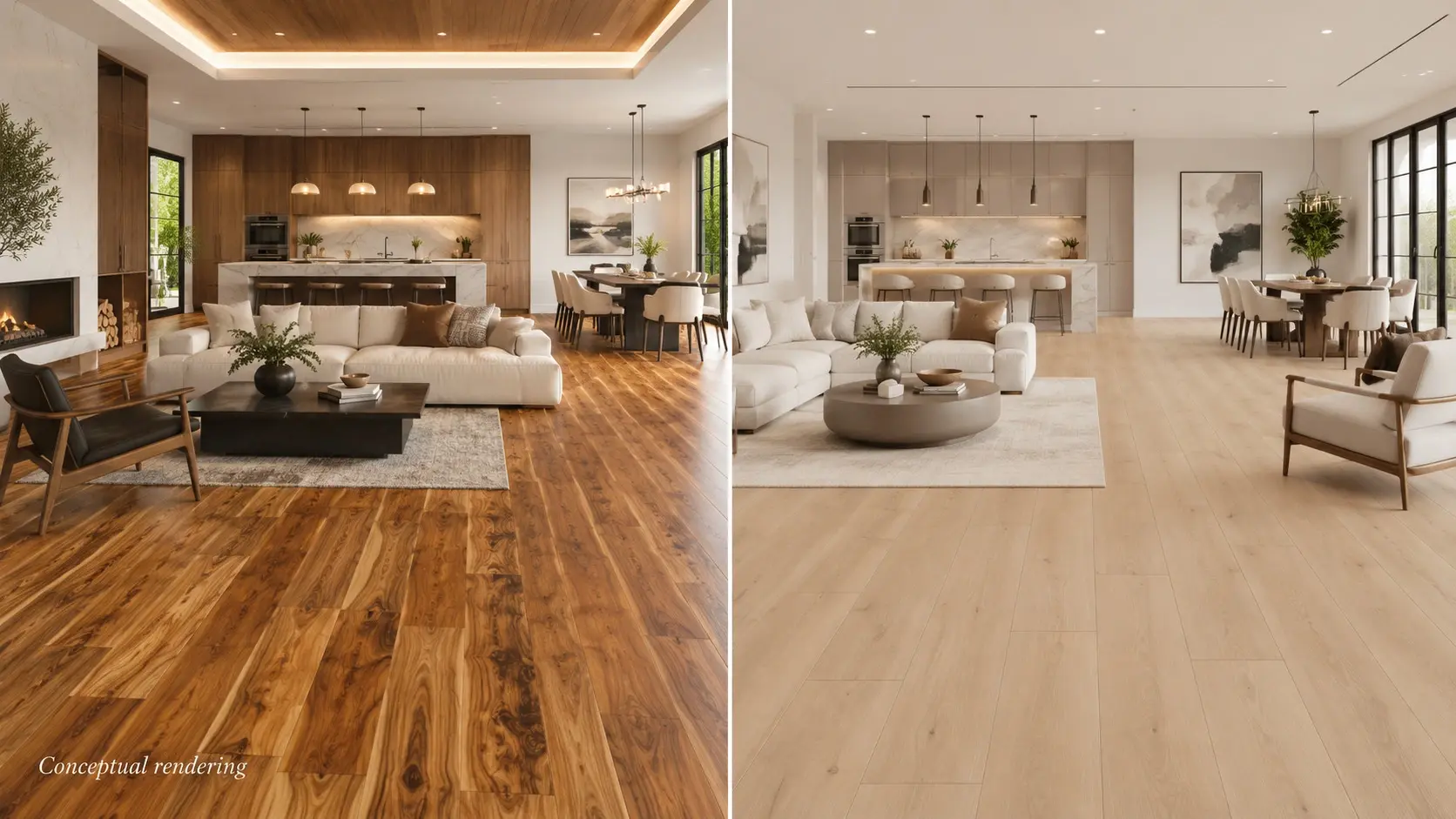
Neither material is right for every situation. The honest frame is this: hardwood rewards you with longevity, refinishability, and resale signal, but it asks for humidity management and a longer investment horizon in return. LVP rewards you with waterproof performance, installation flexibility, and lower upfront cost, but it has a fixed lifespan and cannot be renewed the way real wood can.
Many Reno homeowners end up using both: hardwood in the spaces where the investment makes sense, and LVP where daily life calls for something more forgiving. That split approach is often where the value lands. If you are planning a residential or commercial project, you can apply for a trade account for contractor pricing and project support, or schedule a consultation on our website to explore the best flooring options for your space.
Conclusion
Both materials can work well in a Reno home. The question is never which one is better in the abstract; it is which one fits what a particular space actually demands.
Reno's climate creates a specific challenge for wood floors that doesn't exist in most of the country. Summer humidity drops low enough, and winter heating drops it further, that solid hardwood needs active management to stay stable. Engineered hardwood narrows the gap; LVP sidesteps it altogether.
At the same time, hardwood still carries genuine advantages that LVP cannot replicate: the ability to be refinished and renewed over decades, a material depth that registers differently in a room, and a resale signal that appraisers and buyers continue to recognize in Reno's market.
The right approach is treating each room as its own decision, matching the material to what that space actually demands and being honest about the trade-offs involved.
Nova Tile and Stone, located at 12835 Old Virginia Road, Reno, NV 89521, carries hardwood and LVP collections at the Reno showroom, along with tile, stone slabs, and countertop materials. Tile samples are $1 each to take home. Walk-in design consultations are available Monday through Friday, 7:30am to 6pm, and Saturday 9am to 3pm. Call (775) 331-6682 for more information.
Frequently Asked Questions
For many Reno homeowners, yes. Reno's dry summers routinely push outdoor relative humidity below the threshold solid hardwood needs to stay stable. Engineered hardwood, a real-wood veneer bonded over a dimensionally stable plywood or HDF core, handles those swings more reliably and still qualifies as genuine hardwood for appraisal purposes.
In most cases, yes, provided the existing floor is level, sound, and securely bonded. LVP's click-lock floating system does not require removing a structurally intact floor, which reduces project time and cost. Glue-down LVP has stricter requirements and generally needs professional assessment first.
The clearest sign is a dull, discolored, or patchy surface that cleaning cannot restore, indicating the wear layer has eroded through to the design layer. Lifted or warped planks and deep scratches that penetrate the design layer are also indicators. Unlike hardwood, LVP cannot be refinished once the wear layer is gone.
Yes. At roughly 4,400 feet with around 300 sunny days per year, Reno receives more intense UV than lower-elevation cities. Prolonged sun exposure can fade hardwood finishes and cause color shift in LVP's printed design layer. Hardwood can be refinished when fading appears; faded LVP requires replacement. UV-filtering window film and area rugs help protect both materials.
Yes, and it is a common approach. Keeping wood tones consistent across both materials, such as white oak hardwood in the living room paired with a matching oak LVP in the kitchen, makes the transition look deliberate. Use a transition strip at the boundary, run planks in the same direction across shared spaces, and place the divide at a natural boundary such as a doorway or room function change.
Note: Some images on this page may be conceptual renderings created to illustrate design possibilities and may not depict actual installations.