In Stateline, NV, hardwood flooring generally works best in living rooms and bedrooms away from winter snow, while LVP (luxury vinyl plank) holds up better in entries, mudrooms, and basements that deal with the meltwater and grit of ski season. Stateline sits directly on the California-Nevada state line, on Lake Tahoe's southeastern shore, where heavy winter snowfall makes this a more practical, room-by-room decision than in most Nevada towns. Understanding how each material is actually built, and where Stateline's snow really ends up indoors, makes that choice far easier.
A Town Built Right On The Border
Stateline earned its name honestly. A boundary dispute in the 1800s left the exact location of the California-Nevada line uncertain for decades, and an 1893 federal survey finally fixed the border with a set of monuments still used today. The small community that grew up just east of that line, in Nevada, took its name directly from that boundary. Today it's home to a few hundred year-round residents, though the population swells considerably during ski season and summer, since Stateline sits adjacent to South Lake Tahoe, California and functions as the south shore's gaming and resort corridor.
Nevada State Route 207 connects Stateline to Minden, the Douglas County seat, by way of Kingsbury Grade, a mountain pass that climbs out of the Tahoe basin and drops into Carson Valley on the other side. Anyone who has driven Kingsbury Grade in January knows why snow chains are a standard part of winter driving here. That same road connects Stateline to our Minden showroom, which is part of why Stateline appears on the list of communities our Minden location serves directly.
A meaningful share of homes in Stateline also function as vacation rentals or second homes tied to the ski season and the nearby casino corridor, which adds another layer to any flooring decision. A property with frequent guest turnover needs a floor that tolerates rolling suitcases, wet swimsuits, and hurried late-night check-ins as reliably as it needs to photograph well for a listing, which is often a different priority than what a full-time, owner-occupied home requires.
Why Snow Changes The Flooring Conversation
Lake Tahoe's basin carries a dry-summer continental climate, with warm, dry summers and winters defined by heavy, sustained snowfall, though totals vary sharply depending on exactly where in the basin you are. The Sierra Nevada casts a rain shadow across the lake's eastern side, so the Nevada shore generally sees less snow than the California side of the lake: nearby Glenbrook averages roughly 90 inches a year, and Daggett Pass, at the top of Kingsbury Grade itself, averages around 193 inches, compared to over 400 inches at Echo Summit on the Sierra crest to the west. Stateline sits in that same lower-snowfall pocket. Even so, elevation here still runs above 6,200 feet, and winters bring enough sustained accumulation and ski season traffic that a fair amount of it ends up tracked indoors, in boots and on the bottoms of ski bags, for months at a stretch.
This is the practical reality that shapes flooring choices in a way that a milder climate simply doesn't demand. An entryway in Stateline deals with meltwater, gravel, and de-icing salt for months at a stretch, while a quiet upstairs bedroom rarely sees any of it. Choosing one flooring material for the whole house often means compromising somewhere, which is why so many Stateline homeowners end up mixing hardwood and LVP by room rather than picking a single material throughout.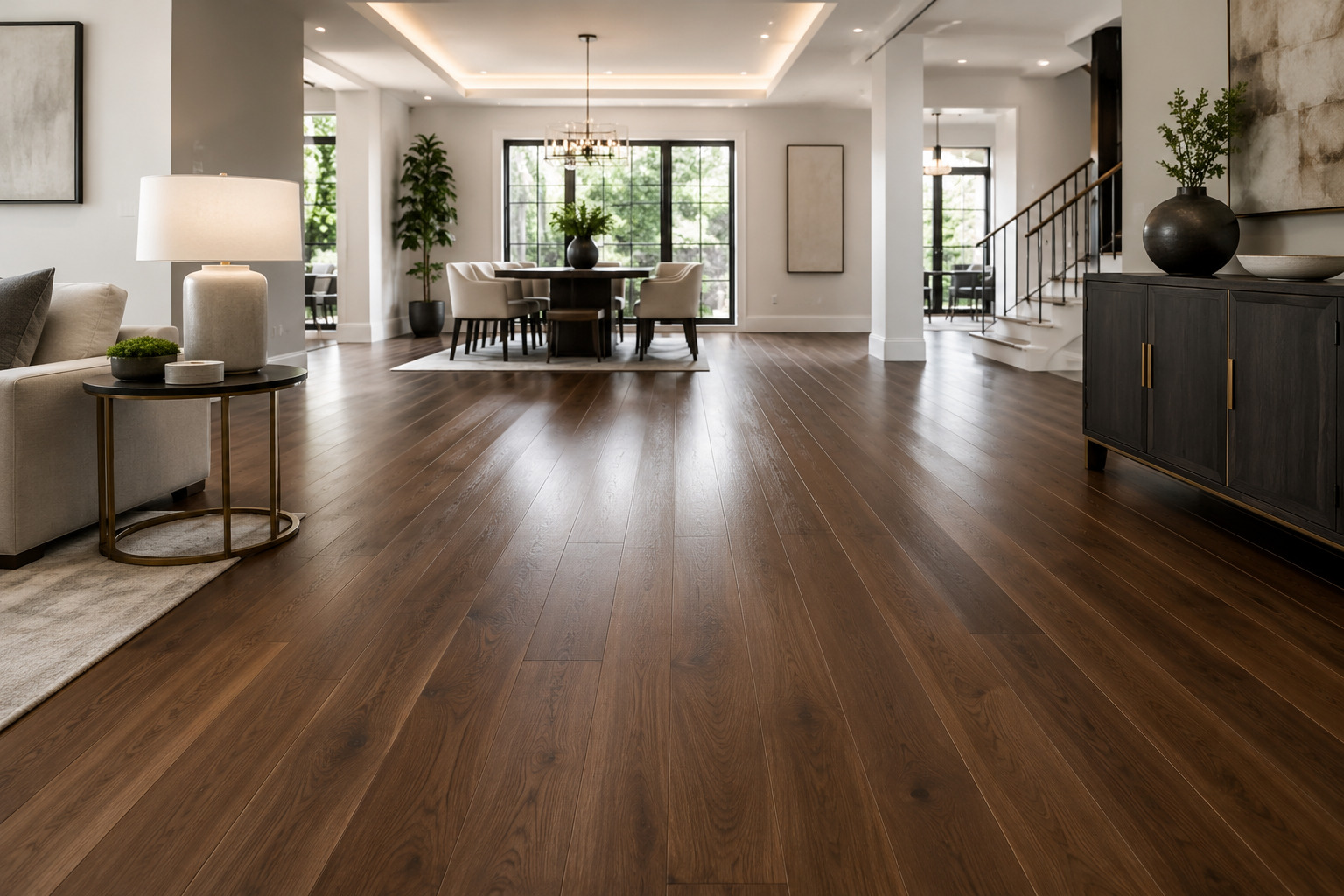
What's Actually Inside Engineered Hardwood
According to the National Wood Flooring Association, a floor qualifies as real wood flooring as long as an actual wood species forms the top-most, wearable surface, a definition broad enough to cover solid wood, engineered wood, and even composite-core products with a genuine wood veneer on top. True engineered hardwood, the kind most commonly sold under that name, typically goes further than that minimum: a thin veneer of an actual hardwood species sits on top of a core built from multiple layers of wood veneer or plywood, glued together with the grain running in alternating directions. That cross-layered structure is what gives engineered hardwood its dimensional stability, since wood naturally expands and contracts with humidity, and layering the grain in opposing directions cancels out much of that movement.
This construction is why engineered hardwood tends to handle the humidity swings of a Tahoe basin winter better than a solid plank would, though it isn't a waterproof product and shouldn't be treated as one. Standing water and repeated snowmelt exposure can still damage the finish and the wood veneer underneath over time, which is a real limitation worth planning around rather than a flaw specific to any one brand.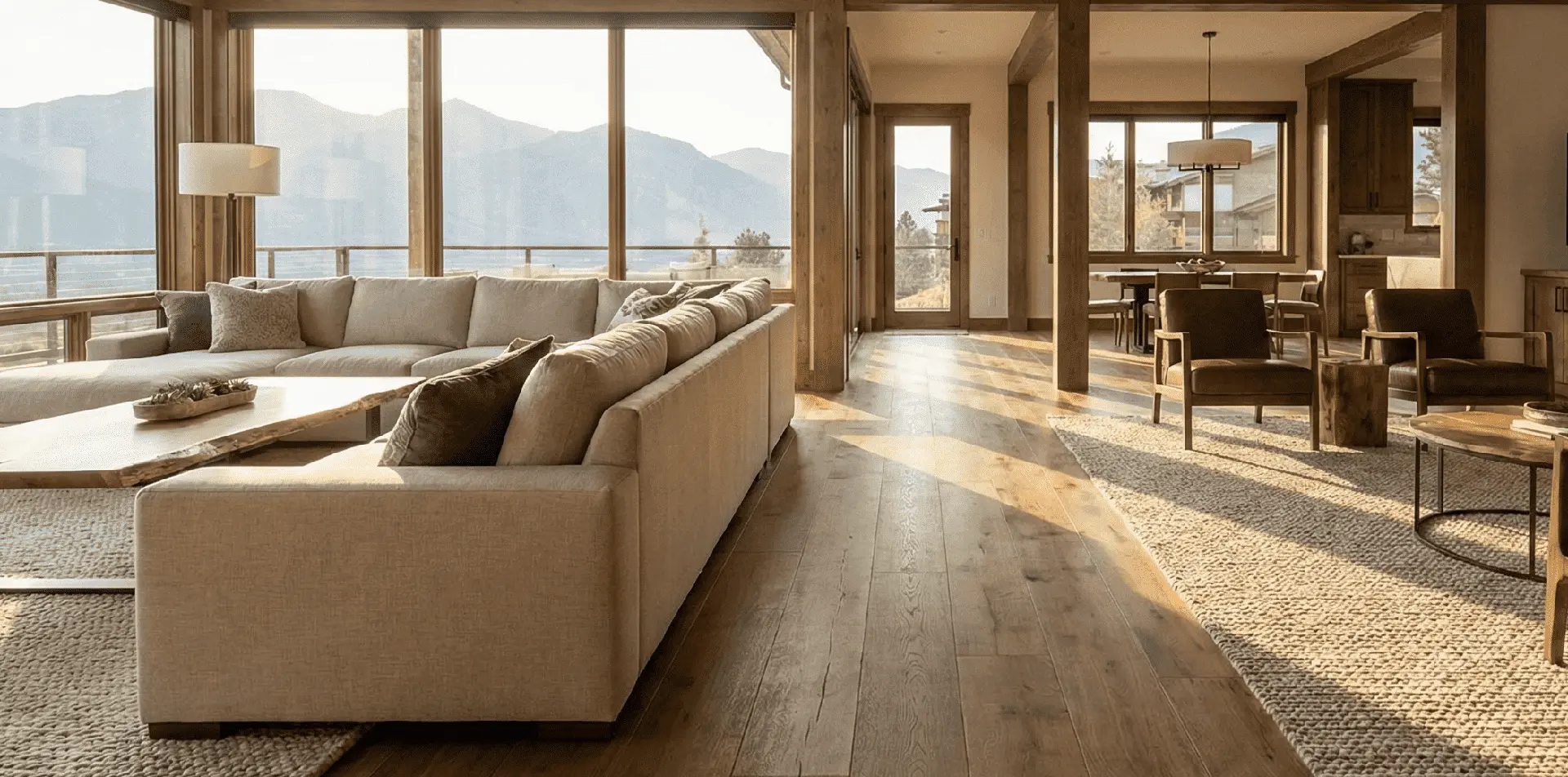
What's Actually Inside LVP
Luxury vinyl plank is built entirely differently. According to the World Floor Covering Association, vinyl flooring in general is constructed in layers: a printed design layer that creates the wood or stone look, a rigid or cushioned core, and a clear wear layer on top that protects the surface from scuffs and scratches. Because none of those layers are organic material the way hardwood is, LVP tends to hold up to moisture, meltwater, and de-icing salt more consistently than solid or engineered wood, provided the wear layer is kept clear of grit that can dull its surface over time.
That resistance to moisture makes LVP a natural fit for a Stateline entryway, mudroom, or ski-gear drop zone, though the wear layer still benefits from routine care. Grit and sand carried in on boots can dull a wear layer over time if it isn't swept or vacuumed regularly, and harsh solvents or abrasive cleaners can degrade the surface faster than plain water and a manufacturer-approved cleaner would.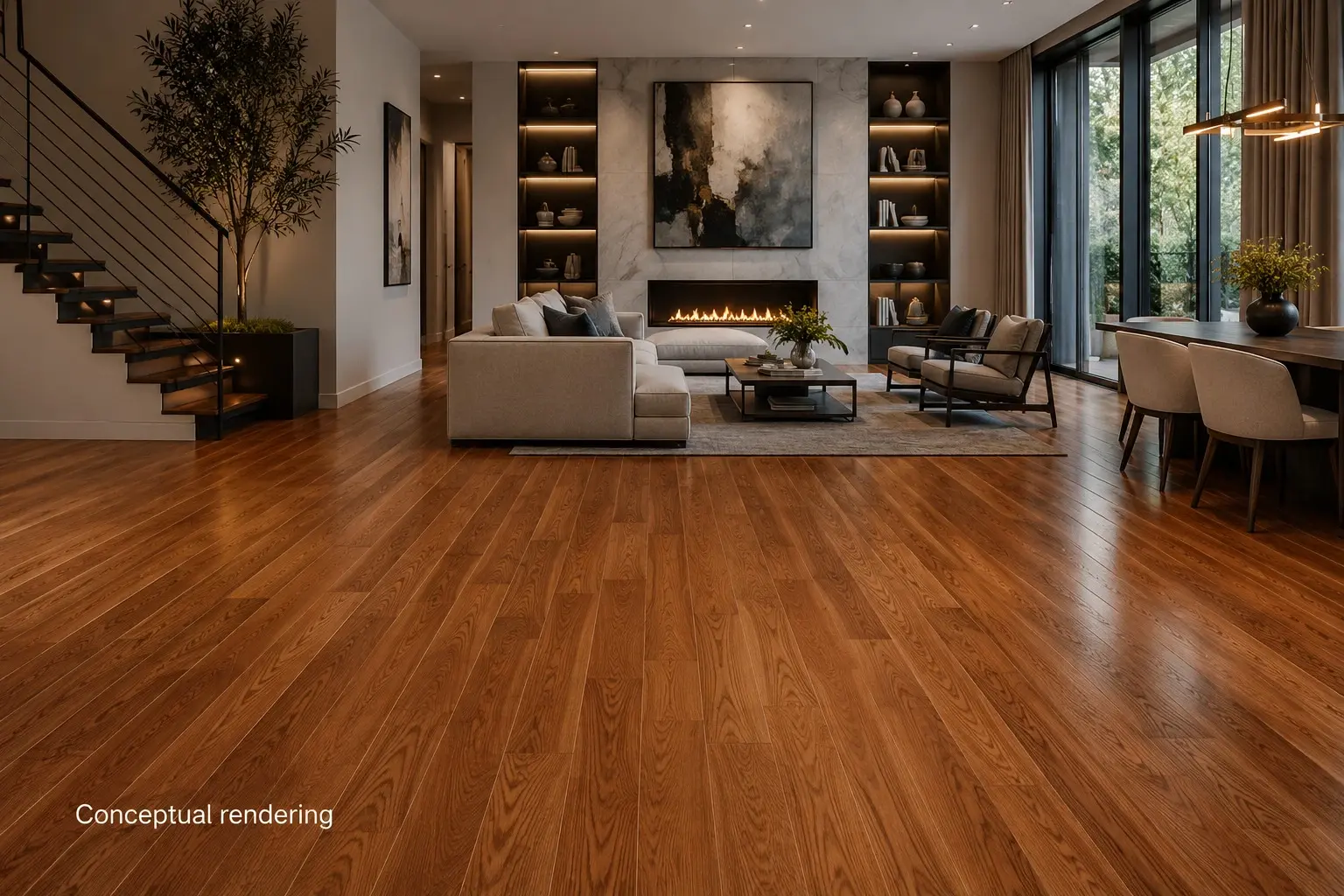
Matching Material To The Room
Hardwood tends to make the most sense in the parts of a Stateline home furthest from direct snow exposure: living rooms, bedrooms, and dining areas where the material's warmth and classic appearance matter more than moisture resistance. It reads as a long-term investment in a mountain home, and its appearance tends to improve with age rather than simply wearing down, provided the wood itself is kept dry and away from prolonged sun exposure that can shift its color unevenly over the years.
LVP earns its place in entries, mudrooms, laundry areas, and basements, the rooms in a Tahoe-area home that see the most direct contact with snow, mud, and moisture during ski season. Its performance in these conditions doesn't come at the expense of style either, since current LVP designs replicate wood grain and stone texture closely enough that many homeowners run it through an entry and transition to hardwood in an adjoining living space without a jarring visual break.
Lower-level rooms and walkout basements deserve their own consideration too. Rooms closer to grade tend to experience more humidity fluctuation across a Tahoe winter than upper floors do, simply because they sit nearer the ground and any moisture in the soil around the foundation. That's part of why LVP tends to be the more common choice below the main living level in newer Stateline builds, while hardwood stays reserved for the floors above.
For homeowners still weighing the split between the two, comparing actual samples side by side, in the specific light of the room they're planning to floor, remains the most reliable way to judge how a material will really look once it's installed. Both engineered hardwood and LVP sit side by side on our Minden showroom floor for exactly that kind of comparison, and our design team offers commission-free guidance on sorting out which rooms call for which material before any order is placed.
Homeowners who want to browse everything on offer before narrowing things down can start with everything we stock across all four locations, while contractors managing several Tahoe-area properties at once may find it worth applying for trade pricing for standardized costs across multiple jobs.
Nova Tile and Stone has served Carson Valley and the greater Tahoe basin since 2005, and that background as a family-run business shows up in the kind of unhurried conversation a mixed-material flooring plan usually needs. Anyone ready to compare hardwood and LVP samples in person can reserve a time to stop by Minden, with directions to the showroom putting it just off Highway 395.
The showroom is located at 2548 Business Pkwy, Minden, NV 89423, and can be reached at (775) 783-4970.
Conclusion
Choosing between hardwood and LVP in Stateline rarely comes down to which material is better in the abstract. It comes down to which rooms in a specific home face direct exposure to a Tahoe basin winter and which don't. Hardwood brings warmth and a sense of permanence to the spaces where snow and mud rarely reach, while LVP's layered, non-organic construction holds up to the entries and mudrooms that spend half the year handling meltwater and grit carried in from outside. Understanding how each material is actually built makes that room-by-room decision far more straightforward.
Frequently Asked Questions
Hardwood works well in Stateline homes, but it performs best in rooms that see limited direct exposure to snow, mud, and moisture. Living rooms, bedrooms, and dining spaces tend to be better candidates than entryways or mudrooms during ski season.
LVP is built from non-organic materials, including a rigid or cushioned core and a protective wear layer, which allows it to handle moisture, meltwater, and de-icing salt far better than solid or engineered wood. This makes it a practical choice for entries and mudrooms in particular.
Yes, and it's a common approach in Tahoe-area homes. Many homeowners use LVP in entries, mudrooms, and basements where moisture exposure is highest, then transition to hardwood in living rooms and bedrooms further from direct snow contact.
Elevation and heavy winter snowfall both play a role, since more snow generally means more moisture gets tracked indoors over a longer stretch of the year. Homes closer to well-traveled entry points tend to benefit most from moisture-resistant flooring like LVP.
Stateline homeowners can compare both materials at our Minden showroom, connected to Stateline by way of Kingsbury Grade and Nevada State Route 207. Viewing full samples in person under real lighting remains the most reliable way to judge how a floor will actually look once installed.