Choosing the Right Grout Color for Your Bathroom Tile
Grout color matching is the process of pairing grout shade with tile surface and color to either blend a design or make a pattern stand out. For Fernley homeowners planning a bathroom remodel, the right grout choice can change the entire look of a room without touching the tile itself. A close match creates a seamless, spa-like surface, while a contrasting grout highlights bathroom floor layouts, countertop edges, and wall patterns. Getting this decision right early helps avoid a costly redo later. Nova Tile and Stone carries a wide range of tile surface and color options suited to bathroom floor, shower wall, and countertop applications. Homeowners can browse the tile shop to see current selections before narrowing down a grout pairing. Matching grout thoughtfully to these surfaces is one of the simplest ways to elevate a small bathroom or make a large one feel cohesive. Local homeowners in Fernley, Fallon, Silver Springs, Wadsworth, and Stagecoach can find tile and grout guidance suited to their specific project goals. Because a bathroom combines several surfaces at once, grout decisions rarely apply to just one area. Floor tile, shower walls, and countertop edges often use different tile surface and color combinations, which means grout can either unify the room or intentionally separate one zone from another. Homeowners who plan grout choices alongside tile selection, rather than as an afterthought, tend to end up with a bathroom that reads as a finished design rather than a collection of separate material decisions.
Benefits of Thoughtful Grout Color Matching
Selecting grout color with intention offers more than good looks. It affects maintenance, visual flow, and how long a bathroom surface reads as clean and well kept. Grout that blends with tile tends to visually enlarge a space, while a contrasting grout can define geometric wall patterns or a herringbone bathroom floor layout.
- Softens or sharpens the look of a tile surface and color palette
- Helps disguise minor grout staining over time with the right tone selection
- Draws attention to countertop and wall pattern designs when contrast is used
- Creates a more cohesive appearance between bathroom floor and shower wall tile
- Can be paired with sealants for easier upkeep, though sealing does not eliminate staining risk entirely
These advantages depend on consistent care. Grout still needs regular cleaning and occasional resealing to keep its color true over years of daily use.
Beyond the visual effect, grout color can also influence how a room photographs and how it feels day to day. A darker grout paired with light tile surface and color choices tends to create strong visual lines that read well in photos but can feel busy in a small bathroom. Lighter grout against the same tile softens those lines and can make a compact bathroom floor layout feel calmer. Neither approach is universally better; the right pick depends on room size, natural light, and how much contrast a homeowner actually wants to live with each day.
Grout Color Matching Across Bathroom Floor, Countertop, and Wall Patterns
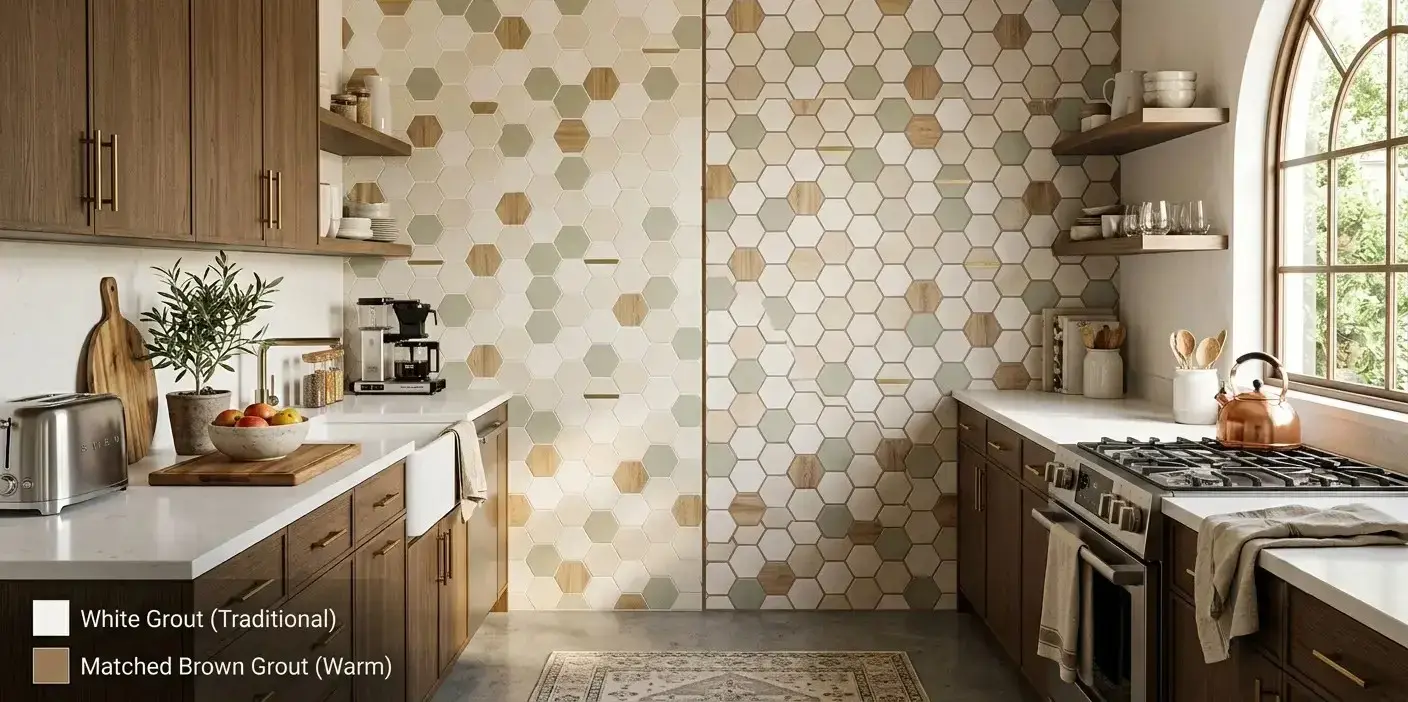
Grout color matching plays out differently across bathroom floor, countertop, and wall pattern designs, since each surface handles light, moisture, and foot traffic in its own way. Choosing a grout shade should always start with the dominant tile surface and color already selected for the space, then move outward to secondary design elements.
Bathroom Floor Applications
On a bathroom floor, grout color affects how visible dirt and water spots appear between cleanings. A mid-tone grout close to the tile shade tends to show less daily wear than a stark white or jet black option, though all grout benefits from prompt cleanup of spills and periodic sealing.
Floor grout also interacts with tile joint width and layout pattern. Narrow joints paired with a closely matched grout tend to emphasize the overall tile surface and color as one continuous plane, which many homeowners prefer for smaller bathrooms. Wider joints with a contrasting grout can instead highlight individual tile shapes, which suits larger bathroom floor layouts where a bolder geometric statement is the goal.
Countertop and Wall Pattern Designs
Countertop edges and wall pattern designs often benefit from a slightly different approach than flooring. A contrasting grout line can emphasize a herringbone or basketweave wall pattern, while a closely matched grout keeps a countertop backsplash looking like one continuous tile surface and color statement. Homeowners exploring classic color pairing ideas often find that timeless neutral combinations age better than trend-driven choices. For wet areas like shower floors, checking wet-area slip resistance guidance alongside grout selection helps balance style with everyday safety.
Countertop surfaces also benefit from considering how grout will hold up near sinks and faucets, where moisture exposure is frequent. A grout tone that matches the countertop tile surface and color can minimize the appearance of minor splashes, while a contrasting grout line around a backsplash pattern draws the eye upward and can make a small bathroom vanity area feel more designed. Reviewing porcelain tile certification standards can also help homeowners understand what quality benchmarks apply when comparing porcelain options for these surfaces.
Comparison: Grout Matching Approaches
Approach | Best For | Visual Effect | Maintenance Note |
Matching Grout | Bathroom floor, small rooms | Seamless, larger-feeling surface | Staining less visible; still needs sealing |
Contrasting Grout | Wall patterns, backsplashes | Defines shape and pattern lines | Staining more visible; clean promptly |
Mid-Tone Neutral Grout | Mixed tile surface and color schemes | Balanced, versatile look | Works across most tile types |
Advantages and Considerations of Grout Color Matching
Advantage:
- Ties together varied tile surface and color choices across a bathroom
- Can make countertop and wall pattern designs feel intentional rather than accidental
- Flexible enough to update a room's mood without replacing tile
Consideration:
- Lighter grout requires more frequent cleaning attention in high-moisture areas
- Very dark grout can look heavy against light bathroom floor tile if overused
- Grout tone should be tested in actual bathroom lighting before final selection
A Simple Grout Color Matching Mini-Guide
- Gather physical samples of your chosen tile surface and color alongside grout swatches.
- View combinations in the bathroom's actual lighting, both daytime and evening.
- Decide whether the goal is a blended look or a defined wall pattern contrast.
- Test a small grout sample against countertop and floor tile edges before committing.
- Confirm sealing needs based on the final grout tone and bathroom moisture levels.
Expert Guidance from Nova Tile and Stone
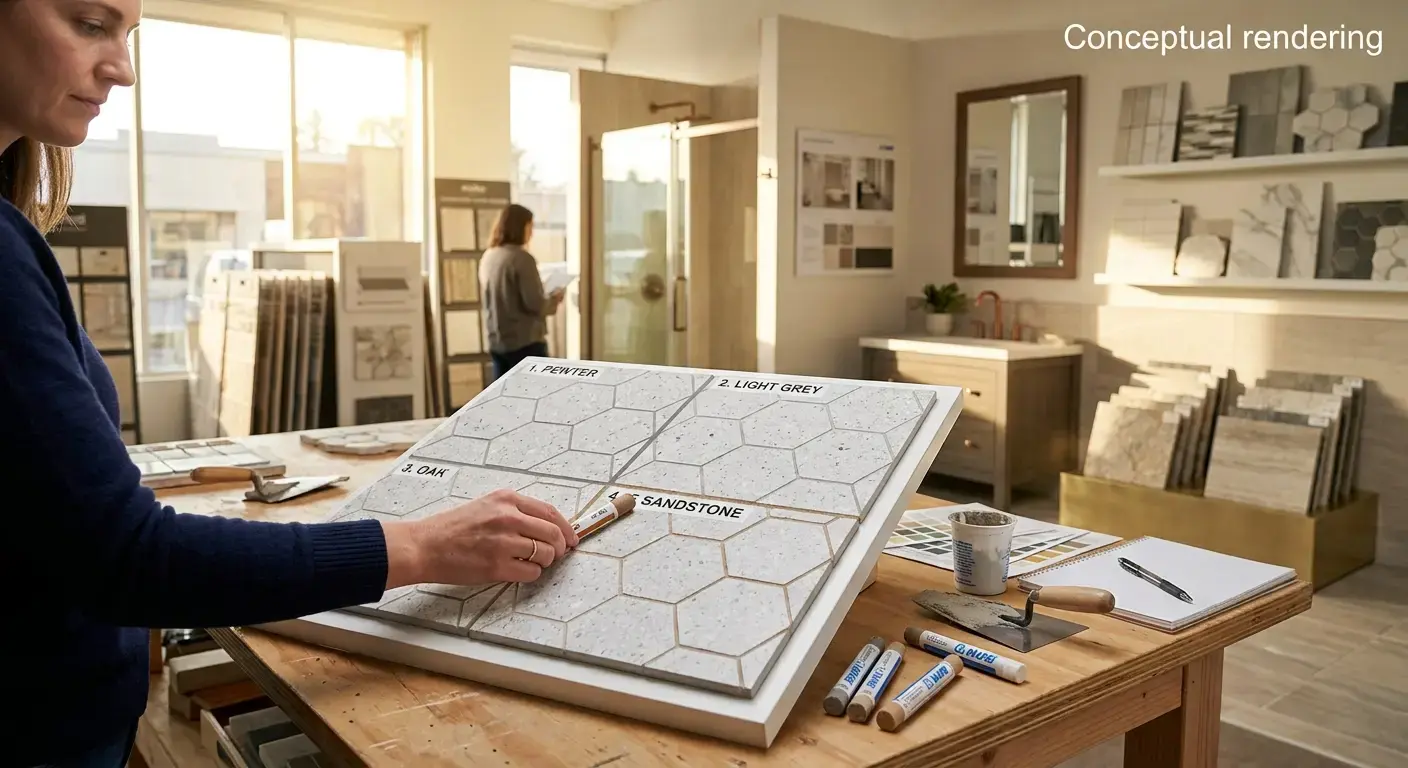
Choosing grout color does not have to be a solo guessing game. Nova Tile and Stone offers tile options by color so Fernley-area homeowners can browse tile surface and color combinations side by side before deciding on grout. Staff can walk through the full product lineup and explain how different finishes respond to various grout tones. Free sample shipping is available on eligible tile selections, making it easier to test real material and grout pairings at home before finalizing a bathroom floor or wall pattern design. For homeowners who prefer an in-person look, visiting Fernley showroom puts full-size tile and grout boards on display. Anyone ready to move forward can reach the team directly to talk through countertop, floor, and wall pattern goals for a Fernley bathroom project.
Working through grout color matching with an experienced, local team can shorten the decision process considerably. Homeowners curious about the company background can learn more here. Instead of guessing at how a grout tone will look against a chosen tile surface and color, homeowners can compare physical boards and sample pairings before ordering. This approach tends to reduce mid-project changes and helps keep a bathroom floor, countertop, and wall pattern design cohesive from the very first selection.
Conclusion
Grout color matching is a small decision with an outsized effect on how a Fernley bathroom's tile surface and color, floor, countertop, and wall pattern designs come together. Whether the goal is a seamless blend or a bold contrast, testing samples in real lighting remains the most reliable approach. Learn more by visiting the Nova Tile and Stone site for additional design resources and current tile selections. A well-matched grout choice, paired with routine care, keeps a bathroom looking finished for years to come.
Frequently Asked Questions
Grout color matching means choosing a grout shade that either blends with or intentionally contrasts a bathroom's tile surface and color scheme.
A close match often hides daily wear better, though some homeowners prefer contrast to define a bathroom floor layout; both approaches require regular cleaning.
Yes, lighter grout tones can show staining sooner in moisture-prone areas, so consistent cleaning and periodic sealing help maintain appearance over time.
Contrasting grout can sharpen the visual lines of a wall pattern, while matching grout softens those lines for a more uniform surface appearance.
Compare physical grout and tile samples together in the bathroom's actual lighting at different times of day before making a final selection.
Curious About Something Else?