For Sacramento kitchens and bathrooms, granite offers documented durability and a wide color range, quartzite delivers notable hardness with a marble-like aesthetic, and engineered quartz provides a low-maintenance surface that never needs sealing. The right choice depends on your household habits, design goals, and how much upkeep you are willing to manage.
Choosing a countertop surface is one of the most significant decisions in any kitchen or bathroom remodel. The surface you select will be used daily for years, so understanding how each material actually performs matters as much as how it looks in a showroom. Granite, quartzite, and quartz are the three most requested countertop materials we see at our Sacramento showroom, and each one has a genuinely different performance profile. This guide breaks down what separates them so you can walk into your material selection with confidence.
What Each Material Actually Is
Before comparing performance, it helps to understand what you are actually buying.
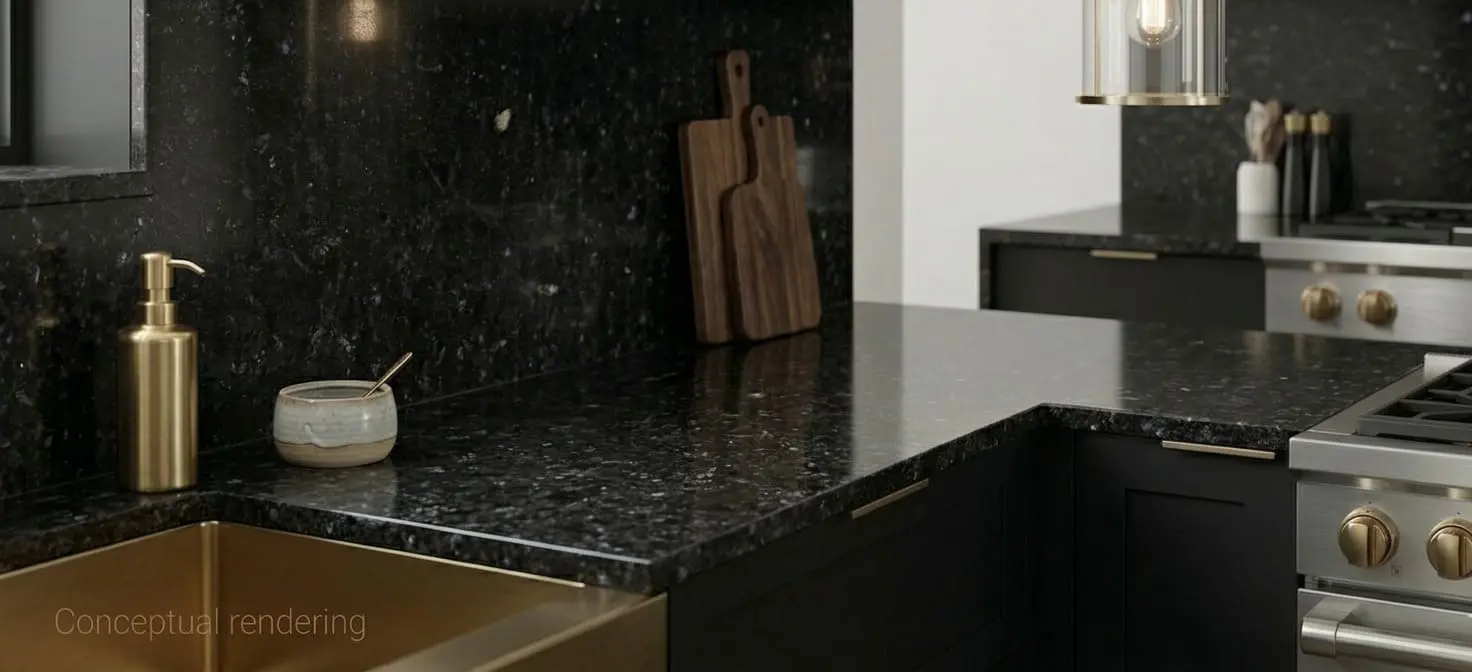
Granite is an igneous rock formed when magma cools slowly beneath the earth's surface. The slow cooling process creates a coarse-grained crystalline structure that gives granite its characteristic speckled appearance and high density. Because it forms from many different mineral combinations, granite comes in one of the widest color and pattern ranges of any natural stone.
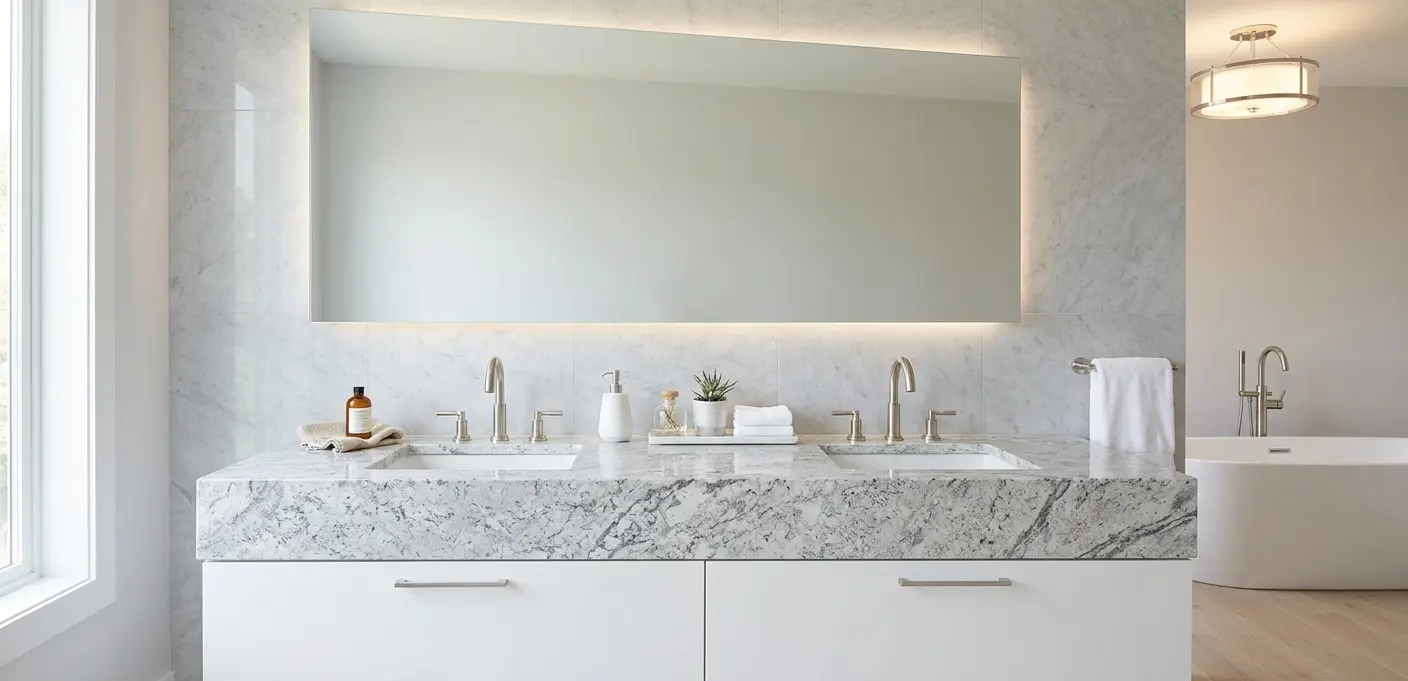
Quartzite is a metamorphic rock that begins as sandstone and transforms under extreme heat and pressure deep within the earth. That transformation fuses individual quartz grains into an interlocking crystalline structure, producing a stone that is harder and denser than granite. Many quartzite varieties display flowing veins and movement that closely resemble marble, making it a popular choice for homeowners who want that aesthetic without marble's maintenance demands.
Quartz (engineered quartz) is a manufactured product, not a mined stone. It is composed of approximately 90 to 95 percent ground quartz crystals combined with polymer resins and pigments. The manufacturing process produces a non-porous slab with consistent color and pattern throughout. Because it is engineered, quartz does not vary from slab to slab the way natural stone does.
Durability and Hardness
Hardness is measured on the Mohs scale, which runs from 1 (softest) to 10 (hardest). Quartzite typically rates between 7 and 8, making it harder than both granite (6 to 6.5) and engineered quartz (approximately 7, though its resin content limits direct comparison). In practical terms, all three materials resist everyday scratching well, but quartzite has the edge in high-traffic kitchens where surfaces take the most abuse.
Heat resistance is where the materials diverge more noticeably. Granite and quartzite are both formed at geological temperatures and handle hot cookware well, though trivets are always a sensible precaution. Engineered quartz contains polymer resin, which can discolor or crack with prolonged exposure to high heat. Trivets and hot pads are not optional with quartz. They are necessary. This is worth keeping in mind for Sacramento kitchens in particular, where the city logs over 3,600 hours of sunshine annually and south-facing countertops near windows can experience sustained heat and UV exposure throughout the year.
For Sacramento households with active kitchens, quartzite and granite both hold up well to daily use. Quartz performs reliably too, as long as heat is managed carefully. Browsing our full slab inventory is a good starting point for seeing which granite and quartzite varieties are currently in stock.
Maintenance and Sealing
This is the area where the three materials differ most significantly for everyday homeowners.
Granite requires sealing at installation and periodic resealing, typically every one to two years depending on the specific stone and how heavily it is used. Granite varies in porosity; some varieties are quite dense and absorb little, while others benefit from more attentive sealing schedules. Daily cleaning with mild soap and warm water is straightforward.
Quartzite also requires sealing, generally on an annual basis. Its dense crystalline structure makes it more resistant to staining than marble, but the stone is still porous and will absorb liquids over time without proper sealer protection. Homeowners who commit to annual sealing find quartzite straightforward to maintain. This Old House's stone countertop guide covers sealing schedules and product recommendations in practical detail.
Quartz requires no sealing at any point in its lifespan. Its non-porous surface prevents liquids from penetrating, which means spills from coffee, wine, and cooking oils wipe away without any concern about absorption. For households that prefer a truly low-maintenance surface, quartz removes an ongoing task from the ownership experience entirely.
If maintenance simplicity is your primary concern, quartz is the straightforward answer. If you are comfortable with annual sealing in exchange for a natural stone surface, granite and quartzite are both reliable choices over time.
Aesthetics and Design Range
All three materials work well in Sacramento's most popular kitchen and bathroom styles, but each has a distinct visual character.
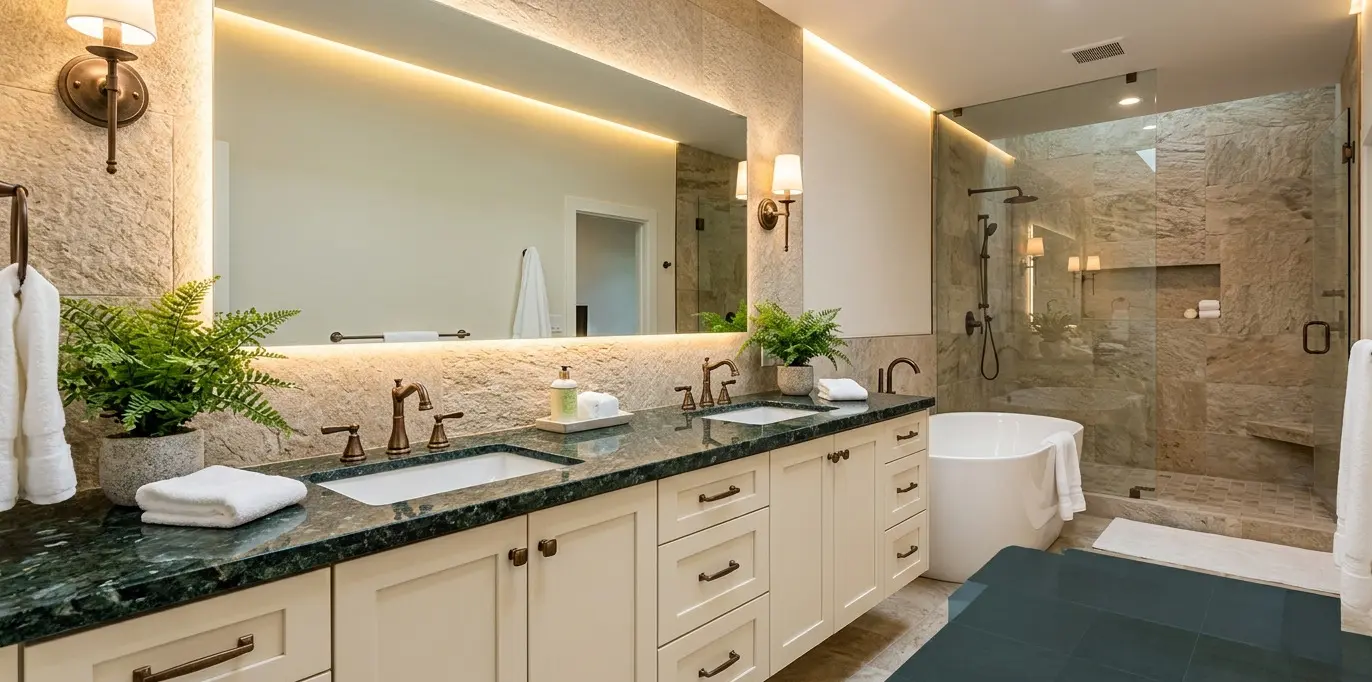
Granite has the broadest color palette of any natural stone category, ranging from pure whites and soft creams to deep blacks, blues, greens, and everything in between. The speckled, granular patterning is immediately recognizable and pairs naturally with both traditional and transitional interiors. Because no two slabs are identical, granite carries the individual character that natural stone buyers are often drawn to. That individuality is one of the reasons buying from a local stone importer makes a meaningful difference: you select the actual slab, not a category.
Quartzite is particularly sought-after for its veining. Many varieties display dramatic movement and flowing patterns that are visually similar to marble, which makes quartzite a preferred choice for homeowners who want a refined look with greater durability than marble provides. If you are planning a statement kitchen island, quartzite frequently delivers strong visual impact, a point worth considering when selecting stone for a natural stone kitchen island.
Quartz offers consistent color and pattern throughout every slab, which is an advantage in certain design contexts. Open-concept spaces where countertops are visible from multiple angles benefit from quartz's uniformity because there is no variation between sections. The range of engineered finishes and tones is wide, though quartz does not replicate the organic movement and depth of natural stone.
Cost Considerations
Pricing varies by specific variety and origin, but some general patterns hold.
Granite offers competitive value at the entry level. Common granite varieties are among the most accessible countertop materials by cost, though exotic imported granites with rare coloring can reach higher price points. For Sacramento homeowners working within a budget, granite frequently offers a competitive balance of durability and visual quality per square foot.
Quartzite tends to carry a higher price, particularly for varieties with pronounced veining, rare tones, or premium origins. The material commands a premium partly because it is more difficult to quarry and process than granite, and partly because demand for its marble-like appearance has grown significantly. Fine Homebuilding's natural stone countertop guide provides a useful breakdown of what drives cost differences across stone categories.
Engineered quartz sits in the middle of the range for standard colors and finishes, though certain designer collections reach comparable pricing to premium quartzite. The no-sealing maintenance profile is a cost consideration worth factoring in over time. The time and product cost of annual sealing adds up over a decade. It is also worth noting that engineered quartz fabrication generates silica dust during cutting; NIOSH's guidance on engineered stone and silica exposure is relevant context for anyone planning a remodel and coordinating with a fabricator.
Viewing full slabs in person at a natural stone countertop showroom is a dependable way to compare quality across price points, since digital images rarely capture the full depth and finish variation between slabs.
Which Material Fits Which Sacramento Household
There is no single correct answer, but some patterns emerge based on how homeowners use their kitchens.
Granite is a solid fit for households that want a natural stone surface, a wide range of color options, and a track record of performance at a reasonable entry price. It works well in traditional, transitional, and contemporary interiors and has a decades-long track record in California homes.
Quartzite suits homeowners who want the veined, marble-like aesthetic but are putting their kitchen through heavy daily use and cannot accommodate marble's maintenance demands. It is also the best choice for households that prioritize heat resistance and maximum surface hardness. Quartzite rewards the commitment to annual sealing with a surface that holds up well over time.
Quartz is the right choice for households that want the lowest maintenance possible, cannot commit to a sealing schedule, or are designing spaces where consistent, uniform patterning is a priority. Families with young children, rental property owners, and anyone who wants a surface that simply does not need to be thought about will find quartz a practical option.
If you are still weighing options, schedule a free design consultation with our team at the Sacramento showroom. Our commission-free design specialists can walk you through current inventory and help you match the right material to your specific kitchen layout, cabinet finish, and lifestyle.
Conclusion
Granite, quartzite, and quartz each work for Sacramento homeowners in different ways. The difference lies in which tradeoffs you are willing to make. Granite delivers natural character and color variety at an accessible price point with moderate maintenance. Quartzite offers the hardest, most heat-resistant natural stone surface available with a look that resembles marble. Quartz removes maintenance from the equation entirely while providing a consistent, durable surface that handles daily use without sealing.
The decision that serves you best is the one made in person, with full slabs in hand and a clear picture of how your kitchen actually operates day to day. As a direct natural stone importer with showrooms across Northern Nevada and Northern California, we carry granite, quartzite, and quartz under one roof so you can compare them side by side. When you are ready to move forward, you can request a slab quote online or visit us in Sacramento at 6100 Warehouse Way, open Monday through Friday 7:30 am to 6:00 pm and Saturday 9:00 am to 3:00 pm. Design and construction professionals are also welcome to explore our trade account program for project pricing and dedicated support.
Note: Some images on this page may be conceptual renderings created to illustrate design possibilities and may not depict actual installations.
Frequently Asked Questions
No. Quartzite is a natural metamorphic rock formed from sandstone under intense geological heat and pressure. Quartz countertops are an engineered product manufactured from ground quartz crystals combined with polymer resins. The two materials differ in composition, porosity, heat resistance, and maintenance requirements. Quartzite requires sealing; engineered quartz does not.
Engineered quartz is the lowest-maintenance option. Its non-porous surface requires no sealing at any point and resists staining from everyday kitchen use. Granite and quartzite both require periodic sealing, generally every one to two years for granite and annually for quartzite, but remain easy to clean with mild soap and water between sealing cycles.
Granite and quartzite are both formed at extreme geological temperatures and tolerate heat well, though trivets are still recommended as a precaution against thermal shock. Engineered quartz contains polymer resin that can discolor or crack with sustained high heat, so trivets and hot pads are necessary, not optional.
Yes. Both natural stone surfaces should be sealed at installation before the countertop sees any use. Sealing protects the stone from moisture absorption and staining at the most critical window: right after the fabricator cuts and polishes the slab. Resealing on the manufacturer's or stone specialist's recommended schedule maintains that protection over time.
Viewing full slabs in person under real lighting conditions is a dependable approach. Digital images do not capture the depth, finish, and movement of natural stone accurately. Bring samples home to see how they look alongside your existing cabinetry and flooring before committing. If you are still uncertain, a free consultation with an experienced design specialist can help you weigh your household's specific priorities, including maintenance tolerance, heat exposure, aesthetic goals, and budget, against what each material actually delivers.