Getting the look of natural stone on a starter-home budget means choosing lower-cost stone types within the natural stone category, or substituting porcelain slab designed to replicate stone patterns. Granite and standard-pattern marble typically cost less than heavily veined or book-matched slabs. Porcelain slab replicates the look of marble, granite, or quartzite through manufactured printing and layering, usually at a lower price point than the natural stone it resembles.
Remnant pieces, left over from larger slab cuts, offer another lower-cost path to natural stone for smaller areas like a bathroom vanity. For homeowners buying into Rancho Cordova's starter-home market, weighing these options against a limited renovation budget is a common part of planning a kitchen or bathroom update, whether in a newer construction community or an older tract home near Folsom Boulevard. Our Sacramento showroom carries both natural stone and porcelain slab side by side, making it possible to compare pricing and appearance in person before deciding.
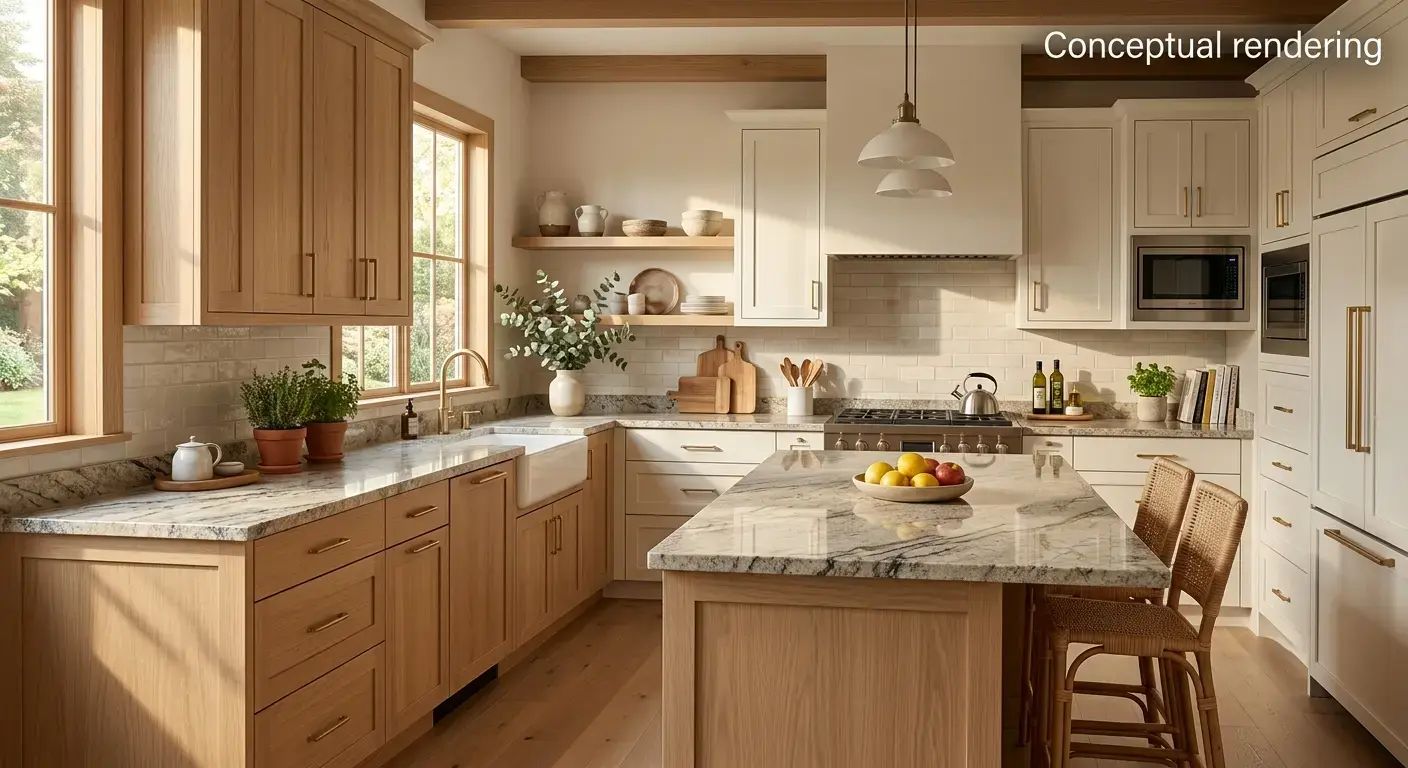
Natural Stone Slab Options That Cost Less Than the Premium Tier
Not all natural stone slab carries the same price point. Within the category itself, some materials are consistently more accessible than others, as outlined in this overview of stone countertop materials.
Granite. Granite remains one of the more widely available and moderately priced natural stone slab options, particularly in common color patterns that are quarried in higher volume. Granite holds up to daily kitchen use with scratch and heat resistance, and its per-square-foot cost is generally lower than rarer stone types with more distinctive veining.
Standard-pattern marble and travertine. Within marble and travertine slab, pricing varies significantly based on how distinctive the veining or color variation is. Slabs with more uniform coloring and less dramatic movement are typically priced lower than book-matched or heavily veined slabs, while still offering the visual characteristics that define these stone types.
Quartzite. Quartzite is a harder natural stone, with scratch and heat resistance that measures higher than granite's, though it typically carries a higher price point due to the way it is quarried and processed. Homeowners drawn to quartzite's appearance but working with a tighter budget often look at standard-pattern slabs within the quartzite category, which tend to be priced lower than slabs with dramatic movement or unusual coloring.
Remnants and smaller-format applications. Buying a full slab is not the only path to natural stone in a starter home. Remnant pieces, which are the leftover sections from larger slab cuts, can be well suited to smaller countertop areas like a bathroom vanity or a kitchen island, often at a reduced cost compared to purchasing a full slab for a small application. You can browse current options through our live slab inventory to see what's available at any given time.
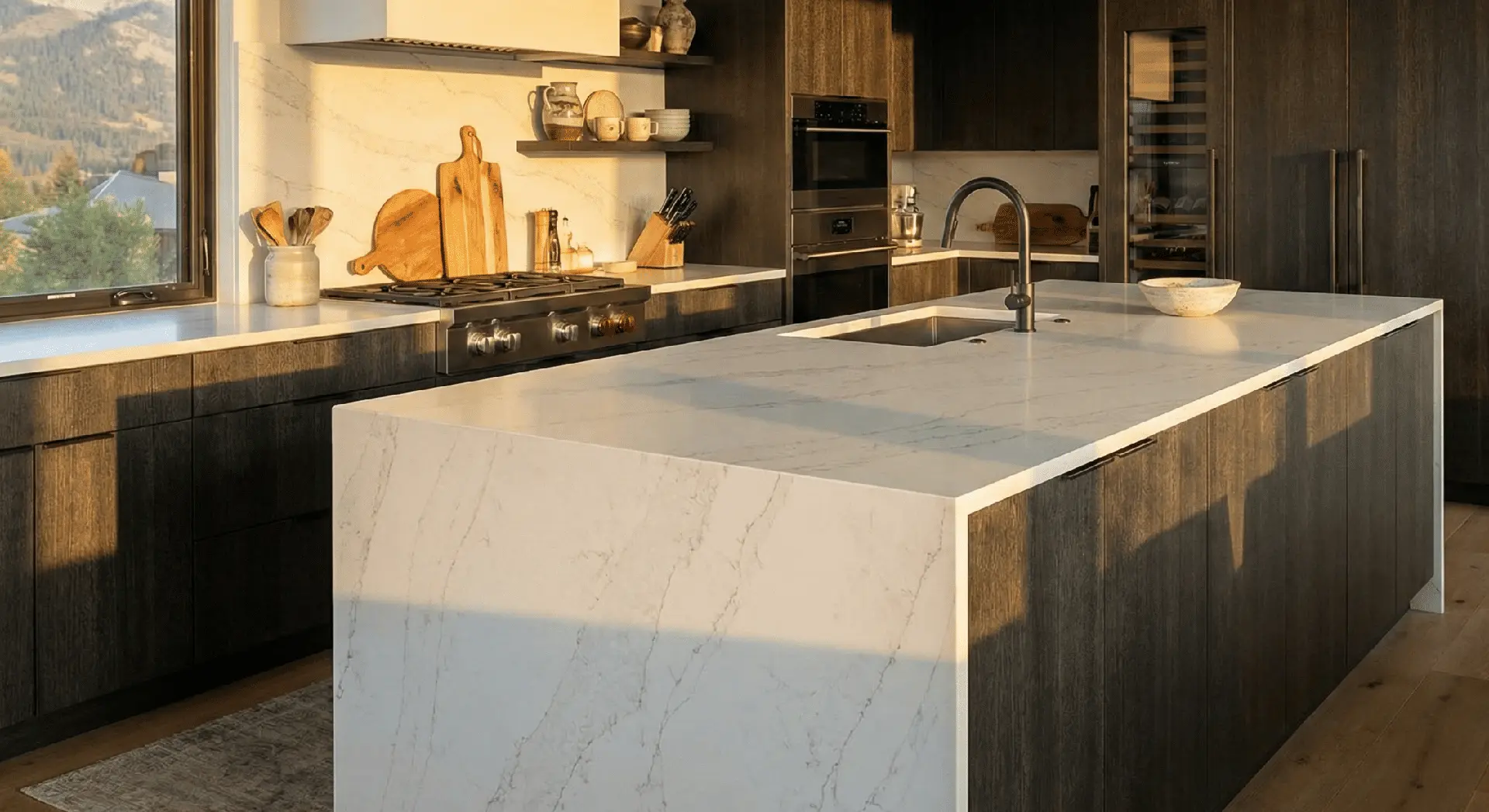
Porcelain Slab as a Stone-Look Alternative
When natural stone slab itself does not fit the budget, porcelain slab has become a common substitute for achieving a similar visual effect.
How porcelain slab replicates the look. Large-format porcelain slabs are manufactured with printed or layered patterns designed to replicate the veining of marble, the speckled texture of granite, or the layered look of quartzite. Because porcelain is manufactured rather than quarried, it is generally available at a lower cost than the natural stone it is designed to resemble, while holding up to daily kitchen counter use in a comparable way.
Where porcelain and natural stone slab differ. Porcelain does not require the periodic sealing that some natural stone types call for, which can be a practical consideration for a first-time homeowner managing a new maintenance routine. On the other hand, natural stone has the color and veining variation that comes from being a quarried material, meaning no two slabs are identical, while porcelain patterns repeat across manufactured runs. Deciding between the two often comes down to whether that natural variation matters to the homeowner or whether a consistent, repeatable pattern is preferable.
Color and pattern selection. Both natural stone and porcelain slab are available in a range of tones, from warm neutrals to cooler grays and whites, giving homeowners flexibility to match existing cabinetry or flooring regardless of which material they choose. Since porcelain patterns are printed rather than naturally occurring, some homeowners find it easier to select a specific look and know that the pattern will read consistently across the full slab.
Edge Profiles and Slab Size Can Also Affect Cost
Beyond the base material choice, a few additional selections can influence the overall cost of a countertop project, as this natural stone countertop guide explains in more detail.
Edge profile. A simple, straight edge is typically the most cost-effective option, while more elaborate edge profiles add to the overall material and labor involved in finishing the countertop. For a starter-home budget, choosing a straightforward edge on a pricier slab is often a more effective use of funds than a more elaborate edge on a less expensive material.
Slab size and layout efficiency. Countertop layouts that use standard slab dimensions efficiently tend to generate less waste than layouts requiring multiple seams or unusual cuts. Homeowners working with a kitchen designer or fabricator can ask how a given layout maps onto standard slab sizes, which can affect how much material needs to be purchased for the project. If you're working with a contractor or designer on a project like this, our trade account program may also be worth mentioning to them.
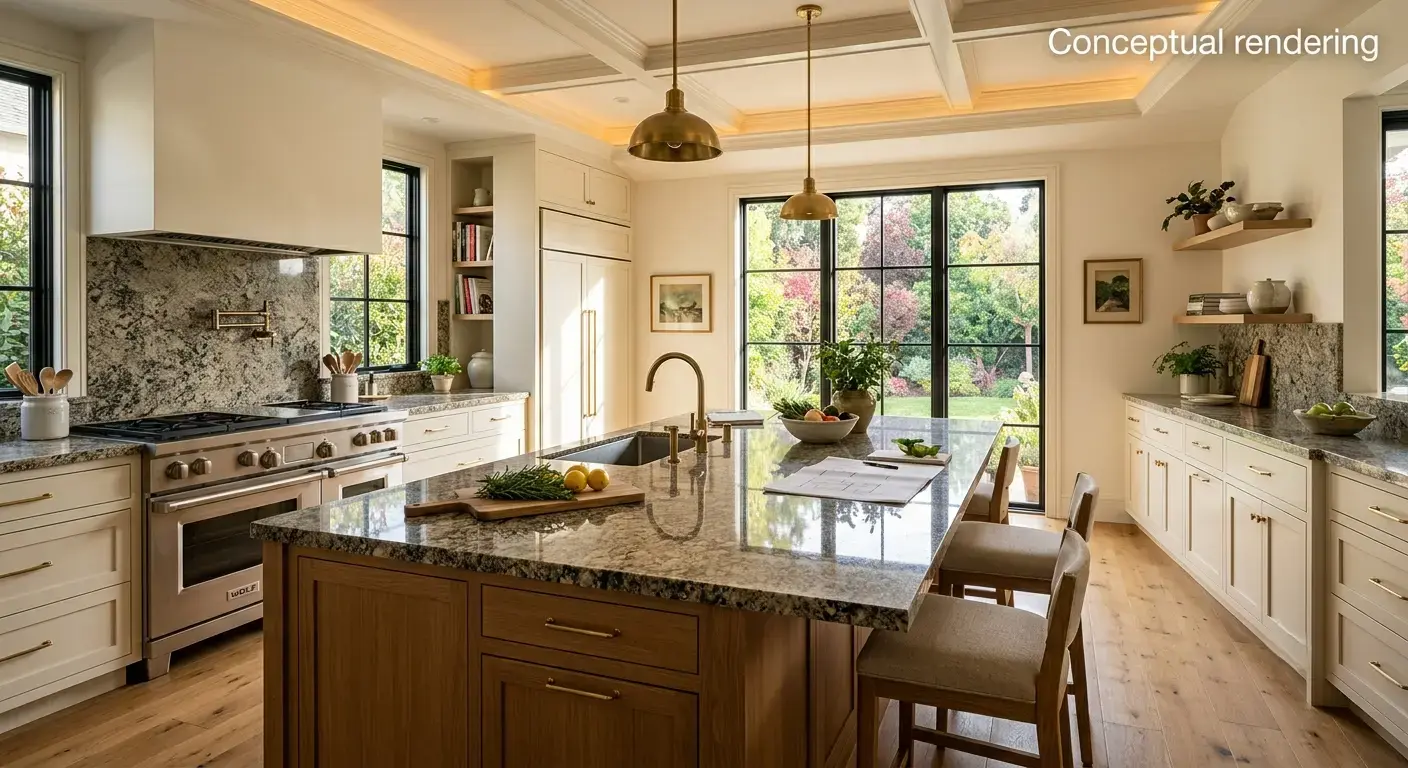
Applying These Options to a Rancho Cordova Starter Home
For buyers in Rancho Cordova's new construction communities, many builder-grade kitchens and bathrooms come with standard-tier countertop options that can be upgraded later rather than during the initial purchase. This gives homeowners the flexibility to move into the home first and phase in a natural stone or porcelain slab countertop as budget allows, rather than committing to an upgrade package at the builder's design center pricing.
For those purchasing an older home near Mather Field or along Folsom Boulevard, the existing countertops are often original to the home's construction era. In these cases, homeowners on a starter-home budget often prioritize which surface to update first, commonly starting with the kitchen countertop or a single bathroom vanity rather than replacing every slab surface in the home at once. Some homeowners also choose to address one side of a kitchen, such as an island, before moving on to perimeter counters in a later phase.
Viewing Slab Options in Person
Because slab material varies in color, veining, and pattern in ways that are difficult to judge from a photo, viewing the actual slab in person is the most reliable way to evaluate it before purchasing. Our showroom carries a range of natural stone and porcelain slab options, and our team can walk through pricing tiers and pattern differences side by side so homeowners can compare a lower-cost granite against a porcelain slab alternative, for example, before making a decision. Seeing a full slab also makes it easier to picture how veining or pattern will be positioned across a specific countertop layout, rather than judging the material from a small cut sample alone. Once you've found a slab you're interested in, you can request a quote directly.
Balancing Cost and Long-Term Plans
For a starter home, it is worth considering how long the current countertop is expected to last before a future renovation. A homeowner planning to stay in the home for many years may weigh the upfront cost of natural stone slab differently than someone who expects to sell within a few years and wants a cost-effective option that still presents well to future buyers. Porcelain slab tends to offer a middle ground in this scenario, providing a stone-look finish without the highest price point in either category.
Combining materials is another way to manage cost. Some homeowners choose natural stone slab for a smaller, highly visible area, such as a kitchen island, while using a more budget-friendly granite or porcelain slab in a lower-visibility area like a secondary bathroom vanity. This approach concentrates the natural stone budget where it has the most visual impact, while still keeping the rest of the home's surfaces consistent in appearance.
Conclusion
Getting the look of natural stone on a Rancho Cordova starter-home budget comes down to understanding the full range of slab options available, from more accessible natural stone types like granite and standard-pattern marble to porcelain slab alternatives that replicate the appearance of stone at a lower cost. Additional choices, such as edge profile and slab layout, offer further ways to manage overall project cost without changing the base material. Whether a homeowner is working with a builder-grade new construction kitchen or updating an older home near Folsom Boulevard, there are ways to bring natural stone character into the space without exceeding a starter-home budget.
If you are weighing natural stone against porcelain slab for your Rancho Cordova home, our showroom at 6100 Warehouse Way in Sacramento carries both categories side by side, and our team can walk through pricing and appearance differences based on your specific project. Feel free to call us at (916) 913-6682, or book a free design consultation to ask about current inventory or schedule a visit.
Note: Some images on this page may be conceptual renderings created to illustrate design possibilities and may not depict actual installations.
Frequently Asked Questions
Granite is generally one of the more accessible natural stone slab options, particularly in common color patterns, and it offers scratch and heat resistance suited to daily kitchen use.
Because porcelain is manufactured rather than quarried, it is typically priced lower than the natural stone types it is designed to resemble, while holding up to countertop use in a comparable way.
No. Porcelain does not require the periodic sealing that some natural stone types call for, which can simplify long-term maintenance.
Yes. Our showroom carries a range of natural stone and porcelain slab options, and our team can walk through pricing and pattern differences with you in person before you make a decision.
This depends on your budget and timeline. Many homeowners on a starter-home budget choose to prioritize one high-visibility slab, such as a kitchen countertop, and phase in additional updates over time.