Backyard Retreat Ideas for Fernley Outdoor Living, Nevada
Fernley outdoor living spaces come together best when fire pits and seating areas use stone built for Nevada's sun and wide temperature swings. Granite, quartzite, and porcelain resist UV exposure and hold up to full-sun patios, while travertine works well in shaded corners near a covered patio. Pairing a stone fire pit surround with matching stone seating creates a cohesive look that ties a backyard together.
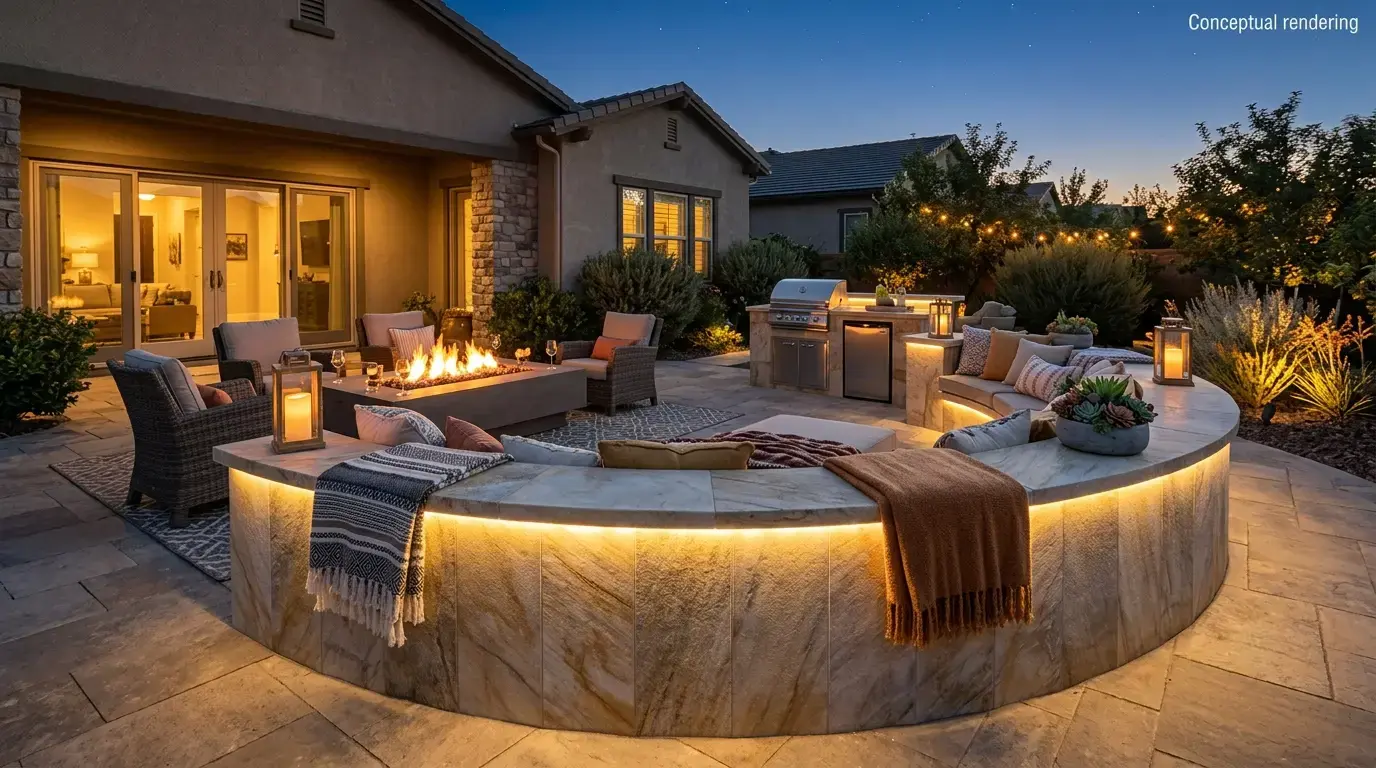
Homeowners across Fernley outdoor spaces often start with the fire pit, since it usually sets the tone for the surrounding seating layout. A raised stone hearth paired with low bench seating keeps sightlines open across the yard. Matching the fire pit surround to nearby patio flooring or an accent wall creates visual continuity from one end of the space to the other.
Nevada's dry climate and wide seasonal temperature swings mean material choice matters as much as layout, since stone options vary in how they handle heat, moisture, and sun exposure over time. Comparing stone and tile surface options side by side early in the planning process makes later decisions about finish and color much easier.
Benefits of Natural Stone and Porcelain for Backyard Fire Pits
Stone brings several advantages to a backyard fire pit and seating area beyond good looks. Granite, quartzite, and porcelain each offer strong resistance to sun fading and daily wear, though proper care still preserves their appearance over time. Selecting the right material depends on sun exposure, expected foot traffic, and desired finish.
- UV-stable options like granite, quartzite, and porcelain hold their color in full sun, though years of exposure and skipped maintenance can still dull a finish over time.
- Honed or leathered textures reduce slipperiness around fire pit seating compared to polished surfaces, a helpful detail for evening gatherings.
- Heat-tolerant stone surrounds handle radiant warmth from a fire pit well, though direct flame contact and rapid temperature swings can still cause damage, so a buffer zone is recommended.
- Low-maintenance surfaces simplify outdoor upkeep, though spills should be cleaned promptly and abrasive cleaners avoided to protect the finish.
- Cohesive material choices across stone slab options and tile let a fire pit, seating wall, and patio floor share one design language.
Classic, neutral color palettes tend to age well outdoors, since they pair easily with warm-toned cushions or cooler accent lighting without looking dated after a season or two. For more on choosing tones that last, this classic color guide covers palettes that continue to hold up over time.
Stone Comparison for Outdoor Fire Pits and Seating
| Material | Full-Sun Suitability | Common Finish for Seating | Maintenance Note |
Granite | Yes, UV-stable | Honed or leathered | Periodic sealing helps resist staining |
Quartzite | Yes, UV-stable | Honed or leathered | Naturally durable, still needs routine cleaning |
Porcelain | Yes, UV-stable | Textured or matte | Check product specs before exposed outdoor use |
Travertine | Shaded areas only | Honed | Avoid full sun and acidic cleaners |
Marble and dolomite follow the same shaded-only outdoor guidance as travertine and are not rated for full-sun patio exposure.
Pros and Cons of Stone Fire Pits and Seating
Pros:
- Withstands sun, wind, and temperature swings better than many alternative materials, with proper care
- Offers wide natural veining and color variation for a distinctive look
- Coordinates across fire pit, seating, and flooring for a unified design
Cons:
- Natural stone needs periodic sealing to maintain stain resistance
- Polished finishes can be slippery when wet or covered in dew
- Large slab pieces add significant weight, which should factor into overall patio design planning
Patio Designs, Exterior Wall and Floor Designs for Fire Pit Areas
Exterior wall and floor designs around a fire pit benefit from consistent material choices across vertical and horizontal surfaces, so a seating wall and the ground beneath it feel like one composition rather than two unrelated projects.
Fire Pit Surrounds
A fire pit surround sees more direct heat than almost any other outdoor stone application, so material choice matters. Granite and quartzite tolerate radiant heat well, though a buffer of a few inches between stone and open flame is recommended since heat-resistant does not mean immune to thermal shock. Leathered or honed finishes add texture that hides ash and soot better than a polished surface. Homeowners visiting the Reno showroom can compare finish samples side by side before settling on a surround material.
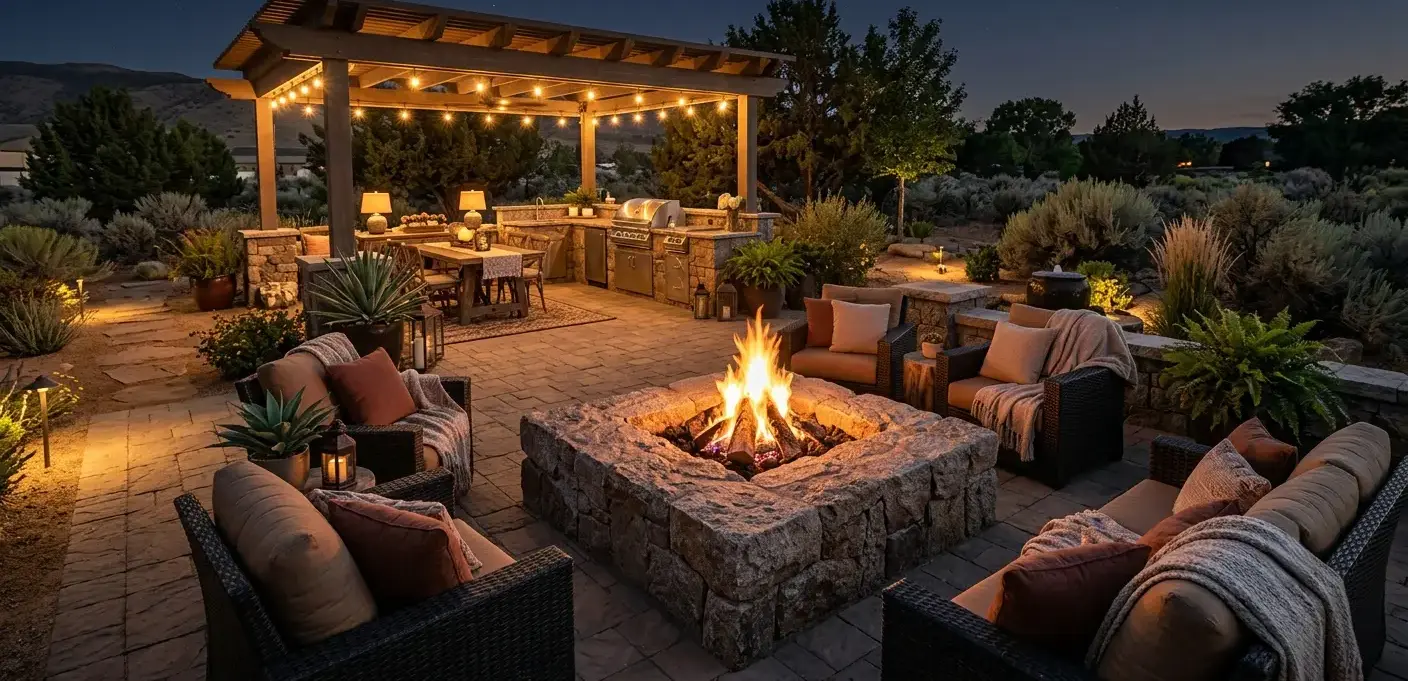 Conceptual rendering
Built-In Stone Seating
Bench seating built from matching or complementary stone ties a fire pit area together visually. Wider, low benches encourage lounging, while narrower ledges work well for smaller patios. Because seating surfaces get direct skin contact, a honed finish feels more comfortable than a cold polished slab during cooler Fernley evenings. Pairing seating stone with the fire pit surround, rather than mixing unrelated materials, keeps the design intentional instead of accidental.
Patio Flooring and Walkways
Patio flooring around a fire pit takes steady foot traffic, spilled drinks, and sun exposure all at once. Porcelain pavers offer a consistent look with fewer natural variations than quarried stone, which suits homeowners who prefer a uniform pattern. Textured finishes reduce slipperiness better than polished tile on outdoor walkways, an important consideration near a fire pit where guests move around seating in low light. Visiting the Minden showroom lets homeowners feel finish textures underfoot before choosing a paver.
Exterior Accent Walls
An accent wall behind a fire pit or seating area adds height and a focal point without competing with the ground-level stone. Ledger stone or large-format slab panels both work, depending on desired texture and scale. Color trends shift from year to year, and a recent design roundup on 2026 palettes shows how warm neutrals continue gaining ground both indoors and out. Choosing a wall material that echoes tones already used in the patio flooring keeps the space from feeling disjointed.
5 Steps to Plan a Fernley Fire Pit and Seating Area
- Assess sun exposure across the yard throughout the day before choosing a material.
- Choose a fire pit surround material that matches the heat and light exposure identified.
- Select seating stone that complements or matches the surround material.
- Plan patio flooring, choosing between natural stone or porcelain pavers based on desired uniformity.
- Confirm colors and finishes with physical samples before finalizing choices across all surfaces.
Free Tile Samples and Expert Guidance from Nova Tile and Stone
Choosing stone for a Fernley outdoor living project involves comparing finishes, colors, and application notes side by side, and Nova Tile and Stone's team can help narrow the options. The Sacramento showroom carries an expanded selection of slab and tile finishes for homeowners who want to see larger format pieces in person.
Tile samples ship free, which makes it easier to test color and texture against existing patio furniture or landscaping before committing to a full project. Homeowners can also reach out to Nova's design team with questions about UV-stable options for full-sun fire pit surrounds versus shaded-area choices like travertine.
Working with a shop local Nevada supplier means faster access to restocks and finish samples compared to ordering sight unseen online. Industry coverage of surface technology, including this flooring innovation update, shows how the category keeps evolving, though proven, well-understood materials remain a reliable choice for outdoor applications.
A short visit to a nearby showroom, paired with a few free tile samples, takes most of the guesswork out of choosing stone for a Fernley outdoor living project.
Conclusion
Fernley outdoor living spaces designed around stone fire pits and coordinated seating areas create a backyard destination that works beautifully for cool evenings and warm afternoons alike. Choosing the right material is key: UV‑stable granite resists fading under direct sun, while travertine performs well in shaded patios with its softer tones. These selections influence both the overall look and the long‑term maintenance required. Browse the complete stone collection to compare finishes side by side and request free tile samples to guide your project.
Frequently Asked Questions
Granite, quartzite, and porcelain are UV-stable and hold up well in full-sun locations. Travertine, marble, and dolomite are better suited to shaded seating areas rather than direct, all-day sun exposure.
Polished finishes can become slippery when wet or covered in dew, so honed or leathered textures are generally a more practical choice for outdoor seating and walkways.
Heat-resistant stone still is not immune to thermal shock, so leaving a buffer between the surround and direct flame helps protect the material over time.
Prompt cleanup of spills and avoiding abrasive cleaners helps preserve a stone or porcelain finish, since harsh chemicals and gritty pads can dull the surface over time.
Tile samples ship free, which makes it easy to compare colors and textures against existing patio furniture before choosing a fire pit and seating material.