A Fernley Interior Design Guide for pairing stone with lighting starts with one idea: the same slab or tile can look completely different under warm, cool or natural light. Polished granite reflects overhead fixtures and daylight, honed marble softens glare, and leathered quartzite adds texture that catches shadow rather than shine. Choosing the right finish alongside a lighting plan helps a kitchen, living room or bathroom feel cohesive rather than mismatched.
Fernley homeowners often start a remodel with paint colors or cabinetry, then add lighting last. Flipping that order, by picking stone finish and light temperature together, tends to produce a more balanced result. Warm-toned bulbs bring out beige and gold veining in travertine or dolomite, while cooler LED fixtures suit the crisp gray tones common in quartz and porcelain. This guide covers the benefits of planning stone and lighting together, room-by-room application ideas, and a short step-by-step approach for narrowing down finishes before a showroom visit.
Benefits of Matching Stone Finishes to a Lighting Plan
Planning stone finish and lighting at the same time offers a few practical advantages beyond appearance. Reflectivity, color rendering and even room temperature perception all shift depending on how light interacts with a polished, honed or leathered surface. The stone slab options available through Nova span a range of finishes suited to different lighting styles, from bright polished granite to matte honed quartzite.
- Polished finishes bounce more light around a room, which can help brighten a kitchen with limited windows, though they also show fingerprints and smudges more readily.
- Honed finishes diffuse light softly, useful for bathrooms with warm vanity bulbs, but they may show etching from acidic spills over time if left uncleaned.
- Leathered textures add depth under angled or accent lighting, though the texture can trap dust in busier households.
- Cooler LED lighting tends to emphasize the gray and white veining common in quartz and porcelain, but color rendering still varies by bulb quality.
- Warmer bulbs bring out gold, beige and rust tones in travertine or dolomite, though direct sun exposure is not recommended for these materials.
- Large-format slabs reduce visible seams under raking light from wall sconces, though careful handling of full slabs is still advised.
Natural Stone vs. Porcelain for Light-Reflective Design
Pros of natural stone:
- Unique veining creates one-of-a-kind light play across a surface.
- A range of finishes, including polished, honed and leathered, allows fine control over reflectivity.
Cons of natural stone:
- Requires periodic sealing to help maintain consistent light reflection over time.
- Polished finishes can be slipperier when wet, so they suit lower-moisture areas better than wet floors.
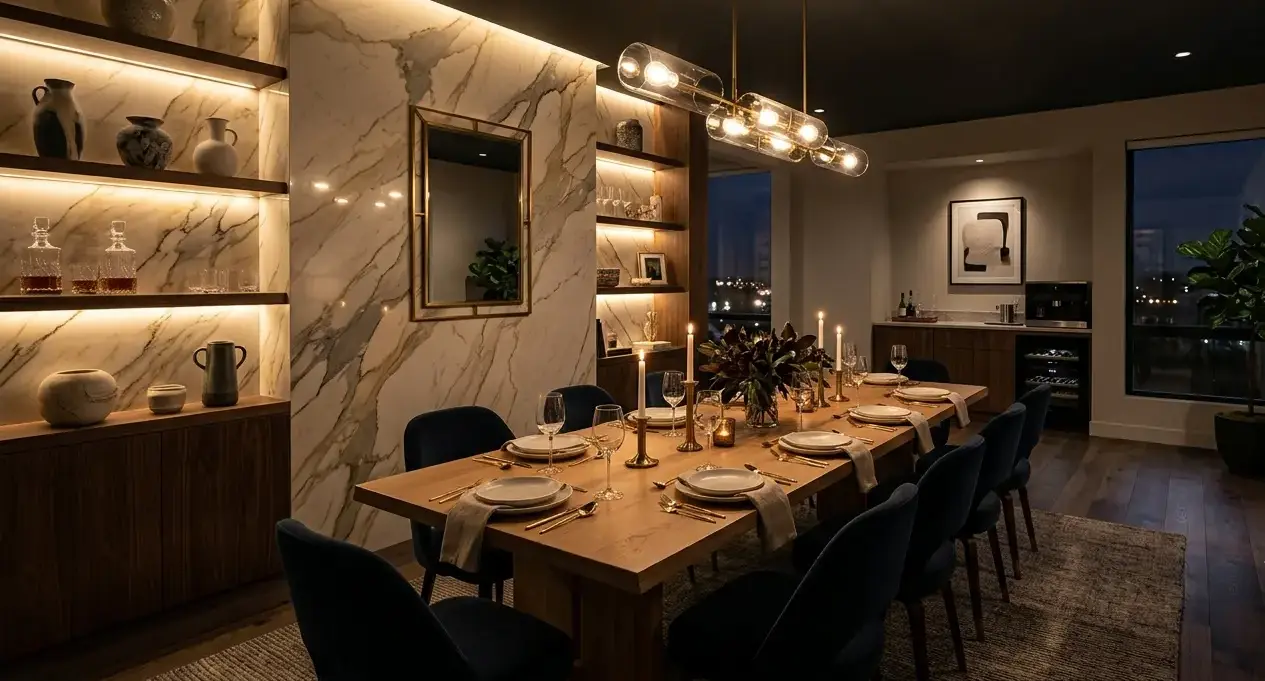 Conceptual rendering
Pros of porcelain:
- Consistent color and finish across every slab or tile, useful for predictable lighting outcomes. Porcelain that meets porcelain certification standards offers additional confidence in performance.
- A wide range of finishes replicate the look of natural stone under most lighting conditions.
Cons of porcelain:
- Fewer specialty finish options compared to natural stone.
- Large-format porcelain slabs still benefit from careful handling due to weight and size.
Designing Kitchens, Living Rooms and Bathrooms With Stone and Light
Each room in a Fernley home calls for a different balance of stone finish and light source. Kitchens benefit from task lighting over work surfaces, living rooms lean on ambient and accent fixtures, and bathrooms depend on vanity lighting that renders skin tones and stone color accurately. The sections below break down finish and lighting pairings by room.
Kitchen Lighting and Countertops
Kitchen islands and countertops sit directly under pendant or recessed lighting, so finish choice matters. Polished granite or quartz countertops reflect that overhead light and can make a smaller kitchen feel brighter, though matte or honed surfaces reduce glare for households that prefer a softer look. Cooler LED bulbs, typically above 4000K, tend to render gray and white veining more accurately than warm bulbs. For general reference on industry care and handling standards, the TCAA resource is available to homeowners researching finish options on their own.
Backsplash tile adds another layer, since vertical surfaces catch light differently than horizontal countertops. A glossy porcelain backsplash under warm undercabinet lighting can visually connect with a honed stone countertop below it, provided the tones share a similar undertone. Traffic-rated flooring near a kitchen should match PEI ratings suited to residential floor use, since not every decorative tile is rated for that level of daily wear.
Living Room Stone Features
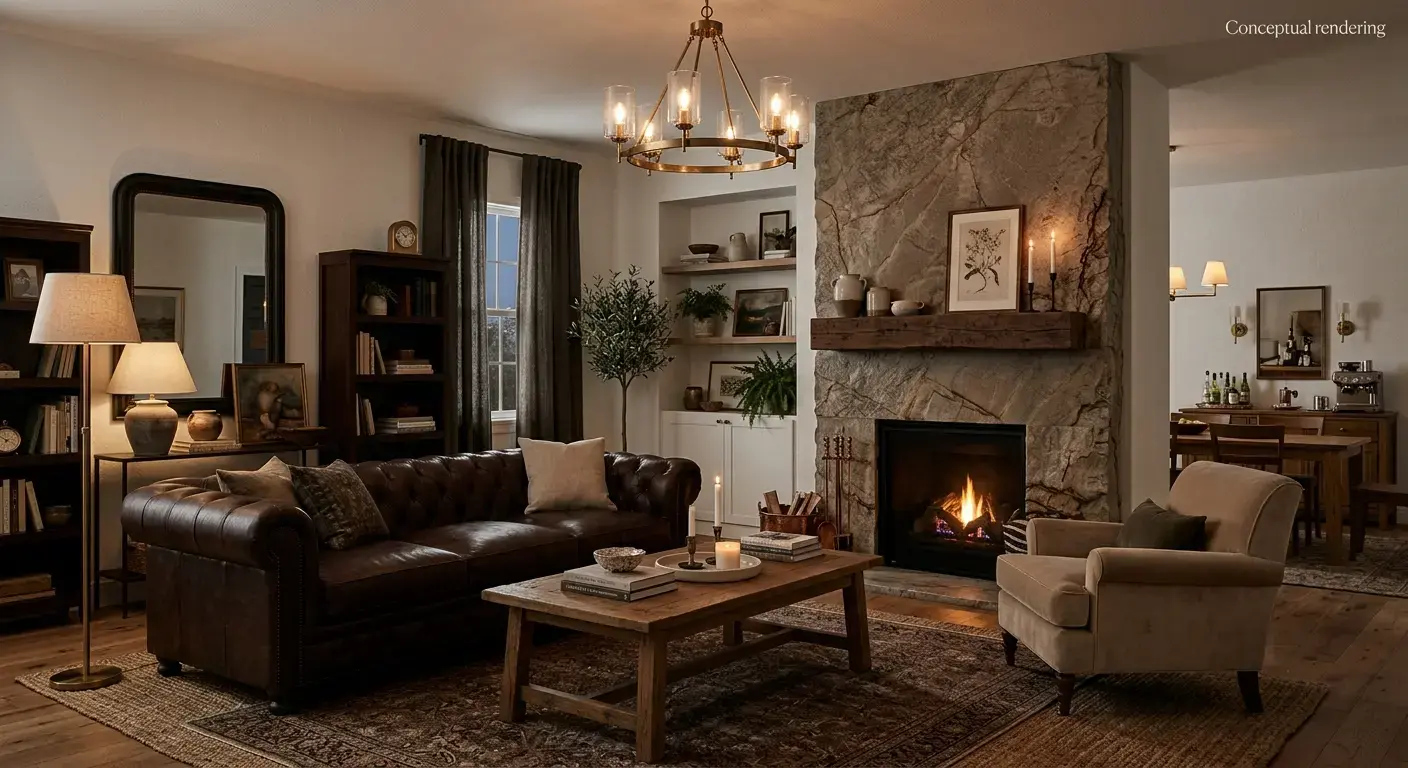
Fireplace surrounds, accent walls and hearths are common living room applications for slab and tile. Leathered granite or quartzite catches shadow and texture nicely under angled floor lamps or wall sconces, adding depth that flat light from a single overhead fixture cannot achieve on its own. According to recent 2026 design trends, warmer, textured natural materials remain popular in living spaces this year.
Marble or dolomite accent walls stay indoors or move to shaded outdoor seating areas, since these materials are not UV-classed for full-sun exposure. Layering ambient ceiling light with a lower accent lamp near the stone feature tends to highlight veining without washing out the surface in flat, even light.
Bathroom Vanities and Ambient Light
Bathroom vanities depend heavily on lighting placed at face height rather than overhead, since accurate color rendering matters for both stone tone and everyday grooming tasks. Honed or matte quartz and granite countertops tend to feel less slick underfoot and on wet vanity surfaces than high-polish finishes, which many Fernley homeowners factor into bathroom floor decisions.
Shower walls and floors call for finishes suited to consistent moisture exposure, and porcelain or granite remain common choices for those areas. The shop local program makes it easier to compare a few finish and lighting combinations side by side before settling on a final plan.
FINISH | LIGHT REFLECTIVITY | BEST LIGHTING STYLE | COMMON ROOMS |
Polished | High | Bright, even overhead light | Kitchen countertops, living room floors |
Honed | Medium | Soft ambient or vanity lighting | Bathroom vanities, kitchen floors |
Leathered | Low, textured | Angled accent or floor lamps | Living room features, fireplace surrounds |
Specialty | Varies by piece | Accent lighting to highlight texture | Wall features, decorative accents |
Stone Finish vs. Lighting Effect
How to Choose a Stone Finish for a Lighting Style
- Identify the room's main light source, whether natural window light, overhead fixtures or lamps, before choosing a finish.
- Match reflectivity to the room's brightness needs: polished for lighter rooms, honed or leathered for softer results.
- Check color temperature. Warm bulbs suit travertine and dolomite tones, while cooler LEDs suit quartz and porcelain.
- Confirm application suitability, since not every stone finish or tile rating supports outdoor, wet or heavy-traffic areas.
- Compare physical samples under the room's actual lighting before finalizing a decision.
Nova Tile and Stone: Fernley Interior Design Guide Projects
Homeowners working through a Fernley Interior Design Guide project often want to see finishes in person rather than relying on photos alone, since lighting changes so much about how stone reads in a room. Nova Tile and Stone stocks granite, quartz, porcelain and specialty finishes across regional showrooms, with staff available to walk through finish and lighting pairings for kitchens, living rooms and bathrooms.
Nova's Fernley showroom offers the closest access to slab and tile samples for local homeowners. The Reno showroom provides additional inventory for larger remodeling projects. Homeowners near Minden can also explore finishes in person. The Sacramento location extends that same design guidance further into Northern California.
Learn more about the Nova team and its approach to stone and tile selection. Tile samples ship free to Fernley-area addresses, making it simple to test a finish under existing kitchen or bathroom lighting before committing to a larger order.
A short conversation with Nova's design team can narrow down finish and lighting choices faster than browsing alone.
Conclusion
A Fernley Interior Design Guide works best when stone finish and lighting style are chosen together rather than treated as separate steps. Coordinating these elements ensures every space feels intentional and balanced. Whether the goal is a brighter kitchen with reflective polished granite, a textured fireplace wall highlighted by angled sconces, or a softly lit bathroom vanity with honed stone, matching finish to light source creates harmony. Visit the full showroom catalog to explore and compare finishes firsthand.
Frequently Asked Questions
Polished granite or quartz tends to reflect the most light in a kitchen, though honed finishes reduce glare and fingerprints for a softer look. The right choice depends on how much natural or overhead light the space already receives.
Yes, warm bulbs bring out gold and beige tones in travertine or dolomite, while cooler LED lighting emphasizes the gray and white veining common in quartz and porcelain. Testing samples under the room's actual bulbs is the most reliable way to check.
Leathered granite or quartzite works well for fireplace surrounds and accent walls, since the textured surface catches shadow nicely under angled lamps or sconces. Flat overhead lighting alone tends to flatten that texture.
Polished stone can be slipperier when wet, so many homeowners choose honed or matte finishes for bathroom floors and vanities instead. Reserving polished finishes for lower-moisture surfaces like accent walls is a common approach.
Natural stone offers unique veining and multiple finish options, while porcelain provides more consistent color and pattern across every piece. Comparing physical samples under a room's actual lighting helps narrow the decision either way.