Guide To Stone Color Palettes And Mood Setting For Fernley Homes
Choosing a stone color palette shapes how a room feels before a single piece of furniture arrives. This guide to stone color palettes walks Fernley homeowners through warm, cool, and neutral tones, how light changes their look, and where each palette performs best across interiors and exteriors. In short: warm palettes such as tan granite and gold-veined quartzite create cozy, inviting spaces, while cool grays and whites open up small rooms and pair well with modern fixtures. Neutral palettes offer the most flexibility for resale and long-term design changes.
Fernley's high desert light shifts throughout the day, so a stone surface that looks soft at sunrise can read brighter by afternoon. Testing a sample under actual room lighting, rather than showroom light alone, prevents surprises after a slab or tile order arrives. Local designers often start with a fixed element already in the home, such as flooring or cabinetry, then build the palette outward from there. This approach keeps color choices grounded rather than trend-driven, which matters most in rooms used daily like kitchens and primary bathrooms.
Benefits Of Choosing The Right Stone Color Palette
A well-planned stone color palette does more than match a paint swatch. It sets the pace of a room, softening a home office or energizing a kitchen gathering space.
Matching palette to purpose also protects long-term value. Neutral granite and quartzite tones tend to suit more buyers later, while bold veining works best as a focal accent rather than an entire kitchen surface.
- Warms a room instantly with tan, gold, or rust-toned granite and quartzite surfaces
- Cools and brightens tighter spaces using pale quartz or light gray stone surfaces
- Blends with existing cabinetry and flooring for a cohesive interiors floor design
- Adds resale flexibility when neutral tones anchor the main color choice, though buyer taste still shifts over time
- Extends from interiors to exteriors when the chosen material is rated for outdoor and UV exposure
Actual mood and color read vary by lighting, finish, and surrounding materials, so viewing a physical stone surface sample in the room is recommended before a final decision. Undertone testing matters most in north-facing rooms, where daylight stays cooler and can shift a warm palette toward gray.
Where Stone Color Palettes Work: Interiors, Kitchens, And Exteriors
Interiors Floor Designs
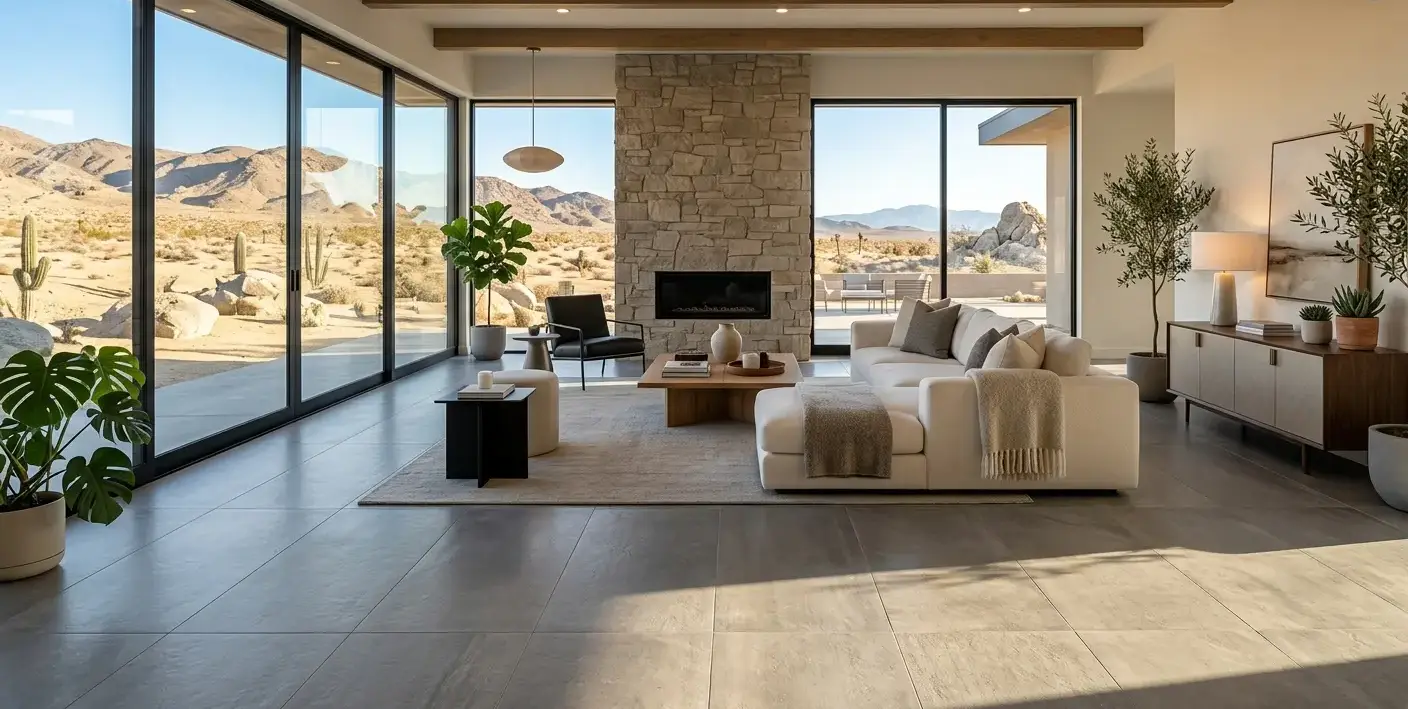
Floors carry more visual weight than almost any other stone surface because they anchor sightlines across an entire room. A light quartzite or honed marble floor stretches a compact hallway, while a deeper granite tone grounds an open-concept living area.
Grout and joint color also shift the palette's overall read. Matching grout close to the stone tone keeps a floor visually seamless, while contrasting grout highlights each tile's shape and pattern instead. Rooms with large window walls tend to show the most dramatic shift between morning and evening floor tones.
 Conceptual rendering
Kitchen And Bathroom Design
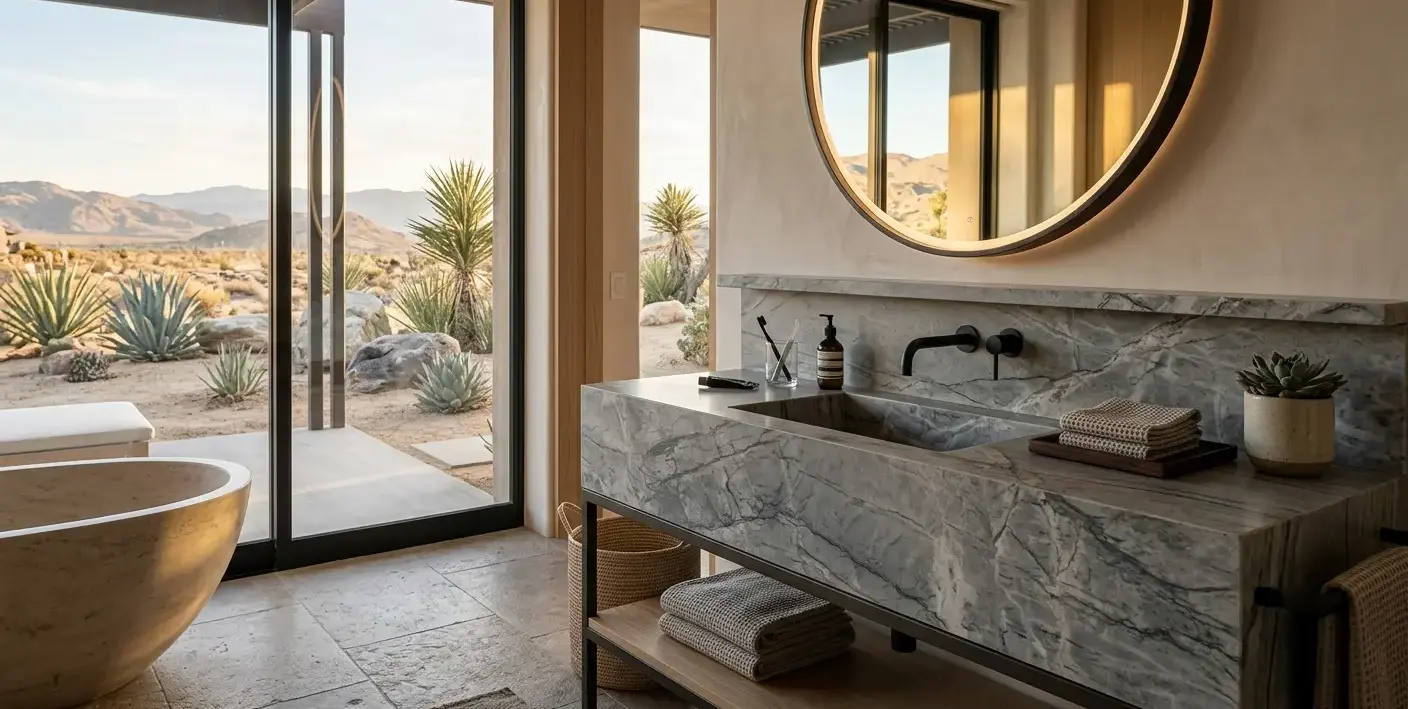
Kitchens and bathrooms see the widest range of stone color palette choices because countertops, backsplashes, and floors can each carry a different tone. Recent 2026 kitchen color trends point toward warmer neutrals paired with textured stone finishes.
Classic pairings still hold up well over time. A classic color schemes approach pairs cream or gray stone with warm wood tones for a look that resists rapid style turnover. Quartz slabs suit kitchen and bathroom design well, but they are intended for indoor floor, wall, and countertop use only, and undertones should always be checked against cabinetry samples in person.
 Conceptual rendering
 Conceptual rendering
Exteriors And Outdoor Stone Surfaces
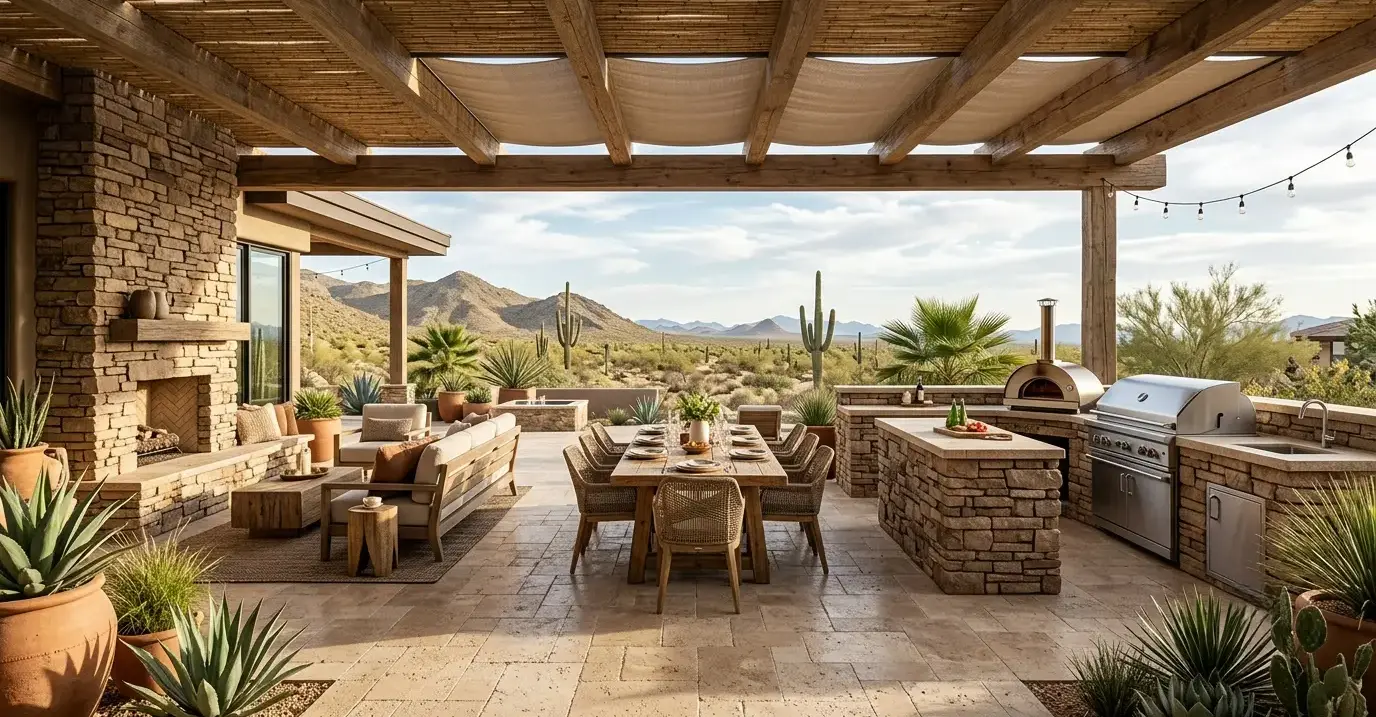
Outdoor palettes behave differently because sun exposure changes how color reads throughout the day. Granite, quartzite, and porcelain are UV-stable and hold their outdoor color across full sun, making them suited to patios, outdoor kitchens, and pool surrounds.
Marble, dolomite, and travertine bring warmer, softer palettes to shaded exteriors such as covered porches or north-facing walkways, but they are not UV-classed and should stay out of direct, all-day sun. The ANSI stone standards outline testing methods for slip resistance and durability that help guide these outdoor placement decisions.
Stone Color Palette Comparison
| ALETTE | MOOD CONVEYED | BEST ROOMS | RECOMMENDED FINISH |
Warm Neutrals (tan, gold, rust) | Cozy, inviting | Kitchens, family rooms | Honed or leathered |
Cool Grays & Whites | Airy, spacious | Bathrooms, small kitchens | Polished or honed |
Bold Veining, high contrast | Dramatic, statement-making | Kitchen islands, accent walls | Polished |
Earthy Outdoor Tones | Grounded, natural | Patios, outdoor kitchens | Leathered or textured specialty |
Advantages and Disadvantages Of A Bold, High-Contrast Stone Color Palette
Advantages
- Creates an immediate focal point in a kitchen or entryway
- Photographs well and stands out in interiors floor designs
- Pairs easily with simple, neutral cabinetry and wall color
Disadvantages
- Can feel overwhelming across large, continuous surfaces
- Limits future color changes to cabinetry, paint, and hardware
- Still needs cutting boards and trivets like any stone surface, since color choice does not change scratch or heat sensitivity
5 Steps To Plan A Stone Color Palette
- Assess natural light patterns in the room across morning and evening hours.
- Pull the palette from one fixed element already in place, such as existing flooring or cabinetry tone.
- Bring a physical stone surface sample into the room before finalizing a color.
- Balance warm and cool undertones with paint, hardware, and lighting choices.
- Confirm application suitability, especially for outdoor exteriors or heavy-use kitchen and bathroom design areas.
Nova Tile And Stone: Expert Guidance For Your Palette
Fernley homeowners can view stone color palette options in person at showroom locations across the region. The Fernley showroom displays a rotating selection of granite, quartzite, and marble slabs suited to the area's high desert light.
Additional palette options are available at the Reno showroom. The Minden showroom carries a similar range of neutral and bold palettes. Homeowners near the capital region can visit the Sacramento showroom for the same guidance. Every location carries stone slab options suited to interiors floor designs and kitchen and bathroom design projects. Current in-stock palettes can be confirmed through the shop local listings before a visit. Background on Nova's design approach is available on the company background page.
A stone color palette delivers the best results when tested directly against real cabinetry, flooring, and lighting rather than relying on a screen or brochure. Fernley homeowners considering warm, cool, or neutral tones benefit from bringing room photos or fixed‑element samples to a showroom visit. This hands‑on approach allows Nova’s design team to provide tailored guidance, narrowing choices efficiently and ensuring the selected palette harmonizes with existing features before a full slab order is placed.
Conclusion
This guide to stone color palettes illustrates how tone, light, and finish interact to shape the overall look of Fernley kitchens, bathrooms, floors, and exterior spaces. Warm, cool, and neutral palettes each bring distinct character, with certain shades working better under specific lighting conditions or room functions. Because natural and engineered stones can shift appearance depending on placement, testing samples in the actual space remains the most reliable step. Homeowners are encouraged to browse full stone collections, compare palette options side by side, and select confidently before beginning a project.
Frequently Asked Questions
Light, cool-toned quartz or honed quartzite generally reads larger in a small kitchen. Pairing pale countertops with a similar-toned backsplash keeps sightlines open, though final results still depend on room lighting and cabinet color.
Cool tones like pale gray or white typically make a room feel more open, while warm tones like tan or gold add coziness but can visually shrink a space. Testing a sample under real lighting confirms the effect before ordering.
Only if the material is rated for outdoor use. Granite, quartzite, and porcelain hold color in full sun, while marble and travertine are better suited to shaded exteriors rather than direct, all-day sunlight.
Start with the cabinet's existing undertone, warm or cool, then choose a stone surface that shares or intentionally contrasts that undertone. Bringing a cabinet sample or photo to a showroom visit makes comparison easier.
Lighter stone can show certain stains more visibly than darker tones, though sealing and prompt cleanup matter more than color alone. Abrasive cleaners should be avoided regardless of the palette chosen.