Budgeting For Stone And Tile Projects: Where To Start
Budgeting for stone and tile projects starts with priorities, not guesswork. Homeowners planning a kitchen, living room, or bathroom design typically decide which rooms matter most, then match material options to that plan. A steady budgeting approach weighs material tier, surface durability, and long-term care together, so the final choice supports both the design vision and daily life in a Fernley home.
Interior designs succeed when planning happens before any material gets chosen. Comparing one stone and tile surface against another means looking past appearance alone. Texture, finish, and maintenance expectations shape how a space feels years later, not only how it looks on the day a project wraps up.
Homes across the wider Fernley showroom service area vary widely in layout, sunlight exposure, and room usage, so no single material fits every situation in a typical household. A kitchen with heavy daily traffic has different needs than a quiet guest bathroom or an occasional-use accent wall.
This guide breaks budgeting into practical steps, covering material categories, side-by-side comparisons, and a simple planning sequence homeowners can follow for any room in the house, whether the project touches one space or several.
Interiors designs rarely happen all at once. Many households tackle one room this year and another the next, which means a budgeting framework needs to hold up across separate phases rather than existing as a single one-time decision made in isolation.
Thinking in terms of categories, rather than individual products, also makes comparison shopping simpler across an entire renovation. Once a homeowner understands how granite differs from quartz or porcelain from marble, applying that knowledge to a kitchen, living room, or bathroom design becomes far more straightforward.
Smart Benefits Of A Clear Materials Budget
A defined budgeting approach brings order to a project that otherwise involves dozens of small decisions made under time pressure. Homeowners who compare options early tend to feel more confident about their final stone and tile surface choices later on.
- Clarifies which rooms receive premium surfaces first
- Reduces decision fatigue when comparing similar looking materials
- Supports realistic timelines for multi-room interiors designs
- Encourages requesting samples before committing to any look
- Keeps design goals aligned with maintenance expectations long term
Working through priorities early also helps prevent a common pattern, where the first room chosen absorbs most of the planning attention, leaving later rooms with mismatched finishes or rushed decisions near the end of a project.
A written budgeting checklist, even a fairly simple one, keeps comparisons consistent across every room and prevents small preferences from quietly overriding the original plan halfway through a longer project.
Porcelain options carry consistent manufacturing standards, including porcelain tile certification benchmarks that help homeowners understand what a given tile is built for. Reviewing these standards alongside a budgeting plan gives kitchen, living room, and bathroom design decisions a stronger foundation.
Durable materials still need proper daily care to preserve their appearance over time. A budgeting plan that accounts for ongoing maintenance, not only the initial selection, tends to hold up better against changing expectations down the road.
A clear budget also makes it easier to say no to options that look appealing in isolation but do not fit the room's real conditions. Full-sun patios, humid bathrooms, and high-traffic kitchens each rule out certain materials regardless of style preference.
Applications And Design: Matching Materials To Each Room
Every room places different demands on a stone and tile surface, so budgeting benefits from thinking room by room rather than treating a whole home as one single project with one single answer.
Style preferences also shift from room to room. A kitchen might call for a clean, low-maintenance look built for constant daily use, while a bathroom or accent wall can lean into a more dramatic finish since daily wear and general foot traffic are both lighter in those smaller spaces.
Kitchen Design
Kitchen counters and backsplashes see daily wear, spills, and heat exposure, so material choice matters as much as style in this part of an interiors design plan. Homeowners can explore slab options to compare granite, quartz, and other surfaces before settling on a direction for the room.
Granite handles indoor and full-sun outdoor kitchen settings well, making it a flexible choice for homes with a covered patio or outdoor cooking area. Quartz, by contrast, stays suited to indoor counters only and should not be planned for exterior kitchen spaces.
Reviewing ANSI tile standards helps homeowners understand tile performance categories when floor tile is part of the kitchen plan, particularly in busy households where flooring sees constant foot traffic throughout the day.
Backsplash decisions often get the least budgeting attention despite covering a highly visible wall area. Pairing a durable countertop with a complementary tile backsplash rounds out a kitchen design without requiring a second major material decision later.
Living Room Design
Living room flooring often anchors the rest of an interiors design plan, since the material sets the tone for adjoining spaces like entryways and hallways. Larger format tile or stone can make a room feel more expansive without changing the footprint of the space itself.
Homeowners comparing textures and finishes in person can visit the Reno showroom to see samples under natural light, which often looks noticeably different than under indoor lighting alone. Seeing a stone and tile surface firsthand often changes which option feels right for a living space.
Budgeting for living room surfaces also means considering how the flooring will read against existing furniture, wall color, and natural light throughout the day, since these factors shift how any given finish appears.
Open-concept homes add another layer to living room budgeting, since flooring often carries visually into a kitchen or dining area. Choosing one consistent material across connected spaces simplifies both the design plan and the comparison process.
Bathroom Design
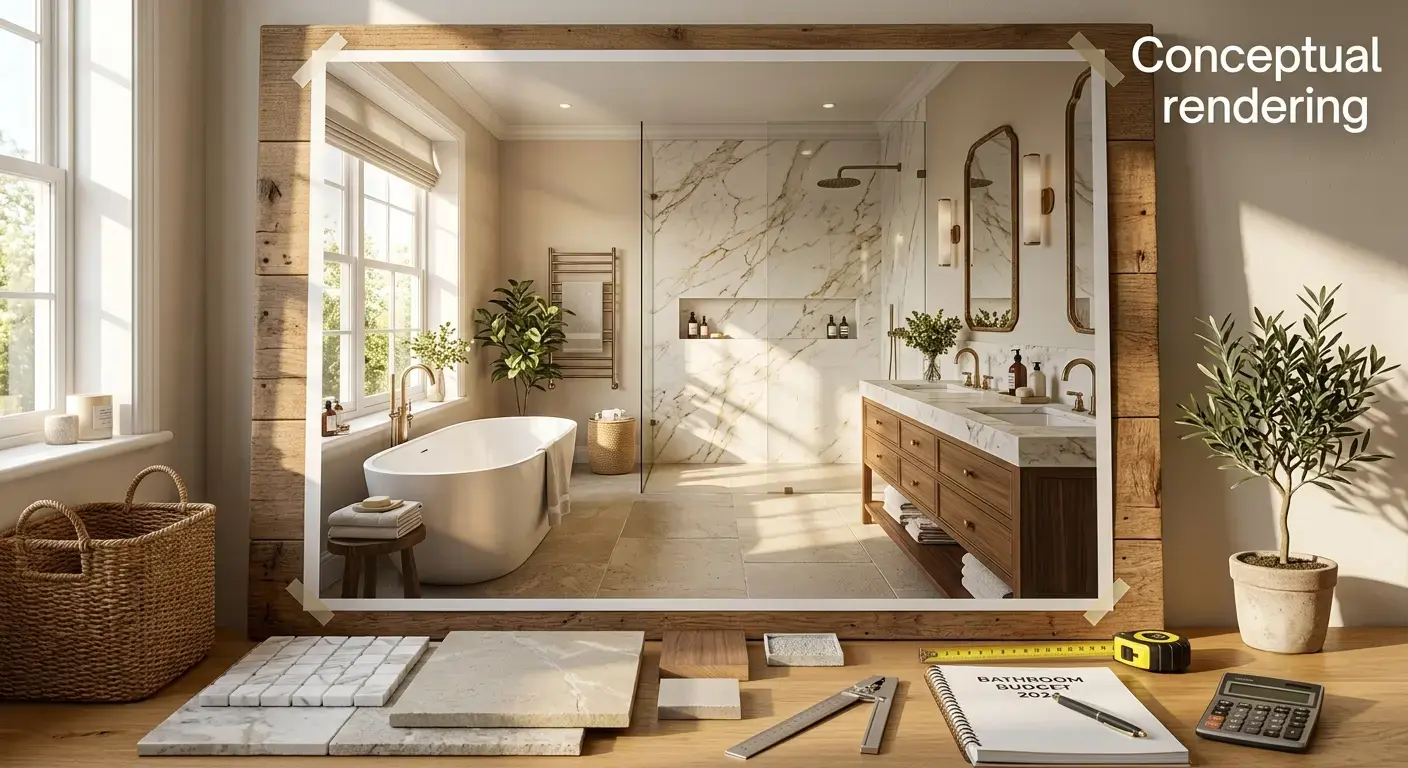
Bathrooms call for careful finish selection since wet conditions affect both comfort and safety underfoot, and the wrong texture choice can make a beautiful material feel impractical day to day. Marble, travertine, and dolomite work well in bathroom settings but stay suited to interior or shaded applications only, never full exterior exposure.
The Minden showroom displays bathroom vignettes featuring these materials, giving homeowners a realistic sense of scale and finish before committing to a plan. The Sacramento showroom offers a second location to compare the same finishes side by side. Comparing finishes across locations helps homeowners budget realistically for accent walls, shower surrounds, and vanity tops.
Smaller bathroom projects often benefit most from a tight budgeting plan, since limited square footage means every material choice carries more visual weight relative to the size of the room.
Powder rooms and guest bathrooms offer a lower-risk place to experiment with bolder finishes, since the smaller surface area limits both the visual commitment and the overall scope of the design decision.
How Nova Supports Fernley Homeowners
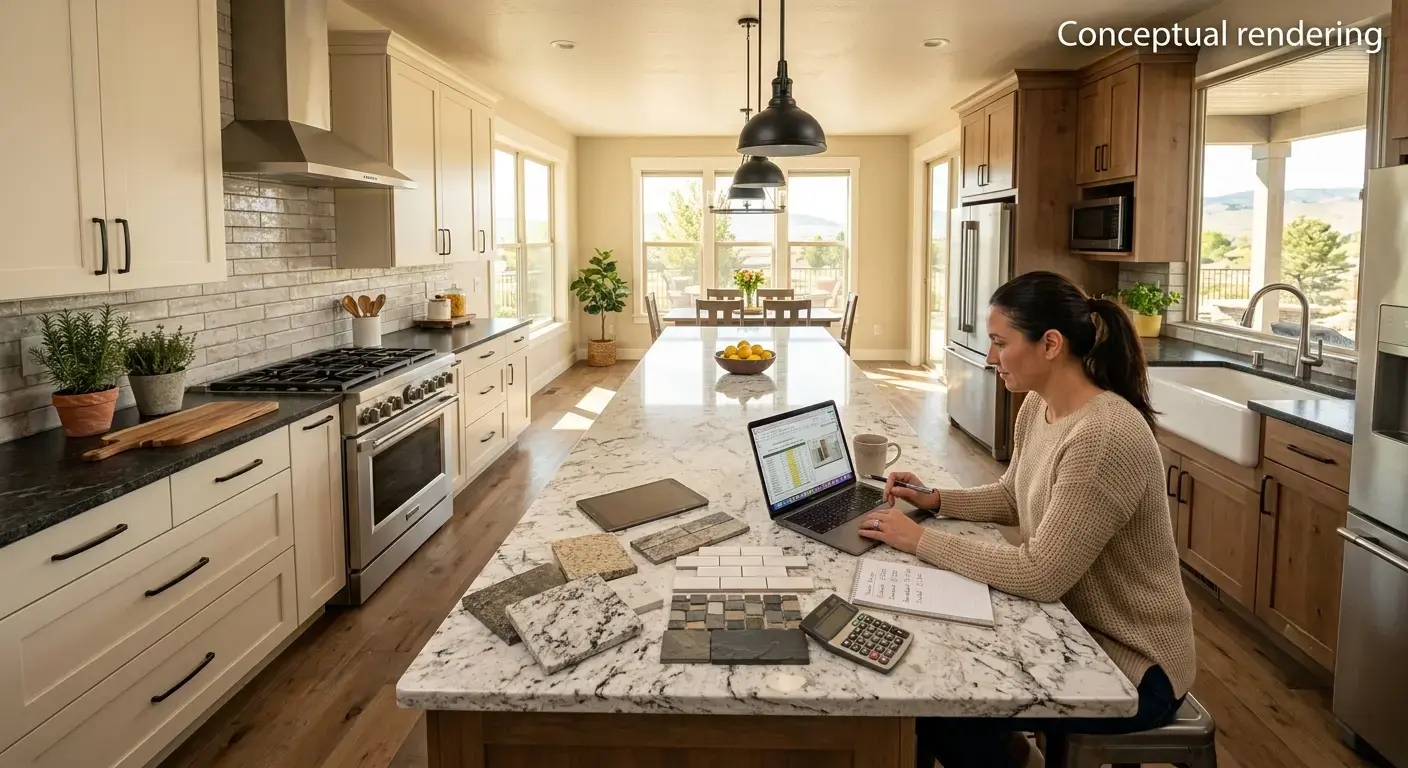
Nova's design team helps Fernley area homeowners compare a stone and tile surface without pressure or guesswork attached to the process. Guidance focuses on matching material categories to real project priorities rather than pushing a single look across every room in a home.
Free shipping on tile samples makes side-by-side comparison easier before any material decision becomes final, letting homeowners hold finishes next to cabinetry, paint colors, and existing fixtures at home rather than relying on memory alone. Requesting a few finishes ahead of time supports a more confident kitchen, living room, or bathroom design outcome.
Staying current on surface innovation trends also helps homeowners understand where flooring technology is heading, which can factor into a longer-term budgeting plan for a multi-room renovation.
Homeowners can learn more about the company on the Nova's design team page, including the showroom network serving Fernley, Fallon, Silver Springs, Wadsworth, and Stagecoach. Visiting more than one location often surfaces finish options that were not obvious from photos alone.
A clear plan makes every next step easier to commit to, especially for households juggling more than one room at a time within a single interiors design timeline.
Homeowners working through a phased renovation often return to the same showroom network more than once, refining their budgeting plan as one room finishes and the next one begins.
Conclusion
Budgeting for stone and tile projects works best as a room-by-room plan built on comparison, not guesswork. Matching each material to its ideal setting protects both appearance and long-term value across a kitchen, living room, or bathroom design. A steady framework also makes multi-phase renovations easier to manage over time. Homeowners ready to compare options can browse the material catalog and start planning with confidence.
Frequently Asked Questions
Start by ranking rooms by priority, then compare a stone and tile surface option for each space before committing to a full plan.
Yes, granite is suited to full-sun outdoor settings as well as indoor use, making it a flexible choice for kitchens and patios.
No, quartz is intended for indoor use only and is not recommended for outdoor kitchen or patio applications.
Marble, travertine, and dolomite are not rated for full sun exposure, so they perform best in interior or shaded outdoor settings only.
Yes, Nova offers free shipping on tile samples, making it easier to compare options before finalizing a kitchen, living room, or bathroom design.