Remodel planning gets a lot easier once you compare real material samples instead of relying on photos alone. Whether you are updating a kitchen in Fernley, a patio in Fallon, or a living room floor near Silver Springs, holding a physical tile sample under your own lighting is the fastest way to confirm color, texture, and finish before committing to a full surface.
In short: bring home a finalist, view it at different times of day, and check it against cabinetry, flooring, or existing trim. This single habit prevents most remodel regrets. Homeowners across Wadsworth and Stagecoach who take this step report far fewer surprises once surfaces are in place.
This guide covers what to look for in a stone or tile sample, how finish and application suitability affect your choice, and a short step-by-step method for comparing options before your next visit to a Nova showroom.
Comparing samples early in renovation planning also helps set realistic expectations for how a surface will read once a full room is covered. A small chip or tile square can only suggest so much about veining, sheen, or color variation, which is why pairing a sample review with a showroom visit tends to produce better results than choosing sight unseen. Durable materials still benefit from this extra step, since appearance and performance depend on proper care once a surface is in place.
Benefits of Comparing Samples Before You Choose
Reviewing samples side by side, rather than choosing from a catalog photo, gives renovation strategy a clear head start.
- See true color and veining under your own natural and artificial light
- Compare finish texture, such as polished versus honed, by touch
- Check how a slab or tile reads next to existing cabinetry or trim
- Confirm scale, since large-format pieces can look different than small chips
- Narrow choices before scheduling a showroom or design consultation
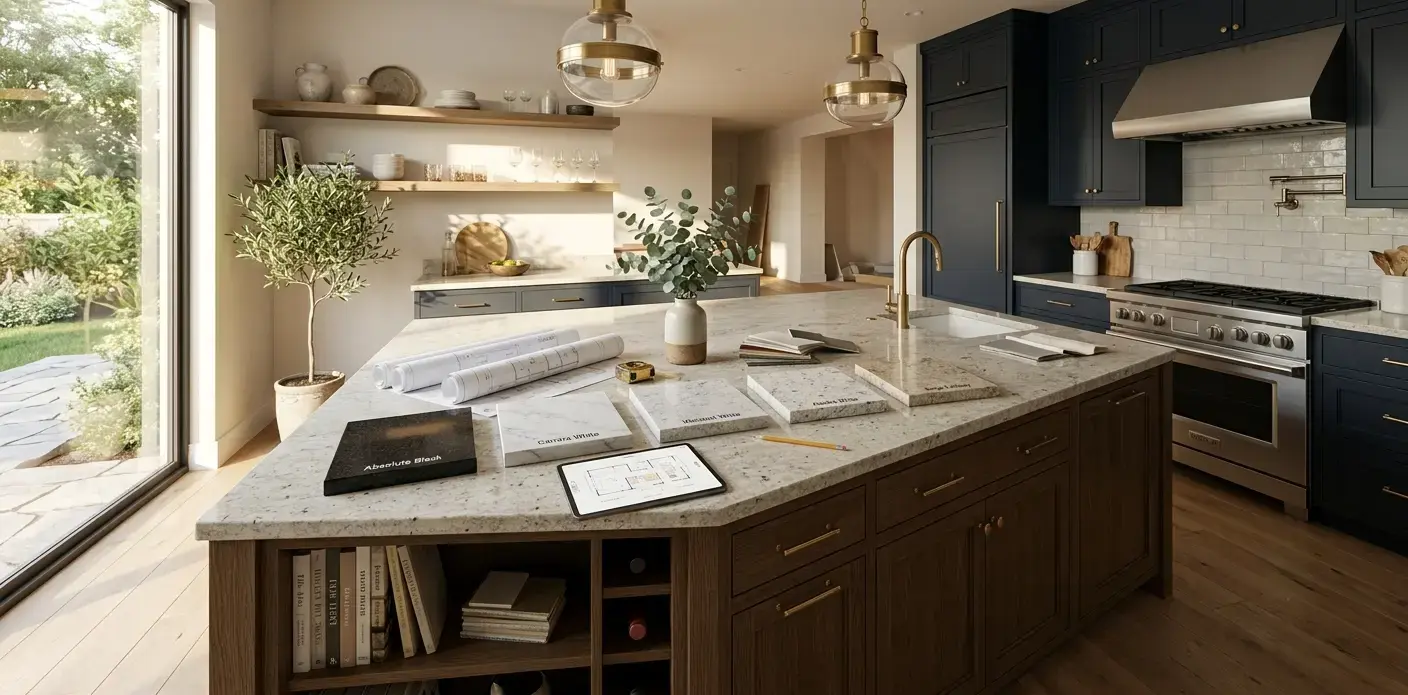 Conceptual rendering
Color and pattern shift depending on lighting, so a sample that looks warm under store lighting may read cooler at home. Comparing finishes side by side also highlights sheen differences that photos tend to flatten, which matters for surfaces near windows or outdoor patios. For more inspiration on timeless palettes, see classic color schemes that never go out of style.
Texture comparisons matter just as much as color. A honed finish feels noticeably different underfoot or under a hand than a polished one, and that difference is easy to miss in a photo. Bringing two or three finish options into the same room, rather than judging each in isolation, makes it easier to notice these smaller distinctions before committing to a full order.
Applications and Design: Matching Materials to the Room
Not every stone or tile surface suits every room, so planning benefits from understanding where each material performs best before samples are compared.
Kitchen Indoor/Outdoor Design
Granite, quartzite, and porcelain surfaces suit both indoor kitchen counters and outdoor kitchen setups, since these materials hold up in full sun. Quartz is best reserved for indoor kitchen counters only, as it is not rated for exterior exposure regardless of finish.
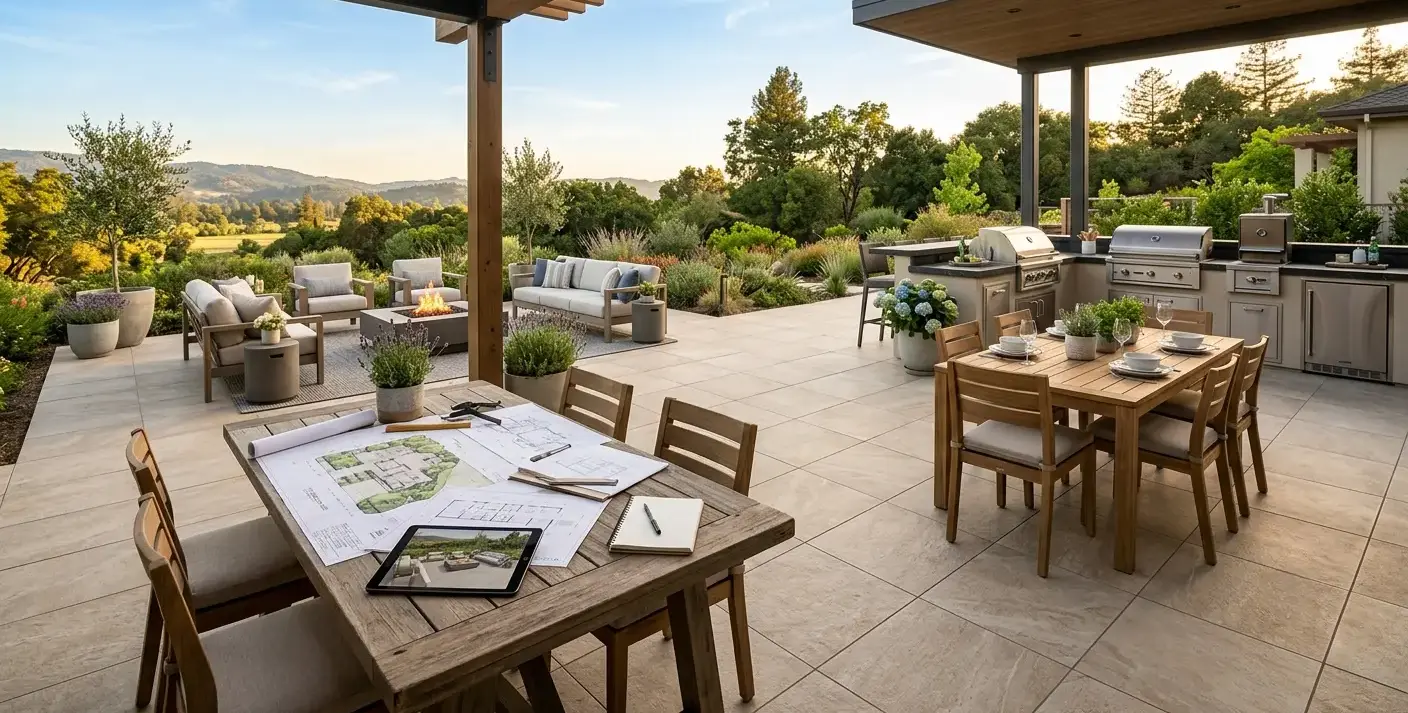 Conceptual rendering
Living Room Floor and Wall Designs
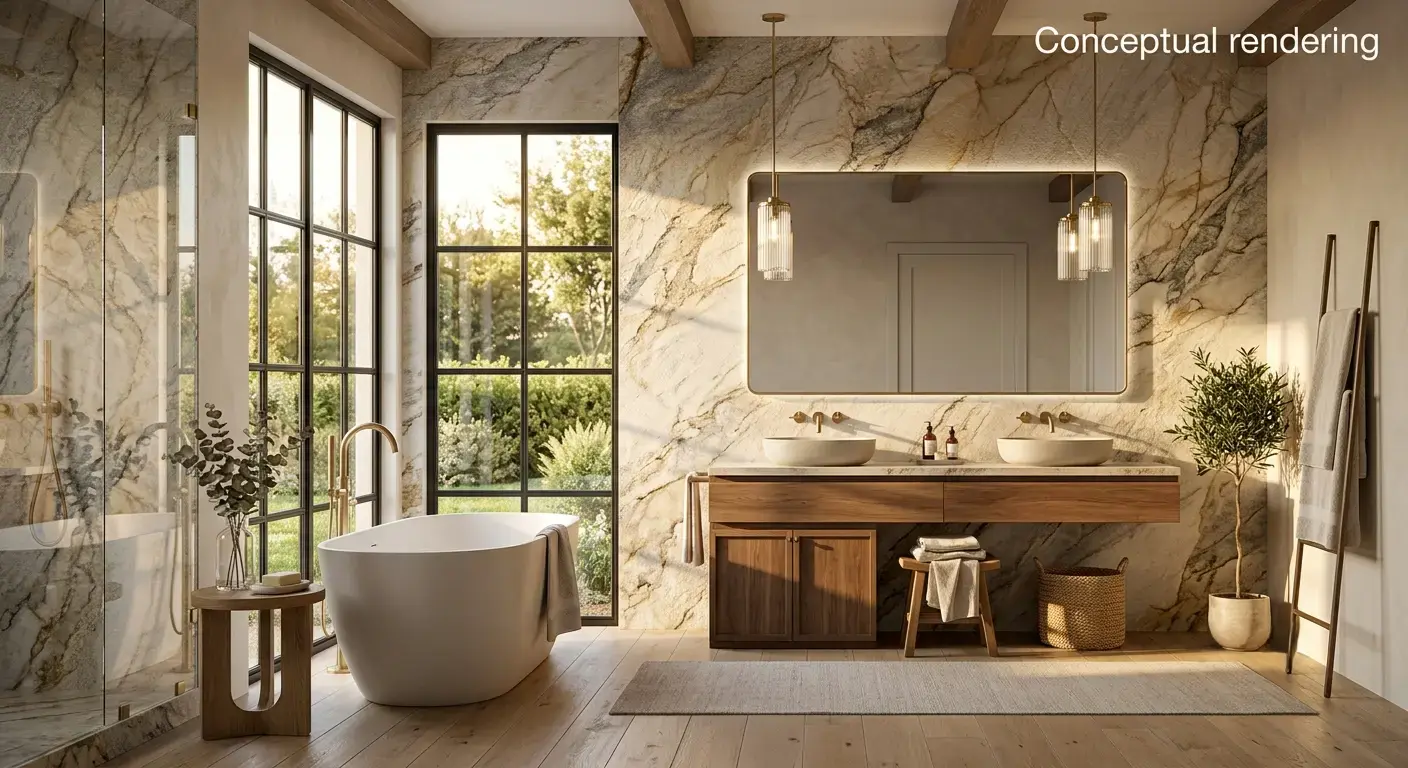
Living room floors and accent walls give more flexibility, since the space stays indoors. Marble, travertine, and dolomite bring warmth and veining to a living room floor without the sun exposure concerns tied to outdoor use.
Patio Designs
Full-sun patios call for granite, quartzite, or porcelain, all suited to exterior, UV-exposed applications. Marble, travertine, and dolomite can still work on a shaded patio or covered porch, but direct-sun placement is not recommended for these materials.
Floor and Wall Surface Pairing
Pairing a floor material with a complementary wall surface, such as a leathered slab floor with a honed wall accent, is a common planning strategy Nova's stone and tile slabs collection supports across finish types.
Polished finishes bring more shine to a wall accent or backsplash, while honed and leathered finishes tend to suit floors where a matte, less reflective look is preferred over a glossy one. Because polished surfaces can feel slipperier when wet, many homeowners choose a textured finish for floor areas near water. Whichever pairing is chosen, samples of both the floor and wall material should be compared together, since a combination that looks balanced on paper does not always look balanced in a lit room.
Comparison: Common Slab Materials at a Glance
Material | Best Applications | Finish Options | Sun Exposure |
Granite | Indoor, outdoor, floor, wall | Polished, honed, leathered, specialty | Full sun |
Quartzite | Indoor, outdoor, floor, wall | Polished, honed, leathered, specialty | Full sun |
Porcelain slab | Indoor, outdoor, floor, wall | Polished, honed, leathered, specialty | Full sun |
Marble | Indoor, shaded outdoor, floor, wall | Polished, honed, leathered, specialty | Shaded only |
Travertine | Indoor, shaded outdoor, floor, wall | Polished, honed, leathered, specialty | Shaded only |
Quartz | Indoor, floor, wall | Polished, honed, specialty | Indoor only |
Advantages and Disadvantages of Sample-Based Remodel Planning
Advantages
- Reduces the chance of choosing a surface that clashes with existing decor
- Reveals texture and sheen details that photos often miss
- Helps confirm application suitability, such as indoor-only versus outdoor-rated materials
- Supports better remodel planning conversations with a design consultant
Disadvantages
- Small samples still cannot show full slab veining variation
- Comparing many options at once can slow down a decision
- Some finishes, such as leathered textures, benefit from an in-showroom touch test
A 5-Step Guide to Comparing Samples
- List your rooms and goals. Note which spaces are indoor, outdoor, or shaded before requesting samples.
-
Request one finalist per surface. Fewer options make side‑by‑side comparison more useful than a large stack.
- View samples in multiple lighting conditions. Morning, evening, and artificial light all shift how a finish reads.
- Hold samples against existing fixtures. Cabinetry, trim, and flooring already in place should guide the final call.
-
Bring a finalist sample to your showroom consultation. Reviewing a larger slab or extended tile section on‑site confirms what a small hand sample only suggests.
Following these steps in sequence, rather than rushing straight to a showroom visit, often shortens the remodeling roadmap overall. Homeowners who arrive with two or three carefully compared finalists typically leave a consultation with a clear direction the same day, reducing indecision and ensuring smoother progress toward final material choices and project completion.
Nova Integration: Guidance for Your Remodel Planning
Nova Tile and Stone makes remodel planning easier with showroom staff who guide homeowners through finish and application questions in person. Free tile sample shipping allows you to compare one or two finalists at home before visiting, ensuring choices feel right in real lighting and against cabinetry, flooring, or trim before committing to a showroom consultation.
Nova's team can also speak to how a chosen material performs once in place, including care expectations tied to finish and application. Background on the company is available on the About Nova Tile Stone page.
Showrooms serving the region include a location in Reno. Nearby homeowners can also reach a showroom in Minden. A further showroom option is Sacramento. The Fernley showroom itself serves nearby communities, including Fallon, Silver Springs, Wadsworth, and Stagecoach.
Homeowners in Fallon, Silver Springs, Wadsworth, and Stagecoach can request samples the same way as those closer to the Fernley showroom, since remodel planning support is not limited to a single town. A phone or in-person consultation can confirm which showroom is most convenient for picking up or returning sample sets.
Design inspiration from sources such as 2026 interior trends can help narrow a starting palette before samples are requested. Reviewing tile fundamentals through the TCNA resource center is also useful background before a consultation.
Conclusion
Remodel design planning becomes far more effective once samples are tested in real lighting and compared directly against cabinetry, flooring, and trim, rather than chosen from photos alone. Seeing how each material performs in indoor light, shaded areas, or full sun helps homeowners avoid costly surface regrets after installation. Nova’s showroom homepage makes it easy to explore finish options across every location, and scheduling a free consultation ensures expert guidance before final selections are made.
Frequently Asked Questions
Two to three finalists per surface is usually enough to compare color, texture, and finish without the process becoming overwhelming.
Granite, quartzite, and porcelain suit both indoor and outdoor, full-sun applications, while marble, travertine, and dolomite are better suited to indoor or shaded outdoor spaces.
Natural and artificial lighting both affect how color, veining, and sheen appear, which is why viewing a sample in your own space matters.
Quartz is intended for indoor applications only and is not recommended for outdoor patio surfaces regardless of finish.
Yes, tile samples ship free, making side-by-side comparison at home straightforward before a showroom visit.