Comparing Stone Material Options for Fallon Pool Areas
Choosing a poolside surface starts with a clear decking materials comparison across sun exposure, finish, and long-term care. Full-sun areas call for UV-stable stone material such as granite, quartzite, or porcelain, since these hold up under direct light without special shading. Shaded lounge zones open the door to marble, travertine, or dolomite, materials that offer distinct veining and color variation but require protection from prolonged sun.
Finish selection matters just as much as material choice near water. Honed and textured surfaces resist slipping better than polished stone, making them a practical starting point for pool decks. Fallon homeowners exploring natural stone slabs can weigh these factors before narrowing down a collection for their outdoor space.
Quartz slabs remain a common indoor countertop material but are not intended for outdoor pool decks, since manufactured quartz is rated for indoor use only. This decking materials guide instead focuses on the natural and porcelain options rated for outdoor placement, so homeowners in Fallon and nearby communities can match sun exposure, finish, and long-term care to the right stone material before finalizing a poolside design. Reviewing this comparison alongside current outdoor design ideas helps homeowners plan a cohesive poolside look suited to the local climate.
Benefits of Natural and Engineered Stone Decking
Stone slabs bring several advantages to poolside design when matched correctly to sun exposure and finish. Each benefit below carries a real-world qualifier, since long-term performance depends on material choice and ongoing care rather than the stone alone.
- Durable surface option, though proper sealing and prompt spill cleanup preserve appearance over time.
- Natural color and pattern variation across granite, quartzite, marble, travertine, and dolomite, though each slab may differ from a showroom sample.
- Heat tolerance suited to outdoor use, though sudden temperature swings still warrant caution around fire features.
- Wide design versatility for pool coping, walkways, and lounge surrounds, though layout should account for shaded versus full-sun zones.
- Textured and honed finish options that improve traction near water, though no finish eliminates slipperiness entirely when wet.
- Consistent slab format across large pool coping runs, though seam placement and layout should be reviewed with a design consultant before finalizing a plan.
- Resale-friendly aesthetic in many markets, though buyer preferences vary and no single material guarantees added home value.
Long-term outdoor performance also depends on local climate exposure, since intense sun, wind-blown grit, and seasonal freeze-thaw cycles in northern Nevada can affect any decking surface over time. Selecting UV-stable stone material for full-sun zones and reserving shaded stone for covered areas reduces the risk of premature wear.
Industry guidance from the TCNA Handbook outlines general material standards referenced across the tile and stone industry. Reviewing recognized resources like this alongside a slab sample helps homeowners set realistic expectations for outdoor performance. Stone remains a long-term material investment, but its appearance depends on consistent care rather than a maintenance-free label.
Decking Materials Comparison for Poolside Design Ideas
Full-Sun Pool Areas: Granite, Quartzite, and Porcelain
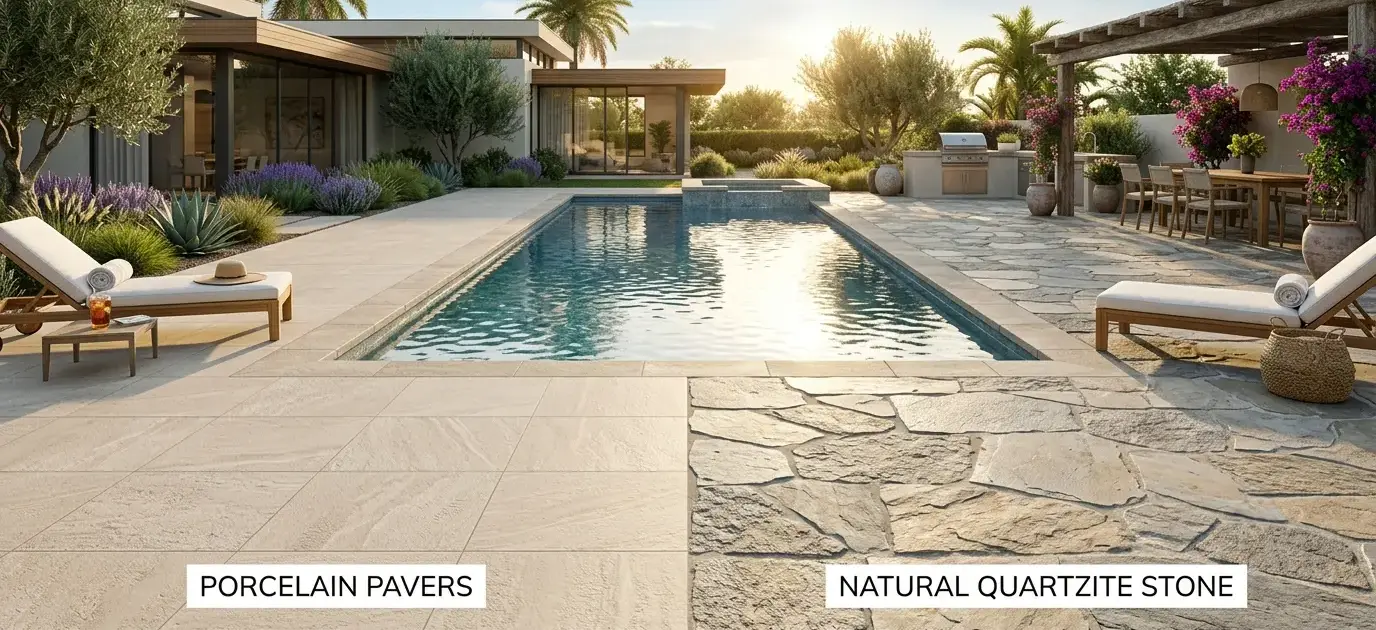
Granite, quartzite, and porcelain share UV-stable ratings, which makes them suitable for pool decks exposed to direct sunlight throughout the day. All three tolerate outdoor conditions without the shading requirements that apply to other natural stones. A honed or leathered finish on granite and quartzite improves footing near the water line, while a textured specialty finish achieves a similar result on porcelain. Direct sun exposure does not remove the need for periodic sealing on granite and quartzite, since both remain porous stone materials. Porcelain needs no sealing but still benefits from routine rinsing to prevent residue buildup around a pool deck.
Color consistency is another consideration for full-sun zones, since granite and quartzite display natural mineral variation that can shift slightly under bright light compared to an indoor sample. Porcelain offers a more uniform pattern across large format pieces, which some homeowners prefer for a modern poolside look. Reviewing full slabs in person rather than a small chip remains the most reliable way to judge how a stone material will read outdoors.
 Conceptual rendering
Shaded Lounge Areas: Marble, Travertine, and Dolomite
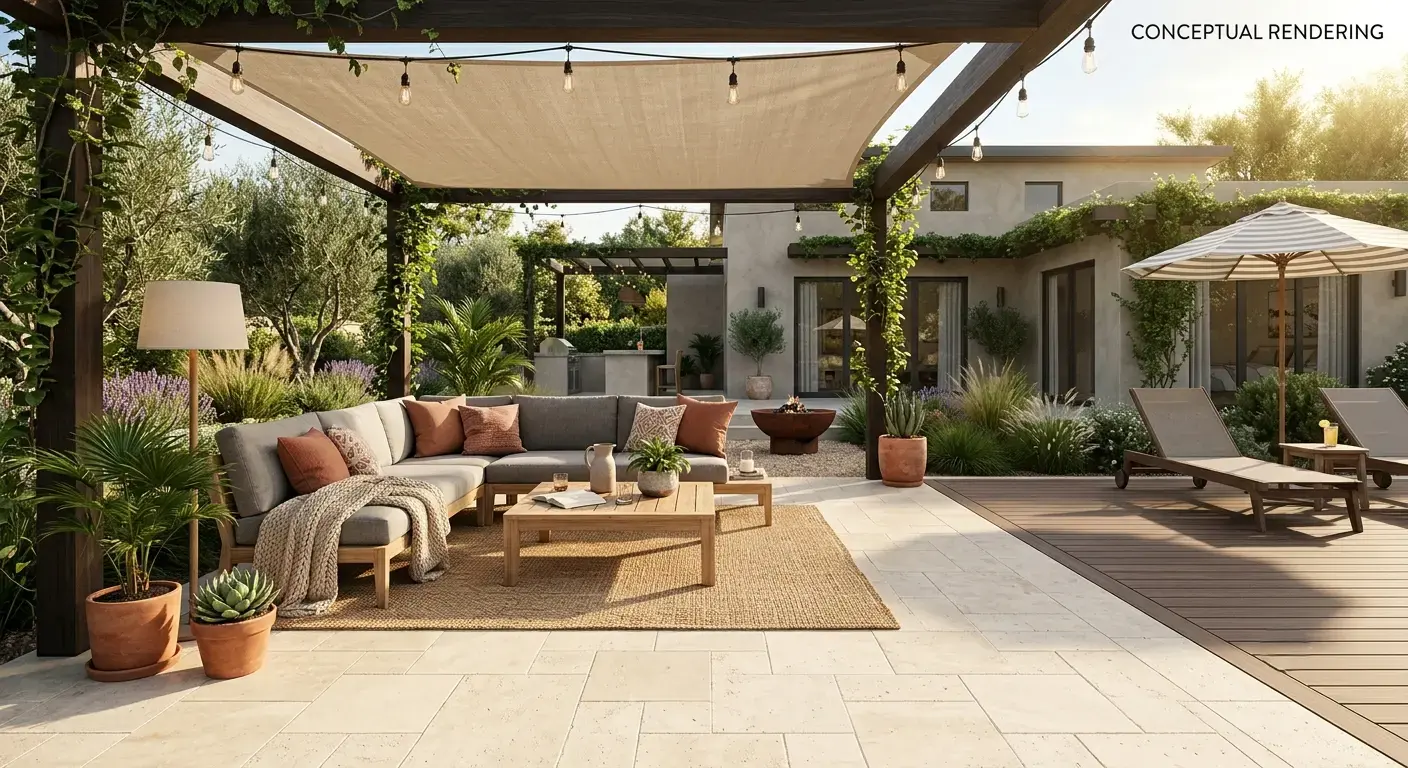
Marble, travertine, and dolomite are not UV-classed, so these materials belong in shaded lounge areas rather than full-sun pool decks. Covered patios, pergola-shaded lounges, and north-facing walkways suit these stones well. A honed finish is recommended over polished for any of these materials near water, since polished surfaces become notably slipperier when wet. Travertine's natural pitting adds texture underfoot, though homeowners should expect some filling and sealing maintenance over time. Design ideas featured in Good Housekeeping's trend report often pair these warmer stone tones with shaded outdoor lounges.
Layout planning for shaded zones should also account for how sunlight shifts through the day, since a covered patio may still receive partial afternoon light depending on its orientation. Marble in particular benefits from consistent shade, as prolonged sun exposure can accelerate surface changes over time. Travertine and dolomite tend to tolerate brief partial light better than marble, though shaded placement remains the safer long-term choice for all three.
Decking Materials Comparison at a Glance
The table below summarizes sun exposure, finish, and maintenance guidance across the six stone materials covered in this decking materials matchup, offering a quick reference before a showroom visit.
Material | Sun Exposure | Recommended Finish | Maintenance Note |
Granite | Full sun, UV-stable | Honed or leathered | Seal periodically; avoid abrasive cleaners |
Quartzite | Full sun, UV-stable | Honed or leathered | Seal periodically; rinse spills promptly |
Porcelain | Full sun, UV-stable | Textured specialty finish | Wipe clean; no sealing required |
Marble | Shaded areas only | Honed, not polished | Prone to etching; keep from direct sun |
Travertine | Shaded areas only | Honed or tumbled | Fill pitting; avoid acidic cleaners |
Dolomite | Shaded areas only | Honed | Seal regularly; avoid prolonged sun exposure |
Our latest content
Check out what's new in our company !
Strengths and Trade-Offs of Stone Pool Decking
Weighing strengths against trade-offs helps set expectations before selecting a slab collection for a pool area.
Strengths: Natural stone material offers distinctive veining, wide finish options, and long-term durability when properly cared for. Porcelain adds a low-sealing alternative with a consistent surface pattern across full-sun zones.
Trade-offs: Marble, travertine, and dolomite require shaded placement, polished finishes are not recommended near water, and most natural stone options call for periodic sealing rather than a maintenance-free routine.
Balancing these strengths and trade-offs against a specific pool layout, design goals, and desired maintenance routine helps narrow the material list before a showroom consultation, rather than choosing on appearance alone.
Five Steps to Choosing Your Poolside Decking Material
- Map sun exposure across the pool area to separate full-sun zones from shaded lounges.
- Match each zone to a UV-stable option like granite, quartzite, or porcelain, or a shaded-only stone material such as marble, travertine, or dolomite.
- Select honed, leathered, or textured specialty finishes over polished surfaces for any area near water.
- Review current outdoor design ideas for color and pattern direction suited to the space.
- Bring measurements and photos to a showroom consultation for guidance on slab selection.
Following these steps in order helps prevent common mismatches, such as specifying a polished finish for pool coping or placing a shade-only material along an unshaded deck edge.
Poolside safety guidance from resources such as the ANSI/NSF pool standard can also inform broader pool-area planning beyond decking material alone.
Poolside Slab Selection Support Across the Region
Homeowners in Fallon, Silver Springs, Wadsworth, and Stagecoach can visit the Fernley showroom to view granite, quartzite, porcelain, marble, travertine, and dolomite slabs in person. Viewing a full slab under showroom lighting gives a clearer sense of veining and color than a small sample chip alone. Expert guidance is available on-site for matching finish and material to sun exposure across a pool area.
Additional slab selections are on display at the Reno showroom for those exploring options beyond the Fernley location. The Minden showroom carries a similar range for homeowners further south. A Sacramento showroom also stocks a comparable slab selection for regional homeowners. More background on the company's showroom network and sourcing approach is available on the company background page.
Design guidance at any Nova showroom typically includes a side-by-side comparison of finish samples under different lighting, which helps homeowners visualize how a stone material will perform in full sun versus a shaded lounge. This hands-on comparison often proves more useful than photos alone when finalizing a poolside material list. Homeowners can also request side-by-side slab pairings to preview how a full-sun material might complement a shaded accent area within the same pool design.
Conclusion
This decking materials comparison highlights how sun exposure and finish selection guide the right slab choice for a Fallon pool area. Granite, quartzite, and porcelain suit full-sun zones, while marble, travertine, and dolomite fit shaded lounges best when finished in honed rather than polished stone. Browse the full slab collection to compare stone material options before a showroom visit. A design consultant can help translate current outdoor design ideas into a finished plan tailored to a specific pool layout. Book a free consultation now!
Frequently Asked Questions
Granite, quartzite, and porcelain are commonly chosen for full-sun pool decks because they carry a UV-stable rating, while marble, travertine, and dolomite are better suited to shaded lounge areas.
Polished finishes become slipperier when wet, so honed, leathered, or textured specialty finishes are generally recommended for surfaces near a pool.
No. Granite, quartzite, and porcelain are UV-stable for full sun, while marble, travertine, and dolomite are not UV-classed and perform better in shaded outdoor areas.
Most natural stone materials benefit from periodic sealing and prompt cleanup of spills, and abrasive cleaners should be avoided across all slab types.
Yes. The Fernley showroom serves Fallon, Silver Springs, Wadsworth, and Stagecoach, Nevada, along with the greater Fernley area.
Visit Our Fernley Showroom – Nova Tile and Stone
1855 US Highway 95A North, Fernley, NV 89408
 Google Maps
Store hours this week:
- Mon. - Fri.: 7:30 am - 4:00 pm
- Sat. - Sun.: Closed