Kitchen Islands That Pair Slab Countertops With Tile Border Accents
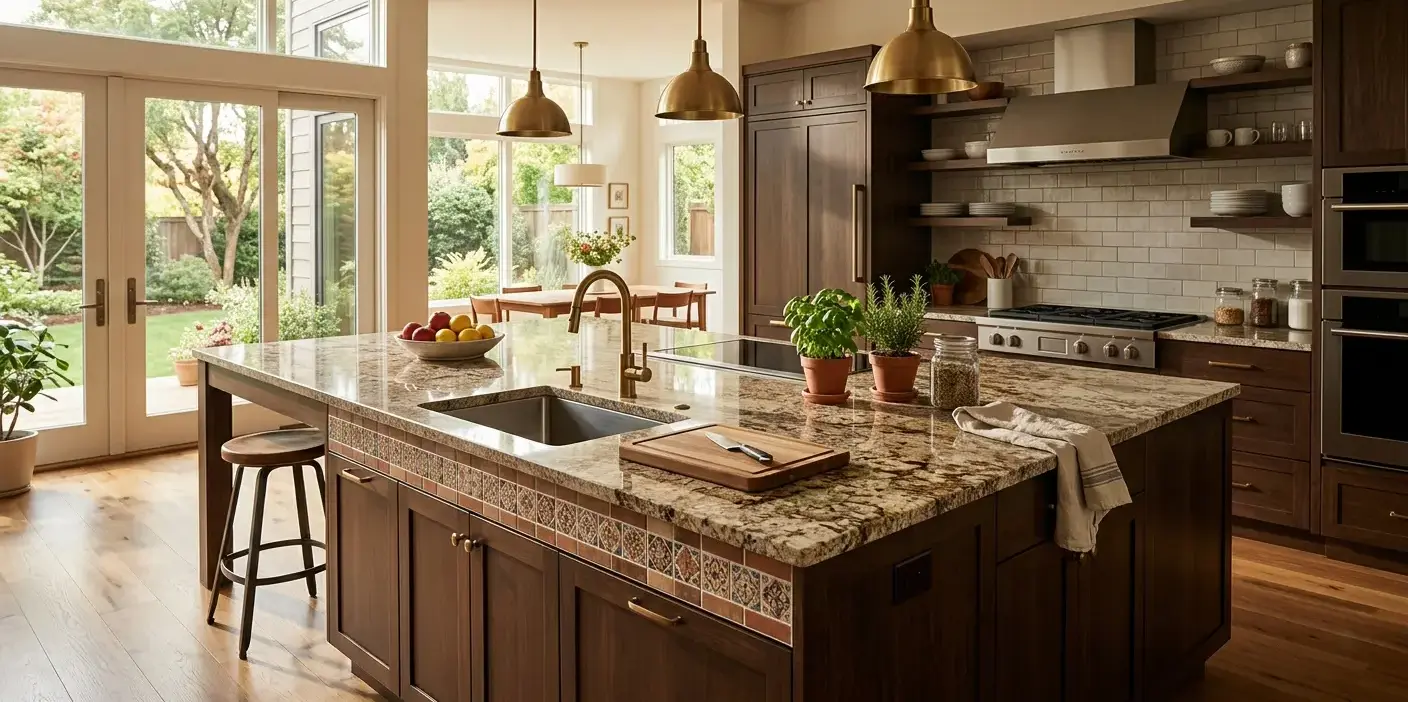
Fallon kitchen islands often combine a slab countertop with a tile border to add contrast, define the footprint, and highlight premium materials in one focal point. Granite, quartzite, or porcelain forms the work surface, while a tile band along the base ties the island into the surrounding kitchen palette. This pairing works well because slab surfaces handle daily countertop use while tile borders introduce pattern and color without covering the whole structure.
Homeowners planning an island for a Fallon remodel often want a countertop that reads as substantial without overwhelming a compact layout. A tile border along the base gives room to experiment with color, including tones similar to the palette shifts covered in 2026 kitchen color trends, while the slab selection stays neutral. Nova's slab collection includes natural stone and engineered options suited to this layered approach, and every material is viewable in person before a homeowner commits to a design direction.
An island built this way also gives a kitchen two visual anchors instead of one flat surface. The slab handles the horizontal work area, and the tile border frames the vertical face, so the eye reads the piece as a considered design element rather than a simple box with a countertop on top.
 Conceptual rendering
Island Countertop Advantages And Design Considerations
Pairing a slab countertop with a tile border gives a Fallon island visual depth, but each material choice carries tradeoffs worth reviewing before finalizing a design.
- Granite kitchen island countertops offer natural pattern variation and hold up to daily food prep, though the surface benefits from periodic sealing to resist staining.
- Quartzite slabs bring a marble-like look with stronger scratch tolerance than many natural stones, but proper care still preserves the finish over time.
- Porcelain slabs resist staining without regular sealing, though the surface should still be cleaned promptly after spills to avoid buildup.
- A tile border adds a secondary color or texture layer, letting the structure stand apart from perimeter cabinetry without changing the slab itself.
- Polished finishes on any island slab look striking under kitchen lighting, but a matte or honed finish reduces glare and softens fingerprint visibility.
Weighing these tradeoffs before ordering material helps avoid a mismatch between the countertop and the border tile later. A slab chosen purely for pattern, without considering finish or sealing needs, can end up harder to maintain than a homeowner expects once the island is in daily use.
Considering how the island will actually function also matters. A prep-heavy household may prioritize a slab with stronger stain resistance, while a household that uses the surface mainly for seating and casual dining has more flexibility in choosing a purely decorative pairing.
Matching Slab Materials With Tile Border Styles
Choosing a tile border style depends on the slab material selected for the countertop, since contrast, undertone, and finish all influence how the two materials read together.
Granite Island Tops With Contrasting Tile Bands
Granite's bold veining and speckled pattern carry plenty of visual weight on their own, so a simpler tile border, such as a single-tone band, keeps the structure from feeling busy. A honed granite top paired with a matte tile edge softens the overall contrast while still framing the piece clearly. Sealing granite periodically helps the surface resist staining, and cutting boards protect against everyday scratches from kitchen tools.
Granite's natural variation means no two slabs match exactly, which is part of the appeal for homeowners who want a one-of-a-kind surface. Viewing the actual slab in person before selecting a border tile helps confirm that the undertones in the stone and the tile complement each other rather than clash under kitchen lighting.
Quartzite And Porcelain Islands With Patterned Borders
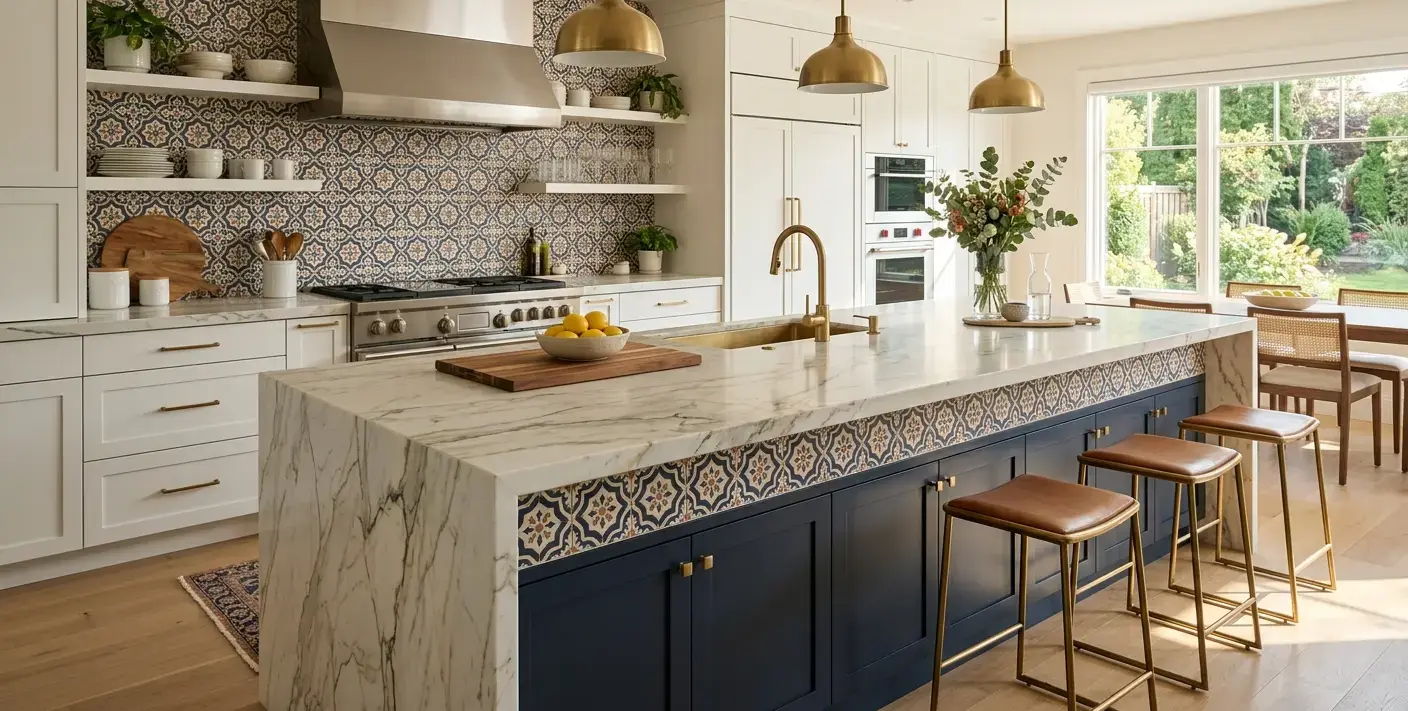
Quartzite and porcelain slabs offer a cleaner, more uniform background, which leaves more visual room for a patterned tile border. A geometric or textured tile band along the base introduces movement without competing with a busy stone pattern. Industry material standards referenced by tile trade groups help homeowners compare product specifications across manufacturers before selecting a border tile.
Porcelain in particular gives designers a wide color range to work with since the surface is engineered rather than quarried, which makes it easier to find a border tile that either matches or intentionally contrasts with the slab tone. Quartzite keeps more of a natural stone look while still offering a fairly consistent background for a patterned border.
Marble And Dolomite Accents For Indoor Islands
Marble or dolomite work well as an accent panel on an end rather than the full countertop, since both materials are better suited to indoor use. A tile border in a soft neutral tone lets a marble accent panel remain the visual highlight of the structure. Trivets and cutting boards remain necessary regardless of material, since heat resistance does not mean thermal-shock resistance.
Homeowners drawn to marble for its veining but concerned about daily wear often reserve it for a smaller accent panel rather than the entire countertop. This keeps the visual softness of the stone in the design while directing heavier daily use toward a more resilient slab like granite or quartzite elsewhere on the structure.
Nova Tile and Stone Support For Fallon Island Projects
Nova Tile and Stone's Fernley showroom gives Fallon homeowners a place to view slab and tile pairings for an island in person before finalizing a design. Viewing large slab sections in-showroom, rather than relying on small swatches, makes it easier to judge veining, tone, and how a tile border will sit against the chosen stone. Staff at the Fernley location can walk through available slab inventory and coordinating tile options for projects of any scale.
Trade professionals sourcing material for multiple island projects across Fallon and nearby communities can review Nova's trade account program for ongoing project needs. Homeowners comparing options from home first can browse the online shop to narrow down slab and tile pairings before an in-person visit.
Nova serves Fernley, Fallon, Silver Springs, Wadsworth, and Stagecoach, NV, and a showroom appointment helps homeowners plan a project with guidance from Nova's team. Anyone curious about the company's background can read more about Nova and its showroom locations across the region. Industry groups such as the tile contractors association publish material standards that inform how tile products are manufactured and specified, which can help homeowners ask informed questions when comparing border tile options.
 Conceptual rendering
Bringing a rough sketch or a photo of the existing kitchen layout to a showroom visit tends to speed up the conversation, since staff can point directly to slab sections and tile lines that would suit the space. Lighting also plays a role in how a pairing reads once the island is finished, so viewing options under conditions similar to the kitchen's natural or fixture lighting helps set realistic expectations before ordering material.
Five-Step Guide To Planning A Slab And Tile Island Design
- Measure the footprint and note where a tile border would sit, such as the base, an end panel, or a backsplash return.
- Select a slab material for the countertop based on how the structure will be used day to day.
- Choose a tile border style that contrasts or complements the slab's tone and pattern.
- Confirm the finish on both the slab and the tile, since polished surfaces read differently than honed or matte options under kitchen lighting.
- Schedule time at the Fernley showroom to view full slab sections and tile samples side by side before finalizing the design.
Latest Updates
Discover what’s new at our company!
Conclusion
Fallon kitchen islands look most cohesive when a slab countertop and a tile border are chosen together rather than separately, balancing pattern, tone, and finish. Nova's showroom resources support that comparison process for Fallon area homeowners weighing granite, quartzite, porcelain, or marble accents. Proper care with each material keeps the finished island looking its best for years to come.
Frequently Asked Questions
Granite, quartzite, and porcelain are common choices for island countertops because they hold up to daily use, though granite and quartzite benefit from periodic sealing while porcelain does not typically require it.
A tile border can be paired with most slab styles, but simpler borders tend to suit heavily veined stones like granite, while patterned borders work well with more uniform slabs like quartzite or porcelain.
Marble is better suited to indoor accent panels or end sections rather than a full working countertop, since it benefits from careful maintenance and is more sensitive to daily wear than granite or quartzite.
Polished finishes look striking under kitchen lighting, though a honed or matte finish can reduce glare and soften the visibility of fingerprints and light scratching over time.
Viewing full slab sections and tile samples together in person makes it easier to judge tone and pattern accurately than relying on small swatches alone.
Visit Our Fernley Showroom – Nova Tile and Stone
1855 US Highway 95A North, Fernley, NV 89408
Store hours this week:
- Mon. - Fri.: 7:30 am - 4:00 pm
- Sat. - Sun.: Closed