Gardnerville sits at roughly 4,750 feet of elevation, and that number explains a lot about why outdoor stone behaves differently here than it does in a showroom photo taken somewhere milder. The valley gets around 250 sunny days a year, but temperatures still swing from the low 20s to the high 80s across an average year, with recorded extremes well below zero and well above 100. That kind of range puts real demands on anything sitting outside year round.
Instead of listing every stone available and hoping one fits, it helps to start from the project itself. A pool deck, a driveway edge, and a fire pit surround each put different stress on a material, and Gardnerville's climate narrows the field further before style even enters the conversation. This guide walks through the outdoor situations that come up most often for Gardnerville homeowners, and which materials tend to hold up in each one.
What Gardnerville's Freeze-Thaw Swings Actually Do to Stone
Fall and spring in Gardnerville bring dozens of days where the temperature crosses freezing more than once in 24 hours. Water that has worked its way into a porous surface expands as it freezes, and repeated cycles of that expansion are what eventually cause chipping or surface breakdown in the wrong material. It's a slow process, but it's the reason a stone that looks identical to another in a catalog photo can perform very differently once it's been outside through a Nevada winter.
Density is the real variable behind that difference. Granite typically tests under 0.4 percent water absorption by weight under ASTM's exterior dimension stone standard, and quartzite generally falls under 1 percent under the equivalent standard for quartz-based stone, which leaves very little room for water to get in and expand in the first place. Travertine sits at the other end of that range, commonly running from under 1 percent up to around 8 percent depending on how porous a given block is and whether it has been filled, which is part of why finish and sealing choices matter more for travertine than for denser stones.
This is also why some attractive, popular stones simply are not sold for exterior use in the first place. Marble and quartz, both common on interior counters, are not rated for outdoor exposure, which is why they are left out of the options below.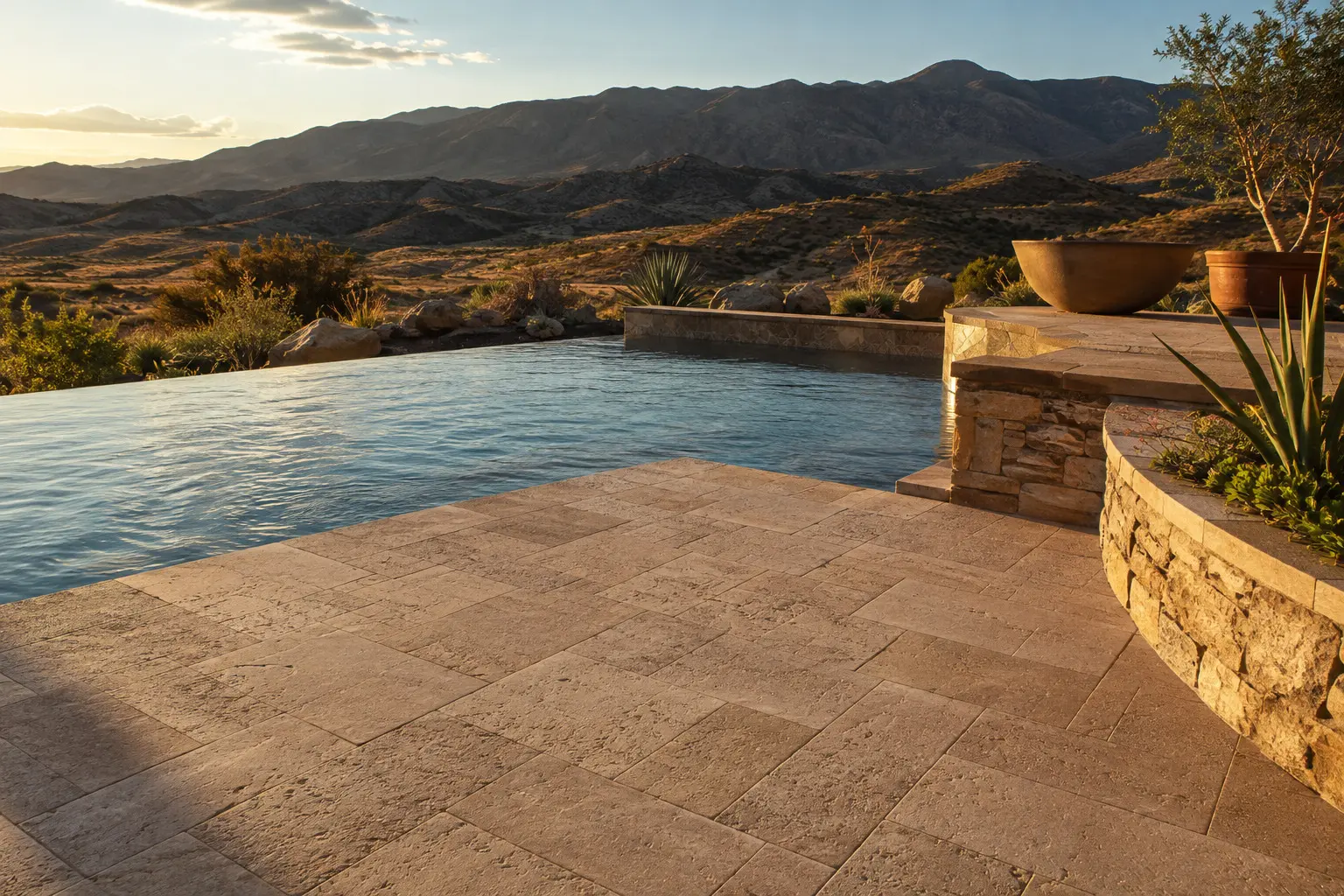
Building a Patio or Pool Deck That Takes Nevada Sun
With roughly 250 sunny days a year, a pool deck or open patio in Gardnerville spends a lot of time in direct UV exposure, which is a different challenge than the freeze-thaw issue above. Quartzite and porcelain are both UV resistant, though performance may vary by color and finish, so a lighter shade is worth testing against a sample before committing to a full deck.
Wet footing matters as much as sun exposure around a pool. Polished finishes look sharp in a showroom but tend to score lower on wet slip-resistance testing than a honed or leathered surface, which is why most pool decks lean toward a textured finish regardless of which material gets chosen. Travertine brings a warmer, naturally textured look that many homeowners prefer around a pool, though its porous structure means it typically benefits from resealing on a shorter cycle than the denser stones above, which need little to no sealing at all; the Natural Stone Institute's care and cleaning guide is a useful starting point for a general sealing schedule. Homeowners can review the live slab inventory to compare current quartzite and travertine bundles before deciding on a deck material.
Driveway Edging, Walkways, and High-Traffic Stone
A driveway apron or a main walkway deals with a different kind of wear than a patio: repeated foot or tire contact, deicing runoff in winter, and constant exposure at ground level. Granite and quartzite are the two most common choices here, and the same low absorption rates that help them hold up through freeze-thaw swings also serve them well against years of daily traffic.
Granite in particular is quarried in a wide enough range of colors and patterns that no two slabs look exactly alike, which gives a walkway or entry a more distinctive look than a poured surface would. It is durable, but proper care will help preserve its appearance, especially at high-contact points like steps and thresholds. Comparing polished, honed, and leathered granite finishes side by side in person is the easiest way to judge how each one will read against a driveway or entry path.
Fire Pits and Outdoor Fireplace Surrounds
An outdoor fireplace or fire pit surround narrows the list slightly further, since not every exterior-rated material is meant for close proximity to a heat source. Granite, quartzite, travertine, and porcelain are all suited to fireplace applications.
Because a fireplace surround gets more direct contact and handling than an open patio, it makes sense to lean toward a slab that is designed for high-use areas, understanding that misuse can still cause damage over time regardless of the material chosen. Comparing a few finish options against the rest of an outdoor kitchen or seating area, rather than picking the surround in isolation, usually gives a more cohesive result.
Many Gardnerville homeowners end up carrying the same leathered granite from a fireplace surround into a nearby seat wall cap or planter edge, since the repeated material ties the whole outdoor space together instead of treating the fireplace as a separate feature.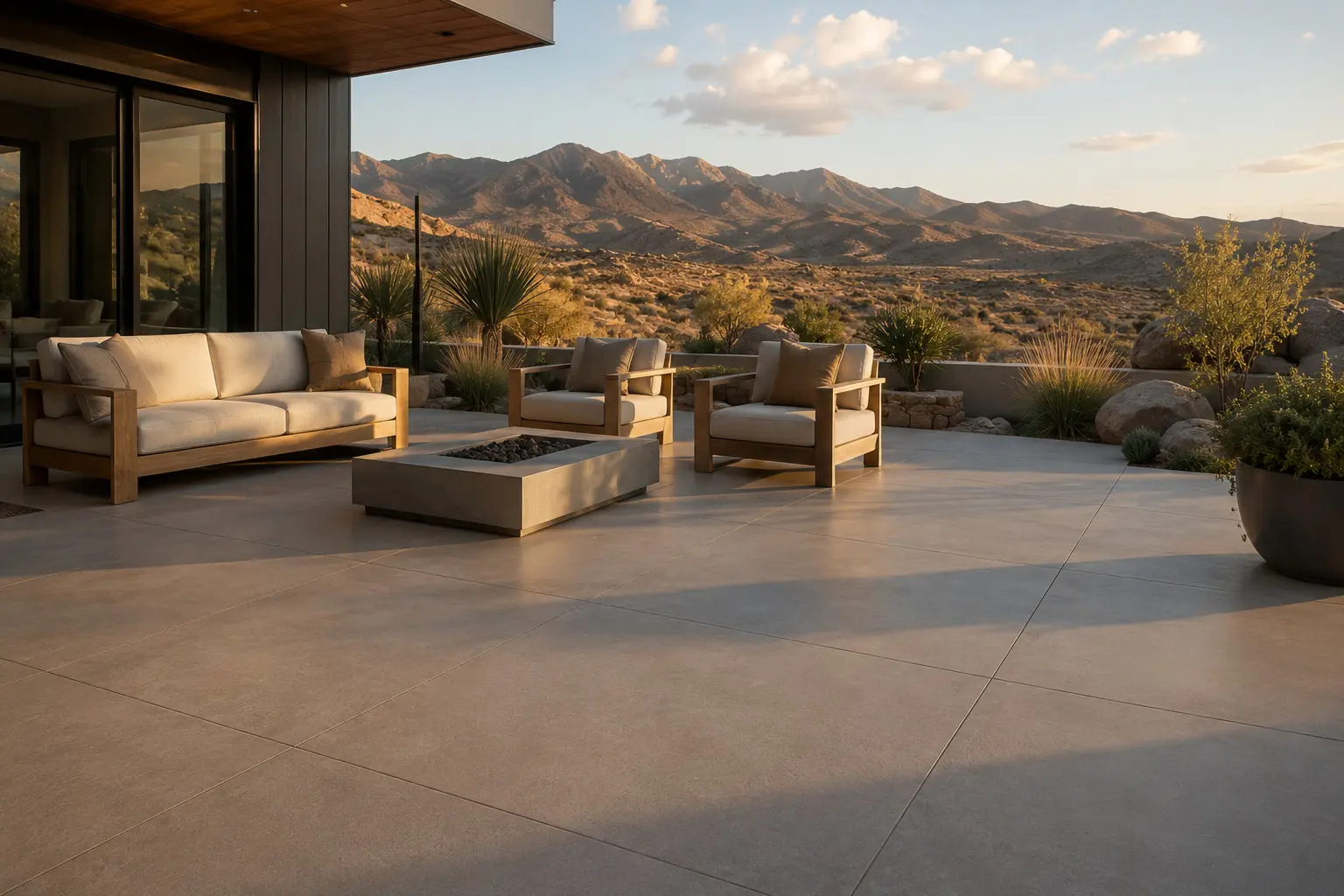
Getting a High-End Look Without the Natural-Stone Upkeep
Porcelain sits in its own category because it is engineered rather than quarried, which changes what it can offer outdoors. It is available in finishes that mimic granite, travertine, slate, and even concrete, so a homeowner who wants a specific look is not limited to whichever natural stone happens to share that appearance.
The slab is non-porous, but regular cleaning is still recommended to keep grout lines and surrounding areas looking their best over time. Porcelain rated for exterior use is generally held to a water absorption benchmark of 0.5 percent or less, and that low absorption is part of why properly selected and installed porcelain tends to perform well through Gardnerville's freeze-thaw swings. Homeowners interested in large-format porcelain can browse the Infinity Surfaces porcelain slab collection to compare thicknesses and finishes built for outdoor projects.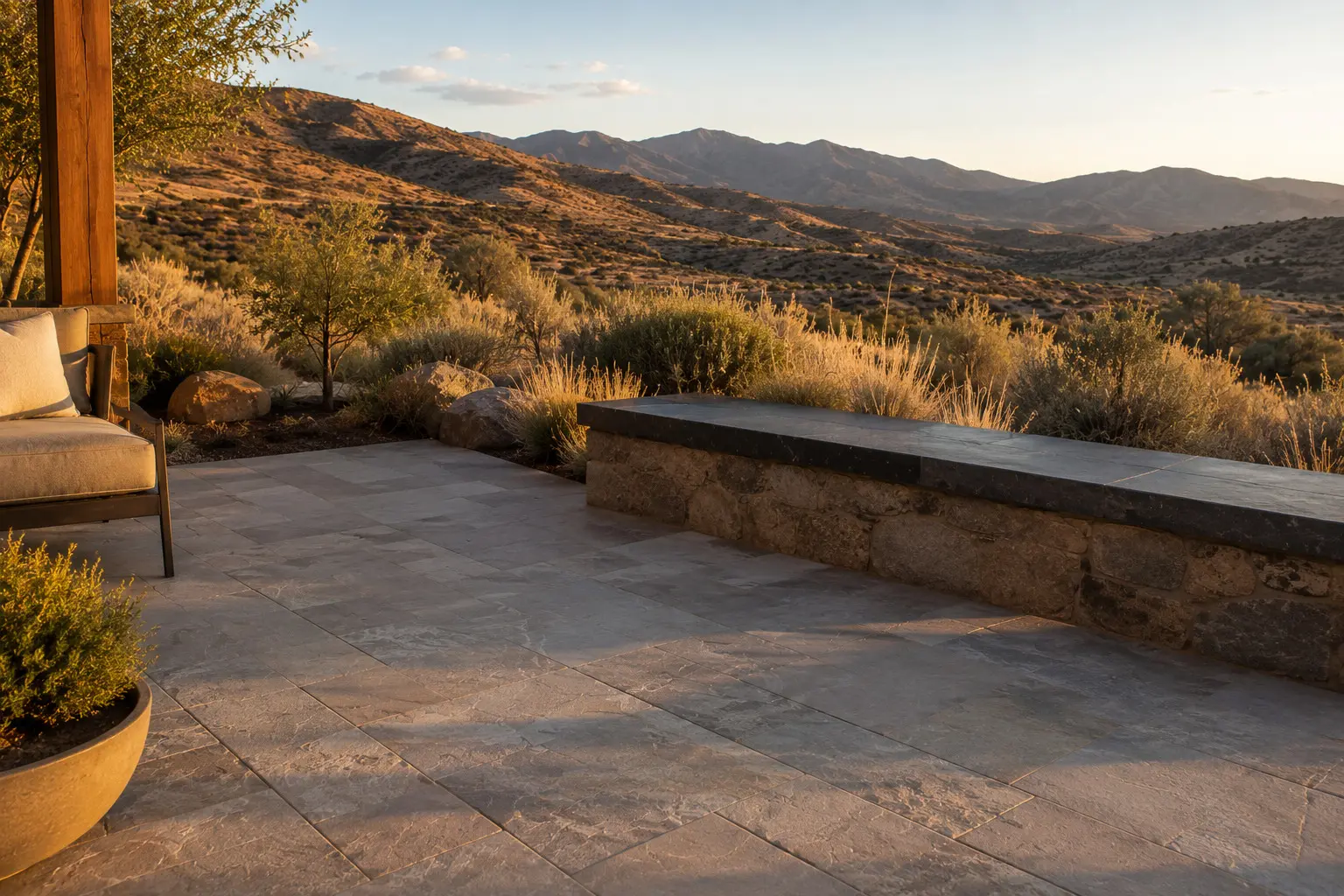
Matching Stone to a Ranch Property or a New Build in Town
A property tucked against the Pine Nut foothills often calls for a different material than a newer build closer to downtown Gardnerville, even when both projects are technically outdoor patios. A ranch-style home surrounded by sagebrush and open fencing tends to suit leathered granite or travertine, since the texture reads more organic against wood siding or exposed timber, while a contemporary build closer to town often suits polished quartzite or a concrete-look porcelain paver instead. Neither approach is more correct than the other, since the surrounding landscape and the home's existing materials usually make the direction fairly clear once they're compared side by side.
General guidance on stone finishes recommends confirming that a material's rating matches its intended use, whether that's a covered porch, an open patio, or a pool deck, rather than choosing based on color alone. Across granite, quartzite, travertine, and porcelain, the same four finish categories apply: polished, honed, leathered, and specialty, and a honed or leathered surface generally suits exterior spaces better than a polished one, which lines up with the finish choices above. For general background on how stone finishes are made and where each one tends to work best, see this overview of stone finish types. Homeowners can also send photos of their home exterior to our design team for finish recommendations ahead of a showroom visit, which tends to narrow the options considerably before anyone compares physical slabs.
Comparing Slabs in Person at Our Minden Showroom
Color and veining shift under natural light in a way that a product photo rarely captures, so seeing a slab outdoors, or at least near a window, matters more for exterior projects than for most interior ones. The Minden showroom serves Gardnerville homeowners directly, with granite, quartzite, travertine, and porcelain on display for direct comparison.
The showroom is located at 2548 Business Pkwy, Minden, NV 89423, and can be reached at (775) 783-4970. For turn-by-turn directions, the showroom's Google Maps location shows the exact building on Business Parkway. Nova Tile and Stone offers a free design consultation for homeowners who want to walk through options with a member of the design team and take samples home before finalizing a material for their project.
Conclusion
Gardnerville's combination of intense sun, low humidity, and repeated freeze-thaw swings rules out some popular interior stones before style even becomes a factor. Granite, quartzite, travertine, and porcelain each handle that climate differently depending on the project, whether it's a pool deck, a driveway edge, or a fireplace surround.
Starting from the specific outdoor space, rather than a general list of stone types, makes the decision faster and reduces the odds of choosing a material that looks right in a photo but struggles once it's actually outside through a Nevada winter.
Frequently Asked Questions
Marble and quartz are popular for interior counters and surfaces, but neither is rated for outdoor exposure. Gardnerville's freeze-thaw cycles are hard on materials that were not built for exterior use, which is why homeowners are generally steered toward granite, quartzite, travertine, or porcelain instead.
Quartzite, porcelain, and travertine are the most common pool deck choices in the area. Quartzite and porcelain also carry a UV-resistant rating, though performance may vary by color and finish, which is useful given how many sunny days the valley gets each year.
Quartzite is suitable for outdoor use, but correct installation is essential to how well it performs season after season through repeated freeze-thaw cycles. Comparing finish options in person is the best way to judge how a specific slab will hold up over time.
Porcelain is rated for fireplace applications, and the slab is designed for high-use areas, though misuse can still cause damage regardless of the material chosen. It also comes in finishes that match granite or travertine, which makes it easy to coordinate with the rest of an outdoor kitchen or seating area.
Homeowners can visit the Minden showroom to compare quartzite, granite, travertine, and porcelain slabs and pavers in person. A free design consultation is also available for those planning an exterior project.