Exterior stone for Reno patios, walkways, and outdoor living spaces includes porcelain pavers, natural stone such as granite and quartzite, and sintered stone panels. Each material performs differently in Reno's climate, including freeze-thaw winters between November and March, summer afternoons regularly exceeding 90°F (32°C), intense UV exposure at 4,500 feet, and annual precipitation of around 7 to 8 inches. Choosing the right material depends on the application, the finish, and how the surface will be used through all four seasons.
This guide covers which materials hold up in Reno's high-desert conditions, what technical standards to check before buying, and how each option applies to patios, walkways, fire features, and outdoor kitchens across Northern Nevada homes.
What Makes Reno's Climate Challenging for Exterior Stone?
Reno's high-desert position produces conditions that most outdoor materials are not designed for by default. Summer afternoons push into 90°F (32°C) but nights drop sharply, sometimes by 30 to 40 degrees. Winters bring hard freezes and snowfall, with precipitation falling mostly as snow between November and March. The air is dry year-round, and UV intensity at elevation is greater than it is at sea level.
Freeze-thaw resistance is non-negotiable for any material used outdoors in Reno. When water seeps into a porous surface and freezes, it expands, cracking the material from within. ASTM C1026 is the standard test method for freeze-thaw resistance in ceramic and glass tile. Materials with a water absorption rate at or below 0.5% are classified as impervious and perform most reliably here. Porcelain and sintered stone meet this threshold by nature of their manufacturing. With natural stone, the specific type determines suitability, and not all stone is appropriate for exterior Reno use.
Slip resistance is equally important on walkways, steps, and other outdoor surfaces exposed to rain or frost. ANSI A326.3 classifies these applications as Exterior, Wet (EW) and generally accepts a minimum wet DCOF of 0.55 for clean and maintained outdoor surfaces. Textured, honed, flamed, and bush-hammered finishes typically provide better traction than polished or high-gloss surfaces when wet.
UV stability and thermal behavior also matter. At 4,500 feet, UV intensity is high, and materials that fade or become uncomfortably hot underfoot are a practical problem. Color stability and low thermal conductivity should factor into the selection alongside freeze-thaw and slip resistance.
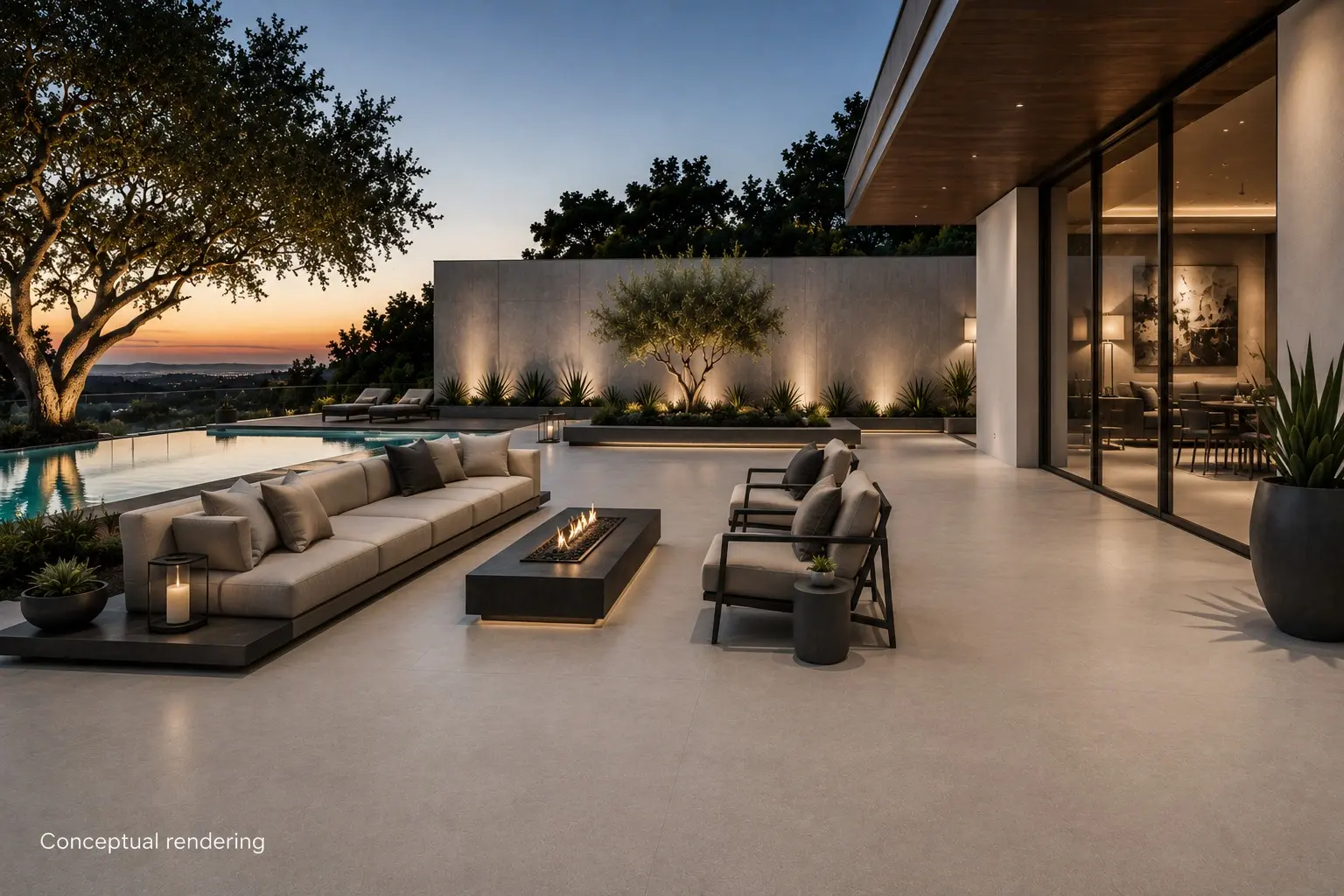
Material Options for Exterior Spaces
Three material categories are commonly used for exterior stone in Reno, each addressing the climate conditions above in different ways.
Porcelain
Porcelain is the most technically consistent option for outdoor use in Reno. Fired at high temperatures from dense clay, it achieves a water absorption rate of 0.5% or less, classifying it as impervious under ANSI A137.1. That low porosity is what makes it so well-suited to freeze-thaw conditions: very little water enters the surface, so there is very little moisture to freeze and expand within the material during a hard winter night.
For exterior use, thicker-format porcelain pavers (typically 20mm or more) are appropriate for ground-level patios and walkways. Textured and matte-finish options rated for exterior wet conditions provide traction without compromising a clean look.
Porcelain is available in wood-look, stone-look, and textured formats. Wood-look porcelain brings warmth to a covered porch without the maintenance burden of actual hardwood, while large-format stone-look options in warm creams, taupes, and charcoal tones read naturally against Reno's mountain backdrop.
Porcelain does not require sealing and resists staining from outdoor cooking and mineral deposits, relevant given the area's hard water.
Sintered Stone
Sintered stone is produced by subjecting natural minerals to extreme heat and pressure without additives or resins, creating a through-body panel with essentially zero porosity. Like porcelain, it performs well in freeze-thaw conditions, resists UV fading, and requires no sealing. It is also highly resistant to thermal shock, an advantage in Reno where summer afternoons can be intensely hot.
Sintered stone is well suited to outdoor kitchen countertops and built-in seating surfaces, where hardness and stain resistance matter most. It is available in large formats and its refined, contemporary aesthetic suits the clean lines common in newer Reno builds.
Natural Stone
Natural stone brings character and authenticity that manufactured materials cannot fully replicate. For Reno's high-desert setting, the warm tones of granite, quartzite, and basalt read naturally against the surrounding landscape of dry grasses, sagebrush, and Sierra foothills.
The key distinction for exterior use is that natural stone performance varies widely by type. Dense, low-absorption stones like granite are highly durable outdoors, handle freeze-thaw well, and are appropriate for walkways, steps, and patio fields when finished with adequate texture. Quartzite, similarly dense and hard, works well in exterior applications. Slate, depending on the source, can also be appropriate with proper finish selection.
More porous calcareous stones such as travertine, limestone, and marble require careful evaluation for Reno exterior use. Their higher water absorption makes them more vulnerable to freeze-thaw damage, and they may need regular sealing through the winter months. Polished finishes are not appropriate for outdoor walking surfaces regardless of stone type. For vertical applications such as fireplace surrounds, retaining walls, and garden borders, the range of suitable stones broadens considerably, since standing water and foot traffic are not factors.
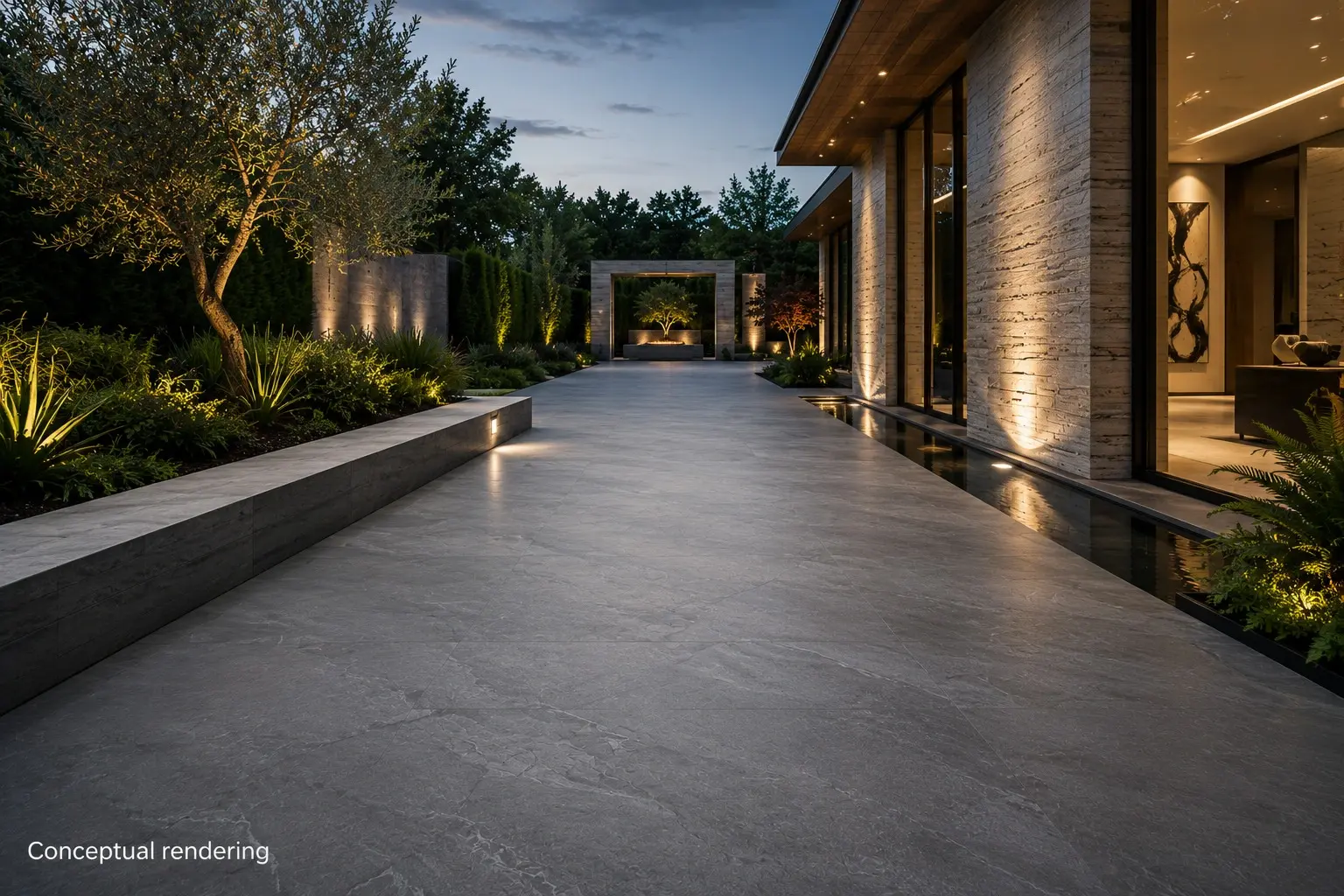
Design Ideas for Reno and Sparks Outdoor Spaces
With the material properties established, the question becomes where and how each one fits within a specific outdoor project.
Patios
The patio is typically the anchoring element of a Reno outdoor living space. Reno homeowners are increasingly investing in patios that extend the interior aesthetic outward, with materials that complement kitchen and living room finishes visible through large sliding or folding glass doors.
Large-format porcelain in warm neutrals, from soft ivory and greige to sand and terracotta, works well in this context. Sizes from 24x24 up to 24x48 or larger create a clean, expansive look, and wood-look porcelain adds warmth to covered patio sections.
For a more natural aesthetic, a large-format quartzite or granite-look slab format laid in a running bond or stacked joint pattern integrates naturally with Reno's landscape. The subtle variation in natural stone tonality brings visual interest without demanding attention.
Walkways
Walkways and paths have a different set of priorities from patio surfaces. They carry concentrated foot traffic, may include steps, and are often exposed to morning frost or brief rain events that make slip resistance particularly important.
For a front entry or garden path, tumbled or textured natural stone in warm tones creates a grounded look that suits residential neighborhoods across Reno and Sparks. A running bond in a 12x24 or 16x24 format provides clean directionality, while irregular flagstone layouts suit a more naturalistic setting.
Porcelain in a slate or travertine look with a structured texture delivers the visual warmth of natural stone with more consistent slip resistance and no maintenance burden. Narrow accent borders in a contrasting material add definition without complexity.
For steps, non-slip nosing and consistent riser height are the priority, with a bull-nosed or drop-edge finish giving the step face a clean finish.
Outdoor Living Spaces: Covered Areas, Kitchens, and Fire Features
Covered patios, outdoor kitchens, and fire pit areas are where Reno homeowners direct the most renovation investment. These are four-season spaces in good weather, used from early spring through late fall and, on mild winter evenings, with a fire feature to extend the season.
For a covered patio or loggia, floor materials that coordinate with adjacent interior finishes reinforce the indoor-outdoor continuity common in current Reno design. Large-format porcelain in a warm stone look works well here, as does a genuine quartzite or granite surface for an outdoor kitchen countertop.
For outdoor kitchen countertops, sintered stone, porcelain, and granite all handle UV exposure, heat, and food stains reliably. Marble and limestone are not appropriate for outdoor kitchen surfaces due to their sensitivity to acid staining and moisture.
Fire feature surrounds in stacked stone, natural stone veneer, or dry-stack quartzite are among the most visually impactful choices in a Reno backyard, echoing the rocky outcrops of the Truckee Meadows landscape.
Practical Considerations Before You Buy
The following checklist applies to any exterior stone project at the Reno showroom location (12835 Old Virginia Road) or for projects delivered across Washoe County.
Match interior and exterior finishes deliberately. A complementary exterior tone creates a seamless indoor-outdoor transition, particularly where interior floors are visible through glass doors.
Confirm frost resistance before committing. Ask for the ASTM C1026 rating on any tile or stone intended for walkways or steps; a product spec sheet should list this.
Check the finish, not just the material. For any surface that will be walked on, specify a textured, matte, honed, or exterior-wet rated finish. Polished finishes are not safe on outdoor walking surfaces.
Plan for grout joint and drainage. Exterior installations need adequate slope for drainage and properly spaced joints for thermal expansion; your installer should specify both.
Consider the whole picture. Exterior stone sits alongside siding, roofline, and landscaping. Bringing photos and existing material samples to a showroom or designer consultation makes it easier to evaluate options in context.

Choosing the Right Material for Your Reno Outdoor Space
Exterior stone selection in Reno comes down to a few practical questions: how much maintenance a surface requires, what finish suits the intended use, and how the material performs through a high-desert winter. A front walkway has different requirements than an outdoor kitchen counter or a fire feature surround, and getting those distinctions right at the selection stage saves problems later.
The materials available today, across natural stone, porcelain, and sintered stone, cover a wide range of aesthetics and performance profiles, and there is a technically appropriate option for every application in a Reno yard.
Nova Tile and Stone's Reno showroom at 12835 Old Virginia Road carries tile, stone, and slab materials for exterior and interior applications. The team offers design consultations to help you select materials that fit your project, style, and budget. The showroom is open Monday through Friday from 7:30am to 6:00pm and Saturday from 9:00am to 3:00pm. Call (775) 331-6682 or stop in any time.
Frequently Asked Questions
Porcelain and sintered stone perform most reliably in Reno's freeze-thaw conditions due to their low water absorption rates. Among natural stones, granite and quartzite are suitable when properly finished; more porous stones such as travertine and limestone require evaluation and likely regular sealing.
Polished finishes are not recommended for outdoor walking surfaces. ANSI A326.3 advises a minimum DCOF of 0.55 for maintained outdoor areas, and textured, matte, or honed finishes are the appropriate choice for exterior walkways in Reno.
Yes, but the specifications must match the outdoor application. Any tile used outdoors in Reno should be rated frost-resistant per ASTM C1026 and carry a DCOF appropriate for exterior wet use, and many porcelain product lines offer both interior and exterior-texture versions for a close visual match.
Natural stone offers character and variation that manufactured materials cannot fully replicate, and dense types like granite and quartzite perform reliably outdoors. Porcelain offers more consistent freeze-thaw resistance and requires no sealing, making it the lower-maintenance option; the right choice depends on your aesthetic goals and how the surface will be used.
Yes, Nova Tile and Stone's Reno location offers delivery across Washoe County. Contact the showroom at (775) 331-6682 to discuss timing and logistics for your project.
Note: Some images on this page may be conceptual renderings created to illustrate design possibilities and may not depict actual installations.