Granite, quartzite, stacked stone, and large-format exterior porcelain are the primary materials used for patios, walkways, outdoor kitchens, and vertical surfaces in Carson Valley outdoor spaces. Granite is a natural igneous stone with no polymer resins, making it UV-stable and well-suited to outdoor kitchen counters and patio pavers. Quartzite is a dense metamorphic stone used for patio floors, pool coping, and wall cladding, requiring sealing but offering strong resistance to the freeze-thaw cycles common in the high desert climate. Stacked stone is a practical format for accent walls, fire pit surrounds, and outdoor fireplace faces. Large-format exterior porcelain at 20mm thickness is non-porous, frost-resistant, and seal-free, making it a low-maintenance option for open, fully exposed patio surfaces. For Douglas County and Minden homeowners, material choice depends on the application, the level of sun and weather exposure, and how much ongoing maintenance fits the project.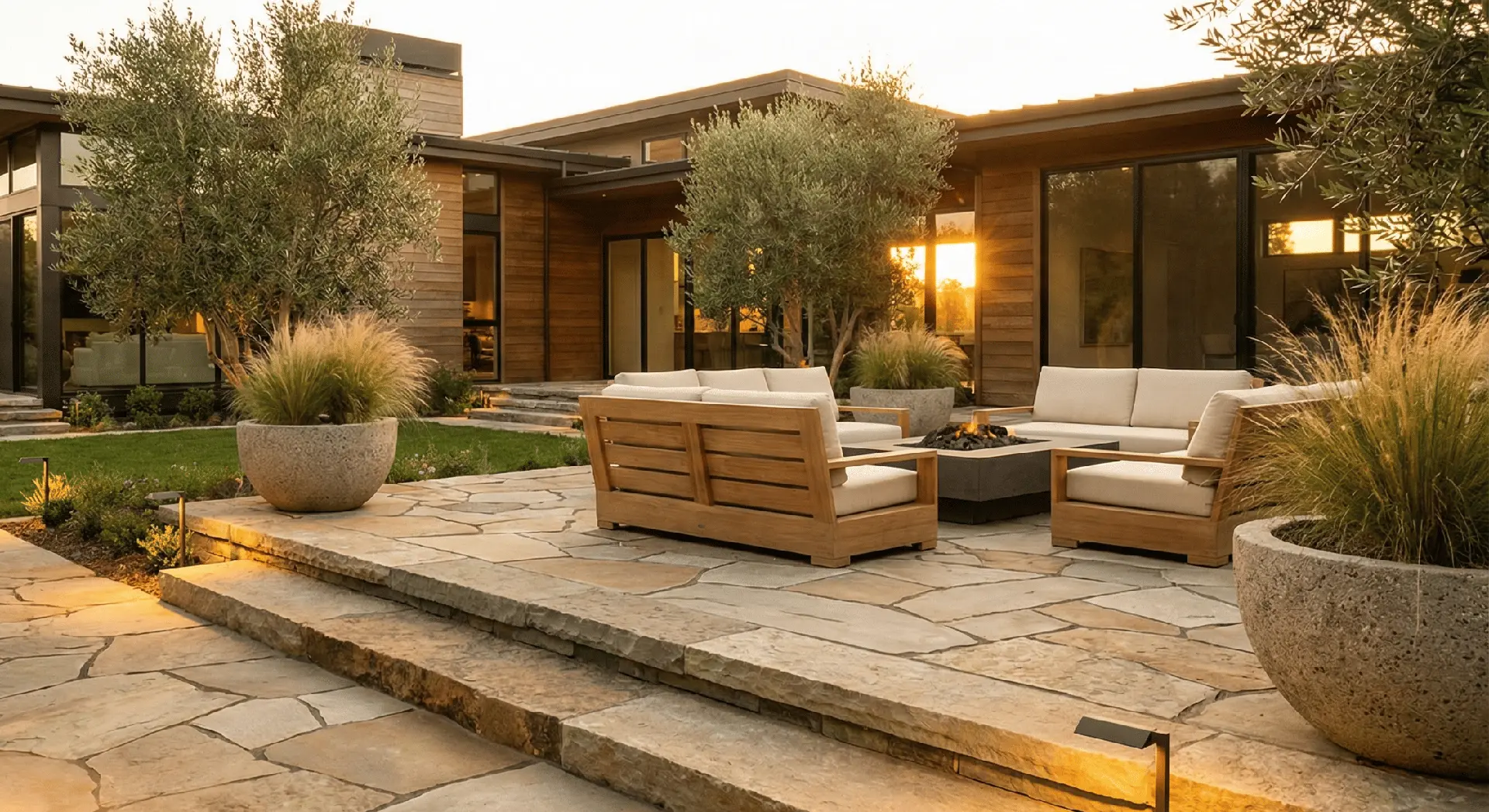
Why Material Choice Matters More Outdoors
Indoor surfaces live in a controlled environment. Outdoor surfaces do not. Patios, walkways, and outdoor kitchen counters face direct sun, foot traffic, moisture, and seasonal temperature shifts that stress materials in ways interior applications do not.
Natural stone used outdoors is durable and built for lasting use, but proper material selection and sealing will help preserve its appearance over time. Not every stone that performs well indoors is suited to exterior conditions. Porosity, finish type, and surface texture all affect how a material holds up over years of outdoor exposure. A polished finish that looks stunning on a bathroom floor can become a slip hazard on a wet patio surface. Honed and textured finishes are generally better suited to horizontal outdoor applications because they provide more grip underfoot without sacrificing the warmth and character of natural stone.
You can browse exterior stone options by style to get a sense of what surface directions are available before visiting the showroom.
Granite for Outdoor Counters and Patio Surfaces
Granite is one of the most widely used natural stones in exterior applications. As an igneous rock, it contains no polymer resins, which means its color and structure remain stable under UV exposure for most varieties, though granites with high iron content may show surface changes over time with prolonged outdoor exposure. The surface is strong and built for lasting use outdoors, but proper sealing is still recommended to protect against moisture and staining over time.
For outdoor kitchen counters, granite is a practical choice. Its density makes it resistant to surface abrasion, and its heat tolerance suits the demands of a working grill station. Honed and leathered finishes are the preferred choices for outdoor counters because they reduce glare in natural light and provide a safer surface texture when wet. For open patio floors and walkways, granite is also available as cut pavers, which are natural stone pieces sized to consistent dimensions for use as flooring units on patios, garden paths, and pool surrounds. The stone's dense mineral structure handles freeze-thaw cycles better than more porous alternatives, but each application should be evaluated based on exposure conditions and finish type.
You can view the live slab inventory to see what granite varieties are currently in stock, or browse granite outdoor kitchen countertop page to see how this material applies to exterior cooking surfaces. For a broader look at how natural stone behaves in outdoor settings, Use Natural Stone's backyard respite guide covers material selection and design principles clearly.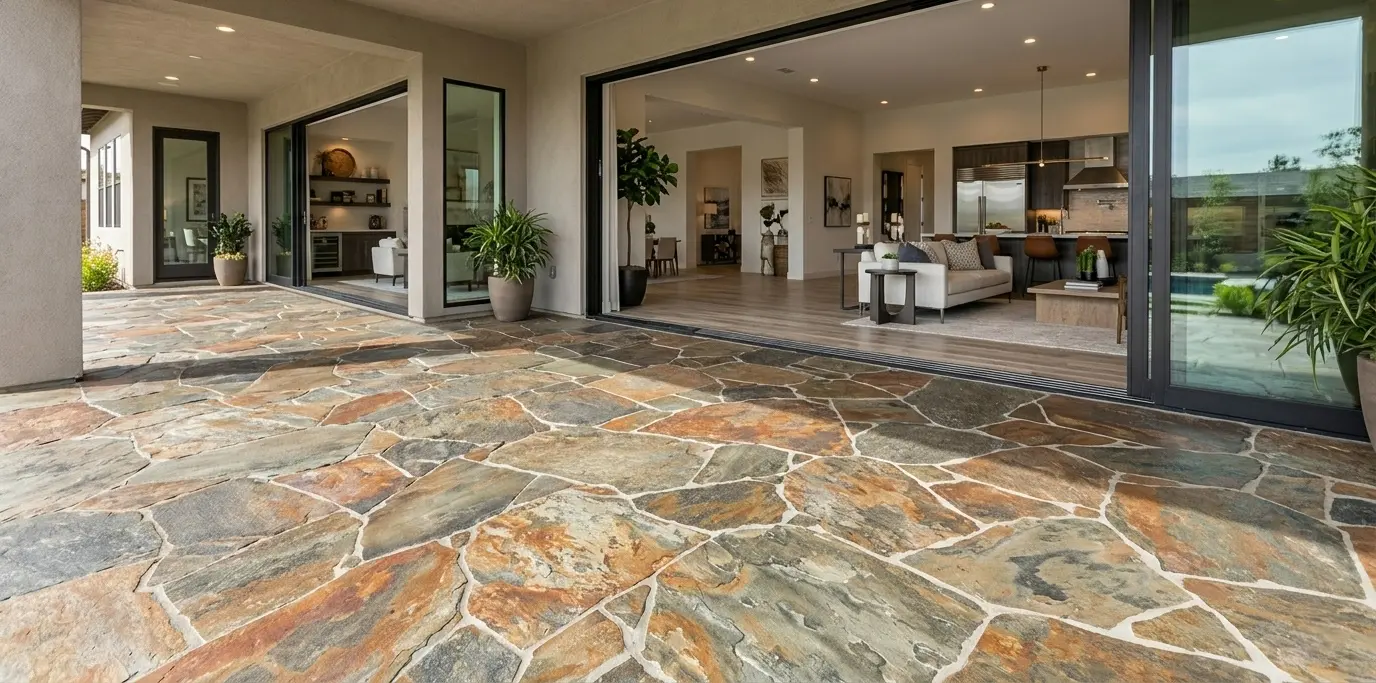
Quartzite for Patio Floors, Pool Coping, and Wall Cladding
Quartzite is a metamorphic rock that ranks among the harder natural stone options for residential use. Its dense crystalline structure makes it well-suited to outdoor horizontal surfaces where traffic, moisture, and temperature variation are ongoing concerns. Edges and corners require extra care during use, and consistent sealing and maintenance are essential for long-term performance.
For Carson Valley patios, quartzite offers a refined visual quality that suits both contemporary and mountain-inspired design directions. Its natural veining and tonal variation give it a character that large-format porcelain cannot fully replicate, while its structural density makes it a more practical outdoor choice than marble for homeowners who want a similar aesthetic. It is well suited to patio pavers, pool coping, and walkway surfaces, and can also be used for exterior wall cladding in covered outdoor spaces.
For patio and pool applications in the Carson Valley climate, sealing at installation and regular resealing is a practical step that helps preserve the stone's character across years of outdoor exposure. You can explore quartzite outdoor kitchen countertop options as a starting point for understanding how this material translates to functional outdoor surfaces.
To see how stone patios come together visually across different design styles, Houzz's stone patio gallery offers a wide range of real project references worth browsing before finalizing your direction.
Large-Format Porcelain for Patios and Outdoor Living Areas
Large-format porcelain slabs are a practical choice for Carson Valley outdoor spaces, particularly for patios, walkways, and covered outdoor kitchen surfaces. At 20mm thickness, porcelain slabs engineered for exterior use have near-zero water absorption, which makes them resistant to moisture penetration, and their frost-resistant composition handles freeze-thaw cycles with reduced cracking risk compared to more porous natural stone.
The surface is non-porous and does not require sealing, which reduces the long-term maintenance commitment compared to natural stone. The material is easy to maintain, but harsh cleaners should be avoided to preserve the surface finish. Because porcelain is manufactured in a controlled environment, it is available in consistent large-format dimensions that allow for expansive patio surfaces with minimal grout lines.
Our Infinity Surfaces porcelain slab collection includes several options in stone-look and concrete-look finishes suited to outdoor applications. The 20mm thickness options are specifically designed for exterior use, with UV-stable colorways that resist fading in sustained sun exposure. The material is UV resistant, but performance may vary by color and finish, so evaluating slab samples in your actual outdoor lighting conditions is a worthwhile step.
For a practical overview of design considerations, finish choices, and material selection for outdoor patio surfaces, Real Homes' garden paving guide covers the key decisions across natural stone and porcelain options.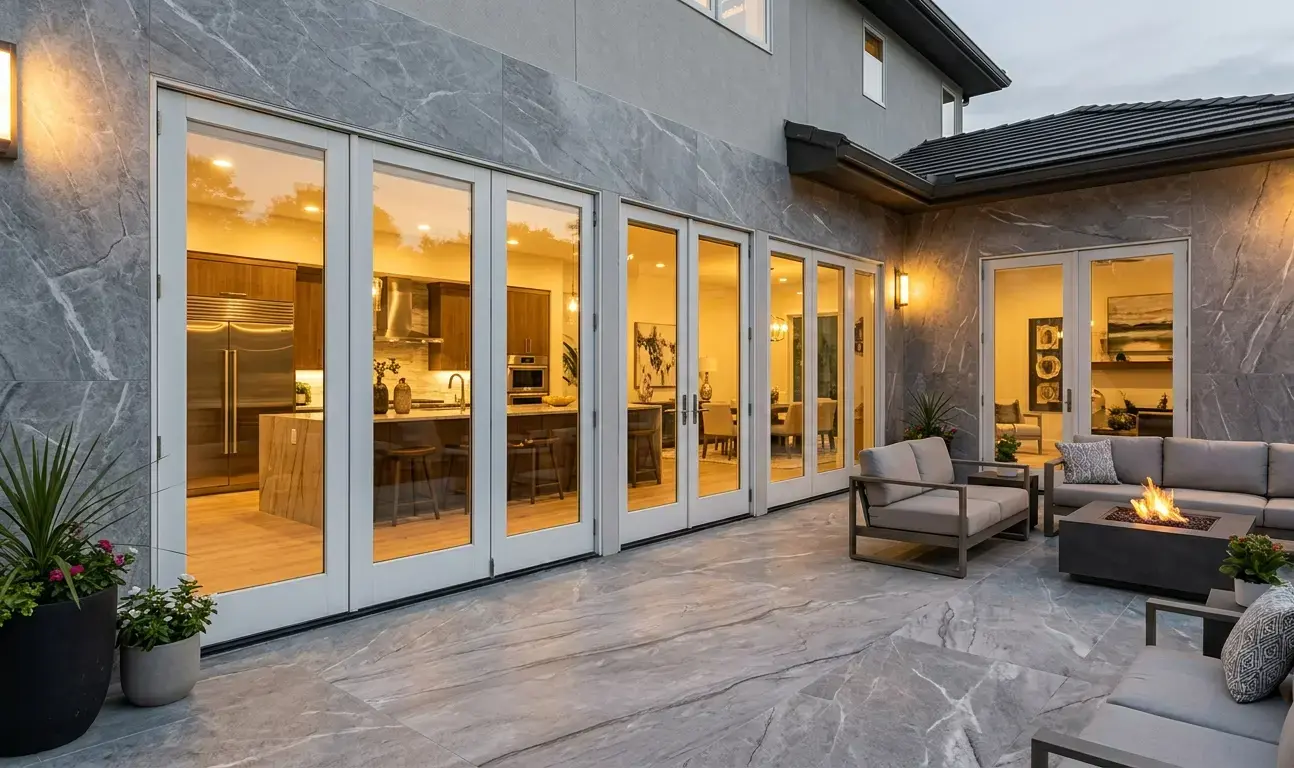
Stacked Stone for Walls, Fire Features, and Vertical Surfaces
Outdoor spaces in Carson Valley often extend beyond the patio floor. Accent walls, fire pit surrounds, outdoor fireplace faces, and garden wall cladding are all areas where exterior stone adds architectural character and visual weight to a space that might otherwise feel incomplete.
Stacked stone is an exterior-rated product available at the Minden showroom and one of the most practical formats for vertical outdoor applications. Nova Tile and Stone's exterior stone category includes stacked stone alongside pool coping and pavers, giving homeowners the option to coordinate materials across an entire outdoor build. Its layered, textured surface adds depth to accent walls and fire feature surrounds, and its modular format suits both covered and semi-exposed outdoor spaces. Natural stone used on outdoor walls is durable and designed for lasting use, but correct installation with exterior-rated setting materials is essential for performance in climates with seasonal temperature variation. The surface resists fading, but prolonged UV exposure conditions should still be considered when selecting finish and color.
For fire pit surrounds and outdoor fireplace faces, stacked stone and granite are both practical choices given their natural heat tolerance and UV stability. Combining a paver patio floor with a matching or complementary stacked stone fire feature surround helps unify an outdoor space visually, creating a design continuity that reads as intentional. For homeowners working with a landscape designer or contractor on a larger outdoor project, our trade account program gives professionals access to materials and project support suited to multi-element outdoor builds.
Designing for the Carson Valley Climate
The high desert environment of Carson Valley and Douglas County brings specific conditions that matter when selecting exterior stone. Summer temperatures can reach the high 90s, winter nights drop well below freezing, and the area receives enough snowfall in some years to create sustained freeze-thaw cycles at ground level. Wind and UV exposure are consistent factors across all seasons.
For patio floors in open, fully exposed areas, dense low-porosity stone or 20mm exterior porcelain is among the most practical starting points. For covered outdoor kitchens and partially shaded spaces, the options expand to include polished and honed granite and quartzite finishes. Textured matte surfaces are recommended for any horizontal outdoor surface that may become wet from rain, snow, or outdoor cooking activity.
Because stone surfaces look different in outdoor light than they do under showroom lighting, taking physical samples home before finalizing a selection is a practical step. Booking a free design consultation at our Carson Valley showroom allows our commission-free design team to walk through material options with your specific space in mind.
Conclusion
Carson Valley patios and outdoor spaces benefit from stone and porcelain materials selected with the region's climate in mind. Granite brings UV-stable color and heat tolerance for outdoor kitchen surfaces. Quartzite offers refined character and structural density for patio floors, pool coping, and wall cladding. Large-format exterior porcelain delivers low-maintenance performance with frost resistance for open, fully exposed applications. Explore the full range of surfaces we carry and bring a few samples home to see how each material looks in your actual space before deciding.
Frequently Asked Questions
Dense, low-porosity stones are among the most practical choices for a climate with freeze-thaw cycles, high summer temperatures, and strong UV exposure. Granite and quartzite both handle these conditions well when properly sealed and maintained, but each application should be evaluated based on exposure level, finish type, and intended use. Large-format exterior porcelain at 20mm thickness is also a strong option for fully exposed areas because of its frost resistance and non-porous composition.
Granite is a practical and widely used choice for outdoor kitchen counters. It contains no polymer resins, so its color remains stable under UV exposure for most varieties, and its density resists surface abrasion from outdoor cooking. Periodic sealing at installation and on a regular maintenance schedule is recommended. Honed or leathered finishes are preferred over polished for outdoor counter applications.
Large-format porcelain slabs engineered for exterior use are non-porous and do not require sealing. Their frost-resistant composition and low water absorption rate make them well-suited to open patio applications in climates with seasonal freezing. Regular cleaning is still recommended to maintain the surface, and harsh chemical cleaners should be avoided. The 20mm thickness options are specifically designed for exterior use.
Quartzite is used for pool coping, walkway surfaces, and patio floors where UV stability and structural density matter. Its hardness and natural texture make it a practical horizontal surface choice, and its tonal quality holds over time with proper sealing and maintenance. For pool surrounds and wet zones, a honed or textured finish is better than a polished surface for slip resistance.
Stone and porcelain surfaces look different under outdoor natural light than they do in a showroom or on a screen. How a material reads against surrounding landscape elements and how its texture holds up in full sun versus shade only become clear when the sample is placed in the actual space. Taking physical samples home and observing them at different times of day is one of the most reliable ways to confirm a choice before committing to a full order.
Curious About Something Else?