Exterior stone refers to pavers, stacked stone, and pool coping used to build patios, walkways, pool decks, and outdoor kitchens. Landscape industry groups such as the American Society of Landscape Architects have long tracked these features among the residential design categories homeowners request most. In Carson Valley's high desert climate, dense materials like granite and quartzite hold up best in exposed, sun-heavy areas, while porcelain pavers offer a manufactured, fade-resistant alternative to natural stone. Homeowners near Minden, Nevada can compare the full range of pavers, stacked stone, and pool coping in person at the Nova Tile and Stone Minden showroom, with a free design consultation available to help match material to application.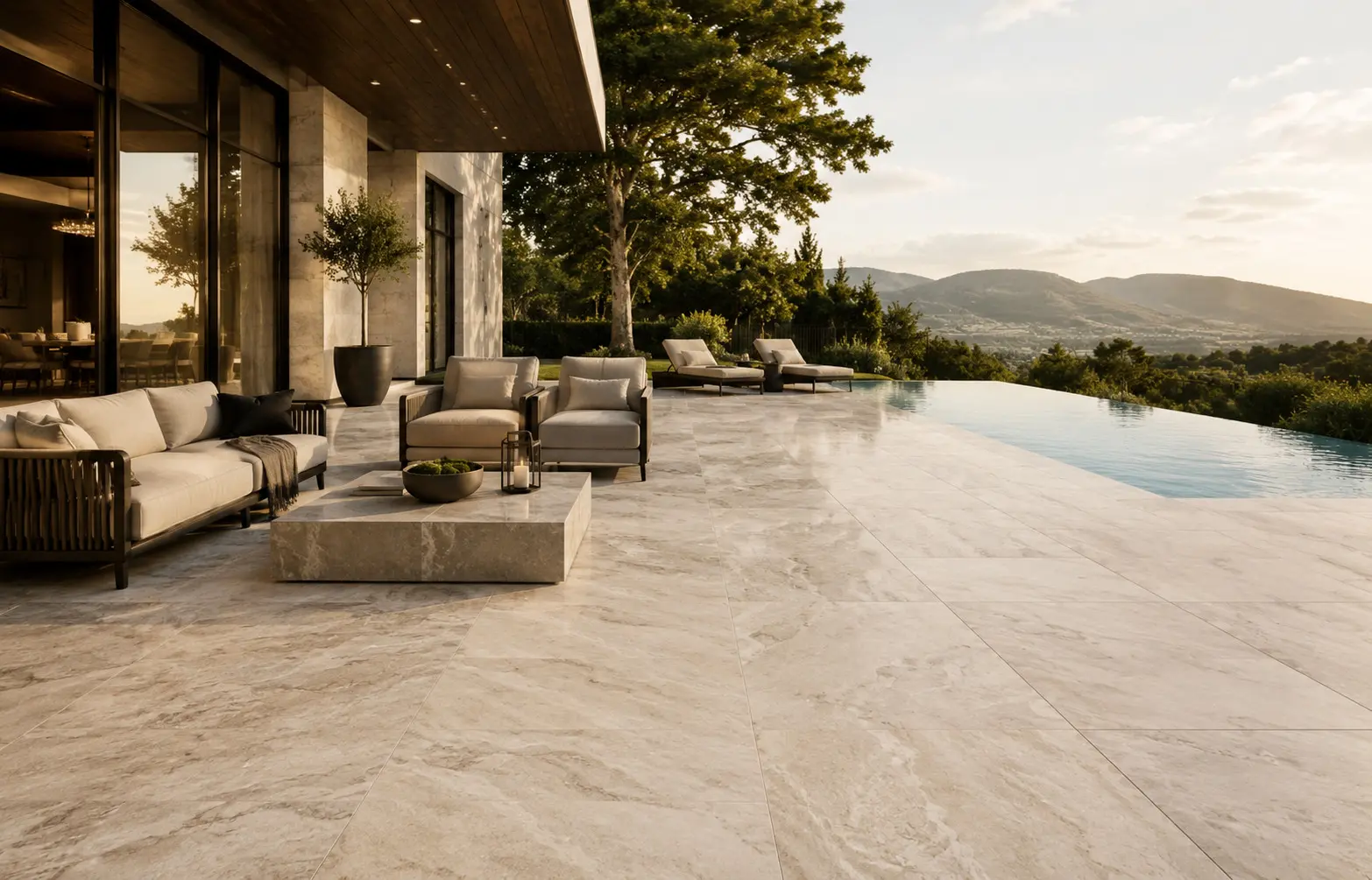
Understanding Exterior Stone and Its Everyday Uses
Exterior stone covers a wide category of hardscape materials rather than a single product. Small to large format pavers form the base of most outdoor floors, while stacked stone brings texture and dimension to vertical surfaces such as seating walls or fireplace surrounds. Pool coping, the trim piece that runs along the edge of a swimming pool, rounds out the category and gives water features a finished border. These materials are quarried or manufactured in slab and modular form, so homeowners can browse the full range of exterior options, from natural stone to porcelain, on the products we carry page before narrowing down a direction for their project.
Porcelain pavers have become a popular alternative to traditional stone because they are manufactured to resist fading and staining while mimicking the appearance of granite, travertine, or concrete. Natural stone, on the other hand, is quarried rather than manufactured, so color and veining vary from batch to batch, a natural characteristic the Natural Stone Institute documents as a normal part of working with quarried material rather than a flaw. Neither option is inherently better; the right pick usually comes down to the look a homeowner wants and how the space will be used day to day.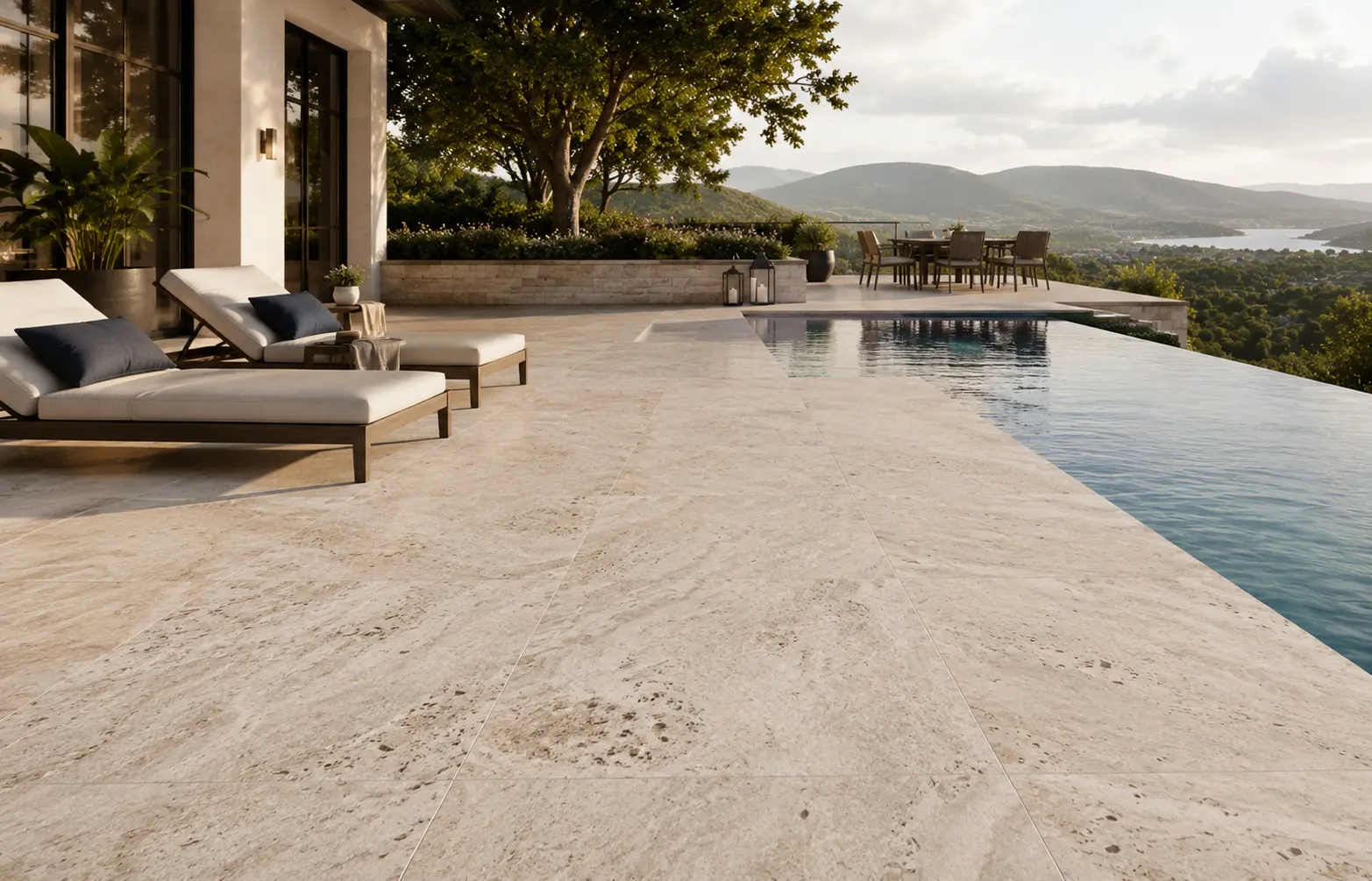
Popular Applications Across Carson Valley Outdoor Spaces
Patios remain the most common starting point for an outdoor stone project, since they anchor furniture, dining areas, and gathering spots. Walkways come next, connecting a driveway to a front entry or linking a back patio to a garden shed. Pool decks call for a different set of priorities, since the surface is designed for high-use areas, but misuse can still cause damage, so slip resistance and heat management matter more than they would on a front walkway. Sandstone and travertine finishes are often chosen here because their texture offers reliable footing, and checking how a sample feels underfoot in direct sun helps confirm comfort before committing to a full pool deck installation.
Outdoor kitchens are another growing request, pairing exterior-rated countertop material with a paver floor and stacked stone veneer around the cooking area. Fire pits and seating walls round out many designs, giving a yard a gathering point once the sun goes down. Retaining walls built from stacked stone can also double as planter borders or terracing on sloped lots, which is common throughout the foothills surrounding the valley. Driveway aprons and entry paths are a smaller but equally practical use, since a well-chosen paver can handle vehicle weight and daily foot traffic while still complementing the rest of the property's exterior finishes.
Matching Stone to the High Desert Climate
Carson Valley sits in a high desert climate with intense summer sun, low humidity, and winter freeze-thaw cycles that can stress certain paving materials over time. The University of Nevada Cooperative Extension outlines how landscape planning in this region has to account for wide temperature swings and limited rainfall. That guidance is written with plant selection in mind, but the same reasoning is worth extending to the pavers, stacked stone, and coping used throughout a yard. Granite and quartzite tend to perform well in these outdoor conditions because of their density, while sandstone and limestone bring warmth and softer color tones along with slightly higher porosity.
Pavers and stacked stone are UV resistant, but performance may vary by color and finish, so darker tones may show fading differently than lighter ones over time. Heat is a separate consideration in full sun: darker pavers also tend to absorb more warmth during peak summer afternoons than lighter shades. Homeowners planning a pool deck or uncovered patio in full sun often lean toward lighter stone for this reason. Exterior stone is suitable for outdoor use, but installation must match the application, meaning a paver rated for foot traffic on a walkway is not automatically the right choice for a driveway or a heavily trafficked pool surround.
Elevation also plays a role in material selection throughout the valley, since properties closer to the foothills can see wider day-to-night temperature swings than those on the valley floor. A stone that performs well in a sheltered courtyard may behave differently on an exposed hillside lot facing prevailing wind. Homeowners working on new construction or a larger landscape overhaul often find it worthwhile to think through sun exposure, wind patterns, and drainage before finalizing a paver or veneer choice, since these factors influence how a surface ages over years of seasonal change.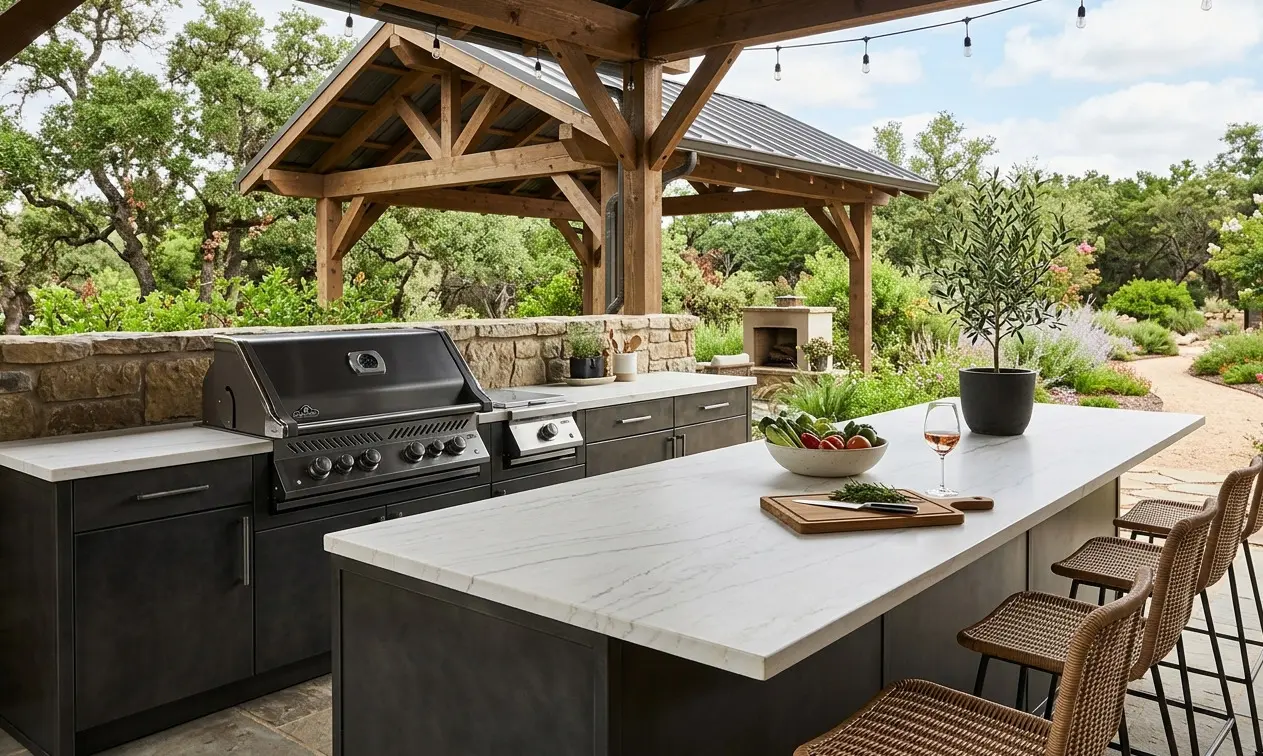
Coordinating Stacked Stone, Pavers, and Outdoor Countertops
A cohesive exterior often comes down to keeping pavers, stacked stone, and outdoor countertop material within the same stone family. A patio floor in one paver line paired with a stacked stone accent wall from an unrelated color palette can make a yard feel disjointed, while choosing complementary tones across both surfaces ties the space together. Outdoor kitchens benefit from this the most, since the exterior-rated countertop material can be selected from the same natural stone countertop line used elsewhere on the property, keeping veining and color consistent between the counter, the surrounding pavers, and any stacked stone backsplash.
This approach also simplifies decision-making, since color palettes and finish sheen only need to be chosen once rather than separately for each surface. Coordinating a stacked stone fireplace surround with the patio's paver tones is another way this plays out, giving the entire outdoor living area a sense of design flow from the seating area to the cooking space.
Comparing Exterior Stone Options at Our Minden Showroom
Photographs and online listings only tell part of the story with stone, since color and texture shift under different lighting. Visiting in person allows homeowners to see how a paver looks in daylight, feel the texture underfoot, and hold samples next to existing exterior finishes like siding or trim. At Nova Tile and Stone, the Minden showroom carries a full range of pavers, stacked stone, and pool coping, so an entire yard project can be planned in one visit.
Live inventory can also be reviewed ahead of a visit through the slab inventory page, giving a preview of what is currently in stock before making the trip. Our design team offers a free design consultation to walk through material options, discuss how a stone will hold up in a specific part of the yard, and help homeowners narrow down choices based on the scale of their project. For those comparing showroom locations across the region, the showroom locator makes it easy to find the closest one.
Caring for Exterior Stone Over Time
Pavers, stacked stone, and pool coping are durable, but proper care will help preserve their appearance, and exterior installations are no exception. Dust, pollen, and mineral deposits from sprinklers can dull a surface over months of exposure, so periodic rinsing keeps color and texture looking closer to new. Paver and countertop surfaces used in outdoor kitchens are stain resistant, but spills should be cleaned promptly, especially where oil-based marinades or wine are common.
Sealing needs vary by material. Dense stones like granite generally need less frequent attention, while more porous options such as sandstone or limestone benefit from periodic sealing to guard against moisture absorption. Pavers and stacked stone offer good resistance to wear, but long-term performance depends on maintenance, so a simple seasonal check of joints, grout lines, and surface wear can catch small issues before they become larger repairs.
Conclusion
Exterior stone gives Carson Valley homeowners a durable, good-looking way to build out patios, walkways, pool decks, and outdoor kitchens. Because the region's climate places real demands on paving materials, matching stone type to sun exposure, moisture, and intended use matters as much as picking a color that looks good in a showroom photo. Comparing samples side by side, thinking through how a space will actually be used, and choosing materials that complement the rest of the property's exterior finishes all lead to a more satisfying outcome. Browsing the full product range online is a helpful starting point, and the Minden location remains a convenient stop for comparing options in person and getting guidance suited to a specific yard and budget.
Frequently Asked Questions
Natural stone pavers come from quarried granite, travertine, sandstone, or limestone, so each piece has unique veining and color variation. Porcelain pavers are manufactured to resist fading and staining while replicating the look of natural materials, often at a more consistent color match across a large area.
Some materials work well in both settings, but pool decks generally call for finishes with strong slip resistance and manageable surface heat, since bare feet are in constant contact with the surface. A finish that suits a shaded patio may not be the best fit for a sun-exposed pool surround.
Yes. Many homeowners pair one paver type for patio floors with a different stacked stone for accent walls or fireplace surrounds, as long as the tones and finishes are chosen to complement each other.
The high desert climate brings strong summer sun, low humidity, and winter freeze-thaw cycles, so denser materials like granite and quartzite often perform more consistently than softer, more porous stones in exposed applications.
Bringing photos of the outdoor space, any existing exterior finishes like siding or trim, and a rough idea of square footage helps our design team narrow down options during a free consultation.
Curious About Something Else?