AT A GLANCE
- Kings Beach sits near 6,250 feet, with frequent freeze-thaw cycles.
- Low water absorption is the key property for outdoor stone here.
- Granite absorbs about 0.05 to 0.40 percent water by weight.
- We list granite and quartzite for outdoor use, and both are UV resistant.
- Quartzite works outdoors and resists UV fading.
- Dolomite is best kept indoors, on walls, floors, and fireplaces.
- Stone is noncombustible, so it fits the 0 to 5 foot fire zone.
IN THIS POST
- How Does Freeze-Thaw Affect Exterior Stone?
- Which Stone Handles Freeze-Thaw Best?
- What Helps Exterior Stone Last?
- Natural Stone or Manufactured Veneer?
- Does Stone Help With Defensible Space?
- What Affects Exterior Stone Cost?
- Conclusion
- Frequently Asked Questions
- Sources
Exterior stone can last for decades in Kings Beach, CA, but only if it’s chosen and installed for the area’s specific freeze-thaw climate. At roughly 6,250 feet on Lake Tahoe’s north shore, Kings Beach sees frequent cycles of freezing and thawing each winter. That stress can crack, heave, or flake stone that isn’t dense enough or properly sealed. Dense stones with low water absorption, such as many granites and quartzites, are generally the more reliable choices for exposed exterior use in this climate. More porous stones, including some limestones, need closer evaluation before they go outdoors.
For homeowners planning a patio, walkway, facade, or fireplace surround in this area, whether in Kings Beach itself, Tahoe Vista, or Crystal Bay, the material choice and installation details (sealing, drainage, and mortar coverage) matter as much as appearance for how long the stone will actually last.
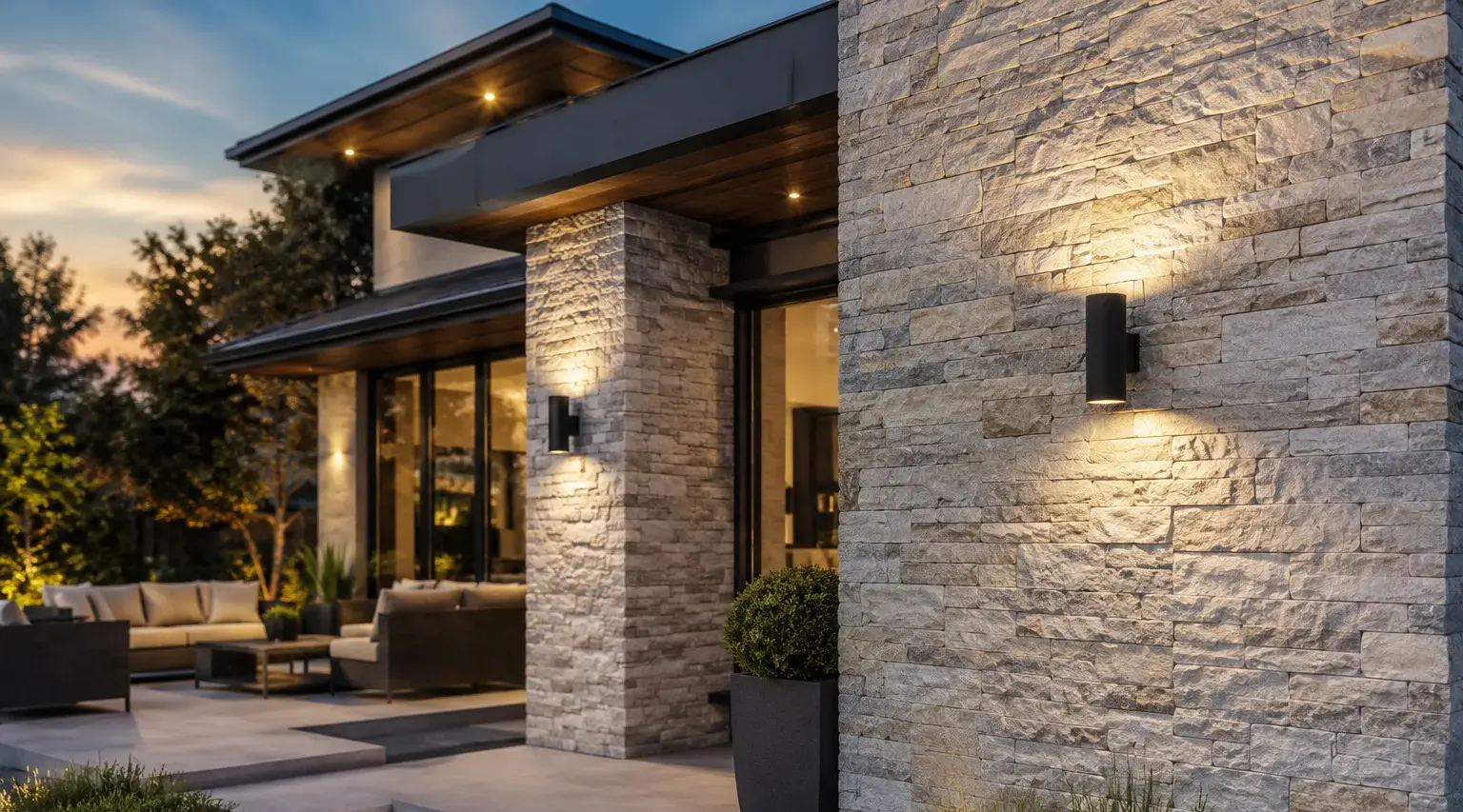
How Does Freeze-Thaw Affect Exterior Stone?
Freeze-thaw cycling, not cold alone, is what damages exterior stone in Kings Beach. Water absorbed into the stone freezes and expands, and repeated cycles over a winter can crack or flake the surface.
Kings Beach experiences a dry-summer continental climate: warm, dry summers followed by cold winters with consistent snow. That seasonal swing matters more for stone than heat or rainfall alone.
Here’s how it works: every stone has some degree of porosity, meaning it absorbs a small amount of water into its surface. When temperatures drop below freezing, that absorbed water expands as it turns to ice, pushing outward against the stone’s internal structure. When temperatures rise again and the ice thaws, the stone contracts back. Repeated many times over a single winter, this expansion and contraction cycle stresses the stone’s internal bonds. Over enough cycles, it can produce cracking, flaking, or spalling, where thin layers of the stone’s surface break away.
Elevation is what makes this location particularly demanding. At roughly 6,250 feet, temperatures can swing above and below freezing many times across a single winter. Daytime sun at altitude can push temperatures above freezing even in January, only for clear mountain nights to drop them back below freezing after sunset. That near-daily swing means more freeze-thaw cycles per season than a climate that stays consistently frozen throughout winter. A consistently frozen climate can actually be easier on stone than one that thaws and refreezes constantly.
Snow load introduces a second, related consideration specific to horizontal stone surfaces: patios, walkways, entry steps, and pool or hot tub surrounds. These surfaces need to shed both snow and the meltwater that follows it. Without adequate slope and drainage built into the installation, water pools on or beneath the stone, then refreezes, accelerating exactly the freeze-thaw damage described above. This is why installation quality matters as much as material choice for any exterior stone project at this elevation.
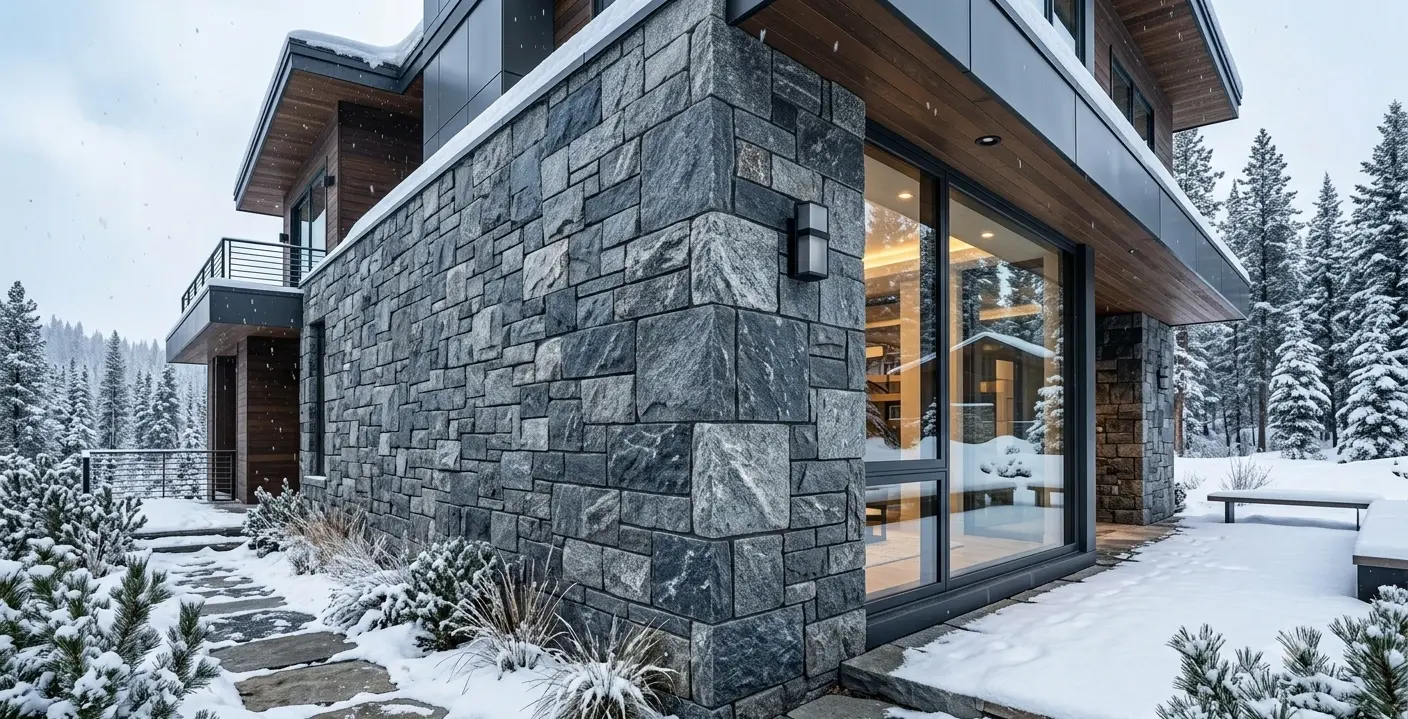
Which Stone Handles Freeze-Thaw Best?
Dense, low-absorption stones such as granite and quartzite generally handle freeze-thaw cycles best, because they take in less of the water that causes the damage. Results still vary from one variety to the next, so a specific stone’s test data matters more than its category name.
Freeze-thaw resistance varies by stone type. A proposed freeze-thaw test method for natural stone measures changes in strength after 100 freeze-thaw cycles, which are meant to simulate decades of exposure. Beyond the absorption rating itself, granite and quartzite each have practical strengths worth knowing before choosing between them.
Granite. Granite’s water absorption typically ranges from 0.05 to 0.40 percent, a very low range for building stone. It has a long record as exterior cladding, paving, and municipal curbing. In northern climates, it has also held up to heavy use of snow-melting chemicals. We list granite as suitable for outdoor use and UV resistant, which makes it a practical option for patios, steps, and exterior facades that need to perform through repeated Tahoe winters.
Quartzite. Quartzite is a metamorphic rock formed from sandstone, and it can be exceptionally strong, dense, and hard. Its strength, abrasion resistance, and weathering durability support use in most common dimension-stone applications. It also tends to show more natural veining and color variation than granite. That makes it a common choice where homeowners want a more textured, less uniform look on facades or hardscape features. We list quartzite for outdoor use and as UV resistant. Because individual quartzites vary, check the specific slab’s absorption data before using it on an exposed surface.
Dolomite. We carry dolomite in polished, honed, leathered, and specialty finishes, and we list it for indoor walls, floors, and fireplaces. That makes it a good fit for an interior fireplace surround in a Kings Beach home. It is not a material we list for exposed patios, steps, or facades.
Limestone, sandstone, and marble. Some limestones, sandstones, and marbles absorb considerably more water than granite or quartzite, which raises their risk of freeze-thaw damage on exposed surfaces. We don’t list marble slabs for outdoor use. Their performance varies by variety and density, so these materials aren’t ruled out for every application. A sheltered surface is a different situation than an exposed, north-facing patio. Still, the specific stone’s absorption rating should be checked before committing to it for exposed exterior use at this elevation.
If you’d like to compare granite, quartzite, and other natural stone slabs in person before deciding on an exterior project, visit our Reno showroom. You can also schedule a design consultation to discuss which materials suit your home’s climate and intended application.
What Helps Exterior Stone Last?
Sealing all faces, building in drainage, and achieving full mortar coverage are the details that most affect how exterior stone holds up through freeze-thaw winters. Even a dense stone can fail early if water is allowed to collect in or beneath it, so these points are worth discussing with your installer before work begins.
Sealing beyond the top surface. Water that infiltrates from beneath a stone, through a poorly sealed base face or unsealed cut edges, can cause just as much freeze-thaw damage as water entering from the exposed top surface. Ask your installer whether the back face and cut edges should be sealed, and confirm that the sealer is compatible with the setting material per both manufacturers’ instructions.
Resealing on a regular schedule. Exterior stone sealers wear down with exposure and traffic over time. Follow the sealer manufacturer’s recommended reapplication interval. Expect heavier snow exposure, foot traffic, and de-icing product use to shorten it.
Drainage and slope. All horizontal outdoor stone installations, including patios, walkways, pool surrounds, and entry areas, need adequate slope to move surface water away quickly rather than letting it pool and refreeze. The right slope depends on the surface, the paving system, and site conditions. Ask your installer how water will be directed away from both the stone and the house.
Full mortar coverage. Full mortar coverage beneath mortar-set paving stones helps eliminate the void spaces where water can pool, freeze, and heave the stone above it. In masonry generally, mortar joints are a common point of deterioration, and repairs last only when the underlying water source, such as poor drainage, is fixed first. The same logic applies to outdoor paving: if water keeps reaching the bed or joints, cracked or displaced stones tend to return after a few winters.
These same installation fundamentals, including sealing, drainage, and moisture management, carry even more weight when comparing natural stone to manufactured alternatives, since the two materials depend on different parts of the installation to perform well over time.
Natural Stone or Manufactured Veneer?
Both can work at this elevation, but they depend on different things. Natural stone’s durability comes mainly from its density and low absorption, supported by drainage and, where appropriate, sealing, while manufactured veneer depends heavily on the wall assembly behind it.
Natural stone’s cold-climate durability comes down to the specific material’s density and absorption, plus installation details that keep water from collecting in or under it. A stone with proven low absorption, granite or quartzite among them, is well suited to decades of freeze-thaw cycling with routine maintenance.
Manufactured veneer is lighter and generally easier to install. However, its long-term performance in a climate like this depends heavily on the wall assembly behind it, meaning the water-resistive barrier, lath, and mortar bed that sit between the veneer and the structure. Veneer failures in cold climates typically start with trapped moisture behind the veneer face rather than a problem with the veneer material itself. That is why the manufacturer’s installation requirements matter so much.
For homeowners comparing natural stone options for exterior projects, explore our offerings to see our granite, quartzite, and other natural stone slabs, along with the pavers and exterior stone we carry. Once you’ve narrowed down a material, you can request a slab quote for current availability and pricing.
Winter durability is only part of what makes stone a practical exterior choice at this elevation. In the Tahoe Basin specifically, the same material also plays a role in a separate, region-specific consideration: defensible space.
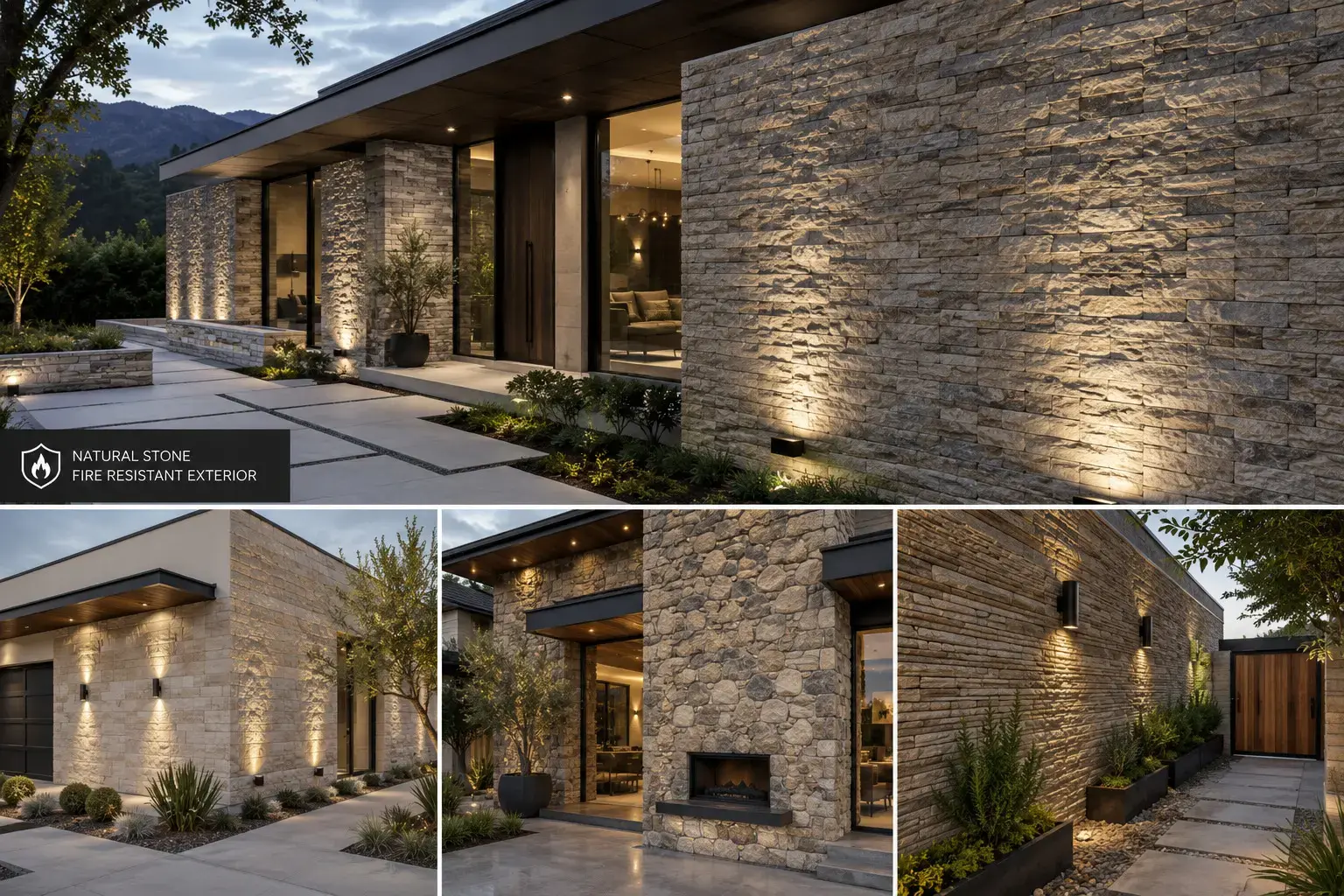
Does Stone Help With Defensible Space?
Yes. Because stone doesn’t burn, stone patios, walkways, and walls are well suited to the noncombustible zone right next to a home, which is an important part of wildfire preparation around Lake Tahoe.
Tahoe wildfire guidance describes the 0 to 5 feet around a structure as the most crucial part of defensible space, with no combustible materials in that zone. Stone, gravel, and similar hard materials are commonly used there. A stone patio or walkway placed close to the home can serve double duty: helping with fire safety while also functioning as a design feature. Local fire districts in the Tahoe Basin offer free defensible space inspections, which are worth scheduling before you finalize a hardscape plan.
Between material selection, proper installation, and this kind of wildfire consideration, it’s worth stepping back to look at how all of these factors actually shape what a project costs.
What Affects Exterior Stone Cost?
Exterior stone costs in Kings Beach depend on the material, finish, and project scope, plus the cold-climate prep work that protects the stone. Projects at this elevation tend to carry costs beyond the price of the stone itself. Sealing appropriate to the stone and setting method, adequate slope and drainage prep during installation, and labor experienced with cold-climate installation practices all factor into a realistic project budget.
Cutting corners on any of these tends to show up within the first few winters as cracking, heaving, or surface flaking. That damage can be more expensive to repair than it would have cost to install correctly from the start. For homeowners comparing quotes, it’s worth asking directly how a contractor plans to handle drainage, sealing, and mortar coverage, since these details affect long-term performance as much as the stone selection itself.
Conclusion
Choosing exterior stone for Kings Beach comes down to low water absorption, careful sealing, and drainage that keeps water from refreezing in or under the stone. Dense, low-absorption stones like granite and quartzite are well suited to repeated winters here, and stone’s noncombustibility also gives it a practical role in defensible space. Homeowners weighing their options are generally better served by asking specific questions about absorption rates, sealing plans, and drainage details than by choosing on appearance alone.
Our Reno showroom at 12835 Old Virginia Rd, Suite 24, Reno, NV 89521, phone (775) 331-6682, serves Kings Beach homeowners planning an exterior stone project. You can browse natural stone slabs in person and book a free design consultation to talk through material choices for your home’s climate.
Frequently Asked Questions
Late spring through early fall is generally preferable, since installation work, including curing mortar and applying sealer, performs best in dry, above-freezing conditions. Installing right before winter can leave sealer or mortar less time to fully cure before the first freeze-thaw cycles begin. Mortar and sealer manufacturers list temperature and curing requirements, and those should guide scheduling.
Yes. Freeze-thaw durability can be assessed through freeze-thaw testing that cycles stone samples through repeated soak-and-freeze periods and checks for cracking or fissuring. Asking a supplier whether a specific stone has freeze-thaw test data is a more reliable check than relying on the stone type alone.
A simple test is to pour a small amount of water on the surface. If it beads up, the sealer is still working. If it soaks in and darkens the stone, the seal has worn down and it's time to reseal.
Common early signs include hairline cracks, small chips or flaking along edges, and pavers that have shifted or settled unevenly. Catching these signs early and addressing the underlying drainage or sealing issue can prevent more extensive damage, and a more costly repair, over the following winters.
Many do. Manufacturers typically indicate whether a veneer product is rated for exterior use in freeze-thaw climates, and checking that rating, along with the recommended wall assembly, is a more direct way to evaluate cold-climate suitability than assuming all veneer performs the same.
Sources
- ASTM International: Natural Stone Resistance to Freeze-Thaw Cycles | https://www.astm.org/news/natural-stone-resistance-freeze-thaw-cycles-mj23
- Natural Stone Institute: Granite | https://www.naturalstoneinstitute.org/consumers/varieties/granite/
- Natural Stone Institute: Sandstone and Quartzite | https://www.naturalstoneinstitute.org/consumers/varieties/sandstone/
- TileLetter (National Tile Contractors Association): Exterior Tile and Stone Installation | https://www.tileletter.com/exterior-tile-installation-with-customs-mike-little/
- Concrete Masonry & Hardscapes Association: Key Installation Checkpoints for Manufactured Stone Veneer | https://www.cmha.org/resource/msv-tec-001/
- Tahoe Living With Fire: Getting Defensive About Wildfire | https://www.tahoelivingwithfire.com/fire-prevention/getting-defensive-about-wildfire/
Note: Some images on this page may be conceptual renderings created to illustrate design possibilities and may not depict actual installations.