The best tile and stone options for Sacramento patios and outdoor kitchens are natural stone and exterior-rated porcelain, selected based on three key performance factors: slip resistance (DCOF rating of 0.60 or above for wet surfaces), water absorption (under 0.5 percent for porcelain, under 3 percent for natural stone), and heat performance in direct sun. Common material choices include travertine, quartzite, granite, porcelain slab, and sintered stone, each suited to different applications depending on the surface, finish, and level of maintenance the homeowner is prepared to provide.
Sacramento's climate adds specific considerations that do not apply to indoor tile selection. Temperatures routinely exceed 95 degrees from late May through September, and the region does experience occasional winter freezes in the 28 to 32 degree range. Any exterior tile or stone used here needs to handle both ends of that range without cracking, fading, or becoming unsafe underfoot. This guide covers the materials that meet those requirements, the specs to look for, and design approaches for patios, pool decks, and outdoor kitchens in the Sacramento area.
Why Exterior Tile Selection Is Different in Sacramento
Indoor tile decisions center on aesthetics, durability underfoot, and cleaning. Exterior decisions involve all of that plus several factors that do not apply inside a home.
The first is the freeze-thaw cycle. Sacramento does experience light freezing temperatures in winter, typically in the 28 to 32 degree range on the coldest nights. Water that penetrates a porous surface can expand as it freezes, gradually fracturing the material from the inside. Any tile used outdoors in this climate needs a low water absorption rating, generally under 0.5 percent for porcelain and under 3 percent for natural stone intended for exterior use.
The second factor is DCOF, or Dynamic Coefficient of Friction. This is the standard rating used to assess slip resistance on wet surfaces. The ANSI A137.1 tile standard sets a minimum DCOF of 0.42 for wet interior floors, but exterior spaces, particularly pool surrounds and areas exposed to rain or irrigation runoff, call for higher values, typically 0.60 or above. Finish matters significantly here: polished stone and high-gloss porcelain are poor choices for exterior use, while honed, brushed, flamed, or textured finishes provide better grip.
The third factor is solar heat gain. Dark-colored or highly polished surfaces can become uncomfortably hot in direct Sacramento sun. Lighter natural stone and matte porcelain in medium tones tend to stay cooler underfoot and are generally more suitable for barefoot use around pools and on open patios.
Natural Stone Options for Sacramento Outdoor Spaces
Travertine
Travertine is one of the more widely used natural stones for exterior applications in warm climates, and it performs well in Sacramento's conditions. Its naturally porous surface, which many homeowners have filled and honed for indoor use, works in its favor outdoors when left in a tumbled or brushed finish. The texture provides grip, and the material's thermal mass keeps it from heating up as quickly as denser, darker stones.
Travertine's warm tones, ranging from cream and ivory to gold and walnut, complement the earthy palette common in Sacramento-area homes. It pairs well with drought-tolerant landscaping, concrete walls, and the wood tones used in many outdoor kitchen structures.
For exterior installation, a filled and honed or tumbled finish is preferable to polished. A penetrating sealer applied annually or biannually will help protect the stone from staining and manage water absorption.
Quartzite
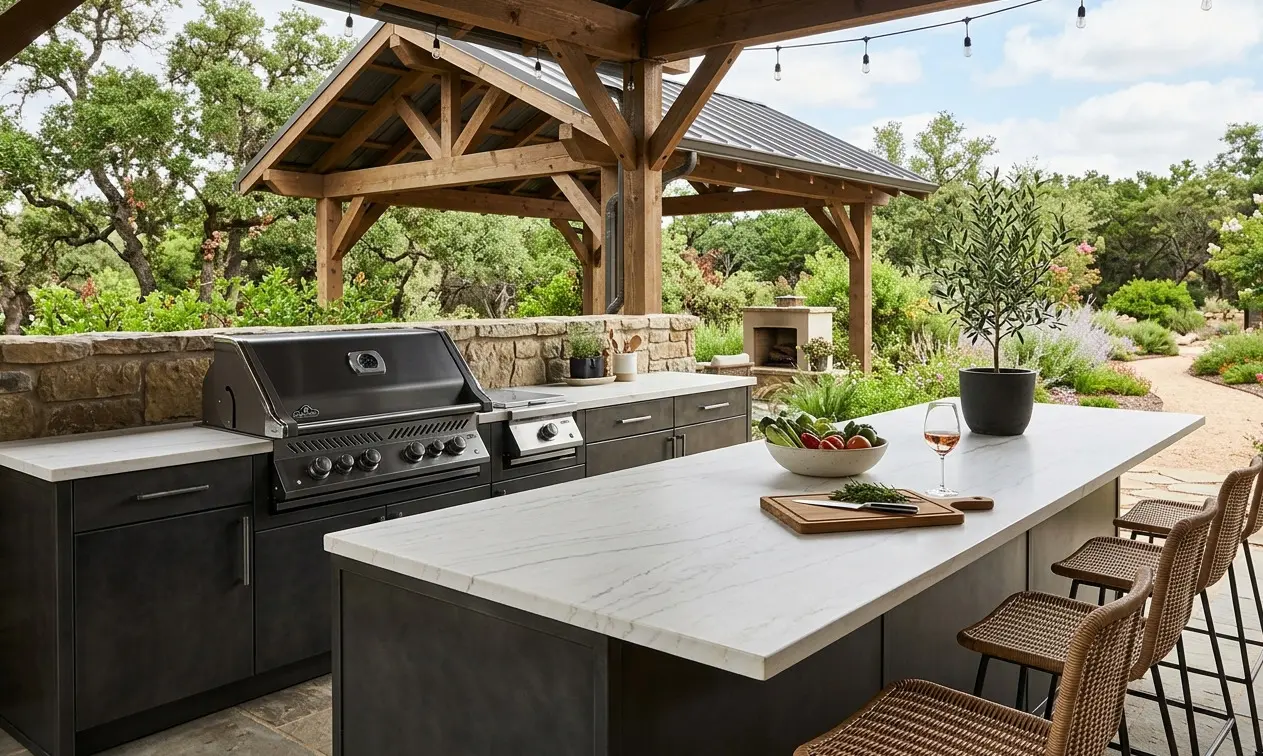
For homeowners who want the visual character of marble outdoors, quartzite is worth considering. True quartzite is a metamorphic stone with a hardness rating of 7 on the Mohs scale, comparable to granite, which makes it resistant to scratching and general wear. Its low porosity, when properly sealed, also makes it suitable for exterior use in climates like Sacramento's.
Quartzite tends toward lighter tones with veining, and it can make a notable design statement on a large outdoor surface. A honed quartzite patio around a pool or outdoor dining area works well aesthetically without sacrificing durability. As with all natural stone outdoors, a brushed or honed finish is preferred over polished for slip resistance.
Granite
Granite is a practical option for outdoor kitchen counters and accent surfaces. It ranks among the harder natural stones, resists scratching from kitchen tools and utensils, tolerates direct heat reasonably well, and is available in a range of colors and movement patterns. Its density and relatively low absorption make it a suitable choice for outdoor countertop use.
On patio floors, granite works well in a flamed finish, which creates a slightly rough, non-reflective surface through the application of intense heat. Flamed granite has good slip resistance and handles Sacramento sun without becoming excessively hot. The finish also tends to weather gradually over time.
Porcelain Tile for Sacramento Patios and Outdoor Kitchens
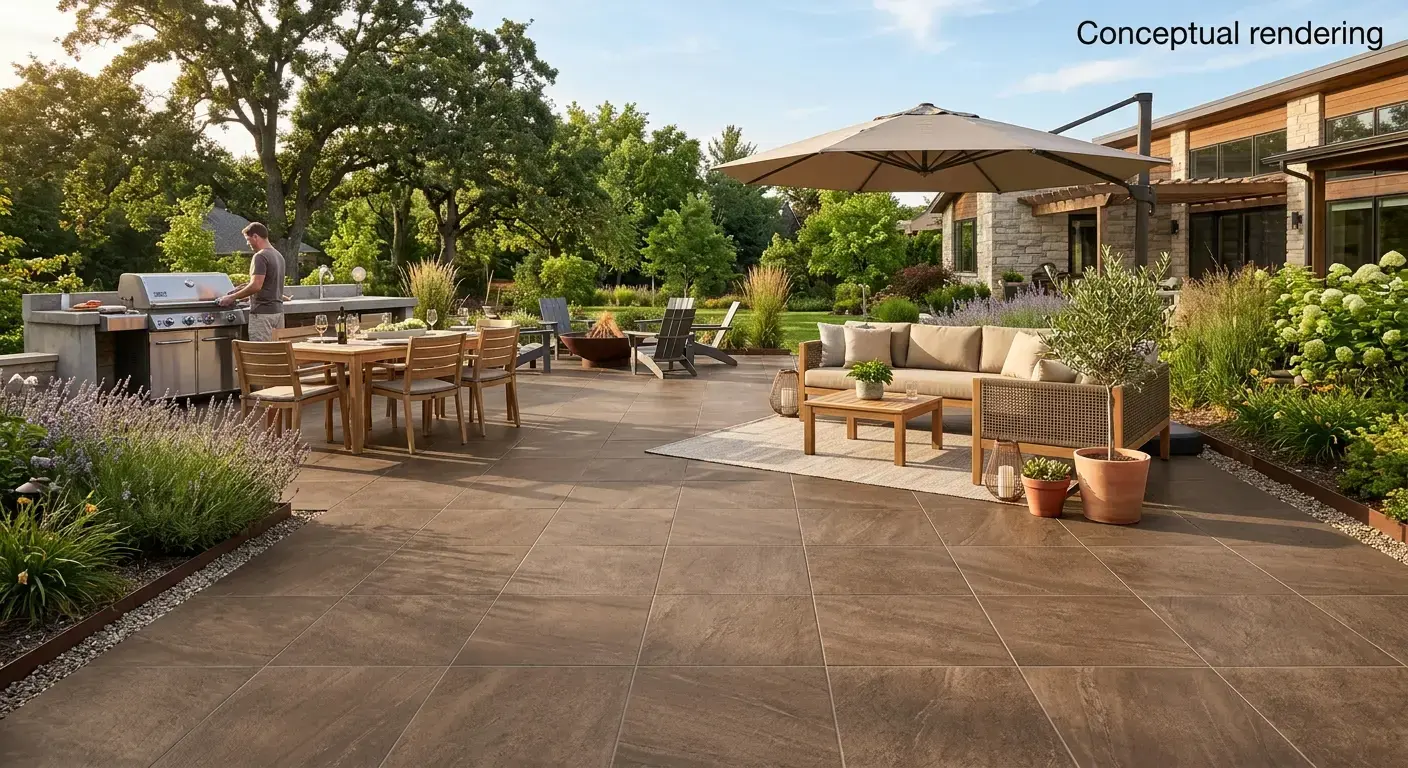
Large-format porcelain tile is a common choice for exterior spaces. Modern porcelain is fired at high temperatures to produce a dense, low-absorption tile that handles freeze-thaw cycles and wet conditions well. When manufactured with an appropriate surface texture, it also delivers consistent DCOF ratings across the production run, which can be harder to guarantee with natural stone.
What to Look for in Exterior Porcelain
The most important specification for outdoor porcelain is the water absorption rate. Tile classified as vitreous (0.5 to 3 percent absorption) is acceptable for mild outdoor conditions, but impervious porcelain certification, with absorption under 0.5 percent, is the more appropriate standard for California climates that include occasional freezing nights. Most modern rectified porcelain tiles at or above the 20x20 inch format fall into the impervious category.
Surface texture is equally important. Porcelain intended for exterior use is typically produced with a matte, structured, or lappato finish rather than a gloss or polished surface. Many manufacturers offer an outdoor version of their most popular slabs and tiles with an added grip texture on the face. These maintain the large-format aesthetic of an interior slab while meeting exterior safety requirements.
Design Applications
Large-format porcelain in 24x24 or 24x48 formats creates a clean, seamless look on Sacramento patios that suits contemporary and transitional home styles. Fewer grout lines compared to smaller tiles also means less maintenance over time, as grout is typically the first element to show wear in an outdoor setting.
For outdoor kitchens, porcelain slab is an option worth considering for countertop surfaces. It is non-porous, requires no sealing, resists staining from oils and sauces, and handles heat exposure without the cracking risks associated with extreme thermal shock. A sintered stone outdoor kitchen countertop in a 12mm thickness offers a surface that requires minimal upkeep compared to natural stone. Browse tile and stone options to explore available formats and finishes.
Design Ideas for Sacramento Patios and Outdoor Kitchens
The Extended Living Patio
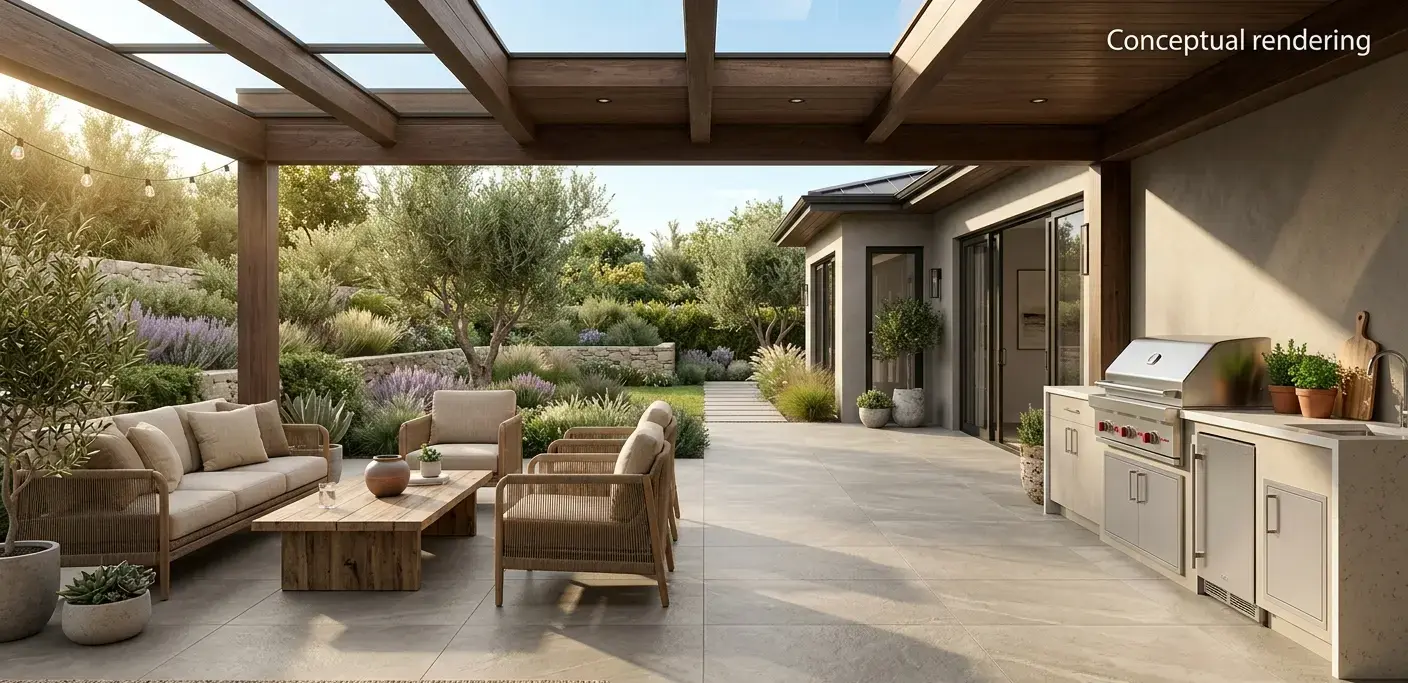
One common outdoor project in Sacramento is the extended living patio: a covered or semi-covered outdoor space with seating, a kitchen or bar area, and a connection to the pool or yard. For this type of project, using consistent material across the floor, the outdoor kitchen surround, and any low walls or seat walls creates a cohesive look. Large-format light travertine on the floor with matching travertine cladding on the kitchen island is a combination that reads as intentional and handles California sun well.
The Modern Pool Surround
For pool decks, porcelain tile in a light warm gray with a structured grip surface addresses the key requirements: adequate DCOF, low heat absorption, and a contemporary look that works with pools finished in white or light blue plaster. A 12x24 or 24x24 format laid in a running bond pattern gives a clean result.
The Outdoor Kitchen Counter
An outdoor kitchen counter takes considerable wear: direct sunlight, UV exposure, cooking heat, grease, citrus, and general use. Porcelain slab or a properly sealed granite are two practical countertop options for this application. Both can be matched to adjacent flooring or contrasted intentionally. A dark, flamed granite countertop against cream travertine floor tile is a combination that works across many home styles.
The Transition Between Indoor and Outdoor
Many Sacramento remodels focus on creating a visual transition between interior flooring and the exterior patio, using similar materials or complementary tones to extend the perceived size of the living space. This typically means selecting an exterior tile or stone that references the color palette of the interior floor. A home with warm white oak floors might carry a cream travertine or warm-toned sandstone porcelain to the patio, creating continuity through large sliding doors.
Maintenance Expectations for Outdoor Stone and Tile in Sacramento
One key distinction between natural stone and porcelain outdoors is ongoing maintenance. Natural stone, including travertine, quartzite, and granite, requires periodic resealing to maintain stain resistance. In an outdoor Sacramento environment, where tree debris, bird activity, pool chemicals, and cooking grease are all present, sealing every one to two years is a reasonable expectation for most stone surfaces. The specific interval depends on the stone, the sealant used, and the level of traffic and exposure.
Porcelain tile requires no sealing. The grout joints between tiles do benefit from a grout sealer outdoors, but the tile itself requires no sealing treatment. Cleaning with a mild detergent and occasional rinsing is typically sufficient.
For both materials, the grout joint is worth careful attention during installation. A grout in the right color, properly installed and sealed, will help maintain the appearance of any outdoor tile installation over time. Learn about our direct import process and the materials we carry.
Visiting a Showroom to Select Exterior Stone and Tile
Selecting exterior materials for a patio or outdoor kitchen is a decision best made in person. Sample images on a screen cannot convey how a stone or tile reads at full scale under natural light, how the surface texture feels underfoot, or how the color shifts from morning to afternoon sun. Our Sacramento showroom serves homeowners, contractors, and designers throughout Sacramento County and the surrounding Northern California region. Come with specific project details in hand: the square footage of the space, the primary sun exposure, whether the surface will be adjacent to a pool, and any interior materials you are trying to match or complement.
Bringing photos of the existing exterior, the interior flooring, and any landscaping or structural elements already in place helps narrow the selection. A free design consultation can walk through the options, compare performance specs for the intended use, and help identify materials worth sampling before making a final decision. Get directions to our Sacramento location before your visit.
Conclusion
Sacramento's outdoor living season is long and the conditions are demanding. The materials used on patios, pool decks, and outdoor kitchen surfaces need to perform across both ends of the climate range: intense summer heat and the occasional winter freeze. Natural stone such as travertine, quartzite, and granite each suit different applications, while exterior-rated porcelain tile offers low-maintenance performance and consistent technical specifications. The right choice depends on the specific use, the aesthetic goals of the project, and how much ongoing care the homeowner is prepared to provide. Visit our showrooms to review full-scale samples in person, or reach out to our team to get started.
Frequently Asked Questions
Light to medium-toned materials with a matte or honed finish tend to perform better in full Sacramento sun. Cream or gold travertine, light quartzite, and warm gray exterior porcelain absorb less heat than dark or polished surfaces. Highly reflective finishes can create glare and become uncomfortably hot underfoot. A DCOF rating above 0.60 is recommended for any surface exposed to irrigation or rain.
Sacramento does experience occasional freezing overnight temperatures, typically in the high 20s to low 30s. Dense natural stones with low water absorption, such as granite and properly sealed quartzite, handle these conditions well. Travertine installed outdoors should be sealed regularly to limit moisture penetration. The greater risk in Sacramento is thermal cycling, where repeated heating and cooling over years can stress grout joints and adhesive layers if the installation is not properly executed.
Exterior porcelain tile is manufactured with a textured or structured surface finish that provides a higher DCOF slip resistance rating for wet conditions. Many tile lines offer the same pattern in both an interior gloss or polished finish and an exterior matte or grip finish. The core tile body is typically the same; the difference is in the face texture. When shopping for outdoor tile, confirm the DCOF value is appropriate for the intended application.
Yes. Granite and quartzite are both practical choices for outdoor kitchen countertops. Granite is a common option because of its hardness, heat resistance, and range of available colors. Both materials need to be sealed before use and resealed periodically, as UV exposure, cooking grease, and seasonal rain can degrade the sealer faster outdoors than inside. Porcelain slab is an alternative that requires no sealing and suits outdoor cooking conditions with minimal maintenance.
The most practical approach is to bring a sample of your interior flooring to a tile showroom and compare it directly against exterior-rated options in similar tones or materials. The goal is typically to match the warm or cool undertone of the interior floor rather than the exact color, which allows for visual continuity without requiring an identical material. Placing samples side by side under natural light gives a more accurate read than comparing colors on a screen.