Engineered hardwood flooring is a real wood floor made of a hardwood veneer, typically 0.6 to 6 millimeters thick, bonded to a cross-layered plywood or composite core. In Reno, this construction is generally the better choice over solid hardwood because the layered core resists the warping, cupping, and gapping that solid wood can develop when indoor humidity drops sharply during Reno's cold, dry winters and shifts again as the seasons change. It also opens up options solid hardwood can't offer, including installation over concrete slabs and compatibility with radiant heat systems, both common in newer Reno construction. This guide covers how engineered hardwood performs in Reno's high desert climate, where it works best in a home, and what to look for in wear layer thickness before buying.
How Engineered Hardwood Is Built
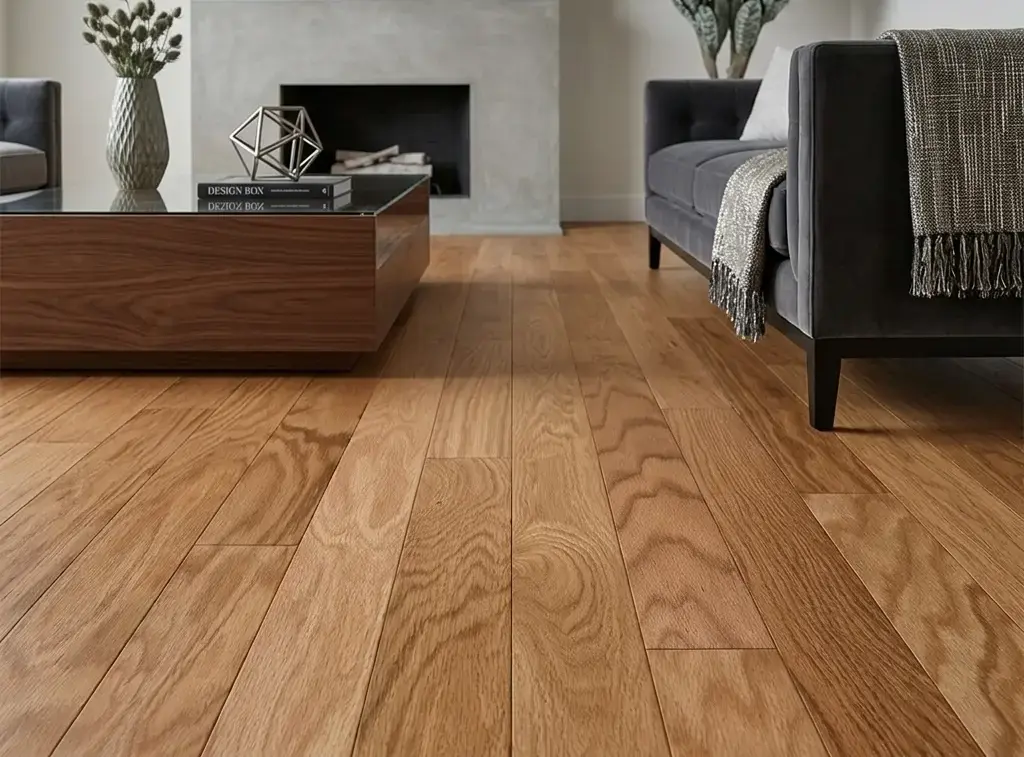
A typical engineered hardwood plank has three parts: a top wear layer of genuine hardwood, a core of cross-layered plywood or high-density fiberboard, and a stabilizing back layer. The wear layer is real wood, the same species and grain pattern found in solid hardwood, so the finished floor looks identical to solid wood once installed. The difference is underneath. Each layer of the core runs in a different grain direction, which cancels out the expansion and contraction that would otherwise stress a solid plank. That construction is the reason engineered hardwood behaves differently from solid wood in the sections below, and it is also what determines how many times the floor can eventually be sanded and refinished, covered further down.
Why the Reno Climate Favors Engineered Construction
Reno sits in a high desert basin bordered by the Sierra Nevada, in the lee of the mountain range. The National Weather Service notes that this location produces large temperature swings on both a daily and seasonal scale, with summer afternoons often above 90 degrees and nights cooling into the 50s. Indoor humidity follows a similar pattern, dropping low in winter when heating systems run constantly and shifting again as seasons change. Solid hardwood reacts to those swings by expanding and contracting across the width of each board, which over time can show up as cupping, gapping between boards, or seasonal creaking.
The layered core described above is why engineered wood is commonly recommended in climates with wide seasonal humidity swings, and Reno's high desert conditions fit that description closely. Managing indoor humidity still matters for any wood floor in this climate, which is covered in the care section below.
Engineered Hardwood and Radiant Heat Systems
Radiant floor heating has become a more common feature in Reno remodels and new builds, particularly as homeowners look for ways to stay comfortable through cold winter mornings without relying entirely on forced air. The same layered construction that helps with humidity swings also makes engineered hardwood the more forgiving choice over radiant heat, since solid wood is far more prone to checking and shrinkage under sustained heat exposure. If you're comparing flooring materials in person, visiting the Reno showroom can make it easier to evaluate engineered hardwood options and discuss which products are suitable for radiant floor heating.
Manufacturers and installers still set limits on this pairing, generally keeping subfloor surface temperatures below 80 to 85 degrees Fahrenheit and raising or lowering temperature gradually rather than in sudden jumps. Anyone installing engineered hardwood over a new radiant system should confirm the specific product is rated for radiant use and follow the manufacturer's temperature and humidity guidelines, since not every engineered floor is built for direct heat contact.
Where Engineered Hardwood Works Best in a Reno Home
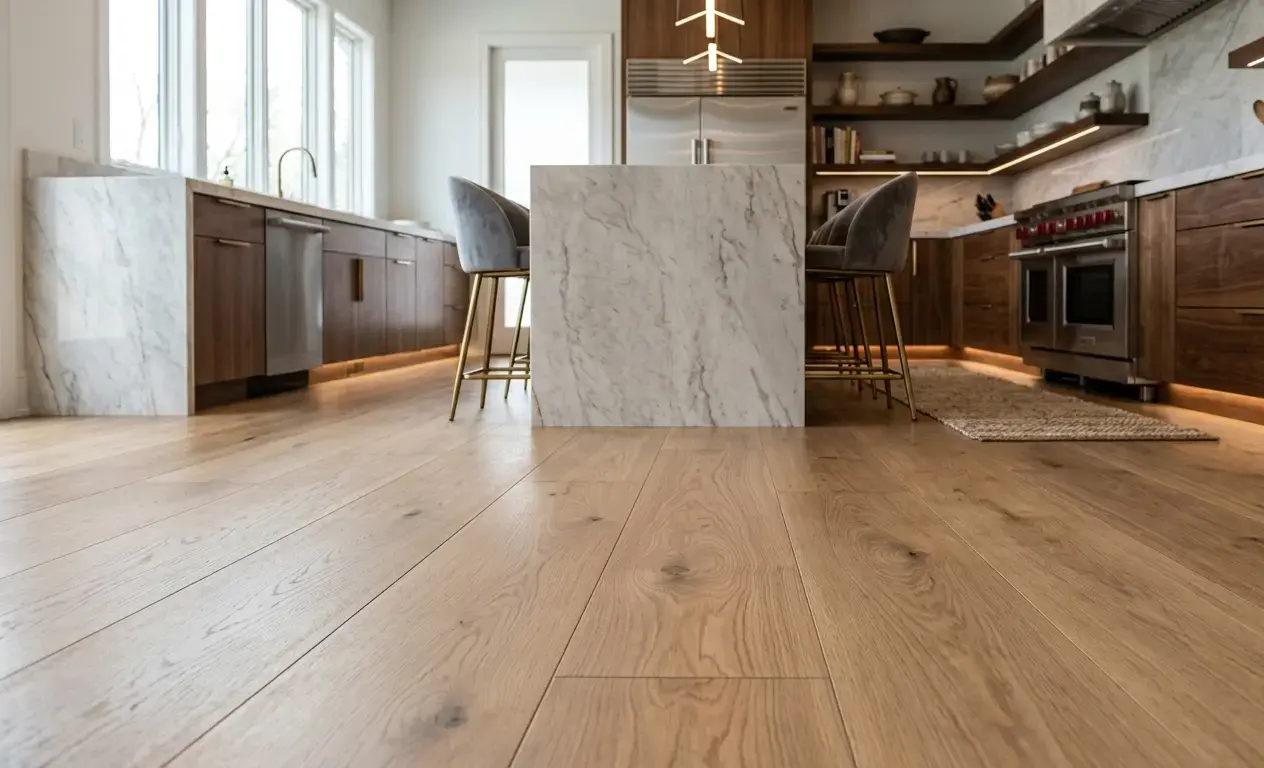
Engineered hardwood handles a wider range of subfloor conditions than solid hardwood, which makes it a practical fit for several parts of a Reno home. It can go over a concrete slab, provided the slab has been tested and meets the manufacturer's moisture threshold, which matters in newer Reno construction where slab foundations are common. It also suits rooms adjoining tile or stone where floor height needs to line up, and wider plank widths that would be more prone to movement in a solid wood format.
Kitchens, living areas, and main living spaces throughout the Truckee Meadows are all reasonable settings for engineered hardwood, as are homes in the Old Southwest and Old Northwest neighborhoods where original hardwood is being replaced or extended into rooms that never had it. Bathrooms and areas with direct, frequent water exposure are still better suited to tile or porcelain, since any wood floor, engineered or solid, can be damaged by standing water. If you have questions about available flooring options or would like guidance before making a selection, you can request a design consultation through our website.
Installation Options
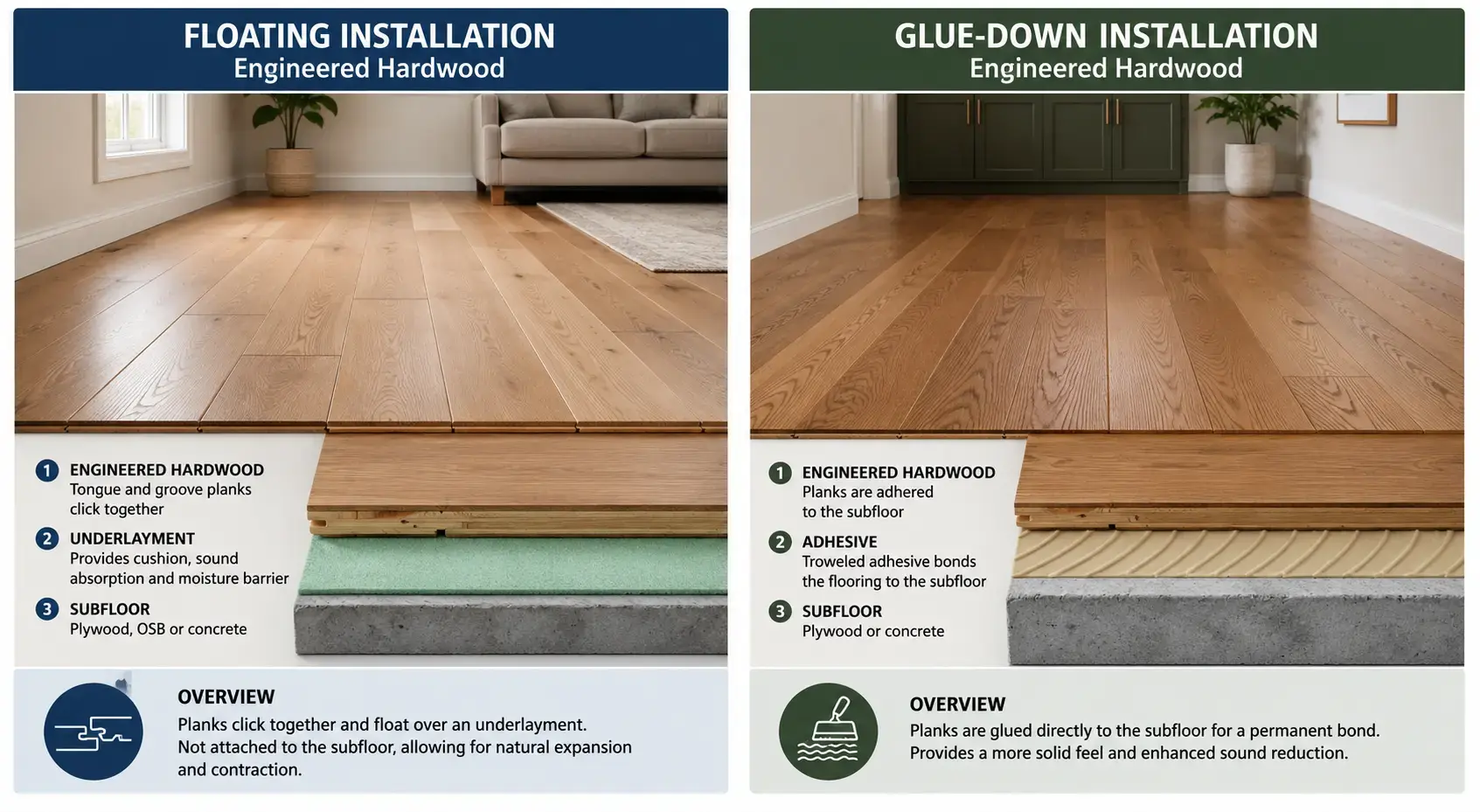
Engineered hardwood can be installed two ways: glued directly to the subfloor, or floated as a click-lock system that is not fastened to the subfloor at all. Glue-down is typically the preferred method over concrete slabs and radiant heat systems because it creates a rigid bond that manages movement evenly across the floor. Floating floors go down faster and work well over existing subfloors, though they can transmit more sound underfoot. The right method depends on the subfloor type, whether radiant heat is involved, and the specific product's manufacturer instructions. The National Wood Flooring Association's installation guidelines cover moisture testing, acclimation, and fastening requirements in detail for anyone comparing methods before committing to a plank width or finish.
Caring for Engineered Hardwood in a High Desert Climate
Day to day care for engineered hardwood is similar to solid wood. Sweep or vacuum regularly, wipe up spills promptly, and avoid soaking the floor with water or steam cleaners. In Reno's dry climate, the bigger concern is winter humidity dropping too low, which can dry out the wood layer over time even with a stable core underneath. The EPA recommends keeping indoor relative humidity between 30 and 50 percent, and running a humidifier during the coldest, driest months helps maintain that range for the floor as well as the rest of the home. Furniture pads under heavy pieces and rugs in high-traffic entryways also go a long way toward protecting the wear layer from scratches, especially with the grit that comes in from outdoor foot traffic during Reno's dry, dusty summer months.
Choosing a Wear Layer for the Long Term
Wear layer thickness is what determines how long an engineered floor will last and how many times it can be refinished. The National Wood Flooring Association maintains an Engineered Wood Flooring Refinishable Program identifying which products have wear layers thick enough to sand, generally starting around 2.5 to 3.2 millimeters depending on the surface texture. Below that threshold, a floor typically cannot be refinished at all and will need full replacement once it shows wear. Mid-range wear layers in the 3 to 4 millimeter range can usually handle one or two light refinishes, while wear layers of 4 millimeters and above come closer to matching what solid hardwood can offer over its lifetime, while still keeping the dimensional stability that makes engineered construction the better fit for Reno's climate. Homeowners planning to stay in a home long-term may want to weigh that refinishing potential against the upfront cost difference.
Conclusion
For a Reno home, engineered hardwood is generally worth a closer look whenever solid hardwood's seasonal movement, subfloor limitations, or radiant heat incompatibility rule it out. The right choice comes down to matching wear layer thickness and installation method to how the room is used and what is underneath it, whether that is a concrete slab in a newer South Reno build or the original subfloor in an older Old Southwest home.
Nova Tile and Stone's Reno showroom carries engineered hardwood along with natural stone, quartz, porcelain, LVP, laminate, and carpet, and offers free design consultations. The showroom is located at 12835 Old Virginia Road, Suite 24, Reno, NV 89521, and can be reached at (775) 331-6682. Visit our Reno showroom to see and feel engineered hardwood samples in person before deciding.
Frequently Asked Questions
Engineered hardwood has a real wood veneer as its top layer, while laminate uses a printed image layer topped with a protective coating to mimic the look of wood. Because engineered hardwood is genuine wood, it can be lightly refinished depending on wear layer thickness, while laminate cannot be sanded or refinished at all and must be replaced once it wears through.
Some seasonal movement is normal for any wood floor as indoor humidity drops during Reno's dry winters, but engineered hardwood's cross-layered core keeps that movement minimal compared to solid wood. Keeping indoor relative humidity in a stable range with a humidifier during the driest months further reduces the chance of visible gapping.
With proper installation and care, engineered hardwood commonly lasts 20 to 30 years, and sometimes longer with a thicker wear layer that allows for periodic refinishing. Lifespan depends heavily on wear layer thickness, foot traffic, and how consistently indoor humidity is managed.
Yes, though a harder wood species and a finish with strong scratch resistance are worth prioritizing for households with pets. Keeping nails trimmed and placing mats near entry points and food or water bowls helps protect the wear layer from scratches and moisture over time.
Yes. Most manufacturers recommend letting the flooring sit in the room where it will be installed for a set period, often several days, so the planks adjust to the home's temperature and humidity before installation begins. Skipping this step is one of the more common causes of gapping or buckling after installation, particularly in a climate like Reno's where indoor and outdoor humidity can differ significantly.
Note: Some images on this page may be conceptual renderings created to illustrate design possibilities and may not depict actual installations.