Fernley homeowners are rethinking what goes into their floors, walls, and countertops. Eco-Friendly Tile and Stone options offer lasting materials without the waste that comes from frequent replacement.
The high desert climate around Fernley rewards surfaces built to hold up for decades. A slab that lasts thirty years replaces three products that would otherwise need manufacturing, shipping, and disposal.
That simple math matters for anyone weighing sustainable renovation choices. Durable stone and tile surfaces remain one of the easiest ways a household can lower its long-term environmental footprint.
WHY IT MATTERS
Durability, Not Just Design, Is Driving The Conversation
Sustainable design has moved from a niche request to a mainstream expectation among homeowners planning kitchen and bathroom updates. Natural materials with long service lives are shaping current design conversations.
Low maintenance needs and minimal chemical treatment are also part of the shift. These priorities are reflected in the 2026 interior design trends that designers are watching closely this year.
Fernley sits in a high desert region with wide temperature swings, dry air, and intense summer sun. Surfaces that resist cracking, fading, and moisture damage under these conditions stay in service far longer.
Materials chosen for durability rather than looks alone directly reduce landfill contributions over time. That reduction compounds across every room in a home over a full renovation cycle.
LASTING VALUE
Natural Stone Surfaces With Lasting Value
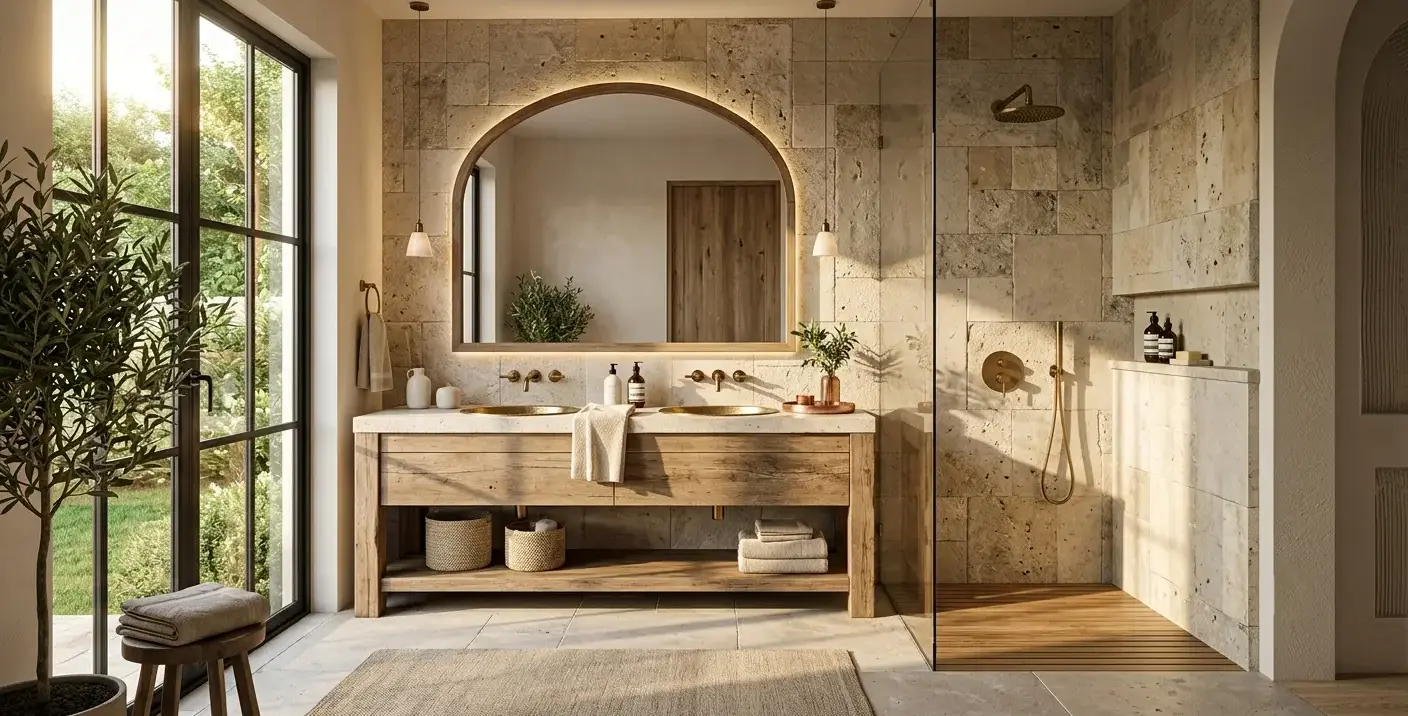
Quarried stone is essentially a one-time extraction that then serves a household for generations. Granite, quartzite, and marble slabs do not off-gas or require frequent chemical refinishing.
 Conceptual rendering
Worn surfaces can often be honed or repolished rather than replaced outright. Browsing the natural stone slab selection in person lets a homeowner compare veining, color depth, and finish before committing.
Slabs viewed upright under natural light reveal characteristics that photographs and small samples cannot fully capture. Longevity is the core sustainability argument for natural stone surfaces in any home.
A well-sealed granite or quartzite countertop can remain functional and attractive for thirty years or more. Fewer manufacturing cycles and fewer transportation trips follow directly from that extended service life.
CERTIFIED STANDARDS
Sustainability Claims Mean Little Without Measurable Standards
The ANSI tile standards published for the industry establish benchmarks for water absorption, breaking strength, and wear resistance. These benchmarks separate durable products from short-lived ones before a purchase decision is made.
A tile or slab that meets recognized performance benchmarks is far less likely to need early replacement. Fewer replacements mean fewer resources consumed across the life of a home.
INSTALLATION OVERSIGHT
The Tile Council of America works to standardize methods and materials for tile and stone installation.
WATER & WEAR BENCHMARKS
Measurable standards for absorption, breaking strength, and wear resistance set the floor for what counts as durable.
EXTERIORS
Eco-Friendly Tile And Stone: Weather-Resistant, Low-Impact Materials
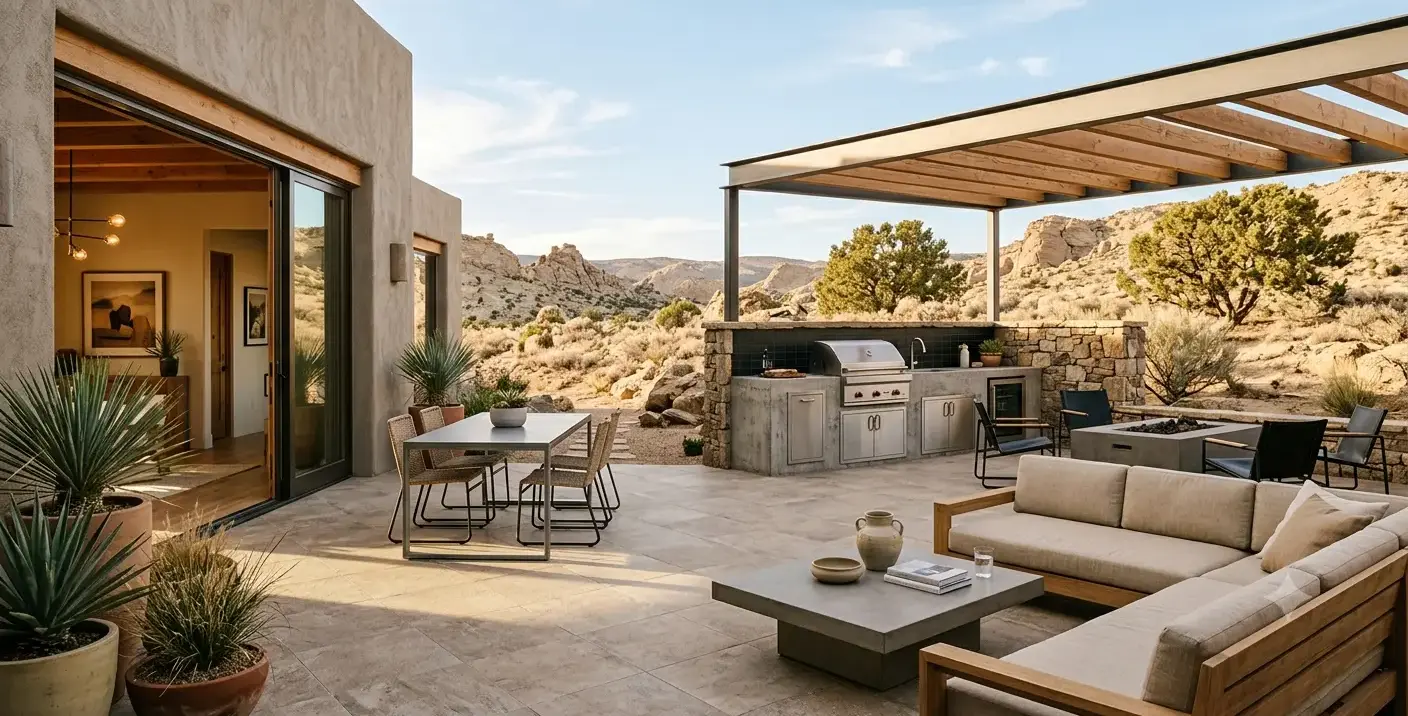
Exteriors demand a different standard than indoor spaces. Porcelain pavers and dense natural stone handle freeze-thaw cycles, UV exposure, and moisture intrusion far better than softer, more porous materials.
 Conceptual rendering
That resistance keeps patios, walkways, and outdoor kitchens intact through repeated seasonal changes. A durable exterior surface also reduces the sealants, coatings, and touch-up work that softer materials often require.
Fewer maintenance products applied over a surface's lifetime translate directly into a smaller chemical footprint. That footprint extends to the property and the surrounding soil over many seasons.
Outdoor surfaces in Fernley face reflected heat off the surrounding high desert terrain in addition to direct sun. Dense porcelain and granite resist the thermal shock that leads to hairline cracking.
Avoiding that cracking prevents the early tear-out and replacement that lower-density materials often require within a decade of installation.
INTERIOR DESIGNS
Interior Design That Elevates Everyday Living
Interior designs built around natural stone and porcelain tile pair sustainability with everyday livability. Large-format porcelain floors reduce grout lines, which cuts down on the cleaning chemicals needed for upkeep.
Fewer grout lines also extend the interval between deep restorations. Stone accent walls, fireplace surrounds, and feature niches bring texture into a room without introducing synthetic materials that off-gas compounds.
A single well-chosen slab can anchor an entire room's design for decades without needing a style refresh. Layering natural materials such as stone, wood-look porcelain, and matte finishes creates depth in a space.
Keeping the overall material palette simple has a practical benefit as well. Fewer material types in a home generally means fewer specialized cleaning products and waste streams to manage over time.
KITCHEN & BATH
Kitchen And Bathroom Applications That Reduce Waste
Kitchen and bathroom projects generate more renovation waste than almost any other room category. Cabinetry, countertops, and flooring are frequently replaced together, multiplying the materials sent to landfills.
Choosing a stone countertop rated for decades of use breaks that replacement cycle at its most resource-intensive point. Bathroom applications benefit from the same durability logic throughout a remodel.
Porcelain shower surrounds and stone vanity tops resist the moisture and cleaning chemical exposure that shortens the life of softer surfaces. That resistance keeps bathrooms functional through multiple decorating cycles.
Quartz and engineered surfaces offer a non-porous, low-maintenance option for busy kitchens where sealing schedules are easy to forget. A surface that never needs resealing avoids an entire category of maintenance products.
FLOOR & WALL
Design That Supports a Sustainable Home
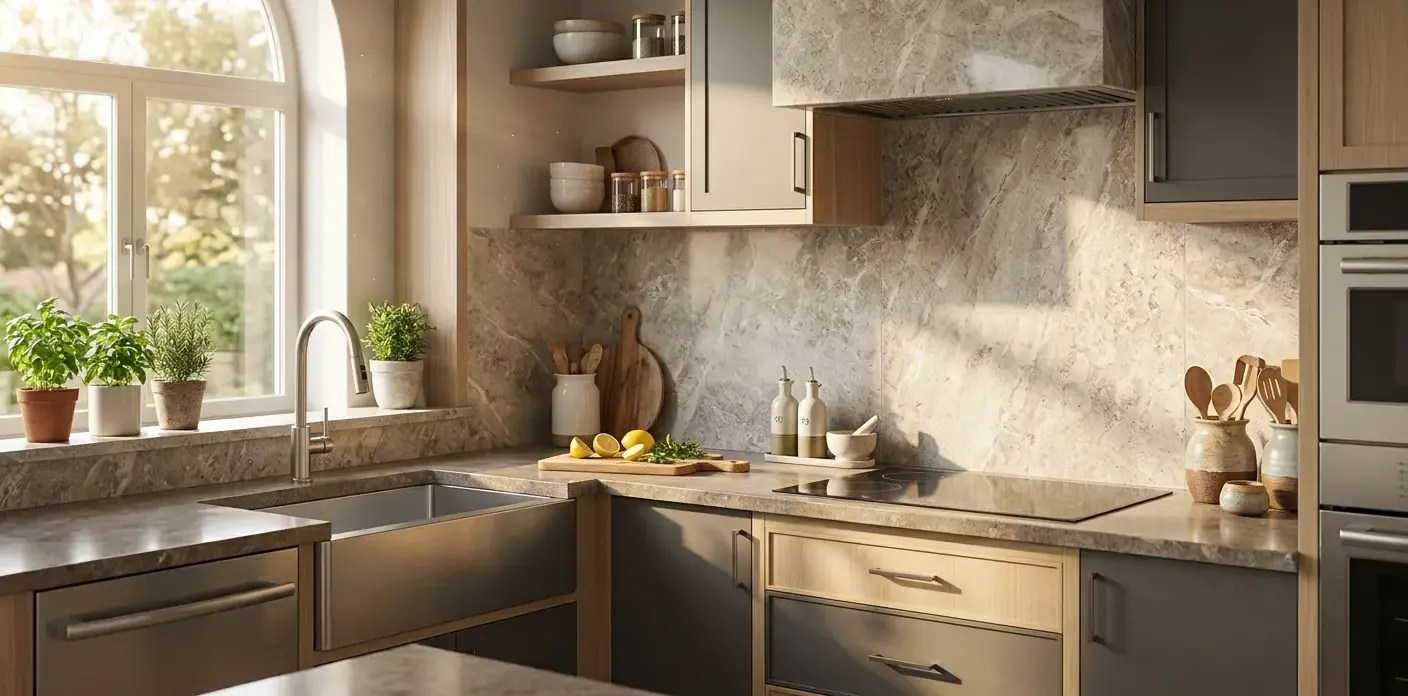
Floor and wall design choices set the tone for how long a room stays functional before a remodel becomes necessary. Porcelain and natural stone flooring handle foot traffic and temperature swings without early degradation.
Wall applications carry similar advantages. A stone or porcelain accent wall installed correctly can last as long as the structure itself, unlike painted finishes that need refreshing every five to ten years.
Matching floor and wall materials across adjoining rooms also reduces the leftover material waste that comes from ordering multiple small batches. Planning a whole-home material palette up front prevents that waste before it starts.
 Conceptual rendering
That kind of early planning is one of the more overlooked sustainability strategies available to homeowners taking on a multi-room renovation. Seeing stone and tile surfaces in person remains the most reliable way to judge color, texture, and finish before a purchase. Local visits also cut down on shipping and return cycles. Homeowners near Fernley can visit the Fernley showroom location directly. Nearby options include the Reno showroom location and the Minden showroom location for a broader selection.
The Sacramento showroom location serves a wider Northern California radius for larger slab and tile projects. A full list of nearby locations is available on the shop local showrooms page. Background on how materials are sourced and evaluated is covered on the company background and mission page for homeowners who want more context before visiting.
Conclusion
Eco-Friendly Tile and Stone options prove that sustainability and durability are the same decision. A surface built to last thirty years does more for the environment than any recycled label ever could.
Fernley's high desert climate makes this math even clearer. Materials that resist cracking, fading, and moisture damage stay in service through decades of temperature swings and intense sun.
Certified standards, careful material selection, and thoughtful whole-home planning all point toward the same outcome: fewer replacements, less waste, and rooms that hold their value over time. For Fernley homeowners weighing a renovation, natural stone and porcelain tile remain the simplest path to a home that performs well for decades and asks little in return.
Frequently Asked Questions
Tile and stone last far longer than many alternative materials, which reduces how often a surface needs manufacturing, shipping, and disposal. Natural stone requires minimal processing after quarrying, and porcelain tile is fired from abundant raw materials into a dense, low-maintenance surface that can serve a home for decades.
Yes. Dense natural stone resists the freeze-thaw cycling, intense UV exposure, and dry conditions common in the high desert around Fernley. Properly sealed granite, quartzite, and similar stones hold up to seasonal temperature swings far better than softer or more porous materials.
Certified standards set measurable benchmarks for water absorption, strength, and wear resistance. Products that meet these benchmarks are less likely to fail early, which reduces the frequency of replacement and the resources consumed over a surface's lifetime.
Yes. Kitchens benefit from non-porous quartz and stone countertops that resist staining without frequent resealing, while bathrooms benefit from porcelain and stone surfaces that hold up under constant moisture and cleaning chemical exposure.
Yes. Samples are available with free shipping, allowing a homeowner to compare color, texture, and finish under actual home lighting before committing to a full order.
Fernley homeowners planning a renovation can weigh durability alongside style from the start. Materials chosen for their long service life reduce waste at every stage, from manufacturing through decades of daily use, making eco-friendly tile and stone a practical foundation for any project.