The best materials for multi-generational Sacramento households are luxury vinyl plank, porcelain tile, laminate flooring, and engineered hardwood, chosen for their resistance to scratches and moisture, ease of cleaning, and secure footing across a wide range of ages and mobility levels. Multi-generational homes, where grandparents, parents, and children share the same living space, place heavier and more varied daily demands on flooring, tile, and countertop materials than a single-generation household does. Because these homes see more foot traffic, more spills, and a wider range of mobility needs, from toddlers to family members using canes or walkers, material choice plays a bigger role in daily comfort and long-term upkeep than in a typical home.
Why Multi-Generational Homes Have Different Material Needs
A household with young children, working-age adults, and older family members experiences a wider range of daily wear than a typical single-family home. Floors and surfaces are exposed to more foot traffic, more spills, more furniture movement, and more variation in mobility, from toddlers learning to walk to family members who may use canes, walkers, or wheelchairs.
This mix of needs means a single material rarely satisfies every priority perfectly. Instead, most Sacramento households end up choosing different materials for different zones of the home, based on how each space is used and by whom.
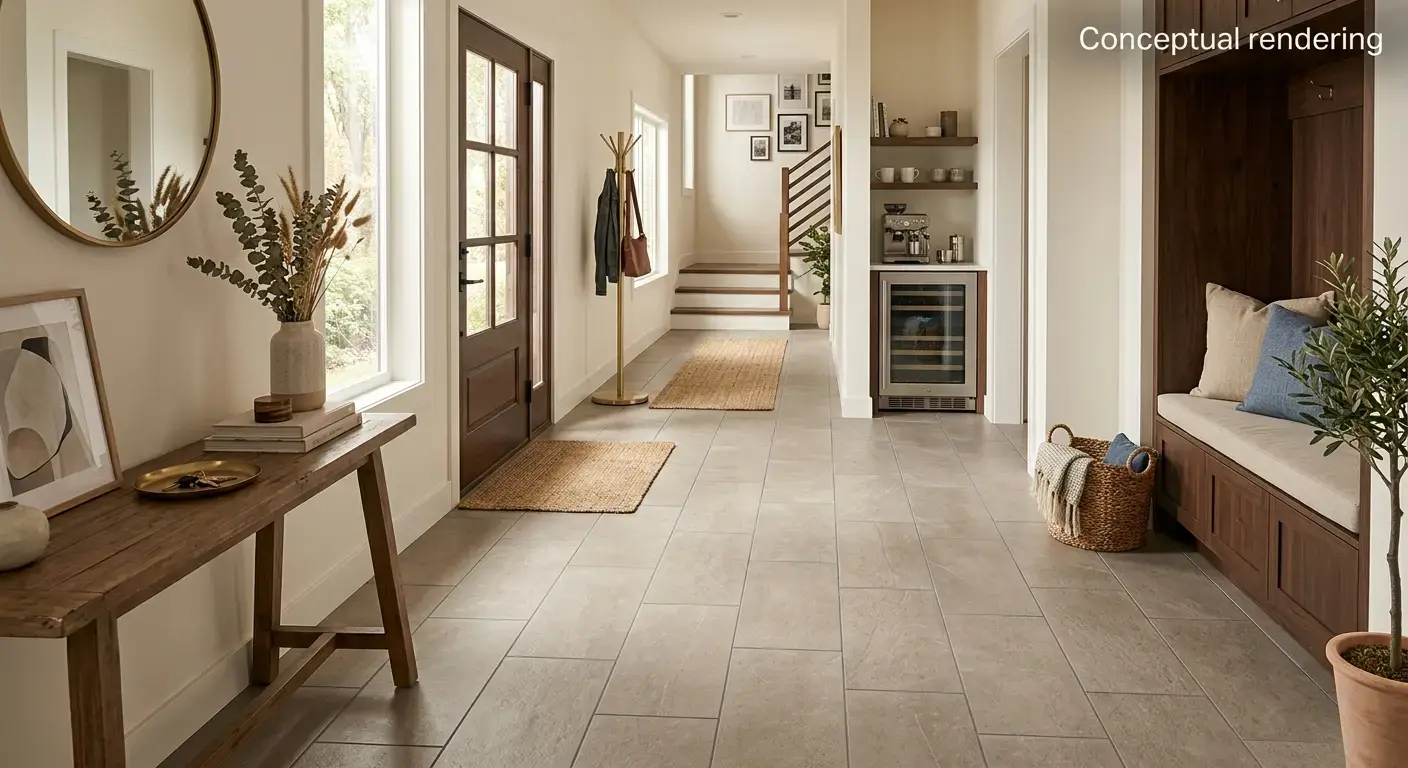
Flooring Considerations
Luxury Vinyl Plank (LVP)
LVP has become a common choice in multi-generational households because it holds up to moisture, resists scratching from pet nails and foot traffic, and offers more give underfoot than rigid materials like tile or hardwood, since it's a resilient flooring product rather than a hard surface. This added resilience can make it more comfortable to stand or walk on for family members with joint sensitivity. It also tends to be quieter underfoot than tile, which matters in homes where nap schedules, work-from-home calls, and general noise levels vary by generation. Households wanting to browse LVP options online before visiting in person can compare colors and formats ahead of time.
Porcelain and Ceramic Tile
Tile remains one of the most practical choices for entryways, kitchens, and bathrooms in multi-generational homes because of its resistance to water and heavy use. Slip resistance is worth paying close attention to when tile is being considered for spaces used by young children or older adults. Tile with a higher coefficient of friction, sometimes labeled for wet-area use and measured against ANSI-rated slip resistance standards, is generally a better fit for bathrooms and entry points than a highly polished finish.
Laminate Flooring
Laminate offers a wood-look surface at a different price point than engineered or solid hardwood, and current laminate products include wear layers designed to resist scratching from foot traffic and pet activity. It performs best in areas without prolonged moisture exposure, since standing water can affect the core board over time.
Engineered Hardwood
Engineered hardwood provides the appearance of solid wood flooring with a layered core construction that offers more dimensional stability than solid wood, particularly relevant in the Sacramento region, where indoor humidity levels can shift between seasons. It's a common choice for shared living rooms, dining rooms, and other central spaces where multiple generations spend time together. Exploring the full range of flooring and stone materials side by side can help a household compare options before settling on one for a shared space.
Carpet
Carpet still plays a role in multi-generational homes, particularly in bedrooms used by older adults or young children, where a softer landing surface can reduce injury risk from falls. Carpet with a lower pile height and stain-resistant fiber tends to be easier to maintain in these spaces than deep-pile options.
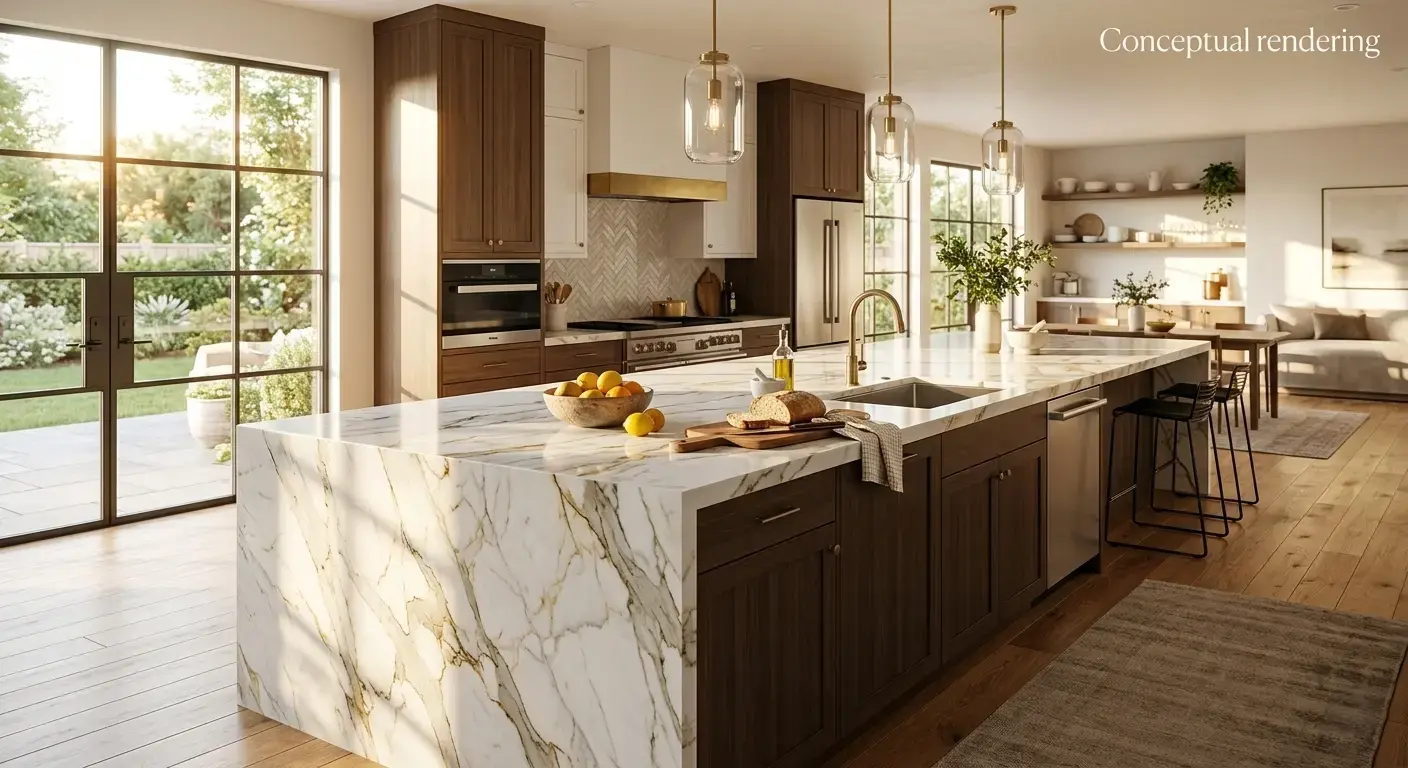
Countertops and Natural Stone
Kitchens in multi-generational households often see more use throughout the day, with multiple people preparing meals, doing homework, or gathering at different hours. Countertop material choice affects daily maintenance and how the surface holds up to repeated use.
Granite and quartzite are dense natural stone options frequently used in busy kitchens because of their resistance to heat and scratching, though all natural stone benefits from routine sealing to maintain its resistance to staining. Engineered quartz surfacing is another option some households consider, as it does not require the same sealing schedule as natural stone. Silica content is also part of the broader conversation around engineered and natural stone surfacing, and ongoing federal research into stone fabrication safety has focused attention on how these materials are handled before they reach a finished countertop. The right choice for a kitchen often comes down to how the space is used day to day and how much routine maintenance a household wants to take on.
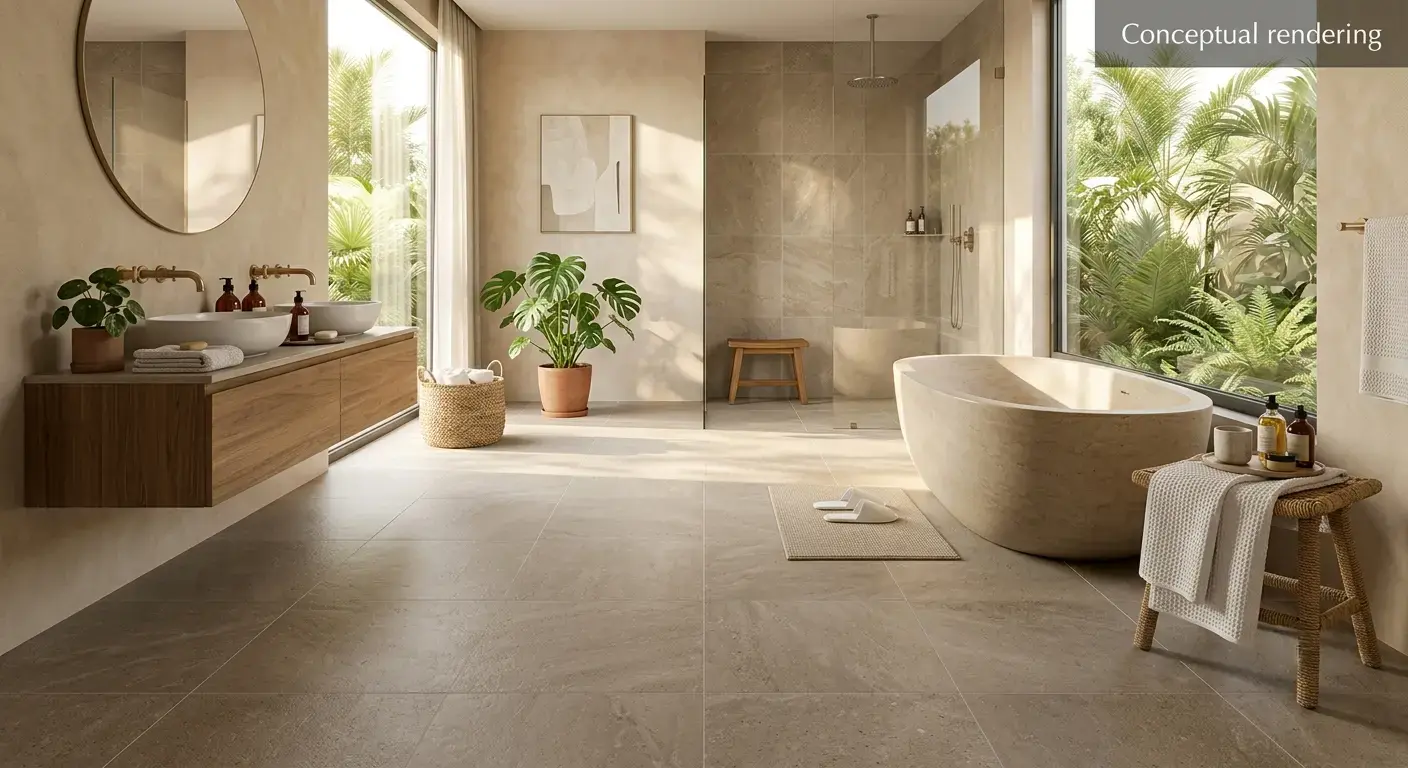
Bathrooms and Safety Considerations
Bathrooms tend to be one of the highest-priority spaces in multi-generational homes, particularly when older adults or young children are part of the household. Floor tile with a slip-resistant rating designed for wet areas is generally recommended over glossy, highly polished tile in these spaces. Grab bar placement, curbless shower entries, and bench seating are layout considerations that often come up alongside material selection when a bathroom is being planned for a wide age range, and households weighing these choices can reach out to our team for guidance specific to their layout.
Shower walls and floors both benefit from tile sizing and grout line spacing that provide secure footing. Smaller-format tile with more grout lines can offer more traction underfoot than large-format tile, which is worth weighing against the visual preferences for the space.
Shared Living Spaces
Common areas like kitchens, family rooms, and hallways see the most combined use in a multi-generational home. These spaces often benefit from a single flooring material that runs consistently from room to room, which can also reduce trip hazards created by transitions between different flooring types and heights. LVP and tile are commonly used for this kind of continuous flooring because of their moisture resistance and ease of cleaning, while engineered hardwood is often chosen when a household prioritizes a warmer, more traditional look in these shared spaces. Seeing samples side by side at a showroom near you can make this comparison easier than looking at swatches alone.
Maintenance Routines Across a Shared Household
Cleaning and upkeep routines tend to look different in a multi-generational home, since more people use the same spaces throughout the day. Materials that require frequent specialized care can become a burden when the household is already managing multiple schedules. Porcelain tile and LVP are often favored because their maintenance mostly involves regular sweeping and damp mopping rather than specialized products. Laminate follows a similar pattern, though manufacturers typically recommend avoiding excess standing water during cleaning.
Natural stone surfaces, including granite and quartzite, involve a periodic sealing schedule to maintain their resistance to staining. This is manageable for many households, but it's worth factoring in if no one has the time or interest in keeping up with it. Engineered quartz is sometimes chosen specifically to reduce this routine, since it does not require sealing the way natural stone does.
Grout maintenance is another consideration in homes with tile flooring or backsplashes. Grout lines can collect dirt and grime over time in high-traffic households, so some families weigh grout color and sealing needs when selecting tile for entryways or kitchens used by a large number of people throughout the day.
Noise and Comfort Considerations
Sound transfer is a practical concern in homes where nap schedules, work-from-home calls, and general daily activity happen under one roof at different times. Hard surfaces like tile and hardwood carry more sound between rooms than softer materials like carpet or cushioned vinyl. Underlayment can help reduce this when hard flooring is installed, and area rugs are a common way to soften sound in rooms with hard-surface flooring.
Temperature underfoot is another factor in households spanning a wide age range. Tile and natural stone can feel cool to the touch, which some family members may find uncomfortable in bedrooms or bathrooms during cooler months. LVP, laminate, and engineered hardwood tend to feel warmer by comparison, which is part of why they're frequently chosen for bedrooms even when tile is used elsewhere in the home.
Balancing Different Needs Across Generations
There is rarely one material that meets every family member's preferences and requirements at once. A practical approach many households take is to prioritize safety and low maintenance in the spaces used most by children and older adults, such as bathrooms, kitchens, and main hallways, while allowing more flexibility in bedrooms or less-trafficked areas.
Talking through daily routines as a household, rather than focusing on material trends alone, tends to lead to choices that hold up better over time. A family that cooks together frequently will have different countertop priorities than one that primarily uses the kitchen for quick meals. A household with a family member who uses a mobility aid will have different flooring transition needs than one that does not. Households in the Sacramento area can schedule a free design consultation to work through these priorities room by room.
Conclusion
Multi-generational households place a wider range of demands on flooring, tile, and countertop materials than single-generation homes, from resisting daily wear to supporting safe movement for family members of different ages and abilities. Materials like luxury vinyl plank, porcelain tile, laminate, and engineered hardwood each offer different advantages depending on how a space is used and by whom. Rather than choosing one material for the entire home, most Sacramento households benefit from matching material choices to the specific needs of each room, with particular attention to slip resistance and ease of maintenance in kitchens, bathrooms, and shared living spaces. Seeing these materials in person can make it easier to compare how they'll perform in a specific home, and our Sacramento showroom page, located at 6100 Warehouse Way, Sacramento, CA 95826 (get directions), has flooring, tile, and countertop options on display for households weighing these choices. Our Sacramento showroom can be reached at (916) 913-6682.
Frequently Asked Questions
Luxury vinyl plank and slip-resistant porcelain tile are commonly used in these households because they resist moisture and scratching while providing secure footing. The best choice for a specific room depends on how that space is used and how much moisture exposure it typically sees.
Carpet can work well in bedrooms, particularly for older adults or young children, where a softer surface may reduce injury risk from falls. Lower pile heights and stain-resistant fibers tend to be easier to maintain than deep-pile carpet in these households.
Tile with a slip-resistant rating intended for wet areas is generally recommended over glossy, highly polished finishes. Smaller-format tile with more grout lines can also provide additional traction compared to large-format tile.
Granite and quartzite are dense stone options that resist heat and scratching, making them a common choice for high-use kitchens, though they require routine sealing to maintain stain resistance. Engineered quartz is another option some households weigh against natural stone based on maintenance preferences.
Using a consistent flooring material in shared spaces like kitchens, hallways, and living rooms can reduce trip hazards created by transitions between different flooring types and heights. Bedrooms and less-trafficked areas often allow more flexibility for individual preference.