Durable flooring ideas for Fernley homes start with porcelain tile, granite, and quartzite, which suit most rooms. Porcelain is dense, with water absorption of 0.5 percent or less measured per ASTM C373, while granite and quartzite resist UV and heat. Luxury vinyl plank suits climate-controlled interiors only.
Fernley homeowners face conditions most design guides overlook. Hot, dry summers, hard winter freezes, and persistent high-desert dust challenge every floor surface year-round, so material selection is a practical issue as much as a style one.
Porcelain tile, natural stone, and luxury vinyl plank each bring different strengths, and the right choice depends on moisture exposure, traffic, UV tolerance, and how much maintenance each room demands.
WHY IT MATTERS HERE
Fernley's Climate Shapes Every Flooring Decision
High desert conditions create three distinct stressors that separate Fernley from the flat-geography markets most flooring guides were written for.
Temperature Cycling
Winter freezes and summer heat cause materials to contract and expand repeatedly, stressing adhesives, grout lines, and rigid surfaces over time.
Intense UV Exposure
Elevation amplifies UV intensity. Surfaces that perform well at sea level can fade, soften, or degrade faster at Fernley's high-desert altitude.
Sudden Moisture Events
Storm runoff and irrigation reach Fernley interiors quickly. Low absorption rates are not a preference here; they are a performance requirement.
MATERIAL BY MATERIAL
Top Durable Flooring Materials for Fernley Homes
Each material performs differently against Fernley's climate demands and room-by-room use patterns.
01
Absorption ≤ 0.5%
PEI III+ (glazed tile)
Freeze-thaw rated
BEST FOR HIGH TRAFFIC + OUTDOOR
Porcelain Tile
Porcelain tile is fired at high temperatures, producing a dense surface with water absorption of 0.5 percent or less, measured per ASTM C373. Freeze-thaw suitability is confirmed separately by ASTM C1026 testing. Glazed porcelain with a PEI rating of III or higher is generally suited to residential kitchen traffic. Through-body porcelain carries its color through the full tile, so surface scratches are far less visible.
BEST FOR OUTDOOR + COUNTERTOPS
Granite and Quartzite
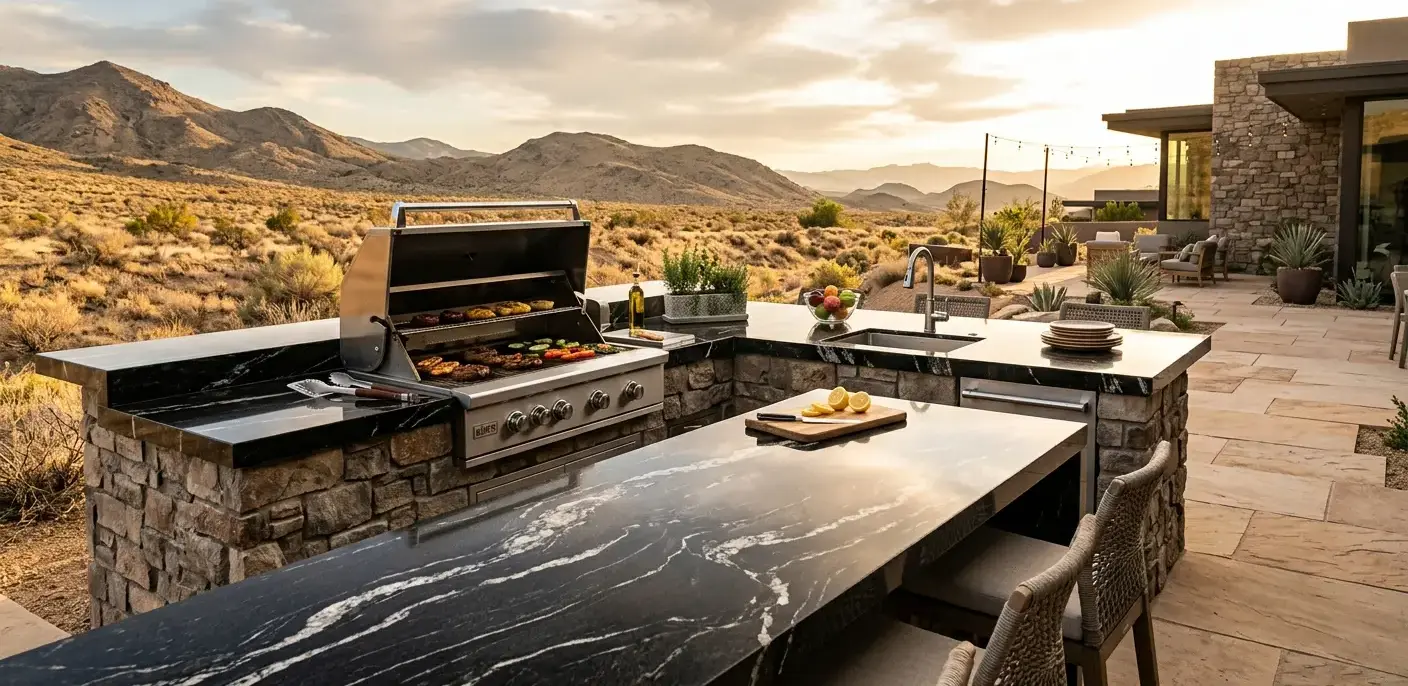
Granite and quartzite rank among the hardest natural stones available. Both are UV-stable, heat-resistant, and suited to Fernley's outdoor patios and high-traffic interior spaces. Periodic sealing protects against staining, but daily care remains minimal. The stone slab options at Nova include granite and quartzite in a full range of tones suited to northern Nevada's building environment.
02
UV stable
Outdoor: textured finish
Periodic sealing
BEST FOR INTERIORS + COVERED PATIOS
Marble and Travertine
Marble and travertine bring warmth and visual texture to interior rooms. Both are porous, which can allow staining, and both are susceptible to acid etching from common kitchen and bathroom spills. Sealing helps reduce staining and absorption, but it does not prevent etching. Travertine performs well indoors and is also generally suited for outdoor use; confirm the exact product and installation system for specific exposure conditions.
03
Honed finish recommended
Interior + covered patio
Sealing required
BEST FOR CLIMATE-CONTROLLED INTERIORS
Luxury Vinyl Plank
LVP offers a waterproof core, a wear-resistant surface layer, and a softer underfoot feel than stone or tile. In climate-controlled interior rooms it performs reliably. LVP expands and contracts under Fernley's wide temperature swings, however, particularly in spaces with south-facing windows or inconsistent HVAC coverage. Outdoor applications are not recommended for LVP in this climate.
04
Waterproof core
Interior only
Softer underfoot
ROOM BY ROOM
Flooring by Space
Each room presents a different performance profile. Matching material to room type avoids premature wear, failed adhesives, and costly replacements
Kitchen
Kitchen floors endure moisture, grease, and heavy daily foot traffic. Glazed porcelain rated PEI III or higher is generally suited to this environment without special cleaning products or frequent refinishing. The Reno showroom carries coordinating stone and tile combinations that run from kitchen floors through backsplashes for a cohesive look.
- PEI III+ for glazed tile · Large-format reduces grout lines
Bathroom
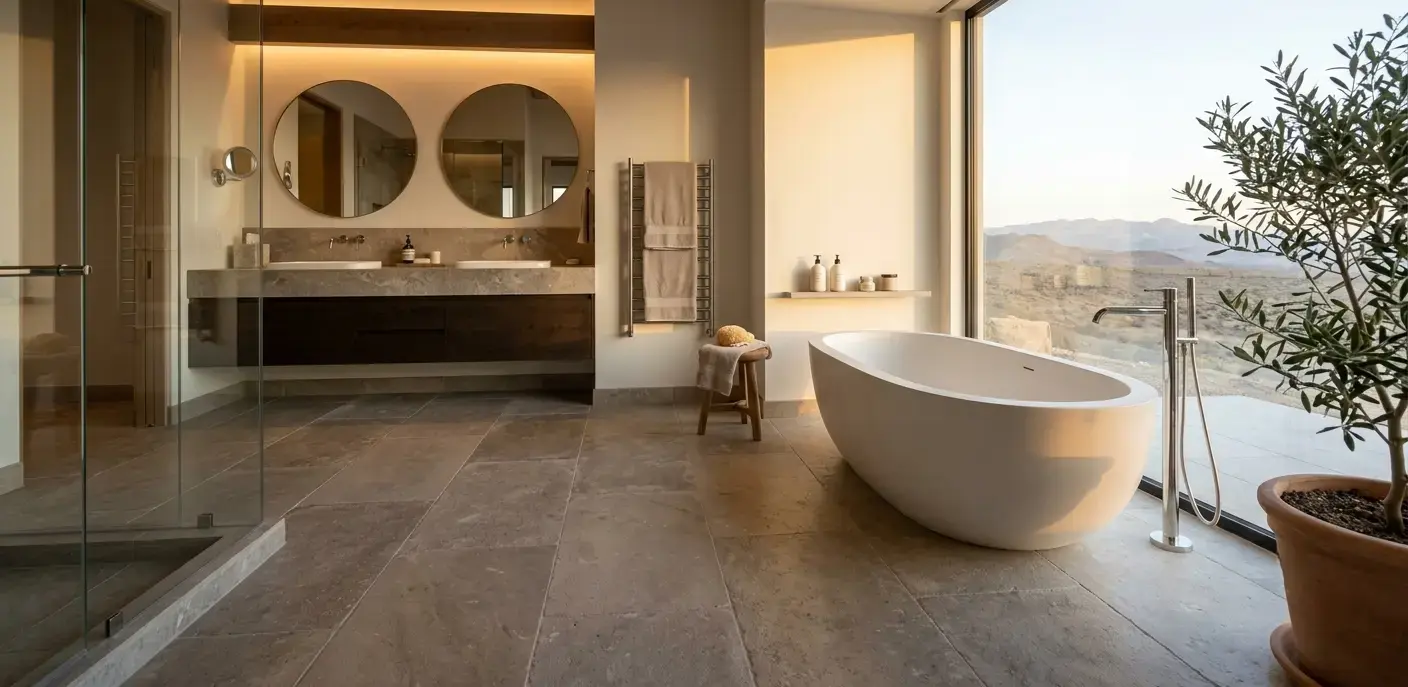
The ANSI A326.3 standard calls for a wet DCOF (dynamic coefficient of friction) of at least 0.42 on hard flooring for level interior spaces walked on when wet. Stone surfaces need periodic sealing to prevent moisture absorption through grout lines and the stone body. The Minden showroom offers hands-on material comparisons so homeowners can evaluate finish and texture in person before ordering.
-
Wet DCOF ≥ 0.42 (ANSI A326.3) · Confirm honed finish rating
Living Room
Living rooms allow the most flexibility in material choice. Porcelain, natural stone, and LVP all perform well in low-moisture interior spaces, and the final decision usually comes down to underfoot feel and visual style. Wide-plank LVP offers a warmer surface underfoot, while large-format stone reads clean and open in rooms with high ceilings. Warmer stone tones paired with natural textiles suit Fernley's earthy landscape palette.
- Most flexible zone · Warmer stone tones trending
Outdoor Spaces
Outdoor patios and entries require freeze-thaw rated materials. Porcelain tile with water absorption of 0.5 percent or less and ASTM C1026 freeze-thaw testing suits these spaces. For wet walking surfaces, manufacturers typically specify a wet DCOF of 0.60 or higher (the Exterior Wet category in ANSI A326.3), and no tile is slip-proof. Granite and quartzite also suit outdoor use when given a textured finish for wet walking surfaces. The Fernley location stocks outdoor-rated tile and stone suited to northern Nevada patios and entries. The Sacramento showroom carries the same freeze-thaw rated selection for Northern California projects.
-
wet DCOF ≥ 0.60 typical · Freeze-thaw rated only
SIDE BY SIDE
Material Comparison
How porcelain, natural stone, and LVP stack up across Fernley's primary performance criteria.
Feature | Porcelain Tile | Natural Stone | LVP |
Water Resistance | Excellent (<=0.5% absorption) | Moderate (sealing required) | Excellent (waterproof core) |
UV Stability | High | High (granite, quartzite) | Low to Moderate |
Outdoor Use | Yes (freeze-thaw rated) | Yes (granite, quartzite, textured finish) | Not recommended |
Scratch Resistance | High | High | Moderate |
Maintenance | Low | Moderate (periodic sealing) | Low |
Underfoot Feel | Hard | Hard | Softer |
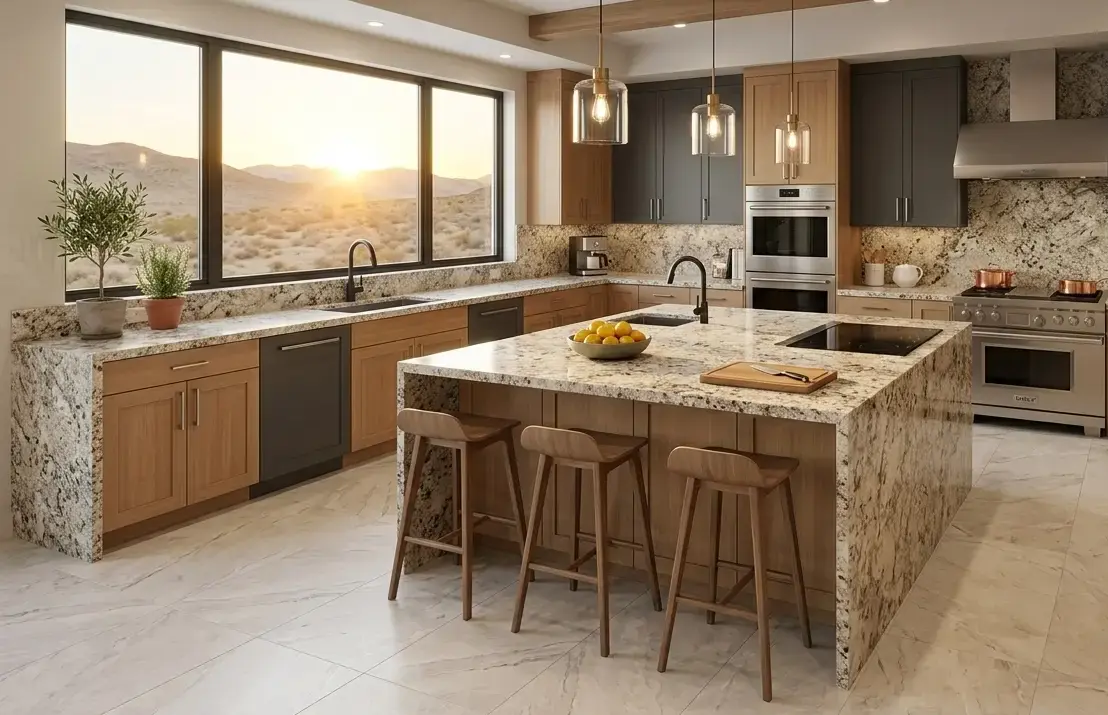
Note: Some images on this page may be conceptual renderings created to illustrate design possibilities and may not depict actual installations.
HONEST ASSESSMENT
Pros and Cons of Tile and Stone in Fernley
Advantages
- Porcelain and dense stone resist warping and surface cracking through Fernley's temperature cycles
- Both materials resist moisture effectively when properly sealed and maintained on schedule
- Natural stone develops a patina over time that deepens the visual character of the floor surface
- Large-format tiles reduce visible grout lines, which lowers the overall cleaning burden per square foot
- Tile samples ship free, so homeowners can preview finishes at home before placing a full order
Considerations
- Natural stone requires periodic resealing to maintain moisture and stain resistance over time
- Hard surfaces feel cold underfoot in winter without radiant heat beneath the floor
- Grout lines in tile accumulate dust and debris and require consistent routine maintenance
- Marble and travertine etch when exposed to acidic household liquids such as citrus or vinegar
A PRACTICAL FRAMEWORK
5 Steps to Choose Flooring for Your Fernley Home
- Assess room conditions first. Note moisture levels, direct sun exposure, and daily traffic patterns for each space before reviewing any material.
- Match material to climate demands. Outdoor and high-moisture interior zones require freeze-thaw rated porcelain or dense natural stone with low absorption rates.
-
Verify DCOF and PEI ratings. Confirm a wet DCOF of 0.42 or above for bathroom floors and, for glazed tile, PEI III or higher for kitchen and living room traffic.
- Order tile samples at no cost. Tile samples ship free from Nova, allowing homeowners to test finishes in actual home lighting alongside existing fixtures before deciding.
- Consult a showroom specialist. A brief in-person visit to any Nova location confirms whether the chosen material meets the specific performance requirements of the space.
Conclusion
Matching flooring to Fernley's conditions requires more than choosing a color or finish. Porcelain tile, granite, quartzite, and LVP each address a different part of the performance equation, and the right combination depends on each room's specific demands. Nova's flooring showroom carries the full range of materials covered in this guide, with regional specialists available at every stage of the project.
Book your free consultation today! Our design consultants help homeowners evaluate top choices with no upfront commitment required.
Frequently Asked Questions
Porcelain tile and quartzite are among the most durable flooring options for Fernley homes. Both resist moisture, UV exposure, and temperature extremes.
Porcelain tile has water absorption of 0.5 percent or less, and outdoor use calls for a freeze-thaw rating confirmed by ASTM C1026 testing.
Quartzite is equally dense and UV-stable but requires periodic sealing to maintain its stain-resistant surface.
LVP performs well in climate-controlled interior rooms in Fernley homes. Its waterproof core handles everyday spills and its wear layer resists surface scratches. However, LVP can expand and contract under wide temperature swings, particularly in rooms with large windows or limited HVAC coverage. For outdoor spaces or high-temperature zones, porcelain tile or natural stone are more reliable choices.
Yes, granite and quartzite are well-suited for outdoor use in Fernley because both are dense, UV-stable, and resistant to freeze-thaw stress. A textured finish is best for wet walking surfaces. Marble should generally be limited to shaded or covered patios, while travertine can be used outdoors but may weather faster under full sun exposure.
Yes, tile samples ship free from Nova Tile and Stone. Ordering samples before a showroom visit allows homeowners to review finishes and colors in their own lighting and alongside existing fixtures, which makes final selection faster and more confident.
Porcelain tile requires less ongoing maintenance and resists staining from food and liquids without periodic sealing. Natural stone such as granite offers a distinctive appearance and tactile quality but needs regular sealing to stay stain-resistant. The choice typically comes down to preferred aesthetics and willingness to commit to a maintenance routine over time.
Visit Our Fernley Showroom – Nova Tile and Stone
1855 US Highway 95A North, Fernley, NV 89408
Store hours this week:
- Mon. - Fri.: 7:30 am - 4:00 pm
- Sat. - Sun.: Closed