Yes, ceramic tile holds up well in Virginia City's cold winters, but only for interior use. It is not rated for exterior surfaces exposed to repeated freeze-thaw cycles. Virginia City sits at roughly 6,200 feet in the Virginia Range, higher in elevation and colder than nearby Reno and Carson City, which means unrated tile installed outside on a porch, landing, or entryway can crack as trapped moisture freezes and expands inside the tile body and grout. Indoors, in bathrooms, kitchens, and living spaces throughout a Comstock-era home, ceramic tile performs the same way it does anywhere else and isn't affected by the winter conditions outside.
If you're weighing ceramic tile for a Virginia City home, here is what actually affects how it performs, where it belongs, and where porcelain or another material makes more sense.
Ceramic vs. Porcelain Tile: What's Actually Different
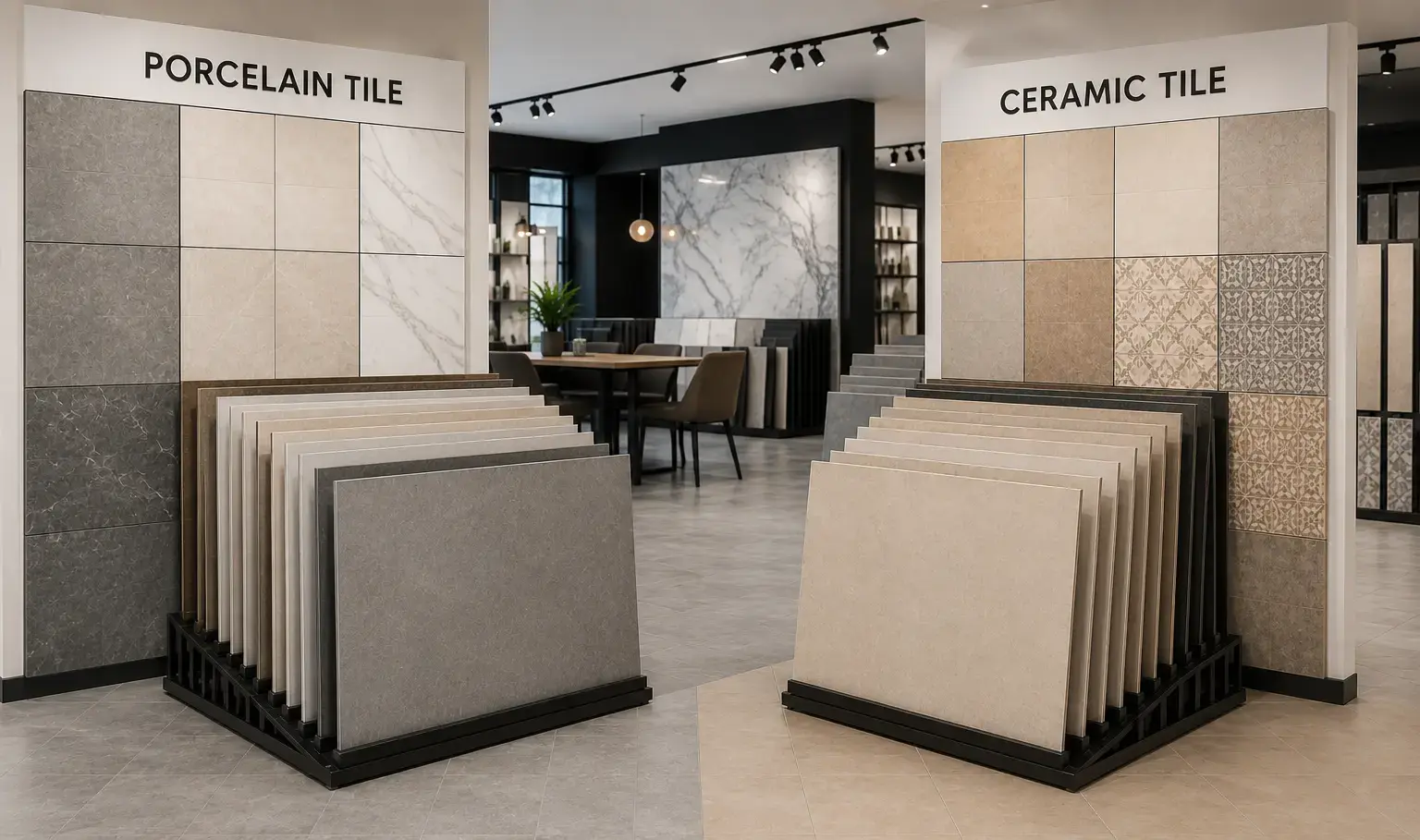
Ceramic and porcelain are often shelved next to each other and talked about as if they're interchangeable, but the manufacturing difference is real. Porcelain is pressed from denser, more refined clay and fired at a higher temperature, and under the industry standard definition used by ANSI, porcelain tile must have a water absorption rate of 0.5% or less to be classified as porcelain rather than standard ceramic. That lower absorption rate is what makes porcelain denser and generally more durable, while ceramic tile stays more porous by comparison.
For most interior rooms in a Virginia City home, that difference is not a dealbreaker. Ceramic performs fine on floors, walls, and backsplashes in living spaces, bedrooms, and most bathrooms. Where it starts to matter is water exposure and abrasion. Tile is rated on a PEI scale from 0 to 5 for surface wear resistance, with higher numbers suited to heavier foot traffic, and on a separate water absorption scale that determines whether a tile is appropriate for wet areas or exterior use. Ceramic generally sits lower on both scales than porcelain, which is the practical reason porcelain tends to get recommended for entryways, mudrooms, and anywhere moisture and grit come in from outside.
Freeze-Thaw: The Real Cold-Weather Question
This is where Virginia City's elevation actually changes the calculus compared to a lower-elevation Reno or Sparks project. Ceramic tile is not typically rated for exterior use in freeze-thaw climates, and the reasoning comes down to physics, not marketing. Water increases in volume by about 9% after it freezes, and standard tile can absorb a small amount of moisture into its body. Only tile certified as impervious, meaning it absorbs less than 0.5% water, is built to withstand that expansion pressure without damage. Push a non-rated tile through repeated winter freeze-thaw cycles and that pressure eventually cracks it from the inside out.
The Tile Council of North America's frost resistance guidance is direct about this: frost-resistant tile can generally handle exterior exposure so long as it is installed according to industry-accepted methods and the manufacturer specifically rates it for exterior applications. That last part is the piece homeowners skip. A tile that looks and feels identical to a frost-rated one at the showroom can behave completely differently once it is set outside a Virginia City entryway through a winter.
Why Ceramic Tile Feels Cold Underfoot (and What to Do About It)
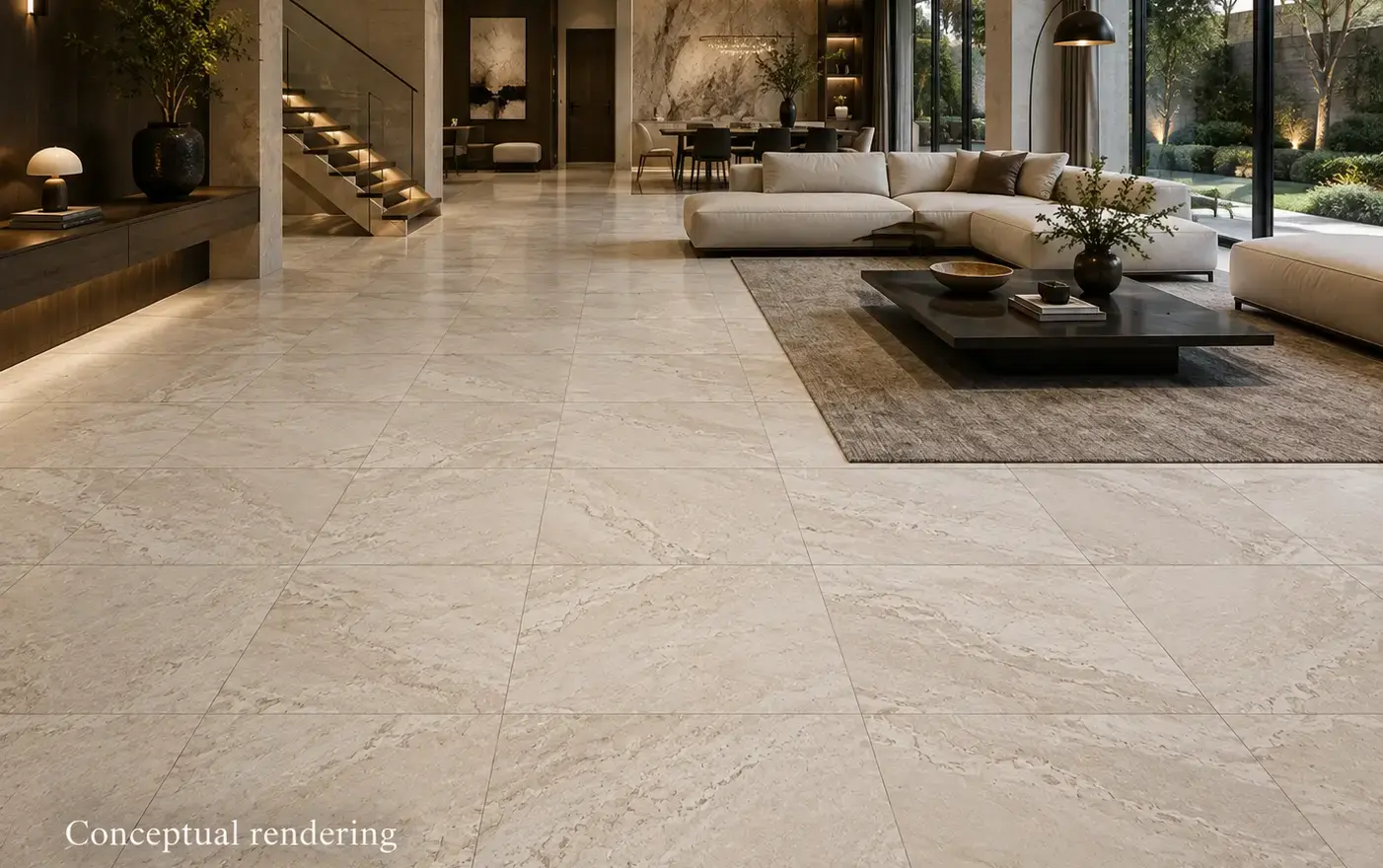
One of the most common complaints about ceramic tile has nothing to do with durability. Tile flooring comparisons consistently note that it doesn't hold heat well and tends to feel cold underfoot, which shows up most in the winter months. At Virginia City's elevation, that effect is more noticeable than it would be at a lower, milder Reno address. Two approaches address it without changing the material decision:
- Radiant floor heating installed under the tile before setting is the most effective fix and works well with ceramic specifically, since tile conducts and holds heat efficiently once it's warmed.
- Area rugs and runners in high-traffic spots such as in front of the kitchen sink or bathroom vanity solve the comfort issue on a smaller budget, without covering the whole floor.
Neither approach is required. Plenty of homeowners simply accept that tile runs cooler than carpet or hardwood in winter, especially in rooms like bathrooms and entryways where that's expected anyway.
Where Ceramic Tile Makes the Most Sense in a Virginia City Home
Given the elevation, the housing stock, and the freeze-thaw reality, ceramic tile tends to work best in these applications for a Virginia City property:
- Interior bathroom floors and walls, particularly with a textured or matte glaze for slip resistance
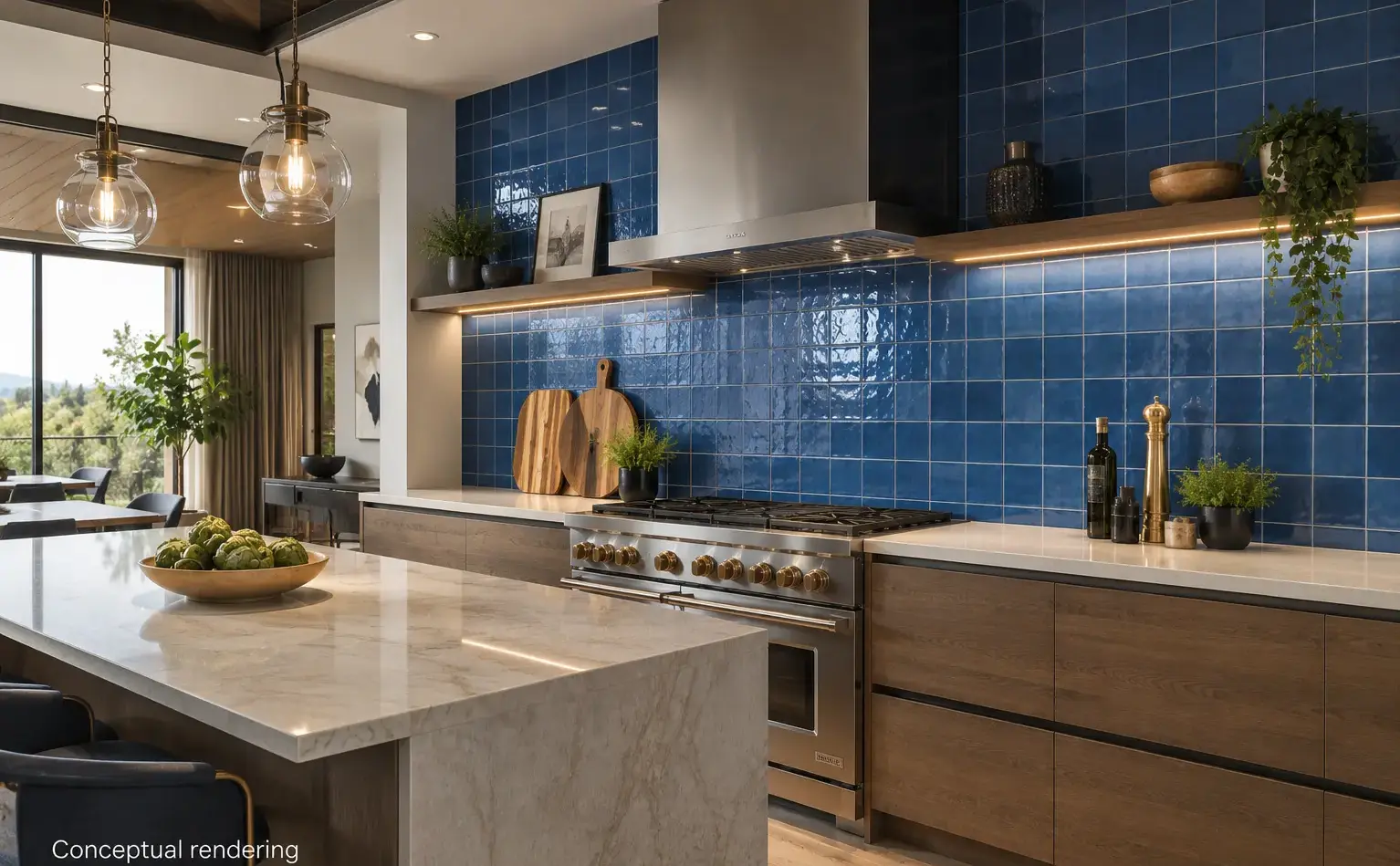
- Kitchen backsplashes and accent walls
- Mudrooms and interior entryways (not exposed exterior landings)
- Laundry rooms and interior utility spaces
- Fireplace surrounds, where heat resistance and easy cleaning matter more than water resistance
For anything exposed to direct weather, an exterior-rated porcelain or natural stone product is the more reliable long-term choice.
Living With Ceramic Tile in a Historic Comstock Home
Virginia City's housing stock is unlike most of the towns Nova Tile and Stone serves. According to the National Park Service's overview of the Virginia City Historic District, the district includes 19th-century mining-era buildings and sits roughly halfway between Reno and Carson City, and many homes here are original Victorian-era structures with steep hillside lots, older subfloors, and layouts that were never designed around today's open-concept kitchens. That changes a few practical things about a tile project:
- Subfloor condition matters more. Older homes are more likely to have uneven or settled subfloors, and ceramic tile is less forgiving of movement than resilient flooring. A proper substrate check before installation avoids most of the cracking issues that get blamed on the tile itself.
- Layouts weren't built around modern kitchens and baths. Narrow hallways, compact bathrooms, and smaller original room footprints are common in Comstock-era construction, which affects the tile size and pattern choices covered next.
Choosing Tile Size, Pattern, and Grout for a Historic Renovation
Beyond the material question, a few selection details tend to make or break how ceramic tile reads in an older Virginia City home:
- Tile size relative to room size. Large-format tile can visually shrink a small, narrow bathroom common in Victorian-era floor plans, since fewer, bigger pieces can emphasize how compact the space actually is. Smaller-format tile, including classic hexagon or subway shapes, tends to suit these rooms better and reads as more period-appropriate.
- Pattern choice. Herringbone, basketweave, and encaustic-look patterns were common in homes from this era and can be recreated in modern ceramic tile without the maintenance demands of the original cement tile these patterns were based on. A more rustic or stone-look ceramic pairs well with the exposed timber and rugged materials common in older mining-town construction, for anyone who prefers that look over a formal Victorian pattern.
- Grout width and color. Narrower grout lines give a cleaner, more contemporary look, while wider grout lines with a contrasting color read as more traditional. In a historic renovation, matching the grout style to the home's era usually looks more intentional than defaulting to whatever is standard for new construction.
- Trim and edge details. Older homes often have unusual wall angles, transitions, and baseboard heights that were common in 1860s and 1870s construction. Planning trim pieces and edge profiles before installation avoids awkward cuts partway through a project.
None of these choices affect how the tile performs. They affect whether the finished room looks like it was designed for the house it's in, which matters more in a historic district than almost anywhere else Nova Tile and Stone serves.
Visiting Nova Tile and Stone for a Virginia City Project
Nova Tile and Stone's Reno showroom, located at 12835 Old Virginia Rd, Suite 24, Reno, NV 89521, phone (775) 331-6682, is roughly a 30- to 40-minute drive from Virginia City and carries both ceramic and porcelain tile alongside natural stone, quartz, and flooring options, so homeowners can compare interior and exterior-rated products side by side before deciding. Tile samples are available to take home for $1 each, which is worth doing before committing to a historic renovation, since lighting in an older home with smaller windows can shift how a glaze or color reads compared to the showroom floor. A free design consultation is also available for anyone working through a full room or whole-house tile plan.
Conclusion
Ceramic tile is a practical, versatile choice for the interior of a Virginia City home, from bathrooms to backsplashes to fireplace surrounds, as long as it's kept out of direct exterior exposure. Matched to the right room, with the subfloor condition of an older home accounted for and a tile size and pattern suited to the house's era, ceramic tile can look right at home in a Comstock-era property without being asked to do a job it was never built for. The material decision is straightforward once the room, the exposure, and the age of the house are accounted for separately, rather than treating "ceramic tile" as a single answer for every surface in the home.
Frequently Asked Questions
It depends on the subfloor's condition and thickness, not its age alone. Ceramic tile needs a rigid, stable base, so a subfloor with noticeable flex, gaps, or settling typically needs reinforcement or a cement backer board layer before tile goes down. Skipping that step is the most common reason tile cracks in older homes, regardless of tile quality.
Glazed ceramic tile itself doesn't need sealing since the glaze is already non-porous, but the grout lines do. Northern Nevada's dry air can actually make grout more prone to hairline cracking over time if it isn't sealed periodically, since low humidity accelerates moisture loss from cementitious grout during curing and beyond.
Yes, ceramic tile is non-combustible and commonly used for fireplace surrounds, but the installation materials matter as much as the tile. Older homes sometimes have fireplace surrounds built with materials or clearances that no longer meet current code, so it's worth confirming clearance-to-combustible requirements before tiling over an existing surround rather than assuming the original construction meets today's standards.
Grout in consistently dry, high-desert conditions tends to show dust and mineral buildup from tap water more than mildew or moisture staining, which is the opposite of what shows up in humid climates. Lighter grout colors will show this buildup faster, so a mid-tone grout is generally easier to maintain in a dry climate without requiring more frequent cleaning.
Yes, in two different ways depending on the season. In warm, dry conditions, thinset mortar and grout can dry too quickly on the surface before they've properly bonded underneath, a problem installers call flash setting, which can weaken adhesion or cause cracking. In cold winter conditions, the opposite happens: curing slows down significantly below about 50°F, so a winter installation may need extra cure time before grouting or foot traffic. A qualified installer will adjust technique and timing for whichever season the work falls in.
Note: Some images on this page may be conceptual renderings created to illustrate design possibilities and may not depict actual installations.