Quartz, granite, engineered hardwood, and luxury vinyl plank are the countertop and flooring materials most commonly recommended for Virginia City, NV homes, chosen for how well they handle the town's high-elevation climate while still suiting its 19th-century Comstock-era architecture. Virginia City sits at roughly 6,100 to 6,300 feet in the Virginia Range, within a National Historic Landmark District built during the Comstock Lode silver boom of the 1860s and 1870s, and many homes there still date to that period, alongside newer builds in areas like the Virginia City Highlands. For homeowners renovating here, the choice usually comes down to durability, maintenance, and whether a material fits a historic structure or a newer home on the Highlands plateau.
Here's what to know about the countertop and flooring options that work well for this market.
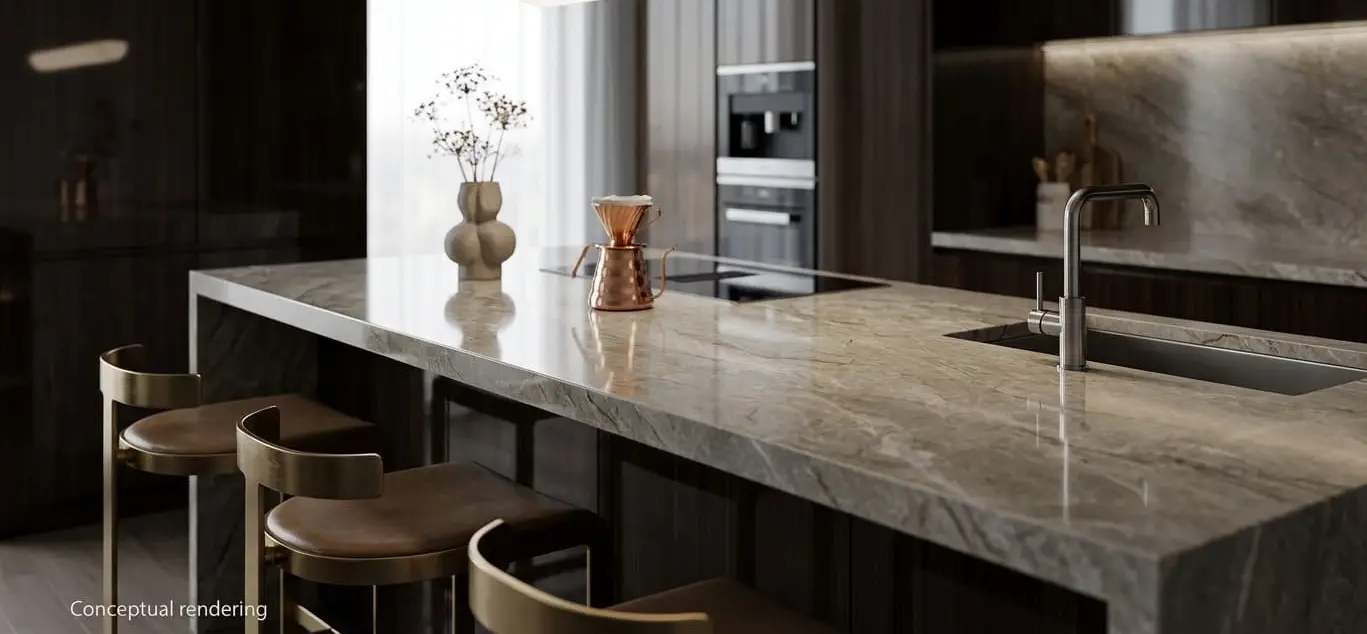
Countertops for Virginia City Homes
Quartz is engineered from natural quartz crystals bound with resin, which makes it non-porous and more resistant to staining and scratching than many natural stones. It doesn't require sealing, which matters in a town where many properties rely on well water and septic systems rather than municipal utilities, and where a low-maintenance surface can be one less thing to think about. Quartz also comes in a wide range of colors and patterns, including options that mimic the look of older marble or granite surfaces for homeowners trying to match a historic kitchen's aesthetic.
Granite is a natural stone that has long suited Nevada's high-desert homes because of its heat resistance and durability, though it does require periodic resealing to stay stain-resistant. Its natural variation and mineral flecking can complement a home built during Virginia City's mining era, since granite countertops echo the same geology that built the town.
Natural stone options like quartzite, marble, and dolomite offer a more traditional look for homeowners restoring or matching period-appropriate finishes, though each has different care requirements. Quartzite is closer to granite in durability, while marble is softer and more prone to etching from acidic foods, which is worth factoring in for a busy kitchen.
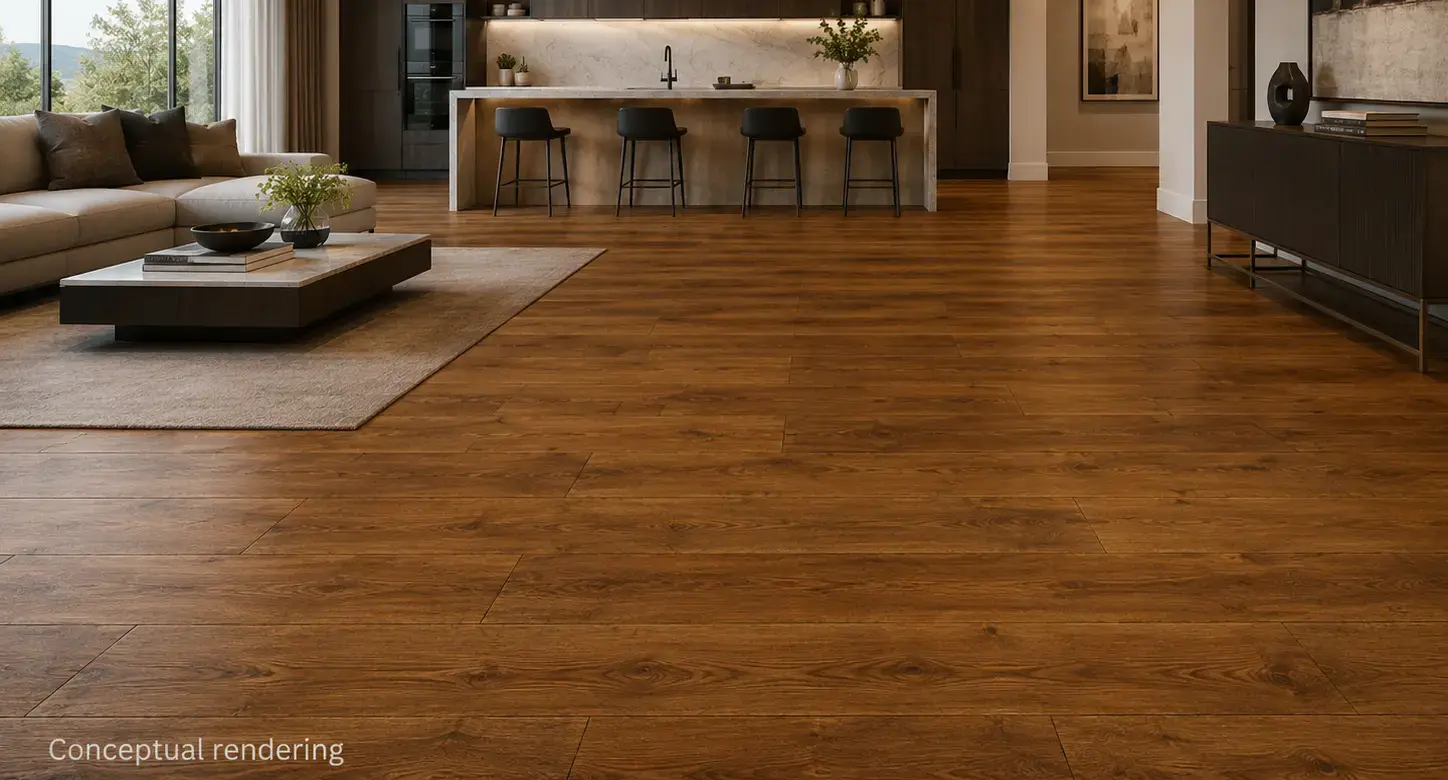
Flooring for Virginia City Homes
Engineered hardwood holds up better than solid hardwood in a climate with real seasonal temperature swings, since its layered construction resists the expansion and contraction that can warp solid wood flooring. It also gives homeowners a way to match the wood tones common in older Virginia City homes without the maintenance demands of refinishing original floors. You can explore a range of engineered hardwood options by stopping at our showroom.
Luxury vinyl plank (LVP) is a practical option for homes that see winter snow tracked in from C Street or a Highlands driveway, since it's water-resistant and holds up well to grit and moisture. It also mimics wood or stone visually at a lower price point, which can help homeowners budget for a full renovation across multiple rooms.
Porcelain tile is another strong option for entryways and kitchens, offering a hard, low-maintenance surface that resists moisture and temperature swings better than most natural stone flooring.
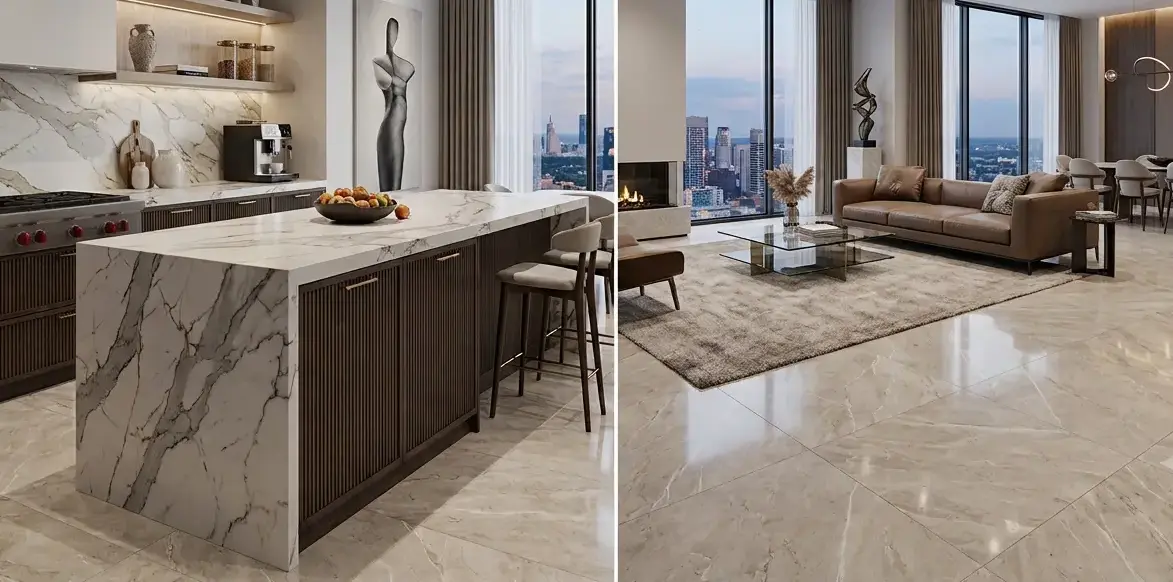
Visiting the Showroom
Virginia City homeowners are typically a 30 to 40 minute drive from Nova Tile and Stone's Reno showroom via the Geiger Grade (SR-341), depending on winter conditions on the pass. The showroom is located at 12835 Old Virginia Rd, Suite 24, Reno, NV 89521, and can be reached at (775) 331-6682. Free design consultations are available for homeowners who want to see and compare countertop and flooring samples in person before deciding on materials for a Virginia City project.
Conclusion
Renovating a home in Virginia City comes with two considerations most Reno-area projects don't have to weigh together: a high-elevation climate with real seasonal swings, and a housing stock where historic character carries real weight. Quartz and engineered hardwood tend to be the most forgiving choices for the climate, since both resist the temperature and humidity shifts that can affect natural wood and porous stone. At the same time, granite, quartzite, and other natural stones remain a strong fit for homeowners who want their countertops to echo the mineral history that built the town in the first place. The right choice usually comes down to how much maintenance a homeowner wants to take on and how closely they're trying to match a home's original period detailing, and both goals can be met with the materials covered here.
Frequently Asked Questions
Yes. At roughly 6,100 to 6,300 feet, Virginia City sees a wider daily and seasonal temperature range than lower-elevation parts of the Reno area, which is why engineered hardwood and quartz are often better choices than solid wood or naturally porous stone that can react to humidity and temperature swings.
The Comstock Historic District Commission reviews exterior changes within the district, such as paint colors, signage, and new construction, and requires a Certificate of Appropriateness before that work begins. Interior countertop and flooring choices fall outside that review process, so homeowners have more flexibility indoors than they do with a home's exterior.
Luxury vinyl plank and porcelain tile are both strong choices for entryways and mudrooms, since they resist water and grit tracked in from snow and won't warp the way solid hardwood can in fluctuating humidity.
Yes. Many quartz lines are designed to mimic the veining and coloring of natural stones like marble, and granite's natural mineral patterning often complements the aesthetic of a historic Comstock-era home without looking out of place.
Granite and marble countertops typically need resealing about once a year in a high-desert climate like Virginia City's, where dry air and dust can wear down a sealant faster than in more humid regions. Quartz doesn't require sealing at all, which is one reason it's a lower-maintenance option for homeowners who don't want that upkeep on their calendar.
Note: Some images on this page may be conceptual renderings created to illustrate design possibilities and may not depict actual installations.