Countertop Heat Resistance Starts With the Right Material
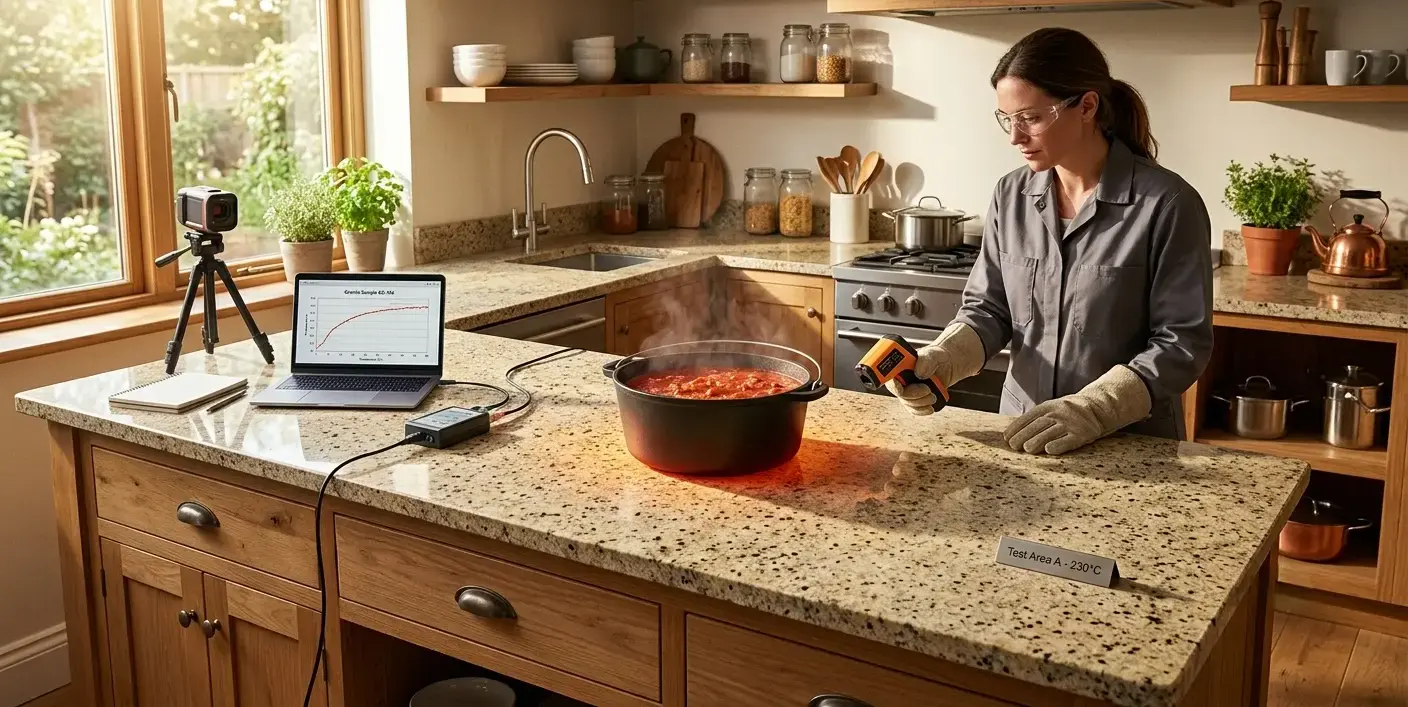
Countertop heat resistance depends primarily on the stone or tile material chosen, its finish, and daily kitchen habits. Granite, quartzite, and dense porcelain slabs generally tolerate brief direct heat better than quartz or marble, though every material benefits from trivets and hot pads near cooking surfaces.
For homeowners planning kitchen countertops and backsplash designs in Wadsworth, matching stone materials and finish to how a kitchen actually gets used helps prevent scorch marks, hairline cracks, and premature wear near stovetops.
Selecting the right finish matters as much as the material itself, since polished surfaces respond differently to heat and moisture than honed or leathered options do over time.
Nova Tile and Stone supplies slab and tile materials for kitchens throughout the Fernley area, Fallon, Silver Springs, Wadsworth, and Stagecoach, helping homeowners weigh heat performance against style and long-term durability before choosing.
A kitchen remodel in Wadsworth often starts with a simple question about which countertop stands up best to daily cooking, baking, and the occasional hot pan left too close to the edge.
Heat is only one factor among several, including moisture exposure, scratch habits, and available natural light, all of which shape which stone materials and finish combinations perform well over time in a working kitchen.
Key Benefits of Heat-Aware Stone and Tile Selection
Choosing countertop materials with heat performance in mind offers practical advantages for busy kitchens, especially where cooking, baking, and everyday food prep happen near hot surfaces.
- Granite and quartzite resist brief direct heat well, though trivets still guard against thermal shock from very hot cookware.
- Porcelain slabs offer dense, low-porosity surfaces that pair naturally with matching porcelain tile backsplash designs; independent porcelain certification programs support this consistency.
- Marble and dolomite bring classic veining but perform best with hot pads, since sudden temperature shifts can affect these softer stones.
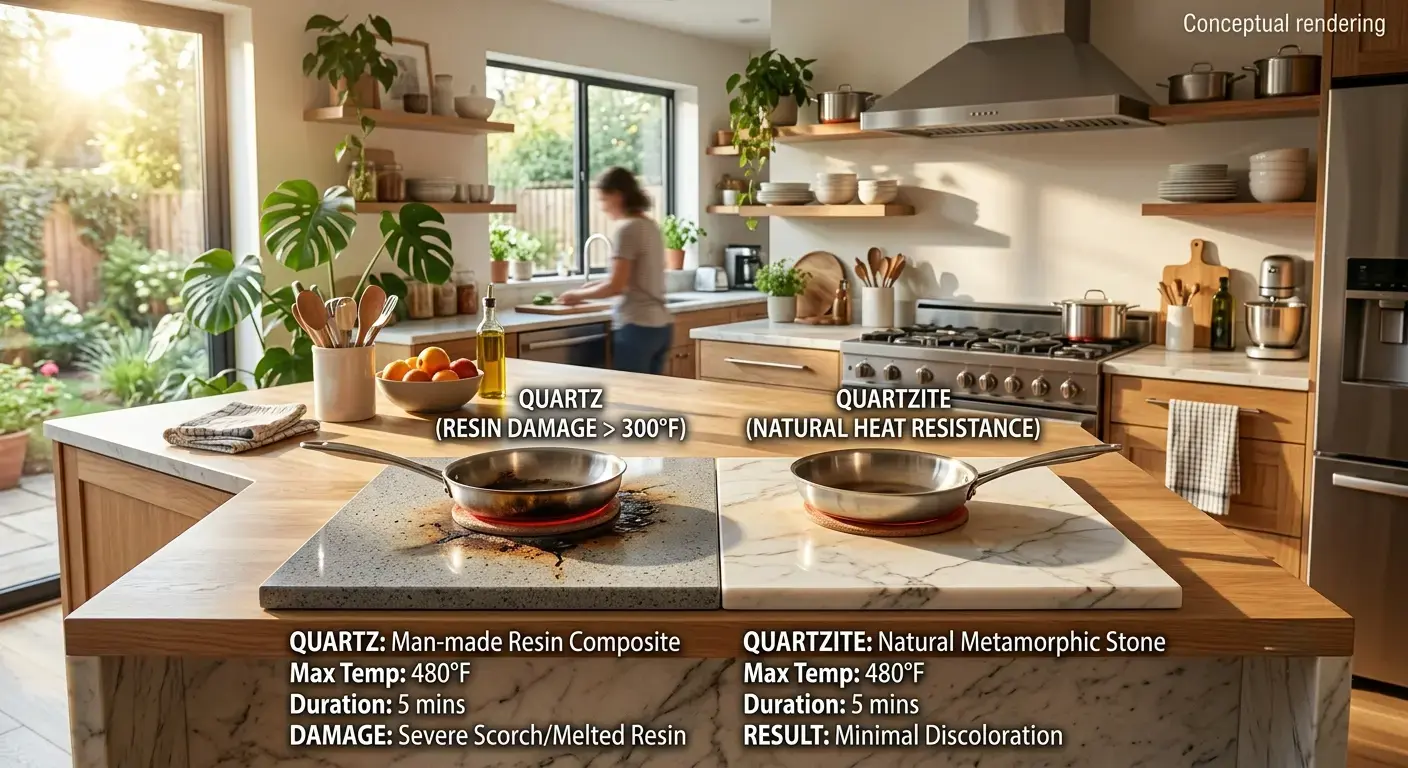
- Quartz surfaces are engineered and consistent, but resin content makes them more heat-sensitive than natural stone, so trivets stay essential.
- Matte, honed, or leathered finishes reduce slipperiness near sinks and stovetops compared with polished surfaces in the same area.
 Conceptual rendering
Every material choice involves tradeoffs between heat tolerance, upkeep, and appearance, so browsing the slab collection helps narrow options before a final decision.
Comparing heat performance side by side also clarifies where a budget is best spent, since a durable slab near the range may matter more than matching material along a rarely used far counter.
Homeowners weighing granite against porcelain, or quartz against quartzite, often find that daily habits around cooking and cleanup matter as much as the stone itself when it comes to long-term satisfaction.
Where Marble, Quartz, Dolomite, and Travertine Fit Best
Marble, dolomite, and travertine work best in shaded or indoor settings away from constant direct heat, pairing nicely with a lightly used prep counter or backsplash. Quartz suits similar indoor placements, since it is not rated for outdoor or UV exposure.
Current design coverage from recent design events shows continued interest in mixing natural stone accents with engineered surfaces for contrast.
Dolomite in particular is sometimes mistaken for marble because of similar veining, though both stones share the same shaded-placement guidance and benefit from the same gentle daily care routine.
Travertine brings warm tones well suited to backsplash accents or lightly used floor areas, provided it stays away from constant direct heat and harsh cleaning chemicals over time. A quick three-step approach keeps any material performing well over time.
- Match the material to its typical use zone, keeping marble, dolomite, and quartz away from constant direct heat exposure.
- Keep trivets and hot pads within reach of every cooktop, since heat resistance does not mean thermal-shock proof performance.
- Wipe spills promptly and skip abrasive cleaners, since surface care extends the useful life of any stone or tile finish.
Advantages and Points to Consider
- Advantage: Granite and quartzite tolerate everyday cooking heat with minimal fuss when paired with basic trivet habits.
- Advantage: Porcelain slab and tile combinations simplify design continuity across countertops and backsplash surfaces.
- Consider: Marble, dolomite, and travertine need shaded placement and gentler daily care than harder stones.
- Consider: Quartz needs consistent trivet use, since its resin content responds differently to heat than natural stone.
Kitchen Countertops and Backsplash Designs for Every Cook Space
Granite and Quartzite Near Cooktops
Granite and quartzite slabs suit areas directly beside ranges and ovens, where brief heat exposure is common during everyday cooking and holiday meal prep season.
Both materials pair well with porcelain or ceramic backsplash tile, creating a durable transition zone that resists heat, moisture, and daily wear with proper care. Homeowners near the Reno showroom often review granite and quartzite samples side by side.
A honed or leathered finish on either stone can soften glare near a range hood, while still holding up to everyday heat exposure better than most engineered surfaces on the market.
Neither granite nor quartzite is truly thermal-shock proof, so setting a cold pot straight from the freezer onto a very hot section of countertop is still worth avoiding whenever possible.
Porcelain Slab and Tile Pairings
Porcelain slabs and tiles share consistent heat tolerance, making them a practical match for countertops, backsplash, and even open shelving accents within one continuous design.
Because porcelain is manufactured, color and pattern stay consistent across slab and tile pieces, which simplifies coordinating a full kitchen palette. Classic pairings from this color guide still translate well to stone and tile choices today.
Porcelain slabs also resist staining from acidic foods and everyday spills reasonably well, though prompt wipe-ups still preserve appearance better than letting liquids sit for long stretches.
Pairing a large-format porcelain slab with smaller-format porcelain tile along the backsplash creates visual continuity while keeping heat and moisture behavior consistent across both surfaces.
Material | Typical Finishes | Heat Exposure Tolerance | Best Kitchen Placement |
Granite | Polished, Honed, Leathered, Specialty | High, trivets still recommended | Countertops near cooktops |
Quartzite | Polished, Honed, Leathered, Specialty | High, similar to granite | Countertops, prep zones |
Porcelain | Polished, Honed, Specialty | High, dense and consistent | Countertops and backsplash |
Marble | Polished, Honed, Leathered, Specialty | Moderate, sensitive to shifts | Backsplash, light-use counters |
Dolomite | Polished, Honed, Leathered, Specialty | Moderate, similar to marble | Backsplash, accent counters |
Quartz | Polished, Honed | Lower, resin-sensitive | Backsplash, secondary counters |
Travertine | Polished, Honed, Leathered, Specialty | Moderate, shaded use only | Backsplash, floor accents |
 Conceptual rendering
Expert Guidance From Nova Tile and Stone
Nova Tile and Stone offers expert guidance on matching countertop heat resistance needs with the right slab or tile material for kitchens throughout the region.
Free tile samples let homeowners compare color, texture, and finish at home before committing to a final backsplash or accent tile selection for a project.
Bringing home a few tile samples often reveals how a finish truly interacts with everyday kitchen lighting, which can cast warmer or cooler tones compared to the bright, uniform showroom fixtures seen during a slab viewing. This step helps homeowners visualize realistic color shifts and surface details before committing to installation.
Showroom consultations are available near Minden, where specialists walk through heat performance, finish options, and maintenance expectations before any material is ordered. Design specialists also support projects sourced through the Sacramento showroom for homeowners further west who want the same level of guidance.
Visiting the team background page introduces the specialists behind Nova's slab and tile selection process, along with showroom locations serving Fernley, Fallon, Silver Springs, Wadsworth, and Stagecoach.
Conclusion
Countertop heat resistance ultimately depends on selecting durable stone materials and finish combinations tailored to each kitchen’s cooking habits. Granite, quartzite, and porcelain often perform best, but success also requires reinforcing those choices with everyday care practices such as using trivets, avoiding direct pan contact, and ensuring prompt cleanup after cooking.
Nova Tile and Stone helps homeowners across Fernley, Fallon, Silver Springs, Wadsworth, and Stagecoach compare granite, quartzite, porcelain, marble, and quartz for durable kitchen countertops and backsplash designs. Visit the full collection overview to see available materials, finishes, and current design pairings before scheduling a showroom visit.
Book your free consultation today to start planning a heat-aware countertop and backsplash design suited to your kitchen.
Frequently Asked Questions
Granite tolerates brief direct heat well, though trivets and hot pads still protect against thermal shock from very hot pots and bakeware.
Quartz contains resin binders that make it more heat-sensitive than natural stone, so hot pans should always rest on a trivet first.
Granite, quartzite, and porcelain generally handle heat near stovetops better than marble, dolomite, or travertine, which prefer hot pads and shaded placement.
Finish affects slipperiness and appearance more than heat resistance itself, though matte or honed finishes are often preferred near cooking and prep zones.
Nova Tile and Stone serves Fernley, Fallon, Silver Springs, Wadsworth, and Stagecoach with slab and tile material options for kitchen projects.