Comparing Countertop Options for Fernley and Fallon Homeowners
Comparing Countertop Options means weighing how granite, quartzite, quartz, marble, and porcelain slabs perform in daily kitchen and bathroom use, not just how they look on a showroom sample. Granite and quartzite hold up well in full sun and heavy traffic areas, while marble and quartz suit calmer, temperature-controlled spaces instead. The right match depends on where a surface lives and how a household actually treats it day to day.
Homeowners across Fernley, Fallon, Silver Springs, Wadsworth, and Stagecoach deal with desert heat, dry winters, and wide daily temperature swings that make application suitability just as important as color or veining. A slab chosen for looks alone can underperform if its finish or material class does not match its setting.
This guide breaks down finish options, application suitability, and everyday care across five popular slab materials, then walks through how each performs in kitchen, bathroom, and indoor-outdoor living spaces. Browse current slab material options before narrowing down a direction for a remodel or new build.
Benefits of Natural Stone, Quartz, and Porcelain Slabs
Slab countertops bring durability, visual depth, and long-term value to a kitchen or bathroom remodel. Granite and quartzite resist scratching and heat better than many surfaces, though cutting boards and trivets still protect any finish from repeated direct contact. Marble and dolomite offer soft veining and a cooler surface feel that many bakers appreciate, but both mark more easily around acidic spills like citrus or wine.
Porcelain slabs bring a manufactured consistency that natural stone cannot always match, along with strong resistance to staining in busy kitchens. Quartz stays indoors only, pairing dependable color consistency with lighter day-to-day maintenance, though sustained high heat can still affect its resin binder over time. Specifications referenced in resources such as the TCNA Handbook guidelines help clarify how hard surface materials are generally classified across the industry.
Slab benefits worth weighing include:
- A wide finish range across polished, honed, leathered, and specialty textures, depending on the material chosen
- Distinct veining and color variation that make each slab feel one-of-a-kind rather than mass-produced
- Granite, quartzite, and porcelain extend to outdoor kitchens, fireplaces, and shaded or sun-exposed patios
- Honed or leathered textures reduce slip risk near sinks and wet zones, though careful footing still matters
- Sealed natural stone resists everyday stains better, provided spills get cleaned up promptly
Natural Stone vs. Engineered Quartz: Advantages and Considerations
Advantages
- Natural stone offers one-of-a-kind veining and color movement that manufactured surfaces cannot fully replicate
- Quartz delivers consistent pattern and color across an entire kitchen or bathroom project
- Granite and quartzite extend outdoors, while quartz remains a reliable, low-maintenance indoor choice
Considerations
- Natural stone typically needs periodic sealing and prompt cleanup of acidic spills to preserve its finish
- Polished finishes on any material can feel slippery near sinks, showers, or wet floors
- Quartz can be affected by sustained high heat despite its generally durable resin binder
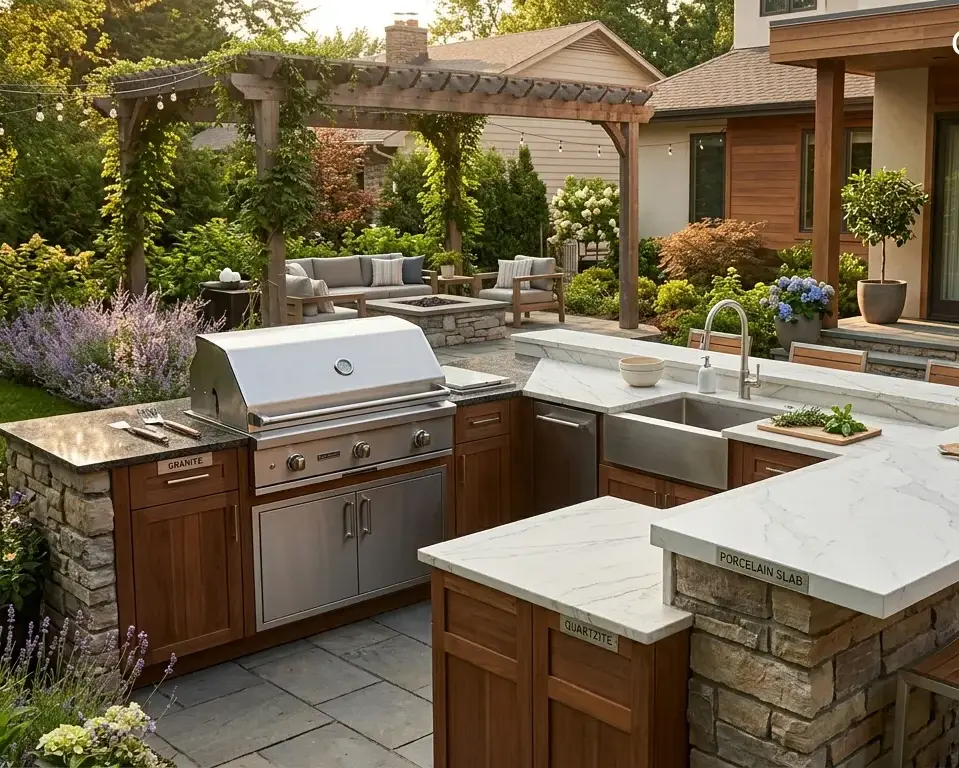 Conceptual rendering
Where Each Slab Material Fits in Kitchen and Bathroom Design
Material choice changes depending on the room, the traffic level, and whether a surface stays fully indoors or steps outside. A quick look at how popular materials compare side by side helps narrow the field before visiting a showroom in person.
Material | Finish Options | Indoor/Outdoor Suitability | Heat Note | Maintenance Note |
Granite | Polished, honed, leathered, specialty | Indoor and full-sun outdoor | Heat resistant, but trivets still recommended | Periodic sealing; clean spills promptly |
Quartzite | Polished, honed, leathered, specialty | Indoor and full-sun outdoor | Heat resistant, but trivets still recommended | Periodic sealing; avoid abrasive cleaners |
Porcelain | Polished, honed, leathered, specialty | Indoor and full-sun outdoor | Heat resistant, but trivets still recommended | Low porosity; wipe clean with mild cleaners |
Marble | Polished, honed, leathered, specialty | Indoor or shaded outdoor only | Heat resistant, but trivets still recommended | Prone to etching; seal and clean promptly |
Quartz | Polished, honed, specialty (no leathered) | Indoor only | Sensitive to sustained high heat | Low daily maintenance; avoid abrasive cleaners |
Kitchen Islands and Prep Surfaces
Kitchen islands see the heaviest daily use, from food prep to casual dining, which makes finish selection especially important. A honed or leathered granite or quartzite surface tends to hide fingerprints and light scratching better than a high-gloss polish, while still keeping full indoor and outdoor application range. Quartz stays indoors only, so it works well in a fully enclosed kitchen but should not extend to a covered patio pass-through. Homeowners comparing island finishes in person often start at the Reno showroom location, where multiple materials sit side by side.
Bathroom Vanities and Wet Areas
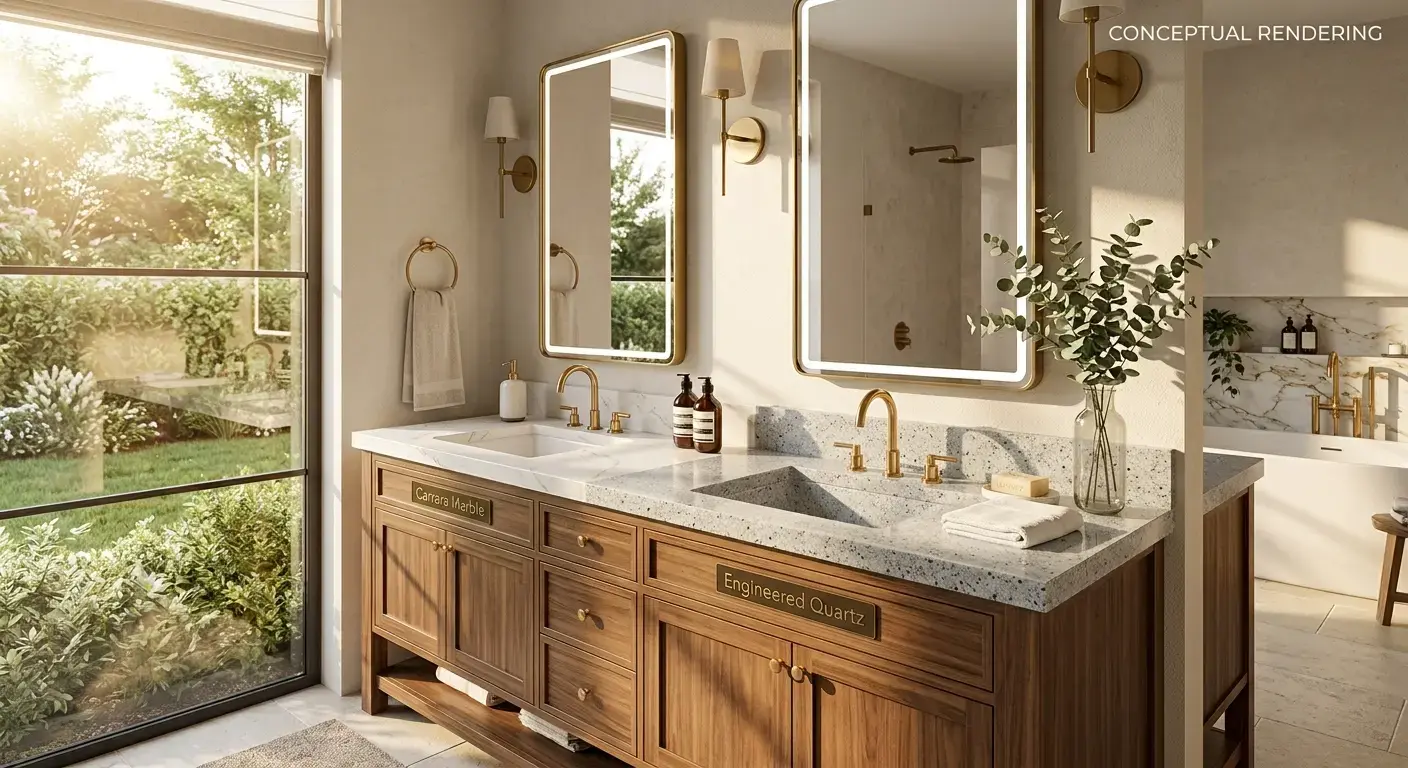
Bathroom vanities deal with constant moisture, so finish matters as much as material. A polished marble or quartz vanity top looks elegant but becomes noticeably slicker when splashed, while a honed finish offers steadier footing near a sink or shower ledge. Dolomite and travertine behave similarly to marble in bathroom settings and are best kept away from direct sun through a window that gets intense afternoon glare. The Minden showroom location displays several honed and leathered vanity samples for closer comparison.
Indoor-Outdoor Living Spaces
Outdoor kitchens, bar surrounds, and covered patios call for materials rated beyond indoor use. Granite, quartzite, and porcelain handle full sun and temperature swings, making them common choices for outdoor bars and fireplace surrounds across the region. Marble, dolomite, and travertine can still work outdoors if the space stays shaded, such as under a covered porch roof. Design-forward pairings, including waterfall edges and mixed-material islands, are covered in detail in this outdoor kitchen inspiration roundup. The Sacramento showroom location carries a rotating outdoor-rated slab selection as well.
4 Steps to Compare Countertop Options for a Remodel
Resources like the TCAA industry resource outline broader technical standards that inform how the tile and stone trade approaches material classification and testing.
Nova's Local Showroom Network for Slab Comparisons
Comparing finish samples in person remains one of the more reliable ways to judge how a slab will read in real lighting and against real cabinetry. The Nova team background page outlines how the showroom staff can walk homeowners through granite, quartzite, quartz, marble, and porcelain side by side. A Fernley showroom visit remains a convenient stop for homeowners across Fernley, Fallon, Silver Springs, Wadsworth, and Stagecoach who want to compare finishes before ordering.
Anyone comparing countertop options for an upcoming kitchen or bathroom project can schedule a showroom visit to view slab firsthand and ask about application suitability for a specific space, room, or design direction.
Conclusion
Comparing Countertop Options ultimately comes down to matching finish, application class, and maintenance routine to how a kitchen or bathroom really gets used. Granite and quartzite handle full sun and heavy traffic, marble and dolomite favor calmer interiors, and quartz stays reserved for indoor spaces only. Homeowners across Fernley, Fallon, Silver Springs, Wadsworth, and Stagecoach can browse the full material catalog to see current slab options before starting a kitchen or bathroom remodel.
Frequently Asked Questions
Granite and quartzite are both natural stone, but quartzite is generally denser and more heat resistant. Both accept polished, honed, leathered, and specialty finishes, and both extend to full-sun outdoor use.
Marble works indoors or in shaded outdoor areas only. It is not rated for full-sun exposure, so covered patios or shaded courtyards suit it better than open decks.
Quartz is intended for indoor use only. It is not classified for outdoor exposure, so granite, quartzite, or porcelain are better matches for an outdoor kitchen or bar.
Honed or leathered finishes generally handle moisture better than a high polish, since polished surfaces become slipperier when wet. A textured finish paired with prompt cleanup helps reduce slip risk near sinks.
Wipe spills promptly and use non-abrasive cleaners suited to natural stone. Cutting boards and trivets protect the surface from scratches and thermal shock, since heat resistance does not mean thermal-shock proof.