Tile pattern layout is the arrangement tile takes once it is set in place, and it shapes how a room feels as much as the tile itself. The five most common layouts are herringbone, chevron, stack bond, running bond, and basketweave, each creating a different visual effect depending on tile size, room shape, and overall design style.
For Minden homeowners, layout is often just as important as the tile selection. A stack bond or simple grid keeps a space feeling clean and contemporary, herringbone and chevron patterns add movement and visual interest, and basketweave or running bond bring texture that works well in smaller rooms.
Because a pattern is locked in for the life of a floor or wall, it is worth comparing options before ordering. Here at Nova Tile and Stone, we hear this question often from homeowners planning a Minden-area project, so this guide breaks down each layout, including where it tends to work best.
Why Layout Direction Changes The Whole Room
Two homes can use the exact same tile and still look completely different depending on how it is laid. A straight grid draws the eye evenly across a floor, which keeps a room feeling open and unbroken. A diagonal or angled layout pulls the eye along a longer line, which can make a narrow hallway or galley kitchen feel wider than it is.
Layout also affects how grout lines read from across a room. Fewer, straighter lines tend to disappear into the background, while patterned layouts create their own visual texture. Homeowners exploring these effects can browse tile by style to compare how different layouts photograph across a range of finishes and colors.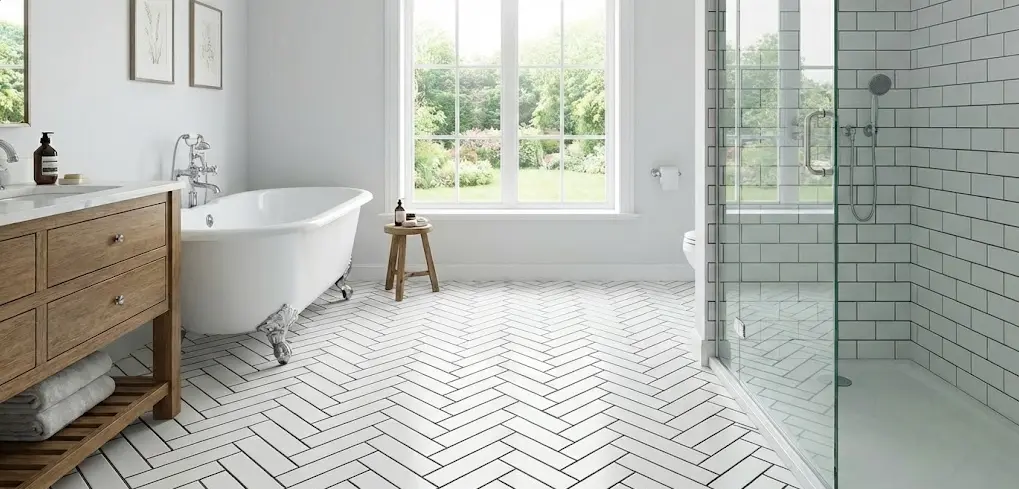
Herringbone: Movement And Elegance For Any Room
Herringbone is built from rectangular tile, most often plank-shaped pieces, set at an angle so each row zigzags into the next without a continuous straight line running through it. The result feels layered and a little more formal than a standard grid, which is part of why it shows up so often in entries, kitchen floors, and bathroom floors alike.
This layout tends to suit medium to smaller format tile best, since the angled cuts become more pronounced and visually busy as tile size increases. Herringbone has also been a consistent favorite in broader bathroom flooring trends over the past several seasons, holding up well against newer patterns without losing its appeal.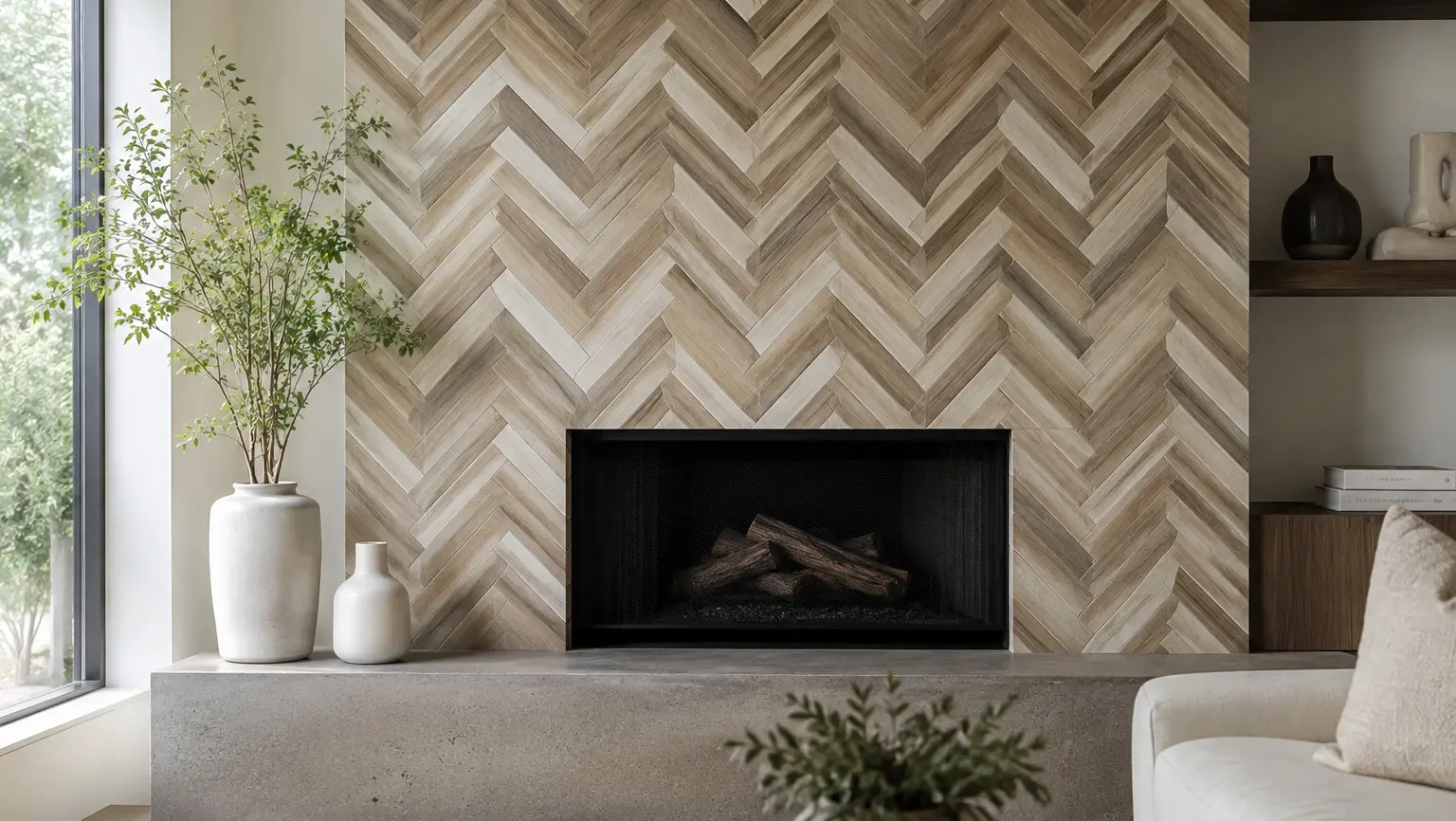
Chevron: A Bolder Angled Statement
Chevron looks related to herringbone at first glance, but the tile ends are mitered so the pieces meet in a continuous, unbroken point rather than a staggered zigzag. That small difference gives chevron a sharper, more graphic look that reads as more contemporary.
Because the pattern relies on precise mitered cuts, chevron tends to be reserved for feature areas rather than an entire home. A fireplace surround, an accent wall, or a compact powder room floor are common places to let this layout stand out without overwhelming a larger space.
Color and finish play a bigger role with chevron than with most other layouts, since the sharp geometry already draws attention on its own. A single neutral tone tends to let the pattern speak for itself, while a two-tone chevron leans into a more dramatic, high-contrast look.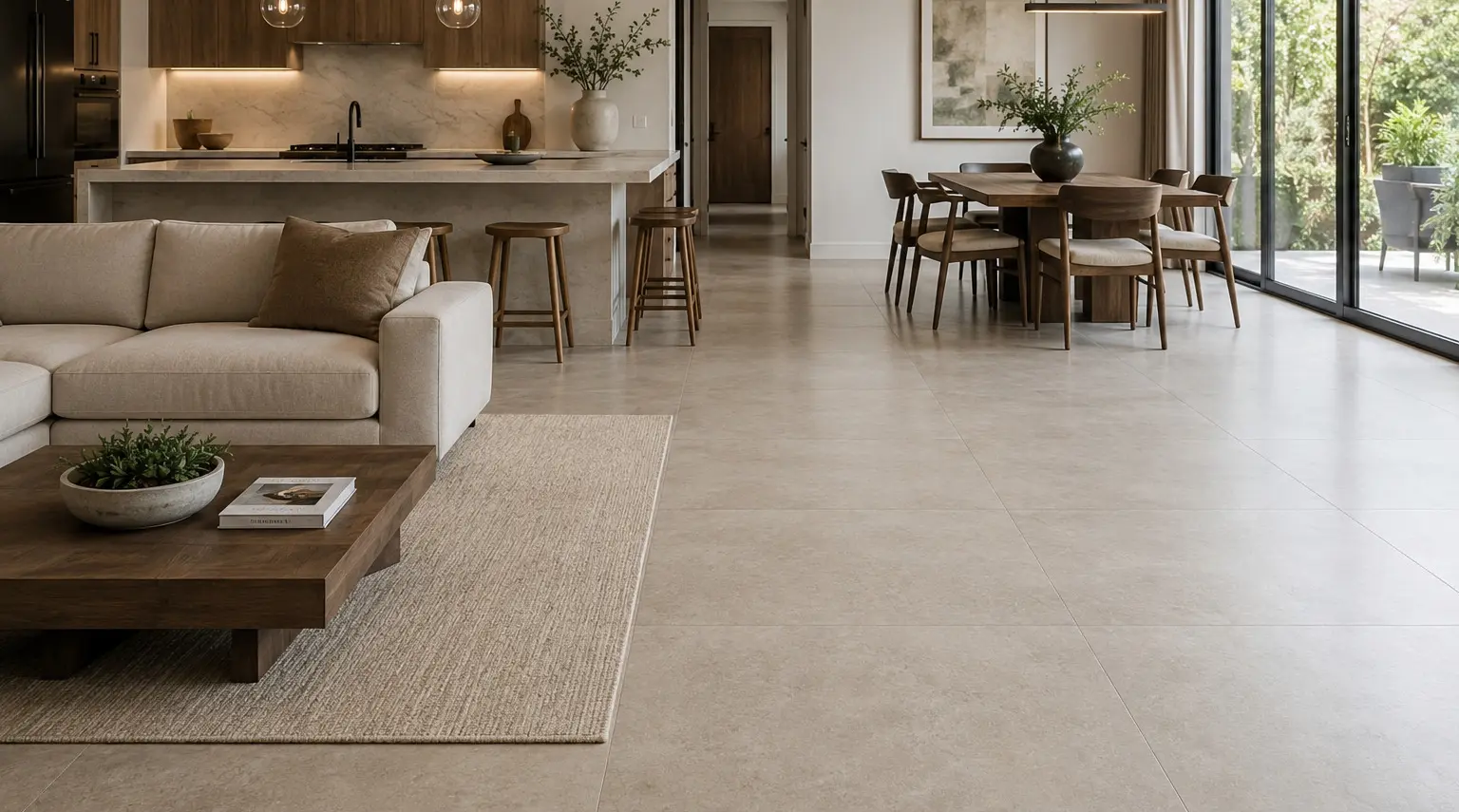
Stack Bond And Grid Layouts: Clean Lines For Modern Spaces
A stack bond, sometimes just called a grid layout, arranges tile in straight rows and columns, with grout joints running continuously in both directions. It is the simplest layout to plan around and tends to suit large-format tile particularly well, since bigger pieces need fewer seams to keep a clean, minimal look.
This layout is a strong match for open-concept homes where floors carry through several rooms without a break. Homeowners weighing tile dimensions for this kind of continuous layout can shop tile by size to see which large-format options are currently available.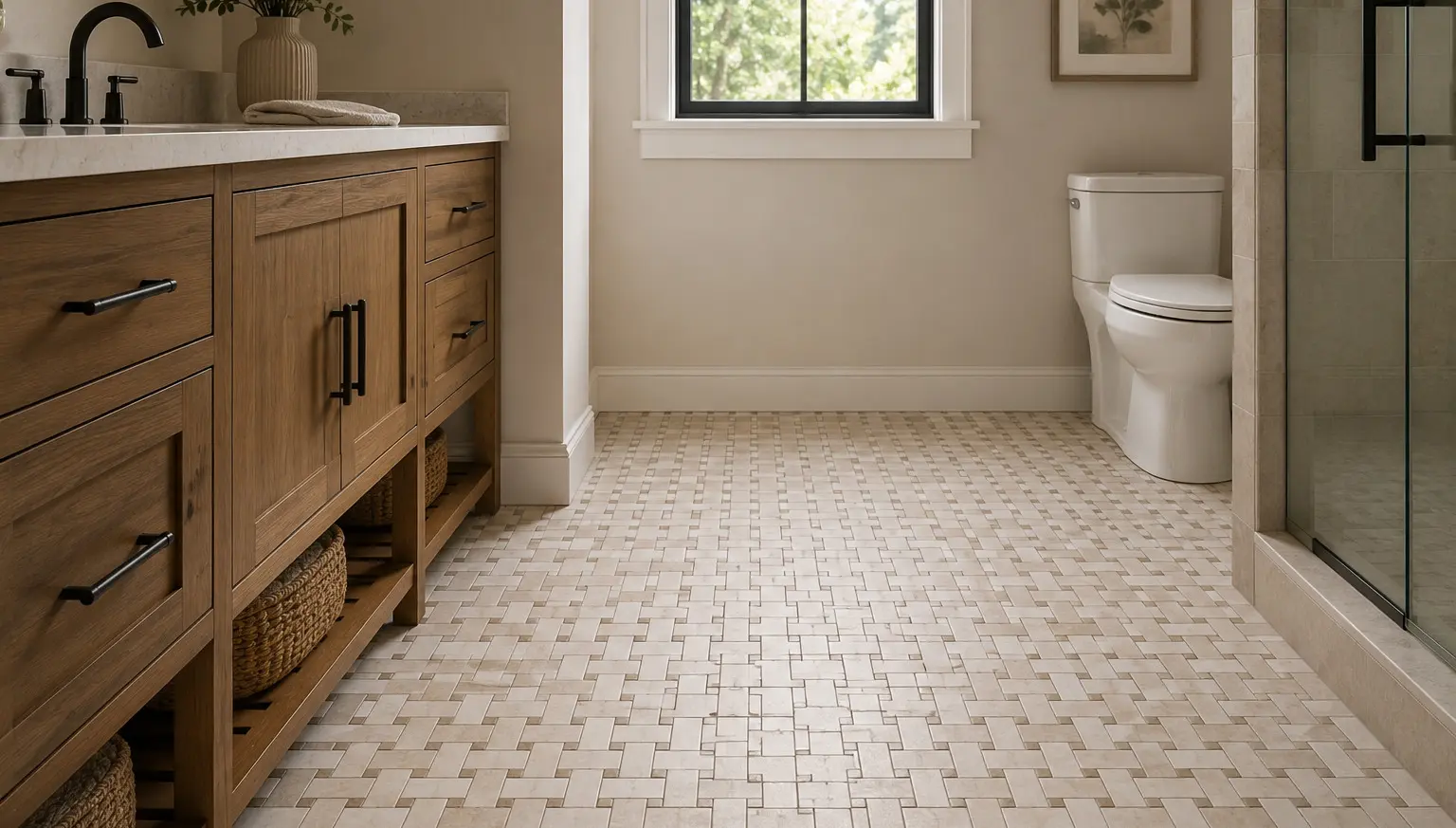
Basketweave: Classic Texture For Bathrooms And Entries
Basketweave arranges small rectangular tiles in alternating pairs so the finished surface resembles woven fabric. It is one of the more detailed layouts on this list and is almost always built with smaller tile or mosaic sheets rather than large format pieces.
This pattern carries a traditional feel that pairs naturally with classic color palettes and softer finishes. It shows up most often on bathroom floors and entryway floors, both spaces where its detailed texture can stand out without overwhelming the room.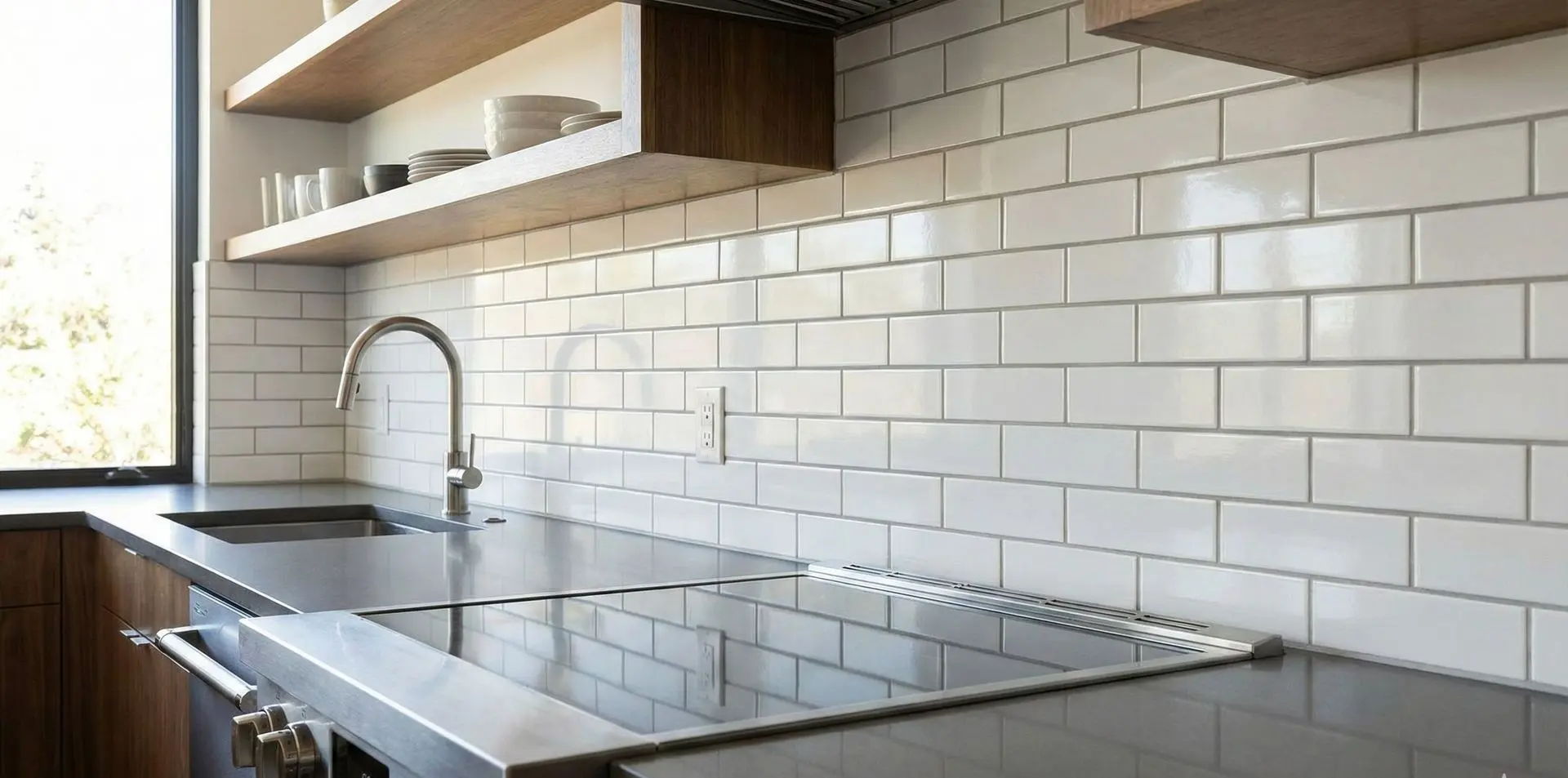
Running Bond: A Timeless, Versatile Choice
Running bond, also known as the classic brick pattern, offsets each row of tile by half the length of the tile below it, similar to how bricks are stacked in a wall. It is a familiar, easy to read pattern that works with almost any tile shape, though it is especially common with subway-style tile on walls and backsplashes.
Because the offset is simple, running bond tends to be forgiving in smaller or oddly shaped rooms where more complex patterns might look cramped. Homeowners deciding between subway, plank, or mosaic formats for this layout can browse tile by type to narrow down the right shape for the space.
Matching Pattern To Tile Size And Room Function
Not every layout works with every tile size. Large-format tile generally favors simpler patterns like stack bond or running bond, since the size of the pieces already creates visual interest on its own. Smaller tile and mosaic formats tend to carry more detailed patterns, like basketweave or herringbone, without looking too busy.
Room function matters just as much as size. A busy kitchen floor benefits from a layout that reads calmly underfoot, while a powder room or fireplace surround can support a bolder pattern since it is seen rather than walked across daily. Correct spacing, grout width, and layout planning should follow current technical guidelines published by the Tile Council of North America, which cover ceramic, glass, and stone tile installation across residential applications. You can browse our full tile selection online to compare pattern-friendly options before narrowing down a final choice.
Which Tile Materials Suit These Layouts Best
Porcelain tile is one of the most flexible materials to pair with any of the layouts above, since it comes in a wide range of shapes and sizes, from small mosaic sheets to large-format planks. It is moisture resistant, but standing water should not be left for long periods on any tile floor, patterned or otherwise.
Ceramic tile is another common choice, particularly for wall applications like backsplashes and shower surrounds where running bond and herringbone are both popular. It is generally easier to cut into smaller pieces, which makes it a practical fit for detailed layouts like basketweave.
For homeowners drawn to a stone-look aesthetic, porcelain tile is also available in finishes that mimic marble, travertine, and slate. This gives a layout like herringbone or chevron a rich, textured appearance while keeping the practical benefits of a porcelain tile underfoot.
Seeing Tile Patterns In Person At Our Minden Showroom
Photos and online layout tools help narrow down a direction, but pattern and grout line spacing are easier to judge in person, under real lighting, next to an actual sample. Our Minden showroom page has more detail on what is currently on display, including tile in a range of shapes and sizes suited to the layouts covered in this guide.
The Minden showroom is located at 2548 Business Pkwy, Minden, NV 89423, and can be reached at (775) 783-4970. You can also get directions to the showroom if you would rather map out the visit ahead of time.
Conclusion
Tile pattern layout is one of the easiest details to overlook and one of the most noticeable once a project is finished. Herringbone and chevron bring movement and a custom feel, stack bond and running bond keep things clean and versatile, and basketweave adds classic texture to smaller spaces.
The best starting point is usually the room itself. Once the function, size, and tile format are settled, the right layout tends to follow naturally.
There is no single correct answer for every home, since a layout that works beautifully in one Minden kitchen might feel out of place in another. Reviewing a few options together, ideally with an actual sample in hand, is often the fastest way to settle on a direction with confidence. For Minden homeowners ready to make that comparison, our full range of tile and flooring is on display to explore in person.
Frequently Asked Questions
Right now, herringbone and large-format stack bond top the list for Minden projects. Herringbone tends to go into entries and kitchens for its visual movement, while stack bond fits open, contemporary layouts where a clean, seamless floor matters most.
It does. Angled layouts such as herringbone can stretch the eye along a room's length, making narrow spaces feel wider, while large-format tile set in a simple grid opens up a room by cutting down on visible grout lines.
Several patterns move easily between floors and walls, including herringbone, chevron, and running bond. The tile size and finish usually need small adjustments depending on whether the surface is underfoot or on a wall.
Both can work, but they create different effects. Herringbone's softer, staggered look tends to feel more at home in a small bathroom, while chevron's bold, pointed lines make more of a statement in a compact space.
As a general rule, larger tile pairs well with simpler layouts like stack bond or running bond, since the size alone provides visual interest. Smaller tile and mosaic sheets tend to handle detailed patterns like basketweave or herringbone with more precision.