The best tile for a house floor in most cases is porcelain, since it handles moisture, scratching, and daily wear better than most other materials. Natural stone, such as dolomite or quartzite, is a strong alternative for homeowners who want a more textured, organic look. In a snow climate like Tahoe City, the right pick also comes down to slip resistance and whether the floor will pair with radiant heat, since snowmelt, cold temperatures, and moisture change how each material performs. Here's how to think through the choice room by room.
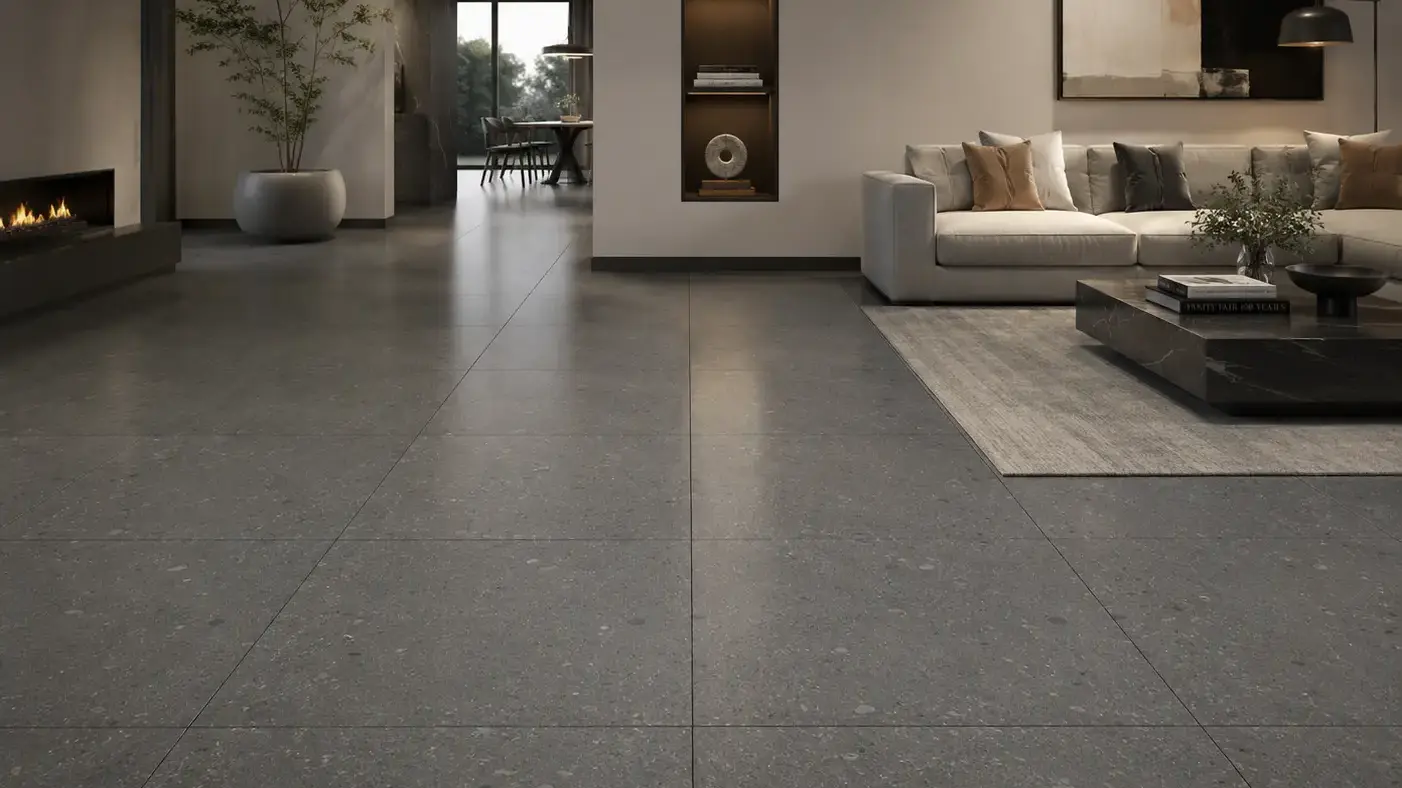
Porcelain Tile: The Workhorse Choice for Mountain Floors
For most whole-home flooring questions, porcelain is the material that checks the most boxes. It's fired at a higher temperature than standard ceramic tile, which makes it denser, less porous, and considerably more resistant to scratching and water absorption. That combination matters in a Tahoe City home, where boots, skis, and wet dogs are a daily reality for a good chunk of the year.
Ceramic tile still has its place. It's generally less expensive and easier to cut, which is why it shows up often on backsplashes and lower-traffic walls. But on floors, especially in an entry, mudroom, or kitchen that sees real foot traffic and moisture, porcelain tends to hold up longer. A comparison of porcelain and ceramic tile performance notes that porcelain is the longer-lasting option, with meaningfully higher scratch and wear resistance than ceramic, though it also points out that porcelain can feel cold underfoot in cold climates, which is worth keeping in mind before you commit to it in a bedroom or living room without some kind of heat source underneath.
Why Slip Resistance Matters More in a Snow Climate
Durability and warmth aren't the only things worth weighing before a material goes down, though. Whichever tile you choose, how it performs when wet matters just as much in a place that sees months of snow and slush each year.
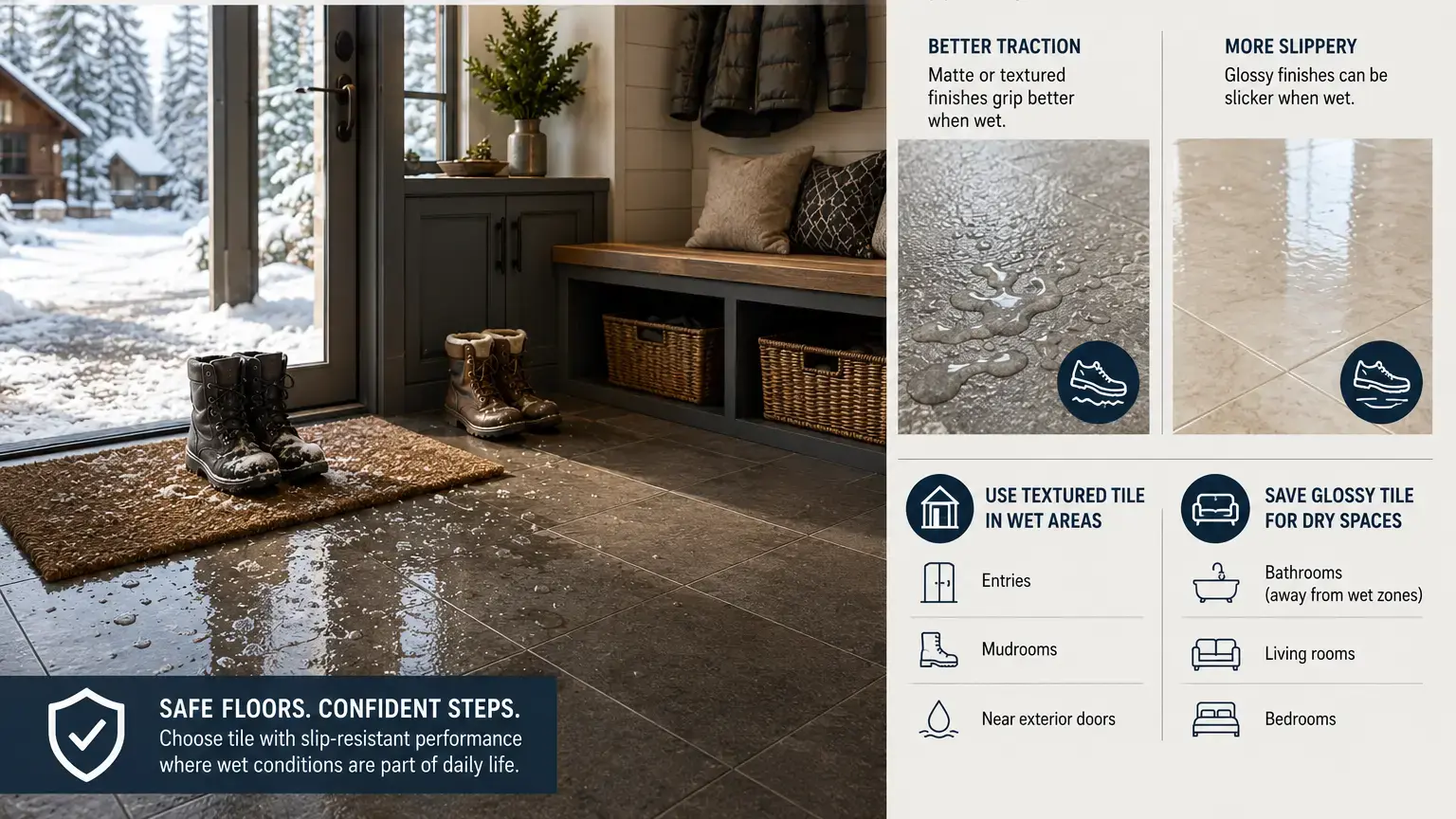
Slip resistance is not just a bathroom consideration in a place like Tahoe City. Entries and mudrooms track in snow, slush, and standing water for months at a time, so the tile in those areas needs to perform when wet, not just when dry and clean.
The tile industry measures this with a wet dynamic coefficient of friction, or DCOF, and the current standard sets a minimum of 0.42 for a tile to be considered appropriate for a level interior floor that's expected to get wet. An explainer on how tile slip-resistance testing works is a useful reference if you want to understand what the number on a tile spec sheet actually means before you buy. In practice, this means favoring a matte or textured finish over a high-gloss one for entries, mudrooms, and any floor near an exterior door, and saving the glossier finishes for rooms that stay dry.
Natural Stone Floors for a Mountain Aesthetic
Porcelain isn't the only answer, and for a lot of Tahoe City homeowners, it isn't even the preferred one. Natural stone floors read as a natural extension of the timber-and-stone architecture that defines the area, and there are practical reasons to consider them beyond looks.
Dolomite, for example, is available in four finishes: polished, honed, leathered, and specialty, and it's suitable for floors as well as walls and fireplaces. A honed or leathered finish in particular tends to offer more underfoot texture than a polished one, which helps with grip in an entry or mudroom while still reading as a refined natural material rather than a purely utilitarian one. Quartzite and marble are worth a look for the same reasons, and each comes with its own hardness, porosity, and sealing needs, so it's worth talking through the specifics of the slab or tile you're considering before it's installed.
Engineered stone, like quartz, is another option if you want the look of natural stone with a bit more consistency in color and pattern, along with lower maintenance since it doesn't require the same periodic sealing that natural stone does.
Pairing Tile with Radiant Floor Heat
If cold porcelain or stone underfoot is a concern, and in a place with a real winter it usually is, radiant floor heating is worth factoring into the decision early rather than as an afterthought. Tile and stone happen to be excellent heat conductors, which is exactly why they're a common pairing with radiant systems. A guide to choosing and installing a radiant floor heating system notes that while tile and stone can cost more to heat than some other flooring types, they conduct that heat evenly and effectively, which offsets the cold-underfoot tradeoff that comes with hard flooring in a cold climate.
If you're planning a remodel or new build and know you want tile or stone floors in a bathroom, kitchen, or entry, it's worth discussing radiant heat with your contractor before the subfloor work begins, since retrofitting it later is more involved than building it in from the start.
Matching Tile to the Room
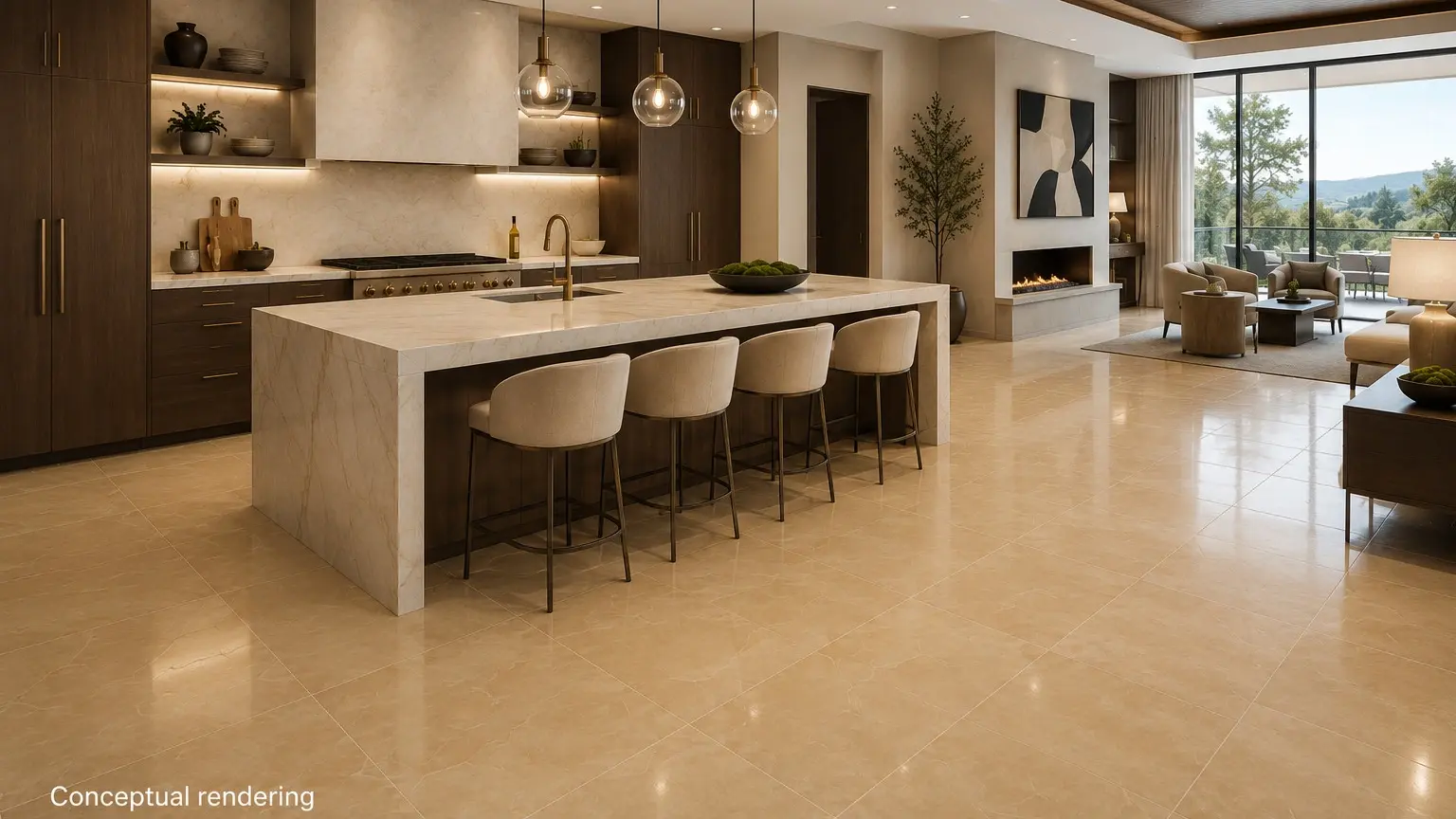
With durability, slip resistance, and heating all factored in, the last piece is matching material and finish to how each room actually gets used. A few practical guidelines, organized by the rooms where this question comes up most often:
- Entries and mudrooms: Porcelain with a matte or textured finish, in a larger format tile if possible, to handle moisture, grit, and repeated foot traffic without showing wear quickly.
- Kitchens: Porcelain or a durable natural stone with a honed finish, both of which stand up to daily spills.
- Bathrooms: Porcelain is generally the safer choice for floors given its low porosity, while ceramic can still work well on the walls around a shower or tub.
- Living areas and bedrooms: This is where a wood-look porcelain plank can work nicely if you want the warmth of the mountain cabin look without maintaining actual hardwood, or where natural stone paired with radiant heat can carry the aesthetic through the whole main floor.
None of this is a strict rulebook. It's a starting point for a conversation about what your household actually needs from a floor, how much upkeep you want to take on, and how the room connects to the rest of the house. To explore materials that may suit your project, you can browse our complete tile and stone offerings.
Conclusion
There's no single tile that's right for every floor in a Tahoe City home. Porcelain covers most of the durability and moisture concerns that come with a snowy mountain climate, natural stone brings a texture and character that fits the local architecture, and radiant heat changes the underfoot comfort equation for either material. The right combination usually comes down to which rooms see the most traffic and moisture, and how much of that mountain-lodge look you want to carry through the house.
Seeing and feeling the actual finish, texture, and color of a tile or stone slab in person makes this decision a lot easier than working from photos alone. Our Reno showroom serves homeowners throughout the region, including Tahoe City, and our design team can walk you through porcelain, ceramic, and natural stone options side by side in person.
Nova Tile and Stone
12835 Old Virginia Rd, Suite 24
Reno, NV 89521
(775) 331-6682
Frequently Asked Questions
Porcelain typically holds up the longest on a floor. Its manufacturing process leaves it denser and less porous than ceramic, so it resists scratches, stains, and moisture better over years of daily use.
Natural stone can work well on floors, though it does need periodic sealing to manage porosity. Finish matters too: honed and leathered surfaces provide more traction than a polished one, which helps in entries or other high-moisture spots.
For a floor that gets wet, look for a tile rated at least 0.42 DCOF (dynamic coefficient of friction), the industry minimum for level interior floors used in wet conditions. Textured or matte finishes typically test higher than polished ones.
Yes, tile and stone conduct heat efficiently, which is exactly why radiant systems pair well with them. That same property is why these floors can feel cold without a heat source underneath, so it's worth planning for radiant heat or a rug if you're choosing tile for a room that won't have one.
Porcelain in a matte or textured finish is usually the best fit, and a larger format tile helps too, since it means fewer grout lines where salt, sand, and snowmelt grit can collect and stain over time.
Note: Some images on this page may be conceptual renderings created to illustrate design possibilities and may not depict actual installations.