Polished vs. Honed Stone In Fernley Homes: A Quick Overview
Choosing between polished and honed finishes changes how a room looks, feels, and holds up over time. For homeowners researching stone in Fernley homes, the short answer is this: polished surfaces have a high-gloss, reflective sheen that shows color and veining clearly, while honed surfaces have a matte, satin texture that softens the surface and can better disguise everyday wear. Neither finish outperforms the other in every setting. The better option depends on how a room is used, how much moisture or traffic it sees, and the overall design style a homeowner wants to achieve.
Granite, marble, quartzite, travertine, dolomite, and porcelain are each available in multiple finish choices, giving flexibility across kitchen countertops, bathroom floors, and living room accent walls. A polished granite island can serve as a reflective centerpiece, while a honed travertine floor can add a softer, more casual texture nearby. Understanding these differences before selecting a surface helps homeowners match finish to function, rather than choosing on appearance alone. The sections below break down the benefits, ideal applications, and a simple guide for deciding which finish fits a specific space.
Benefits of Polished and Honed Finishes for Stone and Tile Surfaces
Both polished and honed finishes bring distinct advantages to stone and tile surfaces, and understanding these benefits helps narrow down the right choice for a given room. Polished finishes are prized for their light-reflecting quality, which can make smaller rooms feel brighter and larger, though the shine does require regular wiping to stay looking its best. Honed finishes are valued for their softer look and their ability to visually minimize small scratches or etching between cleanings, though routine sealing and care are still needed to preserve appearance over time.
Homeowners can review available natural stone slab options to compare polished and honed choices side by side. Design trends highlighted at the International Surface Event show continued interest in both high-gloss and matte stone surfaces for residential interiors.
Key benefits by finish type:
- Polished finishes enhance color depth and veining, though surfaces can show smudges and require regular wiping.
- Honed finishes offer a soft, contemporary look and can help mask minor surface wear, but they still need sealing and routine cleaning.
- Both finishes are available across granite, marble, quartzite, travertine, dolomite, and porcelain, allowing consistent style across multiple rooms.
- Polished surfaces are well suited to formal spaces seeking a reflective, high-end appearance.
- Honed surfaces tend to feel warmer underfoot in living spaces and can complement more casual or transitional interiors.
Where Polished and Honed Stone Fit in Kitchen, Living Room, and Bathroom Design
Selecting a finish often comes down to how a specific room is used day to day. Kitchens, bathrooms, and living rooms each place different demands on a stone or tile surface, from moisture exposure to foot traffic to how much shine feels appropriate for the space. Homeowners near the Fernley showroom can view finish samples in person before comparing options for a kitchen, bathroom, or living room project.
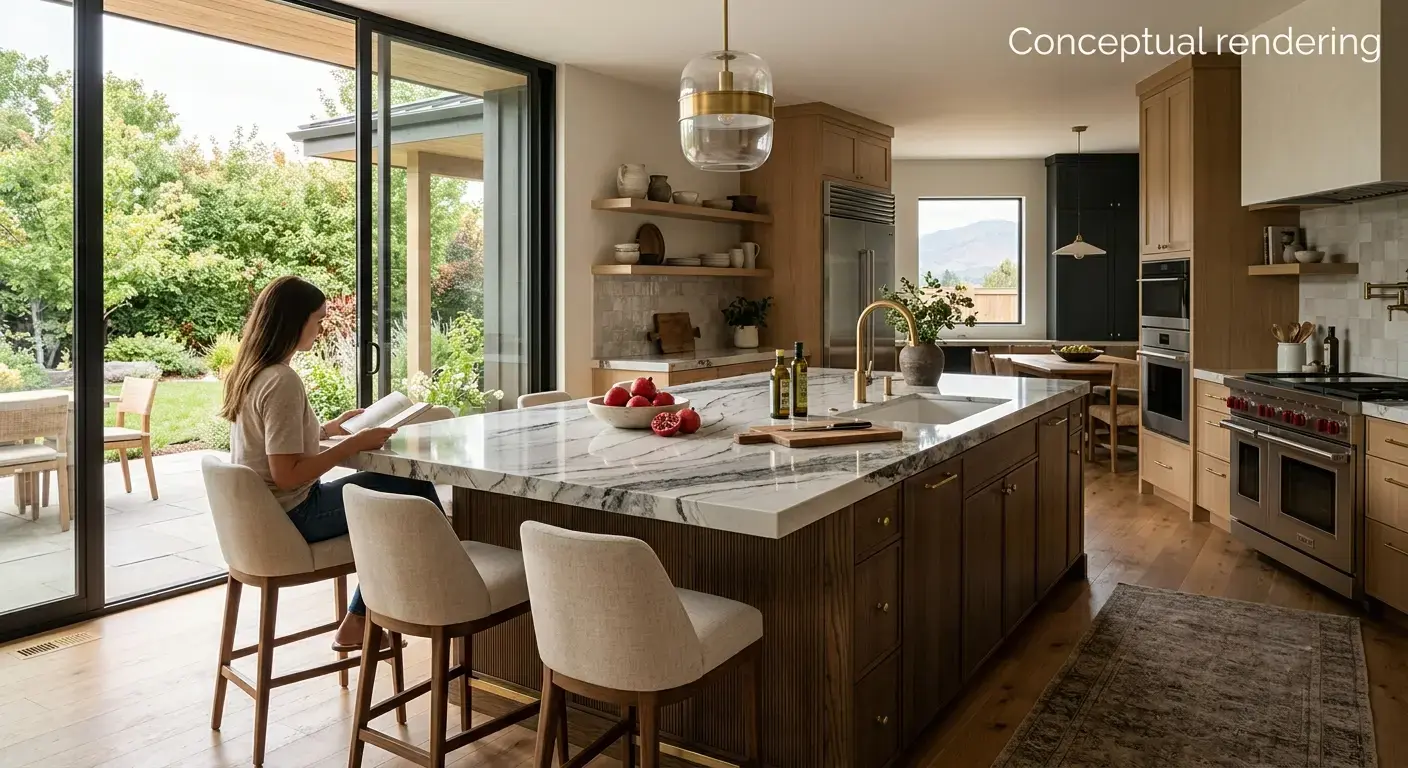
 Conceptual rendering
Kitchen Applications
Polished granite and polished quartzite countertops are popular for kitchen islands and perimeter counters because the glossy surface reflects light and highlights natural veining. Honed marble or honed dolomite can offer a softer, more matte look for kitchens leaning toward a farmhouse or transitional style. Regardless of finish, cutting boards and trivets help protect stone surfaces from scratches and heat marks during daily use, since heat resistance does not mean a surface is immune to thermal shock. Homeowners can also review recognized industry standards for additional context on stone and tile performance expectations.
Bathroom Applications
Bathroom floors and shower surrounds see regular moisture, which makes surface texture an important consideration. Honed and leathered finishes generally offer more texture underfoot compared to a high-polish surface, a detail many homeowners weigh carefully for wet areas, though careful footing still matters regardless of finish. Polished stone can still work well on bathroom walls or vanity tops, where surface texture underfoot is less of a concern. Guidance is also available from the Nova design team when comparing finishes for specific bathroom layouts.
Living Room Applications
Living rooms often showcase stone through fireplace surrounds, accent walls, or occasional flooring. Polished stone can act as a striking, reflective focal point behind a fireplace, while honed stone provides a quieter, more textured backdrop for surrounding furniture and decor. Porcelain tile in either finish is another option for living room flooring, offering consistent appearance across large areas. Additional details on porcelain tile certification programs are available for homeowners comparing porcelain to natural stone. Material choice should always account for how much daily traffic and cleaning a living room floor will see.
Finish Comparison at a Glance
Feature | Polished Finish | Honed Finish |
Surface sheen | High gloss, reflective | Matte to satin, low reflection |
Color and veining | Appears more vivid and saturated | Slightly softer, muted appearance |
Surface texture | Smooth, can feel slicker when wet | More texture, often preferred for wet areas |
Visual wear | Shows smudges and etching more readily | Can help visually mask minor wear |
Common uses | Kitchen islands, feature walls, formal rooms | Bathroom floors, casual living spaces, high-traffic areas |
Advantages and Considerations by Finish
Polished Finish Pros: reflects light, highlights natural veining, suits formal design styles.
Polished Finish Cons: shows smudges and water spots more easily, can feel slicker when wet, needs frequent wiping to keep its shine.
Honed Finish
Pros: softer appearance, can help mask minor scratches and etching, adds visual warmth to a room.
Honed Finish Cons: shows fingerprints more visibly on some materials, still requires sealing, may show oil-based stains more readily on certain stones.
How to Choose a Finish for a Specific Room
- Identify how the room is used, including moisture exposure and daily foot traffic.
- Compare polished and honed samples in natural and artificial lighting.
- Consider maintenance routines, including sealing schedules and cleaning products suited to the material.
- Request a tile sample to test color and texture directly in the room's lighting.
- Consult a Nova design specialist to confirm the material and finish fit the intended application.
Expert Guidance and Showroom Support from Nova Tile and Stone
Homeowners across northern Nevada and the greater Sacramento area have access to showroom locations for hands-on comparisons of polished and honed stone and tile. The Reno showroom displays a range of finish samples for kitchen and bathroom projects. The Minden showroom offers additional samples for living room and outdoor-adjacent applications. The Sacramento showroom rounds out the network with further stone and tile options for comparison.
Design specialists are available to help match a finish to a specific room, whether the project is a kitchen update in Fernley or a bathroom refresh in Fallon, Silver Springs, Wadsworth, or Stagecoach. A tile sample is a practical way to see color and texture firsthand before committing to a full room. Reach out to request a tile sample and compare finishes in the lighting of the actual space.
Conclusion
Deciding between polished and honed stone in Fernley homes comes down to how a room is used and the look a homeowner wants to achieve. Polished finishes bring reflective shine and bold veining, while honed finishes bring texture and a softer, more casual feel. Both options are available across granite, marble, quartzite, travertine, dolomite, and porcelain. Browse the stone and tile collection to compare finishes across materials. Request a $1 tile sample today to see the difference in person before making a final decision.
Frequently Asked Questions
Polished stone has a high-gloss, reflective surface that highlights color and veining, while honed stone has a matte, satin texture that softens the surface and can help disguise minor wear. Both finishes are available on granite, marble, quartzite, travertine, and dolomite.
Both finishes can work well in a kitchen, depending on style preferences. Polished granite or quartzite highlights veining for a formal look, while honed marble or dolomite offers a softer, more casual appearance. Cutting boards and trivets help protect any finish from daily wear.
Honed and leathered finishes generally provide more surface texture than polished stone, which some homeowners prefer for bathroom floors. Polished stone can still be used on bathroom walls or vanities, where surface texture underfoot is less of a concern.
Both finishes need regular cleaning and periodic sealing to maintain their appearance. Polished surfaces tend to show smudges and water spots more readily, while honed surfaces can better hide minor scratches but still require consistent care to prevent staining.
Yes, tile and stone samples let homeowners compare polished and honed finishes in their own lighting before deciding. Requesting a tile sample is a practical first step for comparing color, texture, and finish side by side.