Getting Started with Countertop Slab Selection
Slab thickness typically comes down to two standard options: 2cm and 3cm. The right pick depends on edge style, material choice, and how the countertop fits into the overall kitchen layout. Most Stagecoach homeowners start with the look they want, then confirm structural fit with a design specialist before finalizing specs.
A 2cm slab reads as sleek and modern, often paired with a built-up edge to appear thicker. A 3cm slab stands on its own with a substantial, furniture-like presence. Both options come in granite, quartzite, porcelain, and quartz, each with its own care needs.
Local factors matter too. Stagecoach kitchens tend to mix open-concept islands with tighter galley layouts, so cabinetry support and edge visibility often guide the decision as much as personal style preference does. Homeowners near Fernley, Fallon, Wadsworth, and Silver Springs face similar layout questions when comparing materials in person. Browse slab options to compare material side by side before committing to a thickness.
Key Advantages of the Right Slab Thickness
Countertop durability depends on more than thickness alone. Material density, finish, and daily care habits all play a role in how a slab performs over the years in a busy Stagecoach kitchen.
Thicker 3cm slabs generally resist chipping along exposed edges better than thinner profiles, though proper care still matters for long-term appearance. Thinner 2cm slabs can achieve a similarly durable edge when laminated correctly, but they rely more heavily on skilled fabrication. Either option benefits from routine sealing on natural stone and prompt cleanup of spills.
Countertop durability also depends on how a household actually uses the kitchen. A high-traffic prep island near a sink sees more moisture and impact than a quiet coffee bar, so daily habits shape wear patterns regardless of whether the slab measures 2cm or 3cm. To see how each option might work in a specific layout, homeowners can meet the Nova team for personalized guidance.
Common benefits homeowners weigh:
- Edge presence: 3cm slabs create a bold, substantial edge without lamination, though heavier slabs need adequate cabinet support.
- Design flexibility: 2cm slabs allow lighter-weight installs of large islands, but edge lamination requires a skilled fabricator for a seamless look.
- Material range: Granite, quartzite, porcelain, and quartz are all available in both thicknesses, though each material has its own sealing and cleaning needs.
- Visual weight: Thicker slabs suit farmhouse and traditional kitchens, while thinner profiles fit sleek, contemporary spaces, provided finish care is followed.
- Long-term appearance: Both thicknesses hold up well with routine maintenance, but neither is scratch-proof or stain-proof regardless of material.
Homeowners can also request a slab quote once a thickness and material direction feels right for the project.
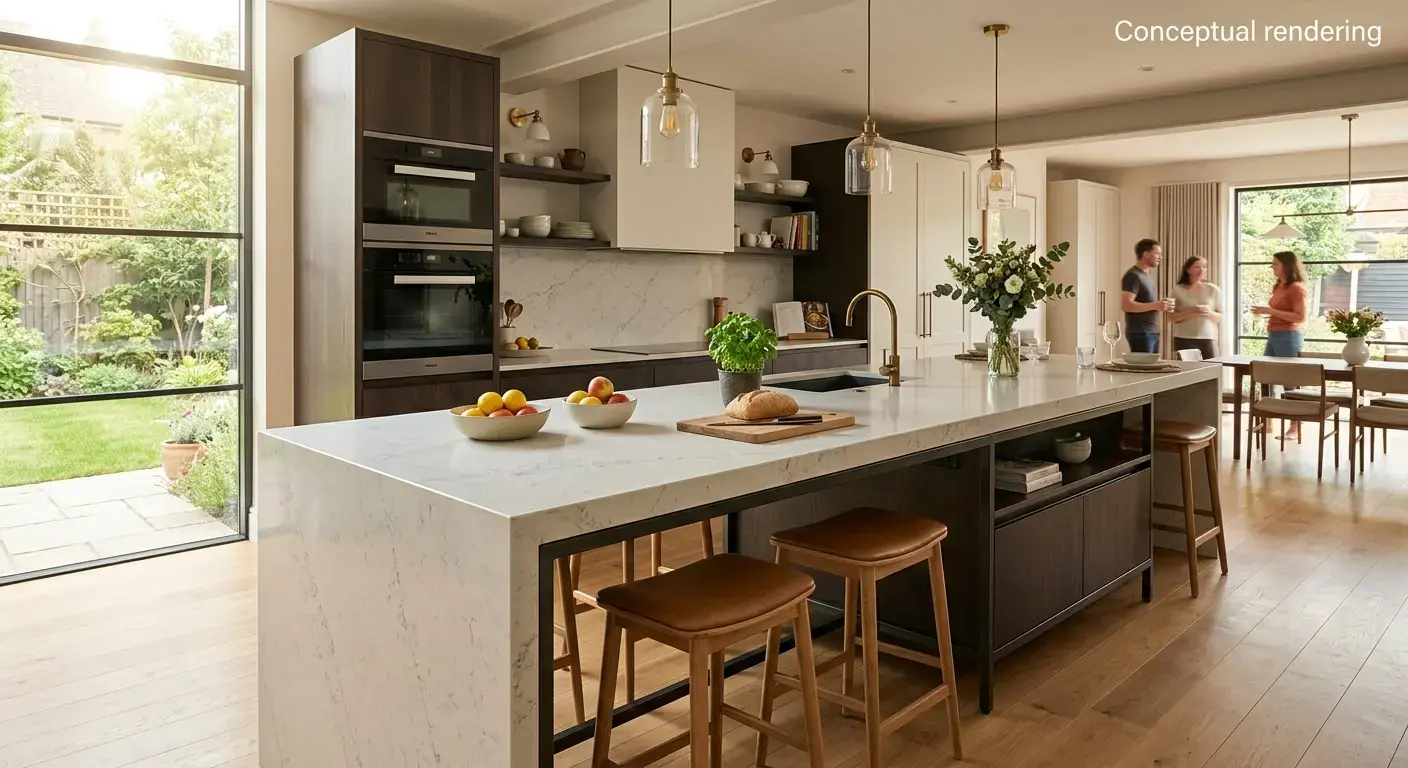
Design Applications for 2cm and 3cm Countertop Slabs in Stagecoach Homes
Thickness choice shapes how a countertop reads in a room, from island centerpieces to compact prep counters. Below are common applications Stagecoach homeowners consider when comparing the two options, along with how edge style, finish, and outdoor exposure factor into a final decision.
Feature | 2cm Slab | 3cm Slab |
Visual edge | Slim, often built up with lamination | Naturally substantial, no lamination needed |
Typical weight | Lighter, easier cabinet support needs | Heavier, may need reinforced cabinetry |
Common styles | Modern, minimalist kitchens | Traditional, farmhouse, waterfall islands |
Material availability | Granite, quartzite, porcelain, quartz | Granite, quartzite, porcelain, quartz |
Care needs | Sealing varies by material; avoid abrasive cleaners | Sealing varies by material; avoid abrasive cleaners |
Kitchen Islands and Waterfall Edges
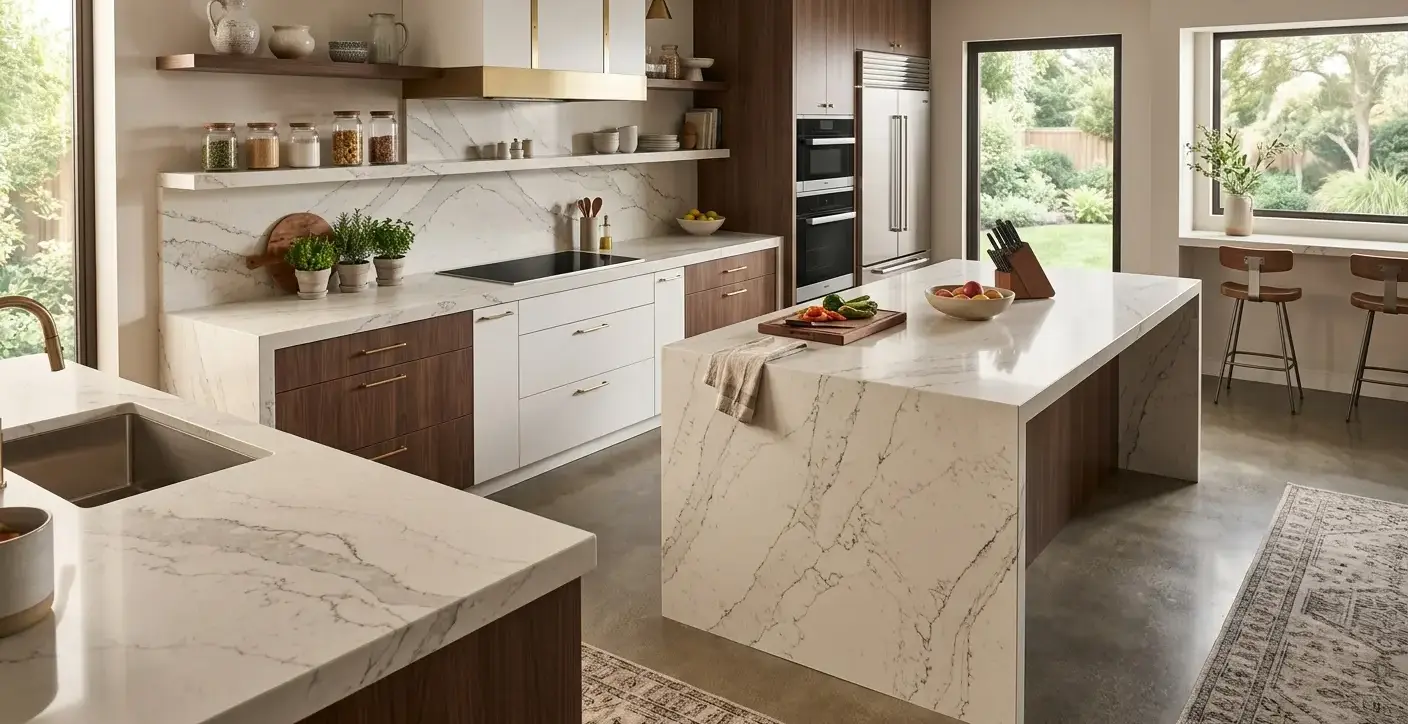
Waterfall edges, where the slab wraps down the side of an island, tend to favor 3cm stone for a seamless, uninterrupted line. Homeowners researching the best slab thickness for quartz countertops often land here first, since quartz offers consistent color across a waterfall panel, though it remains an indoor-only material and should not be specified for exterior applications.
Smaller peninsula counters and secondary prep islands often work well with 2cm slabs, since the lighter profile eases cabinetry demands while still allowing a laminated edge that reads as thicker. Either approach works, provided the visual goal for that specific island matches the material and finish selected.
Countertop Edge Profiles and Finish Options
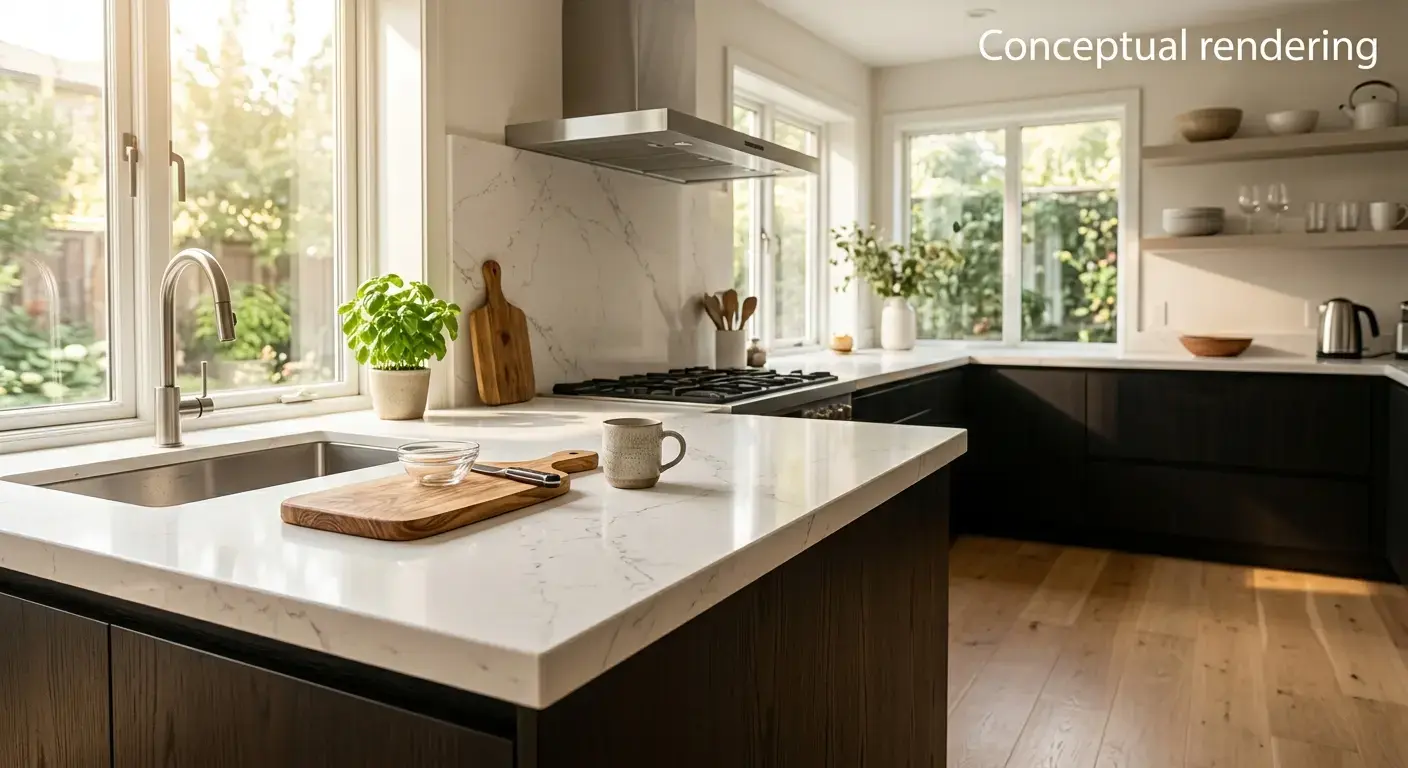
Edge profile and finish work together with thickness to define a counter's character. Polished finishes bring high shine and reflect light, while honed finishes offer a softer, matte look with less visible etching over time.
Advantages and considerations by finish:
- Polished granite or quartzite: High shine, good scratch resistance, but requires periodic sealing and gentle cleaners to avoid dulling.
- Honed porcelain or quartz: Matte look hides light scuffs well, though quartz stays indoor-only and porcelain generally needs little sealing.
- Leathered natural stone: Textured surface softens fingerprints, but textured finishes can trap debris and need regular wipe-downs.
 Conceptual rendering
Pairing edge and finish choices with a broader color palette matters too; the 2026 kitchen color trends roundup offers useful context for coordinating slab tone with cabinetry and hardware this year.
Edge profile shape, such as a simple eased edge versus a bullnose or ogee, reads differently depending on thickness. A 3cm slab tends to carry a bullnose profile with more visual heft, while a 2cm slab often looks cleaner with a straightforward eased or beveled edge.
Outdoor Kitchen Considerations
Granite, quartzite, and porcelain are commonly selected for full-sun outdoor kitchen counters in the Fallon and Silver Springs area, though homeowners should always verify the exact product's UV rating before finalizing outdoor plans. Homeowners can explore the Fernley showroom to view full outdoor-rated slabs in natural light before deciding. Quartz should be reserved for indoor use only, since it is not rated for sustained sun exposure. Porcelain slabs also carry industry certification standards worth reviewing; the porcelain certification standards resource outlines general testing benchmarks used across the surfacing industry.
Thickness plays a role outdoors as well. A 3cm slab often stands up better to unsupported overhangs on an outdoor bar or grill station, since it carries more of its own structural weight without additional bracing. Whichever thickness is chosen, confirming sun and weather exposure with a stone professional before finalizing an outdoor layout is worthwhile.
 Conceptual rendering
Nova Tile and Stone's Guidance for Stagecoach Homeowners
Choosing between 2cm and 3cm often feels overwhelming without seeing the material in person. Nova's design specialists walk Stagecoach, Fernley, Fallon, Wadsworth, and Silver Springs homeowners through both options against real cabinetry and lighting conditions.
Photos and online swatches only tell part of the story, since slab veining, sheen, and edge thickness all shift depending on the light in a specific kitchen. Seeing full slabs side by side helps homeowners avoid surprises after a material order is placed.
Steps to narrow down a countertop choice:
- Identify the overall kitchen style, whether modern, traditional, or transitional.
- Shortlist materials suited to the application, such as granite or quartz for indoor counters.
- Compare edge profile samples in 2cm and 3cm side by side.
- Confirm cabinetry support needs with a qualified stone professional.
- Finalize the selection with Nova's design team before ordering.
Nova's broader design perspective is shaped by ongoing conversations with the surfacing industry, including insights shared at the architects and designers resource event each year. Trade professionals working on multiple Stagecoach-area projects can also apply for trade account access for streamlined ordering.
Homeowners who are ready to move forward can book a consultation to walk through slab materials with a design specialist. Coming prepared with rough kitchen dimensions helps make that first visit more productive.
Conclusion
Slab thickness is a foundational decision that shapes both the look and long-term feel of a Stagecoach kitchen countertop. Granite, quartzite, porcelain, and quartz all perform well at 2cm or 3cm when paired with proper care. For a closer look at material options, browse Nova's full catalog online. Nova's team helps homeowners across Fernley, Fallon, Silver Springs, Wadsworth, and Stagecoach compare materials and finalize a countertop plan that fits their space.
Our latest content
Check out what's new in our company !
Frequently Asked Questions
The main difference is visual weight and edge profile. A 2cm slab looks slimmer and is often laminated to appear thicker, while a 3cm slab has a naturally substantial edge with no lamination needed.
Granite, quartzite, porcelain, and quartz are all common countertop choices in the Stagecoach area. Each has different sealing and care needs, so the best fit depends on kitchen style and daily use habits.
Not necessarily. Maintenance depends more on material and finish than on thickness alone. Both 2cm and 3cm slabs benefit from routine sealing where needed and prompt cleanup of spills.
Quartz performs well at both 2cm and 3cm, so the choice often comes down to edge style and budget-neutral design preference. Quartz should always be kept to indoor applications regardless of thickness.
Yes. Nova's design specialists review layout, cabinetry, and style preferences with homeowners to help narrow down between 2cm and 3cm before finalizing a material order.
Visit Our Fernley Showroom – Nova Tile and Stone
1855 US Highway 95A North, Fernley, NV 89408
Store hours this week:
- Mon. - Fri.: 7:30 am - 4:00 pm
- Sat. - Sun.: Closed