Hardwood flooring is a solid or engineered wood floor covering valued for its natural grain, warmth, and long-term durability, making it one of the most popular flooring choices for Minden, NV homes and Carson Valley properties in general. Because the region's high desert climate brings dry summers, cold winters, and noticeable humidity swings, matching the right species, construction, and grain cut to the space matters more here than it does in milder climates.
At our showroom in Minden, homeowners can compare solid and engineered hardwood, wood species, grain cuts, and finishes in person before choosing a direction for their project. This guide breaks down how solid and engineered construction differ, how species and grain cuts affect appearance and stability, finish and color considerations, and where hardwood performs best inside a Carson Valley home.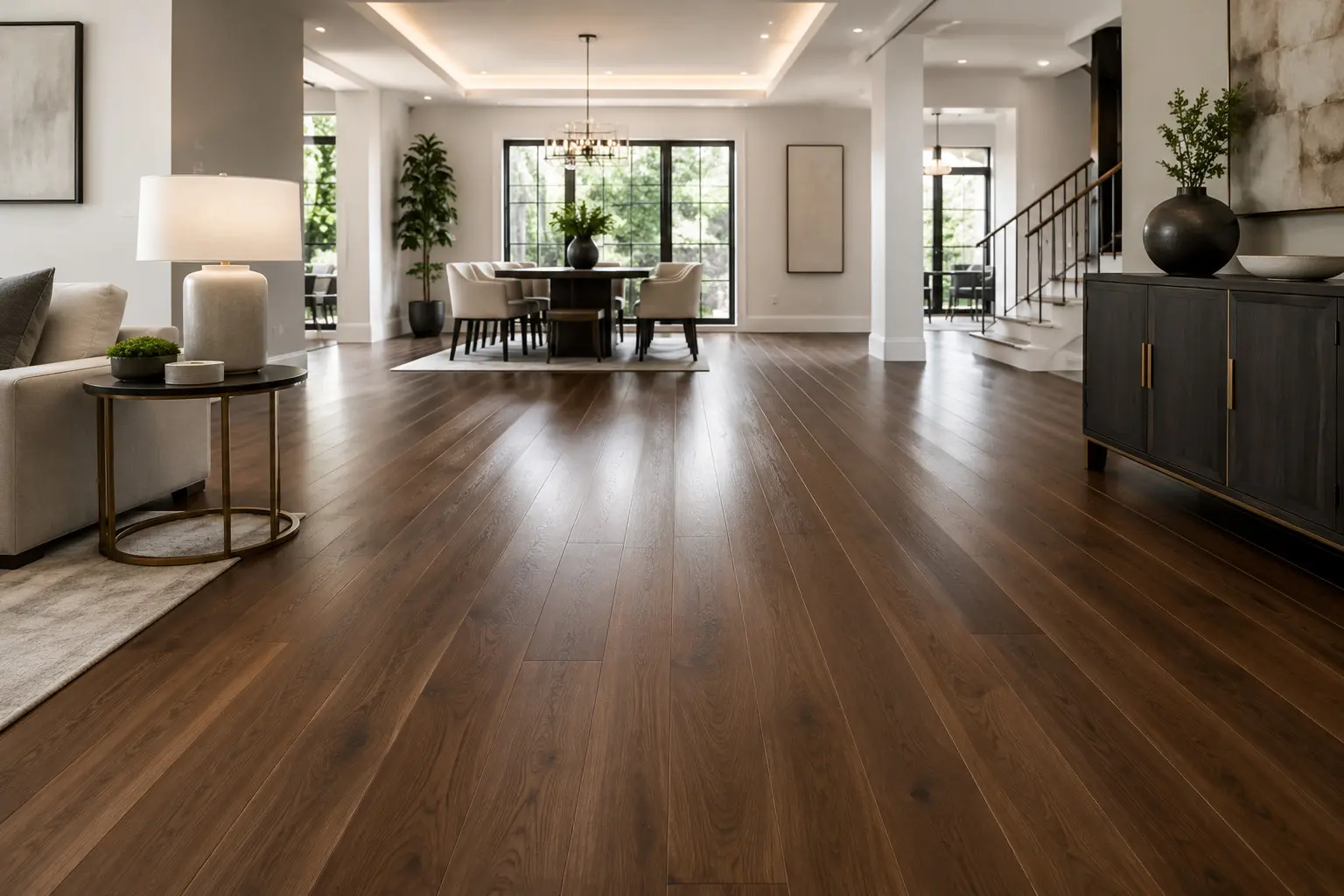
Why Wood Flooring Suits Homes Throughout Carson Valley
Carson Valley sits at a high desert elevation near the Sierra Nevada, which brings dry summers, cold winters, and noticeable shifts in humidity across the seasons. Wood responds to these changes over time, expanding slightly during more humid stretches and contracting when the air turns dry. This natural movement is part of what gives wood flooring its character, and it is also why many homeowners throughout Douglas County lean toward engineered construction or wider plank styles built to handle seasonal shifts with more stability.
For homeowners curious about how different species vary in grain, tone, and hardness, comparing a few options side by side before narrowing down a direction is worth the time. Sunlight is another factor worth considering, since rooms with large windows or south facing exposure see more direct light throughout the day. Certain wood tones can shift subtly with prolonged sun exposure, so rugs, window treatments, or rotating furniture placement are worth factoring into a long-term plan for sun-drenched rooms.
Wood flooring also complements the mountain inspired aesthetic found in many Carson Valley homes, whether the goal is a cozy, rustic feel or a lighter, more modern look.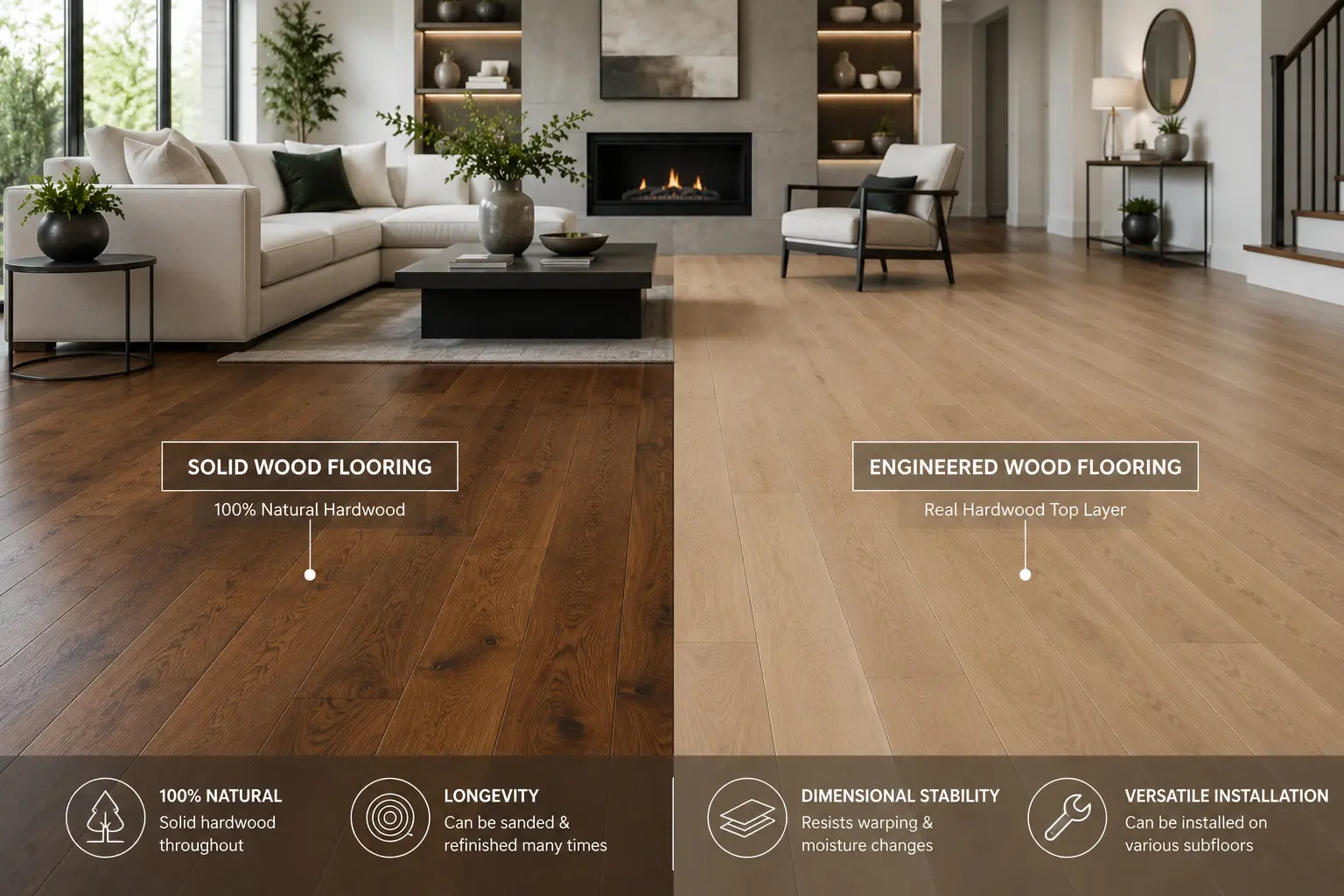
Solid Wood Versus Engineered Wood: Matching Construction to Your Subfloor
One of the first decisions homeowners face when comparing hardwood options is whether to choose solid or engineered construction, and the answer often comes down to what sits beneath the floor. Solid wood planks are milled from a single piece of timber from top to bottom, and this construction is known for a longer lifespan, since the surface can be sanded and refinished several times as it ages. Solid wood is generally used above grade over a wood subfloor, since it reacts more to changes in temperature and humidity than layered constructions.
Engineered wood is built with multiple layers topped by a genuine wood surface, and this layered structure allows it to expand and contract less than solid wood, which is why our design team more often recommends it over concrete slabs or in below grade spaces such as basements, where solid wood is generally not recommended. For a home in Carson Valley, this distinction can matter more than it might in milder climates, since the region's dry summers and cold winters create a wider swing in indoor humidity across the year.
Thickness also varies between products, which can influence how many times a floor may be sanded and refinished across its lifespan, though this is best discussed against the specific product line rather than assumed across the board. Our design team can walk through these differences during a free consultation, comparing samples side by side so the distinction is easier to picture in person.
For bathrooms, laundry rooms, or other consistently damp areas where solid or engineered hardwood is not the best fit, you can find wood-look tile that captures a similar look. Browse wood-look styles or plank-format tile for options using a more moisture-resistant material.
Understanding Grain Cuts: Plain Sawn, Quarter Sawn, and Rift Sawn
Beyond species, the way a board is cut from the log has a noticeable effect on how a floor looks and performs, and it is a detail many homeowners overlook. Plain sawn boards, the most common cut, are milled straight through the log, which produces the sweeping cathedral pattern most people picture when they think of a wood floor.
Quarter sawn boards are cut at a steeper angle to the growth rings, producing a straighter, more linear grain and, in species like oak, a distinctive fleck pattern created by the wood's medullary rays. Rift sawn boards are milled at a similar angle but oriented to minimize that fleck, resulting in the most uniform, straight grain of the three cuts, a look often associated with more contemporary interiors.
Quarter and rift sawn boards also hold their shape more consistently than plain sawn boards, since their growth rings run in a direction that resists cupping, a stability difference explained in more detail on Wikipedia's overview of quarter sawing. None of these cuts is inherently better than another, and the right choice comes down to whether a home leans toward a traditional look with more visible grain movement or a cleaner, more contemporary appearance.
Wood Species, Character, and Color Range to Consider
Nova Tile and Stone carries a range of solid and engineered wood flooring, including oak, maple, hickory, and several exotic species, each bringing a distinct grain pattern and color range to a room. Species selection matters beyond appearance alone. The American Hardwood Information Center's species guide is a useful reference for comparing how species vary in strength, working properties, and finished appearance.
Oak remains one of the most widely used species, with red oak carrying warmer, more reddish undertones and white oak leaning toward cooler, more neutral tones, a distinction that often guides which one fits a given color scheme. Hickory shows more dramatic natural color variation from board to board, appealing to homeowners who want a rustic, lived in character, while maple offers a smoother, more uniform grain suited to cleaner, more contemporary interiors. Walnut brings noticeably deeper, richer tones for homeowners drawn to a more dramatic palette, and exotic species such as Brazilian cherry or acacia introduce deeper reds and bolder grain movement for something less common.
Oak and hickory also rank higher on the Janka hardness scale, a measurement widely used across the flooring industry to compare how well a species resists dents and everyday wear. Color depth in some species can shift gradually with light exposure over the years, which is worth factoring into a decision if a room receives significant natural light throughout the day.
Homeowners can view the hardwood selection at our Minden showroom, with species, cuts, finishes, and widths available to compare in person.
Finish Sheens and Color Trends Worth Knowing
Finish sheen plays as much of a role in a room's overall feel as species selection does. Matte and low sheen finishes show scratches, dust, and everyday wear less readily than high gloss finishes, which is part of why matte and satin sheens have become the more common choice in recent years, particularly in busy households. High gloss finishes still have a place in more formal or traditional rooms, where the added reflectivity makes a space feel brighter and more polished, though it also highlights imperfections more readily.
Color trends have shifted over time as well. Warm, natural wood tones remain a dependable choice that suits most design styles, while cooler, gray toned and lightly whitewashed finishes have grown in popularity for homeowners working toward a more contemporary look. Deeper tones, including espresso and walnut stains, continue to appeal to homeowners who want a more dramatic, formal atmosphere.
None of these choices is inherently right or wrong, and the best fit depends on a room's lighting, its surrounding color palette, and how much day to day wear the space is likely to see.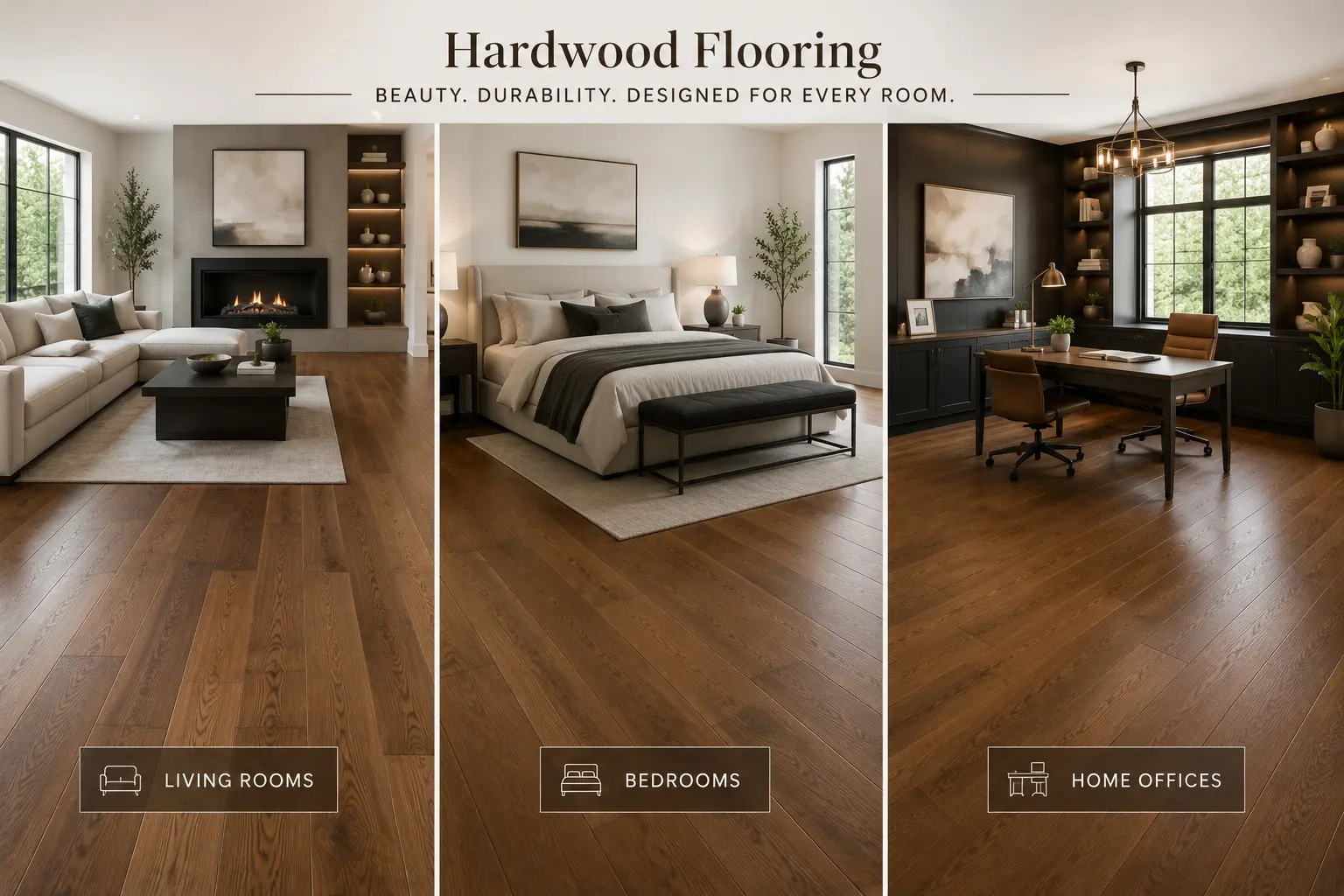
Hardwood Flooring for Minden Living Rooms, Bedrooms, and Home Offices
Hardwood performs best in living rooms, bedrooms, dining rooms, hallways, and home offices, where foot traffic is steady but moisture exposure stays relatively low. In a Minden home, this often means hardwood carries the main living areas of a house, from an open concept great room to a quiet upstairs hallway connecting bedrooms.
Plank width plays a real role in how these spaces feel. Wider planks suit larger, open rooms such as a great room or an open concept living and dining area, since fewer seams read as a cleaner, more expansive look. Narrower strip flooring feels more fitting in smaller, more traditional layouts, such as a formal dining room or a compact home office, where a tighter pattern suits the scale of the room.
Homeowners renovating in stages sometimes start with a single room, such as a primary bedroom or living room, and expand hardwood into adjoining spaces over time as budgets and priorities allow. Whatever the scope of a project, matching plank width, grain cut, and species to the size and function of a room helps the finished space feel intentional rather than arbitrary.
Visiting Our Showroom
Our Minden location sits in the heart of Carson Valley and serves homeowners, contractors, and designers from Gardnerville, Genoa, Carson City, South Lake Tahoe, Stateline, Topaz Lake, and the surrounding Douglas County communities. As a family owned business, Nova Tile and Stone displays a hardwood selection on site, giving homeowners a chance to see species, cuts, finishes, and plank widths in person rather than relying on photos alone.
A sample program is also available, allowing homeowners to take material samples home to view them in their own lighting and alongside existing furnishings, which makes a noticeable difference compared to viewing materials only under showroom lighting. Homeowners preparing for a free design consultation get the most out of the visit by bringing along room measurements, photos of the space, and any inspiration images that reflect the direction they are leaning toward, which gives our design team a clearer starting point for narrowing down species, cuts, and finishes.
For anyone weighing several hardwood directions at once, booking a free design consultation online offers a straightforward way to compare options without sales pressure, since design guidance is not tied to commission. Homeowners can also browse our full range of flooring materials online before or after a showroom visit.
Caring for the Look of Hardwood Over Time
Wood flooring is made for everyday use, but a few general habits go a long way toward preserving its appearance for years to come. Spills are best wiped up promptly rather than left to sit, since standing liquid can affect the finish over time. Harsh cleaning products are best avoided in favor of options formulated for wood surfaces, and felt pads under furniture legs help reduce surface scratches from everyday movement.
Placing a rug or mat near frequently used entry points also helps keep grit and small debris from being tracked across a finished floor, since grit is one of the more common causes of surface wear over time. Direct sunlight and significant swings in indoor humidity can also influence how a floor looks over the years, so homeowners in Carson Valley should factor seasonal changes into how they use and maintain their space.
None of this changes the overall appeal of wood flooring, but a bit of awareness helps homeowners get the most out of the investment.
Conclusion
Hardwood flooring continues to be a strong choice for homeowners who want warmth, natural variation, and a material that pairs well with nearly any design direction. Choosing between solid and engineered construction, understanding how grain cuts affect appearance and stability, selecting a species suited to the household, and matching plank width to the room all shape the final result, and each decision benefits from seeing materials in person rather than relying on photos alone.
Our Minden showroom brings hardwood options together in one place, giving homeowners throughout the region a chance to compare species, cuts, finishes, and widths for their project.
Frequently Asked Questions
Solid wood is milled from a single piece of timber and can be refinished multiple times over its life. Engineered wood is built from multiple layers topped with a genuine wood surface, which lets it handle humidity shifts more consistently and makes it the more common choice over concrete slabs or in below grade spaces, while solid wood is installed above grade over a wood subfloor.
Plain sawn is the most common cut and shows a sweeping cathedral grain pattern. Quarter sawn is cut at a steeper angle, producing a straighter grain and a distinctive fleck pattern in species like oak, while rift sawn minimizes that fleck for the most uniform, linear look of the three cuts.
Oak and hickory rank higher on the Janka hardness scale, which means they resist dents and daily wear better than softer species like walnut or cherry. Routine cleaning and care still help any species preserve its appearance over the years.
Yes, though it works best in living rooms, bedrooms, hallways, and home offices, where foot traffic is steady but moisture exposure stays low. Many homeowners expand hardwood room by room over time rather than installing it everywhere at once.
Yes, when the species and construction are matched to the space, though seasonal humidity shifts are worth planning around. Engineered wood or wider plank styles are often chosen for added stability in homes throughout the region.