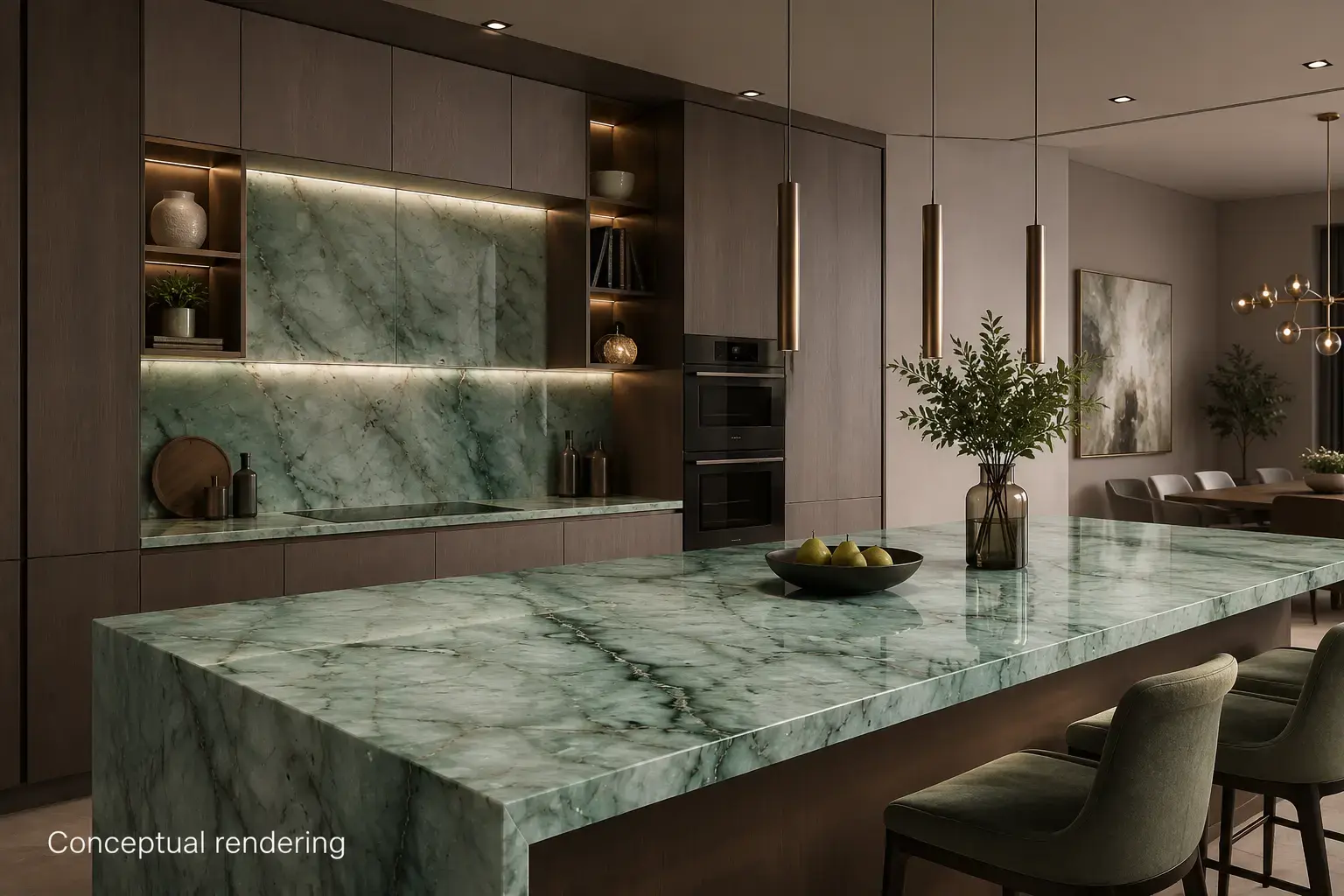
Green quartz countertops are engineered stone surfaces made from crushed natural quartz bound with pigmented resin, which is what makes a consistent green color possible in a material that rarely occurs that way in nature. The color itself spans a wide range, from pale seafoam and muted sage to deep emerald and near-black forest tones, so it can work as a quiet, almost neutral backdrop or as a genuine focal point depending on the shade chosen. Green has moved from an occasional accent to a genuine countertop choice over the past few years, and homeowners in Spanish Springs are noticing. Set against the sagebrush and open valley views that define this part of Washoe County, a green quartz counter reads less like a bold design statement and more like an extension of the landscape just outside the window, all while holding up to daily kitchen use without the sealing or upkeep that natural stone requires.
Why Green Is Showing Up in Local Kitchens
Interior designers point to a broader shift toward nature-inspired color in the kitchen, and green has become one of the clearest beneficiaries of that trend. This showed up clearly in a survey of kitchen and bath design professionals, where a majority of respondents named green as the top emerging color choice for kitchen cabinets, alongside a strong preference for quartz as the leading countertop material overall. Homeowners are drawn to it for the same reason they might choose a sage paint color or a wood-toned floor: it feels calm rather than trendy, and it ages well because it borrows from a palette that already exists outdoors. In a setting like Spanish Springs, where the terrain leans toward dusty tans and muted sagebrush greens, a countertop in a soft sage or deeper forest shade tends to feel intentional rather than out of place.
Understanding Quartz as a Countertop Material
Green quartz countertops are engineered stone surfaces, not quarried ones. Manufacturers grind natural quartz crystal down and bind it with pigmented resins, which is what allows for consistent color across an entire slab and lets a color like green exist at all, since true green stone is rare and expensive in nature. That engineering also means the surface is non-porous, so it resists staining without ever needing to be sealed, unlike many natural stones. It stands up well to daily kitchen use, including knives and everyday scrubbing, though it is not indestructible. As one home-improvement resource notes, the resin binder that gives quartz its durability is also vulnerable to heat damage, so a hot pan straight from the stove can scorch the surface if it is not caught in time. A trivet or cooling rack solves the problem entirely.
Choosing a Shade That Fits a High Desert Home
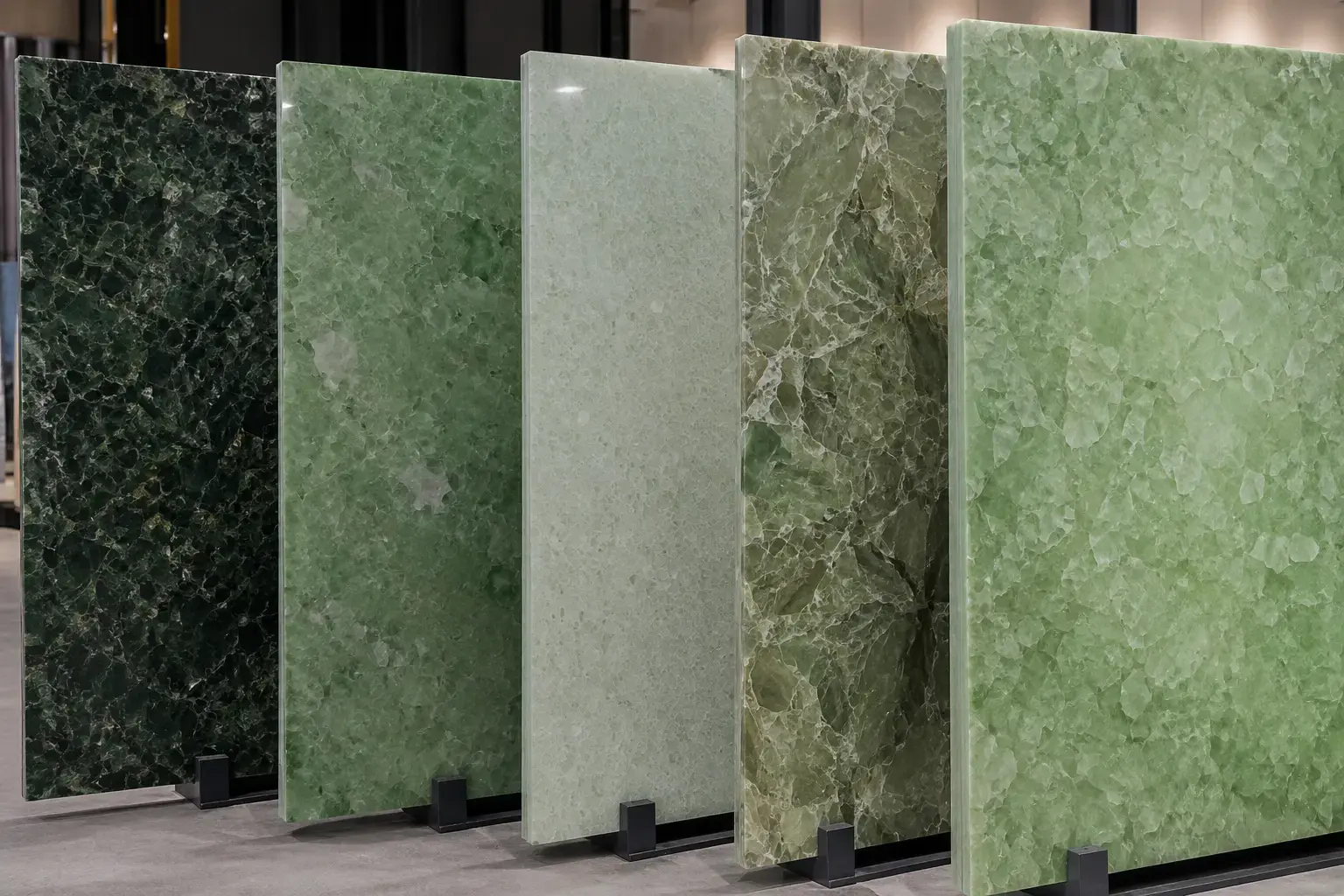
Green quartz spans a wide range, from pale seafoam and muted sage to deep emerald and near-black forest tones. Lighter, softer greens tend to suit homes with a lot of natural light and simpler cabinetry, since they read almost neutral from a distance and only reveal their color up close. Deeper greens make more of a statement and work well as an anchor for a kitchen island, paired with a lighter perimeter counter in white or cream. Many Spanish Springs homes get strong natural light through south- and west-facing windows, partly because the valley sits within the rain shadow of the Sierra Nevada, which keeps skies clear and sunlight intense for much of the year. That light can shift how a color reads compared to a showroom under artificial lighting, so it is worth viewing any sample in the actual room at different times of day before committing. Over many years, that same sustained sun exposure can also cause gradual fading in any quartz color, including green, which is a reasonable consideration for a countertop positioned directly beneath an unshaded window.
Pairing Green Quartz with Cabinets and Backsplash
Green quartz tends to work best when the rest of the kitchen stays relatively simple. White or cream cabinetry lets the countertop carry the color, while natural wood cabinetry creates a warmer, more organic look that echoes the high desert setting outside. For hardware and fixtures, warm brass and gold tend to soften a green countertop and give it a more traditional feel, while matte black creates a sharper, more modern contrast. Backsplash choices are often kept simple on purpose, whether that means a plain white subway tile or a natural stone-look porcelain, so the countertop remains the focal point rather than competing with a busy pattern behind it.
Living with a Quartz Countertop in Spanish Springs
Day-to-day care for quartz is straightforward regardless of color. Warm water, mild dish soap, and a soft cloth handle most messes, and there is no sealing or polishing required over the life of the countertop. Abrasive scrubbing pads and harsh chemical cleaners are worth avoiding, since they can dull the finish over time even though they will not stain or etch it the way they might a natural stone surface. If you have questions about caring for quartz or want to compare different slab options in person, you can visit our Reno showroom or schedule a design consultation with our team.
Seeing Green Quartz in Person Near Spanish Springs, NV
Photos and online renderings only go so far with a color like green, since undertones and sparkle patterns shift depending on lighting. A showroom visit is the more reliable way to judge a slab before ordering. Nova Tile and Stone's Reno showroom, at 12835 Old Virginia Rd, Suite 24, Reno, NV 89521, is a short drive south on US-395 for most Spanish Springs residents and carries quartz slabs on site. Design consultations are available for anyone working through color, edge profile, or layout questions, and the showroom can be reached at (775) 331-6682.
Conclusion
Green quartz countertops are less of a trend and more of a return to color choices that used to be reserved for accent pieces. For a Spanish Springs kitchen, a shade of green can echo the landscape already visible outside, while still holding up to daily use without the upkeep natural stone requires. Whether it is a full run of countertops or a single island used as a focal point, the choice comes down to matching the shade and finish to the room's light, cabinetry, and overall style. Seeing a slab in person under natural light remains the most reliable way to confirm it is the right fit before committing to a full installation.
Frequently Asked Questions
Natural green stones such as marble or granite rely on mineral deposits that produce far less consistent color and veining from slab to slab, and true green natural stone is uncommon and often costly. Quartz achieves a uniform green shade through pigmented resin, so two slabs from the same product line will look nearly identical, which matters for anyone matching an island to perimeter counters or ordering additional pieces later for a remodel.
Countertop color has a smaller effect on resale value than most homeowners expect, since flooring, layout, and overall condition tend to weigh more heavily on a buyer's impression. A muted sage or forest tone paired with neutral cabinetry is generally viewed as a design choice rather than a liability, while a very saturated or unusual green may appeal more narrowly. Buyers considering resale in the next few years often lean toward the calmer end of the green spectrum for this reason.
Lighter greens such as seafoam or pale sage tend to make a smaller kitchen feel more open, since they reflect more light and read closer to a soft neutral. Darker greens can still work in a compact space but tend to look best on a single surface, such as an island or a short run of counter, rather than wrapping the entire room, where a deep color can make the space feel more enclosed.
Minor surface scratches can often be buffed out by a fabricator using polishing compounds matched to the finish. Chips, particularly along an edge or around a sink cutout, typically require a color-matched resin filler applied by a professional, since an exact match on a colored quartz depends on the pigment used in that specific product line. Keeping a small sample piece from the original installation makes future repairs easier to match.
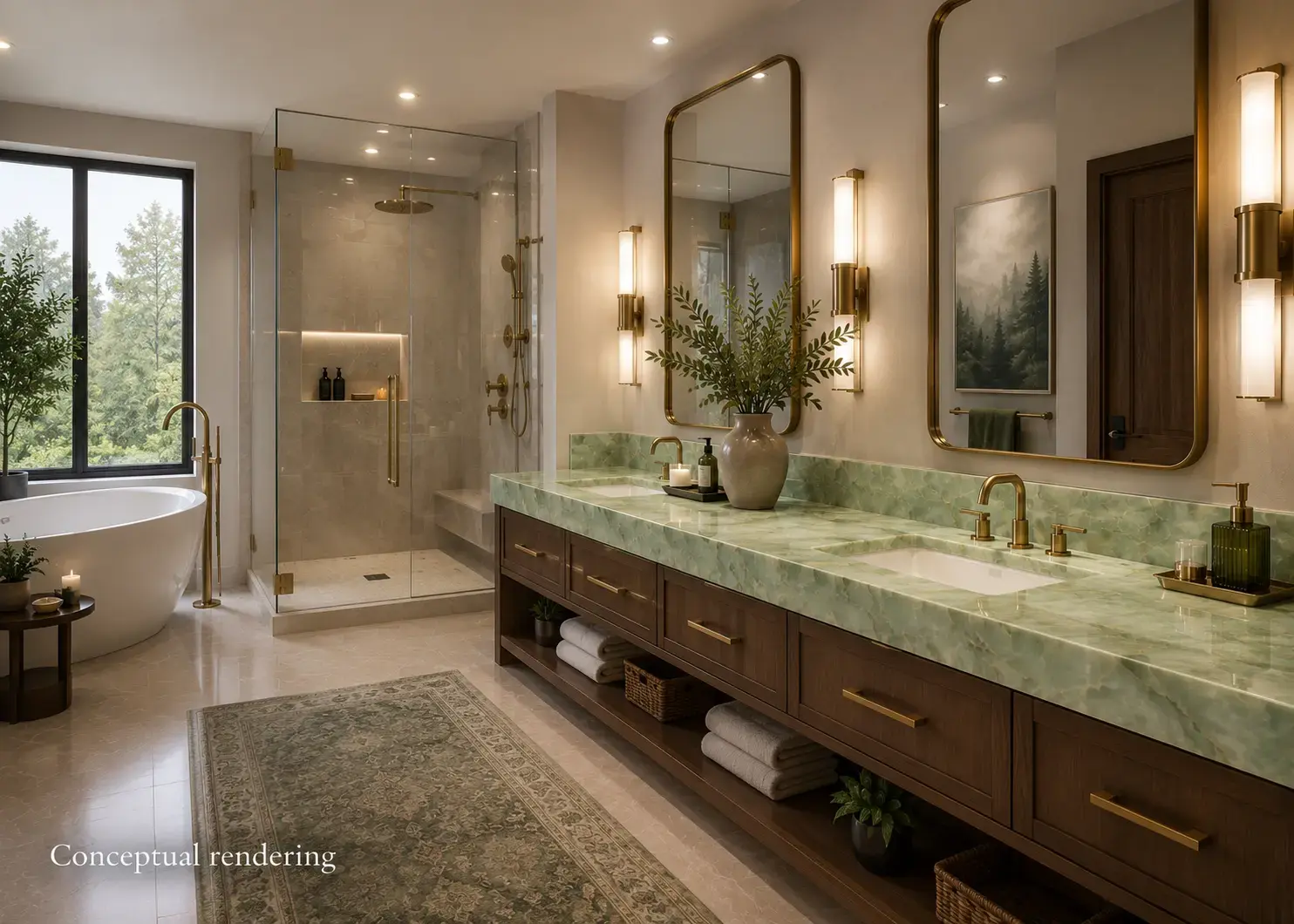
Green quartz works well in bathrooms, where its non-porous surface resists moisture, soap residue, and toiletries without staining. Because vanity countertops see less exposure to heat than a kitchen counter, some homeowners choose a bolder or darker green in a bathroom that they might avoid in a kitchen, using it as a smaller-scale design statement in a powder room or primary bath.
Note: Some images on this page may be conceptual renderings created to illustrate design possibilities and may not depict actual installations.