Engineered hardwood flooring is a type of wood floor built from a real hardwood wear layer bonded over a multi-layer, cross-grain core, giving it more resistance to moisture and temperature changes than solid hardwood while still looking and feeling like genuine wood. This layered construction makes it a strong choice for homes in Sparks, NV, part of the Reno-Sparks region, where the Sierra Nevada blocks much of the Pacific moisture from reaching the area, and where cold winters and sharp day-to-night temperature swings put real stress on flooring materials. Unlike solid hardwood, engineered planks can be installed below grade, over concrete slabs, or over wood subfloors, and with proper care they typically last around 30 years while remaining sandable and refinishable over time.
Engineered Wood Delivers More Than Expected
Engineered wood flooring offers a wide range of species, stain colors, and finish types, giving homeowners the flexibility to match nearly any décor style. That same layered, protective build also allows these floors to hold up well in high-moisture spaces like kitchens and bathrooms, where solid hardwood tends to struggle.
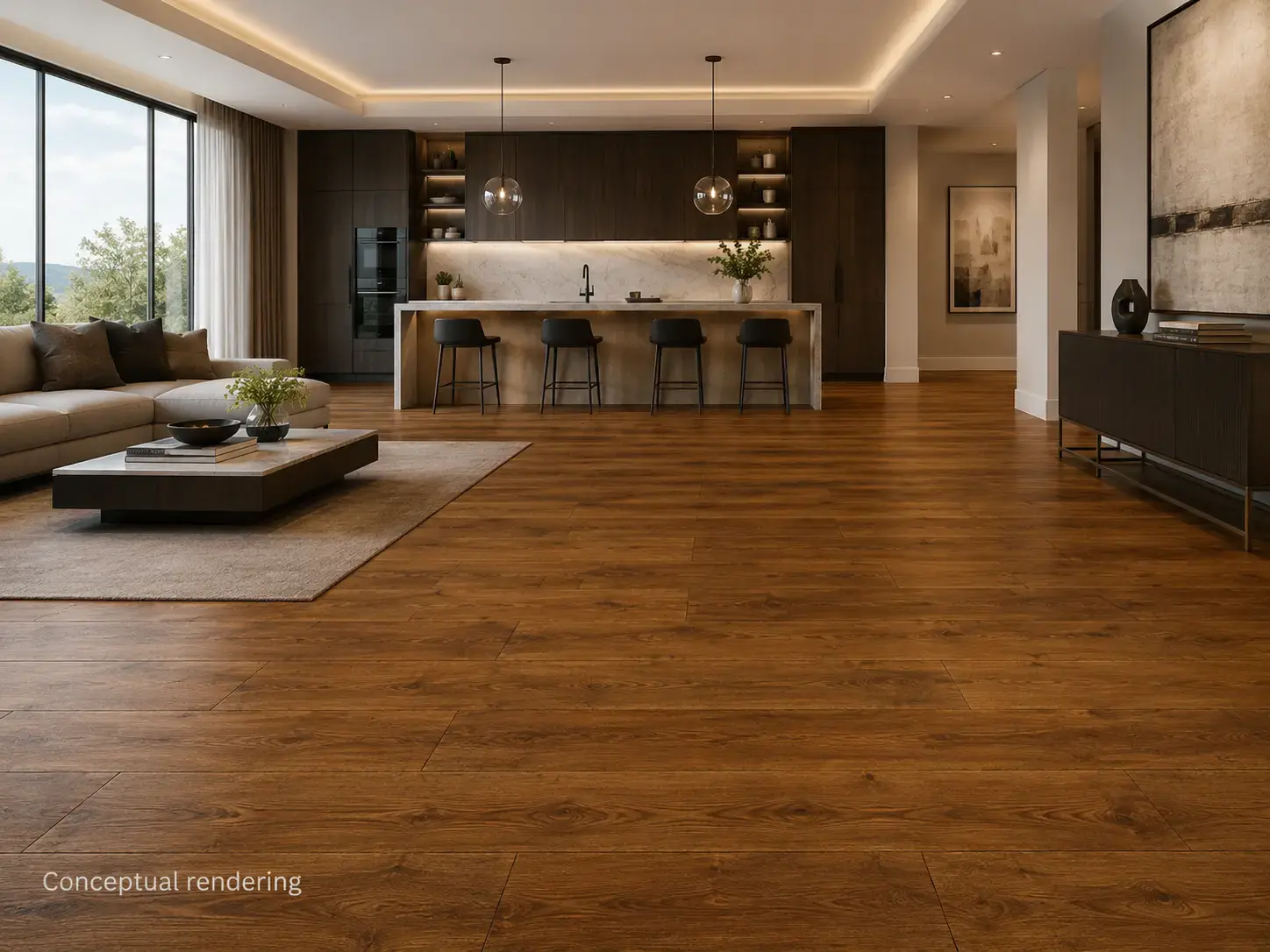
Understanding Engineered Hardwood Construction
That stability comes down to how the planks are built. Instead of one solid piece of wood, each plank consists of multiple layers of wood veneer or plywood arranged in a cross-grain pattern, finished off with a real hardwood wear layer on top. This cross-layered core structure is what allows engineered wood to resist the expansion and contraction that solid hardwood undergoes as temperature and moisture levels shift. If you're comparing flooring materials for your renovation, Nova Tile and Stone offers a range of flooring solutions to help you find the right fit for your space.
Both the number of layers and the thickness of the top wear layer vary from product to product, and each factor influences how the floor performs and what it costs. A thicker wear layer generally means more opportunities to sand and refinish the floor over its lifespan, while a greater number of core layers typically means better dimensional stability. The National Wood Flooring Association maintains refinishing standards based on wear layer thickness to help buyers and installers identify which engineered products can be sanded and refinished down the road. Premium engineered products may include seven or more layers, while more affordable options often use just three to five. Knowing how these floors are built helps buyers balance initial cost against long-term durability when comparing products.
Choosing an Installation Method
Before installation begins, engineered hardwood typically needs time to acclimate, allowing the flooring to adjust to the humidity levels of the room where it will be placed. This step is especially relevant given how dry the air tends to stay across the Truckee Meadows valley. Acclimation time can vary, generally running one to three days depending on humidity and weather conditions ahead of installation.
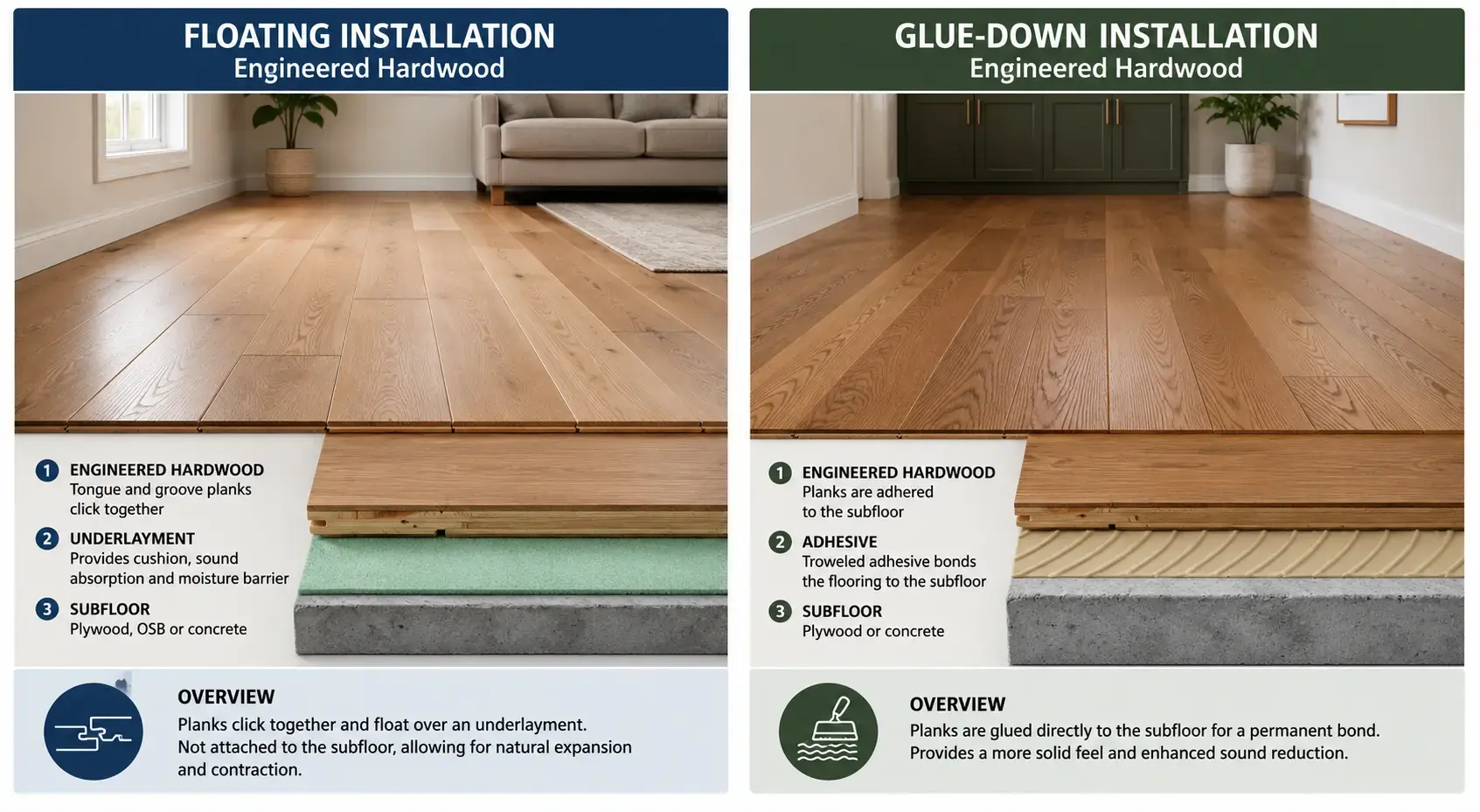
From there, a major advantage of engineered hardwood is the range of installation methods it supports, making it adaptable to different rooms and subfloor types in ways solid wood often isn't. Floating installations, where planks click together and sit on an underlayment without attaching to the subfloor, are favored for their fast installation and compatibility with concrete slabs, a common foundation type in many of Sparks' newer subdivisions such as Kiley Ranch, Wingfield Springs, and D'Andrea. Glue-down methods form a stronger, more permanent bond and offer some added sound absorption, and Fine Homebuilding's guide to gluing engineered flooring to concrete notes that checking the slab's moisture content and flatness beforehand is essential to a successful bond. Nail-down or staple-down techniques, meanwhile, are typically used over wood subfloors, an option more common in Sparks' older, established homes near downtown and Victorian Square.
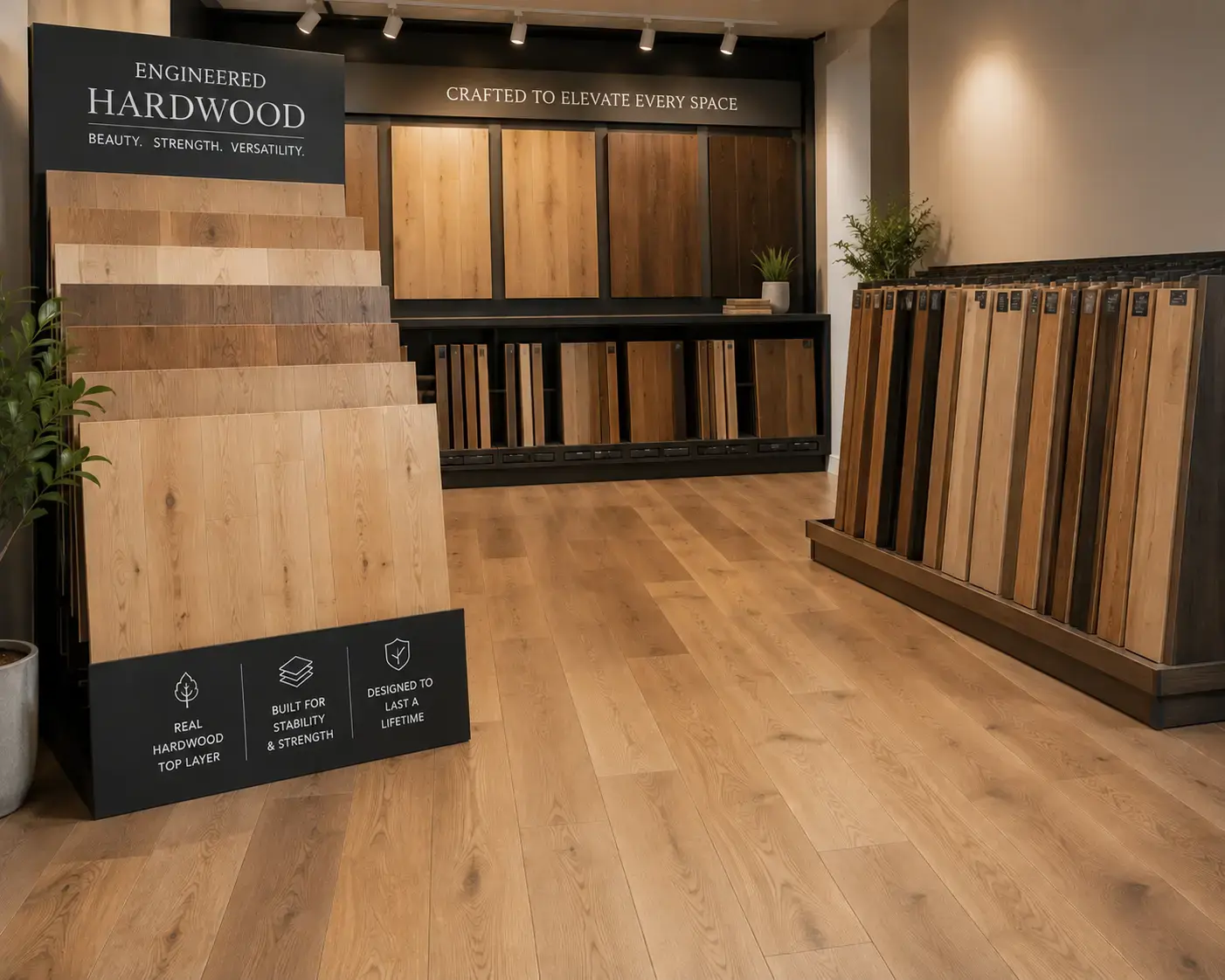
The best installation method usually comes down to the subfloor in place, where the room sits within the home, and personal priorities around future adaptability. Below-grade areas, for instance, generally work better with floating or glue-down methods rather than nail-down, since these avoid puncturing the subfloor. Before making a final flooring decision, homeowners and trade professionals in Sparks can visit the Nova Tile and Stone Reno showroom to view engineered hardwood flooring in person. Contractors, designers, and other industry professionals can also apply for a trade account to access resources designed for trade projects. Once the material has been selected, partnering with an experienced installer helps ensure the flooring performs as intended for years to come.
Conclusion
Engineered hardwood gives Sparks homeowners a flooring option built to handle the valley's shifting seasons while delivering the warmth and authenticity of real wood. Understanding construction quality, wear layer thickness, and the right installation method for a given subfloor makes it easier to choose a floor that performs well for years to come. Nova Tile and Stone also supplies engineered hardwood, natural stone, stone slabs, tile, and LVP for flooring projects throughout the surrounding region, including Spanish Springs, where many newer homes are built on concrete slab foundations and share the same dry-climate considerations as Sparks; Incline Village, where lake-adjacent humidity calls for extra attention to acclimation and moisture barriers before installation; and Carson City, close enough for homeowners to shop the Reno showroom for remodels and new builds.
For a closer look at available species, finishes, and material options, visit Nova Tile and Stone, Reno showroom at 12835 Old Virginia Rd, Suite 24, Reno, NV 89521, or call (775) 331-6682.
Frequently Asked Questions
Yes. Concrete slabs typically require a moisture barrier or vapor retarder underlayment before installation, since slabs can transmit ground moisture upward over time. Testing the slab's moisture level beforehand helps determine whether an additional vapor barrier is necessary.
Engineered hardwood generally costs less upfront than solid hardwood of a comparable species, largely because only the top layer uses premium hardwood rather than the entire plank. Products with thicker wear layers and more core plies narrow that price gap but still tend to come in below solid wood equivalents.
Engineered hardwood generally handles radiant heat systems better than solid hardwood because its cross-layered core resists the warping and gapping that temperature fluctuations can cause. Manufacturer specifications vary, so checking heat tolerance ratings before installation is recommended.
A floating installation in a standard-sized room can often be completed in a single day, while glue-down or nail-down methods may take longer due to drying or fastening time. Acclimation period, which happens before installation begins, is separate from this timeline.
Engineered hardwood should be cleaned with products specifically formulated for wood floors, avoiding excess water or steam mops that can damage the wear layer over time. Regular sweeping and prompt cleanup of spills help preserve the finish between deeper cleanings.
Note: Some images on this page may be conceptual renderings created to illustrate design possibilities and may not depict actual installations.