Choosing a countertop and kitchen island comes down to a handful of core factors: material durability, whether the island should match or contrast the surrounding countertops, how much overhang works for seating, and which edge profile fits the household. Granite and quartzite are generally the more durable natural stone options, marble is more porous and prone to etching, and engineered quartz typically needs the least maintenance, a distinction covered in more depth in this guide to natural stone countertops. A comfortable seating overhang is usually around 12 inches, and waterfall edges have become a common way to carry veining down the side of an island.
We work with homeowners across Elk Grove and the greater Sacramento area at our showroom, and the same questions about countertops and kitchen islands come up again and again. Below, we answer the ones we hear most often, in plain terms.
What Is the Difference Between a Countertop Material and a Kitchen Island Material?
Many Elk Grove homeowners assume the countertop and the kitchen island need to match exactly, but that is a design preference rather than a requirement. Some kitchens use the same material throughout for a cohesive, unified look. Others intentionally pair two different materials, such as a quartzite perimeter countertop with a contrasting granite or marble-look island top, to create a visual focal point.
The kitchen island often serves a different purpose than the perimeter counters. It may be used more for food prep, casual dining, or as a gathering spot, so some homeowners choose a material for the island that prioritizes a particular look or feel, while keeping the surrounding counters more practical. There is no single right approach. The decision comes down to how the kitchen will be used and the overall design direction of the space.
It also helps to think about how often each surface will be used for heavier tasks like food prep versus lighter use like casual seating. A perimeter countertop near the stove and sink tends to see more everyday wear from cooking activity, while an island used mainly for gathering or occasional prep work may have more flexibility in material choice. Walking through a typical day in the kitchen, from morning coffee to weeknight dinner prep, can clarify which areas need the most practical surface and which areas leave more room for a material chosen primarily for its appearance.
How Do I Know Which Stone or Surface Will Hold Up in My Kitchen?
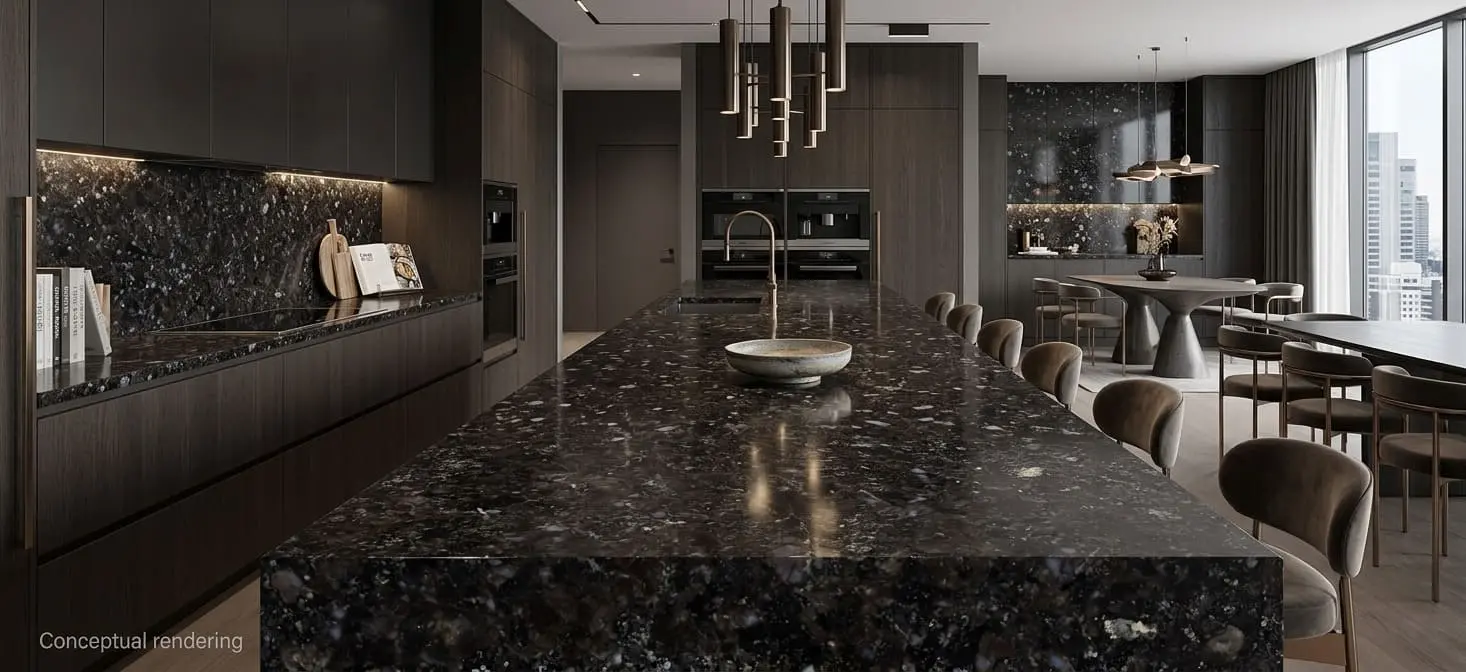
Durability questions are common, especially from homeowners comparing natural stone against engineered options. Granite is known for its hardness and resistance to scratching. Quartzite, a naturally metamorphosed stone, tends to offer strong durability as well, though the exact characteristics vary by slab. Marble is prized for its appearance but is generally more porous and can be more prone to etching from acidic substances. Engineered quartz surfaces are manufactured for consistency and tend to require less maintenance than some natural stones.
Every slab is different, even within the same stone type, so we always recommend viewing actual slabs in person rather than relying solely on samples or photos. Browsing our live slab inventory ahead of time can help narrow down options before a showroom visit. Lighting, veining, and mineral composition can vary significantly from one slab to the next, and seeing the full slab helps set realistic expectations for how it will look once fabricated for a countertop or island.
Sealing is another factor that comes up alongside durability. Many natural stones benefit from periodic sealing to help reduce staining from everyday spills, though the frequency depends on the specific stone and how porous it is, as this overview of stone countertop options also explains in more detail. Homeowners who want a lower-maintenance routine sometimes lean toward denser stones or engineered surfaces, while those drawn to the character of marble or certain porous granites often accept a bit more upkeep in exchange for the look they want. Thinking honestly about how much maintenance fits into your routine, rather than choosing a material based on appearance alone, tends to lead to more satisfaction with the surface over time.
Should the Kitchen Island Be a Different Color Than the Perimeter Countertops?
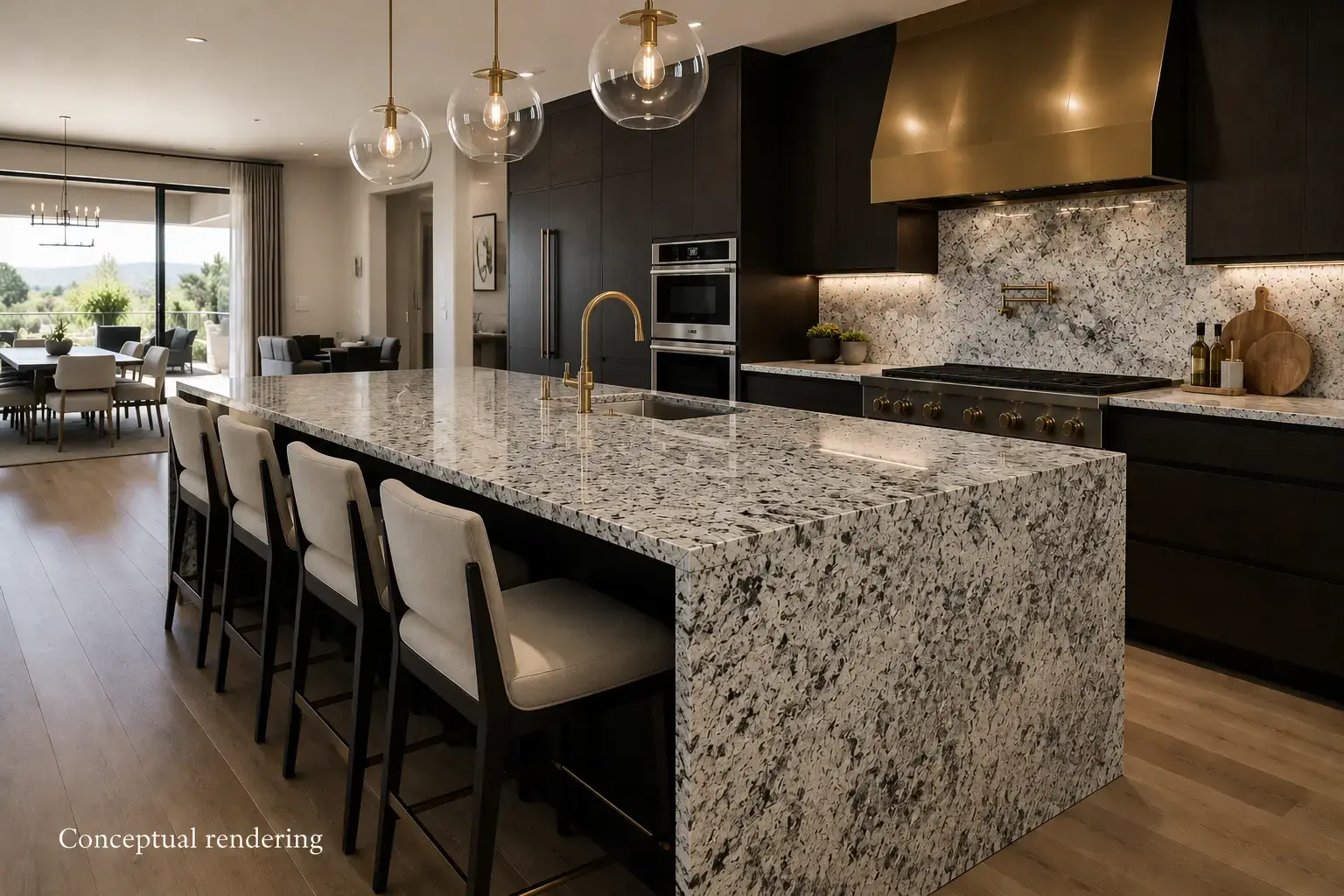
This is one of the more design-driven questions we hear from Elk Grove homeowners, and there is no universal answer. A contrasting island can serve as a visual centerpiece, especially in open-concept kitchens where the island is highly visible from adjoining living spaces. A matching island, on the other hand, creates a more seamless, cohesive look that some homeowners prefer, particularly in smaller kitchens where too much visual contrast can feel busy.
When considering a contrasting color, it helps to think about how the two materials will read together from a distance, not just up close. Undertones matter here. A warm-toned perimeter counter paired with a cool-toned island can sometimes clash more than expected, so comparing physical samples side by side under the kitchen's actual lighting is worth the extra step.
Cabinetry color often becomes the third piece of this puzzle. An island with a painted or stained base cabinet in a color different from the surrounding cabinetry, paired with a contrasting countertop material, can make the island feel like an intentional design statement rather than an afterthought. Homeowners working with a contractor or designer on these decisions may also want to look into our trade account program, which their project team can use directly. On the other hand, homeowners who prefer a quieter, more unified kitchen sometimes find that matching the island countertop to the perimeter, even while varying the cabinet color slightly, achieves a similar sense of distinction without introducing too much visual contrast.
How Much Overhang Should a Kitchen Island Countertop Have for Seating?
Overhang needs depend on how the island will be used for seating. For comfortable knee room with standard counter-height stools, an overhang of roughly 12 inches is typical. Waterfall edges and larger overhangs are increasingly common for their appearance, but they may require additional structural support underneath, since unsupported stone overhangs are subject to weight limits that vary by material and slab thickness.
This is a detail worth discussing early in the planning process, since the amount of overhang can affect cabinetry design, support requirements, and the overall footprint of the island within the kitchen.
Seating comfort also depends on more than just the overhang measurement. The height of the island, whether standard counter height or a raised bar height, changes how much overhang feels comfortable for people sitting there regularly. Households that plan to use the island for casual meals or homework, rather than occasional seating, often benefit from mocking up the seating area with cardboard or painter's tape before finalizing dimensions, simply to get a feel for the actual legroom and traffic flow around the island.
What Edge Profile Works Well for a Kitchen Island?
Edge profile is often one of the last decisions homeowners make, but it has a noticeable effect on both the look and everyday feel of the island. A straight or eased edge gives a clean, modern look and tends to be easier to keep clean along the edge line. A bullnose or bevel edge softens the island's silhouette, which some homeowners prefer in kitchens with young children, since rounded edges reduce sharp corners.
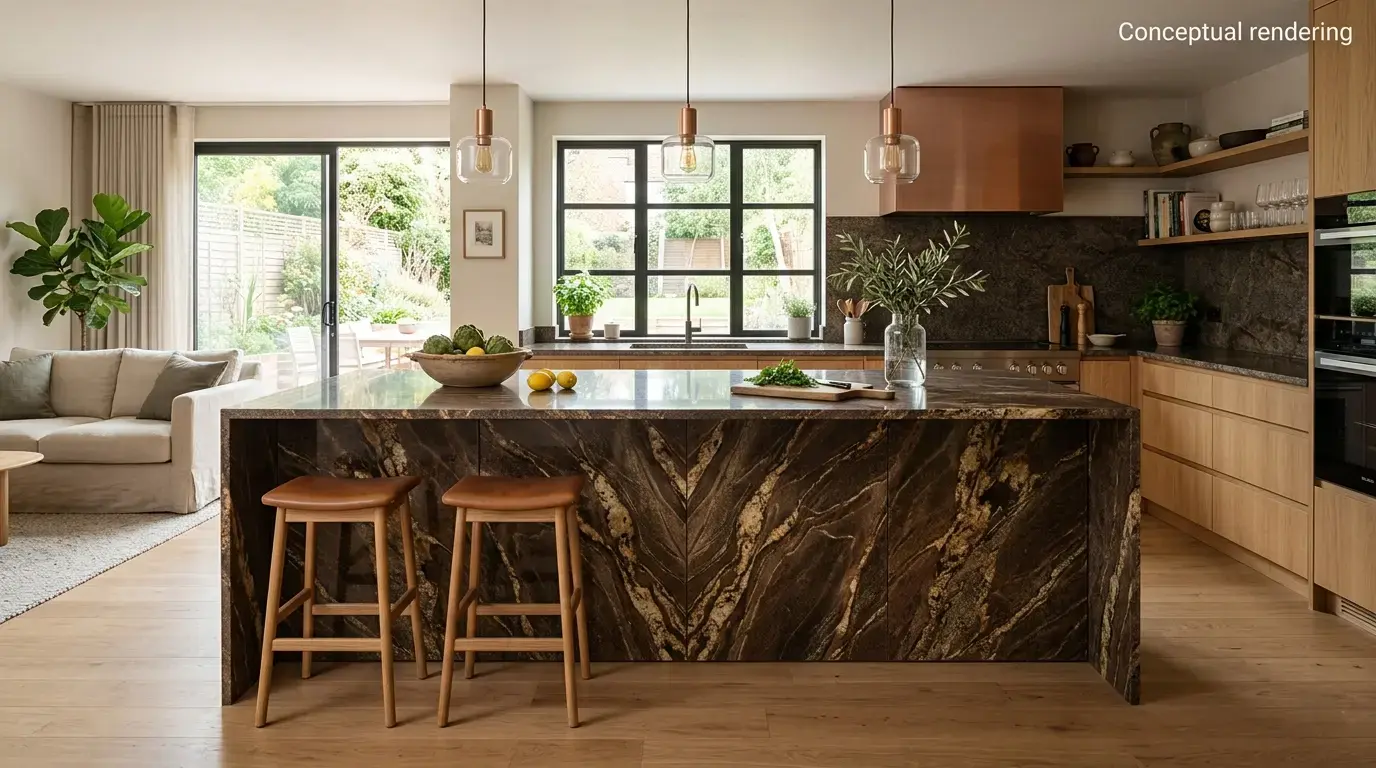
Waterfall edges, where the countertop material continues down the sides of the island to the floor, have become a common choice for a furniture-like appearance. This style tends to work especially well with pronounced veining, since it allows the pattern to flow continuously from the countertop surface down the side panel. Homeowners who find a slab with veining they want carried through a waterfall edge can request a quote on that specific slab once they have a bundle number in mind.
Beyond appearance, edge profile can also influence how the island interacts with everyday household activity. A straight edge tends to define clear boundaries for the workspace, which some homeowners find helpful in a busy kitchen. A softer bullnose or bevel can make the island feel more approachable and less like a hard architectural element, particularly in kitchens that double as gathering spaces for family and guests. There is no requirement to match the edge profile of the island to the perimeter countertops, though many homeowners choose to keep them consistent for a more unified overall look.
Bringing It All Together
Choosing a countertop and kitchen island is rarely just about picking a color or a stone type. It involves weighing durability, maintenance expectations, how the space will be used day to day, and how the finished look will fit within our full range of tile, stone, and flooring options. For many Elk Grove homeowners, the island in particular becomes an opportunity to make a design statement, whether through a contrasting stone, a waterfall edge, or a slab with pronounced veining.
There is no single right combination of material, color, and edge profile. What works well in one kitchen may not suit another, which is why viewing slabs in person and considering how each option performs in the context of a specific kitchen layout and lifestyle makes such a difference. Taking the time to compare options side by side, under real lighting and against actual cabinetry samples, helps avoid surprises after installation. Homeowners who want personalized guidance can schedule a design consultation with our team.
We welcome Elk Grove homeowners to visit our Sacramento showroom at 6100 Warehouse Way, Sacramento, CA 95826, to see natural stone and engineered surface options firsthand. For questions before your visit, we can be reached at (916) 913-6682.
Note: Some images on this page may be conceptual renderings created to illustrate design possibilities and may not depict actual installations.
Frequently Asked Questions
No. Many kitchens use matching materials for a cohesive look, while others pair a contrasting island with the surrounding countertops to create a focal point. The choice depends on personal preference and the overall design of the kitchen.
Both are generally considered durable natural stone options, though characteristics can vary by individual slab. Comparing actual slabs in person is the most reliable way to understand how a specific piece will perform.
An overhang of about 12 inches is typical for comfortable knee room with standard counter-height stools, though larger overhangs may require additional structural support.
A bullnose or beveled edge softens the island's corners and is often preferred in households with young children, compared to a sharp straight edge.
A waterfall edge is a design where the countertop material continues down the sides of the island to the floor, creating a continuous, furniture-like appearance that often highlights pronounced veining.