Caring for a pre-fabricated countertop depends mainly on the material: granite and quartz can usually be wiped clean with mild soap and water, while marble and quartzite are more porous and benefit from pH-balanced cleaners along with periodic sealing to help prevent staining. Porcelain, an engineered option, is non-porous and holds up well against daily spills, though wiping up messes quickly still helps preserve the finish. Because pre-fabricated countertops are cut and polished before installation, the base material determines almost every part of the long-term care routine.
Some materials resist staining better than others, and certain finishes can fade unevenly with long-term sun exposure depending on the surface. This guide walks through practical, everyday care habits for each pre-fabricated material so a new countertop stays in great shape for years to come.
Countertop materials have become a bigger part of kitchen design conversations than ever, from popular kitchen countertop picks to more specialized natural stone options. Understanding basic care requirements up front helps homeowners feel confident no matter which material they eventually choose.
What Are Pre-Fabricated Countertops?
Pre-fabricated countertops are slabs or sections that have been cut, edged, and polished in standard sizes before reaching a showroom floor. Instead of waiting on a custom template and fabrication timeline, homeowners can choose from ready-made pieces and move through the project faster. This approach works well for kitchens, bathrooms, and other spaces where standard dimensions fit the layout.
Nova Tile and Stone carries pre-fabricated options across several material categories, including granite, quartzite, marble, porcelain, and quartz. Browsing our full selection of tile, stone, and countertop materials is a good starting point for comparing looks and finishes side by side. Each material has its own care requirements, which is why understanding the surface first matters before finalizing a decision.
Daily Cleaning Habits That Support Long-Term Durability
Regardless of material, a few cleaning habits apply across nearly every countertop type. Wiping up spills as they happen, rather than letting liquids sit, reduces the chance of staining or discoloration over time. A soft cloth with warm water and a mild, pH-balanced cleaner is usually enough for daily upkeep.
Harsh chemicals, abrasive powders, and rough scrub pads can dull a polished finish faster than normal wear would. Vinegar-based cleaners in particular should be avoided on natural stone, since acidity can affect the surface over time. Standing water near a sink cutout or seam is one of the more overlooked sources of long-term wear, so drying that area after use is worth the extra few seconds.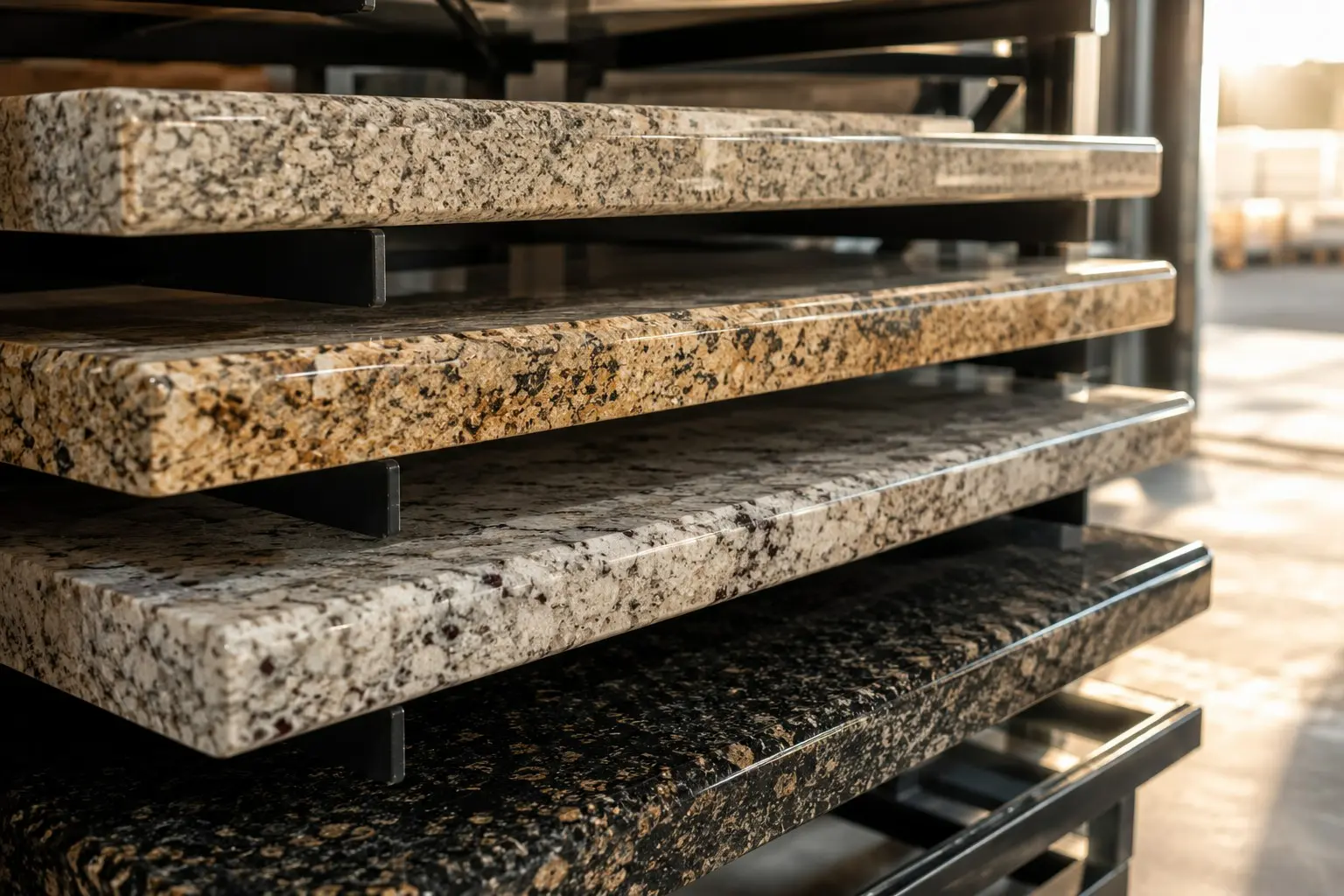
Caring for Granite Countertops
Granite is one of the more forgiving materials on this list, largely due to its density and natural hardness. That toughness holds up well through years of daily kitchen traffic, though like any surface it still benefits from routine care to keep the polish looking fresh. Granite also handles heat relatively well compared to many other surfaces, though setting a hot pan directly on it still isn't recommended.
Because granite is a natural material, small variations in color and veining are normal from slab to slab. Homeowners who want to see specific patterns before committing can look through our live slab inventory to compare bundles, since pieces cut from the same block match more closely than ones from separate slabs. Noting a bundle number before finalizing an order helps avoid uneven veining across separate countertop sections.
Because granite is dense and non-reactive, it's one of the few natural stones commonly used for food preparation, though a cutting board still protects both the knife edge and the polished surface. Periodic resealing helps maintain its stain resistance, especially in busy kitchens where the surface sees daily use.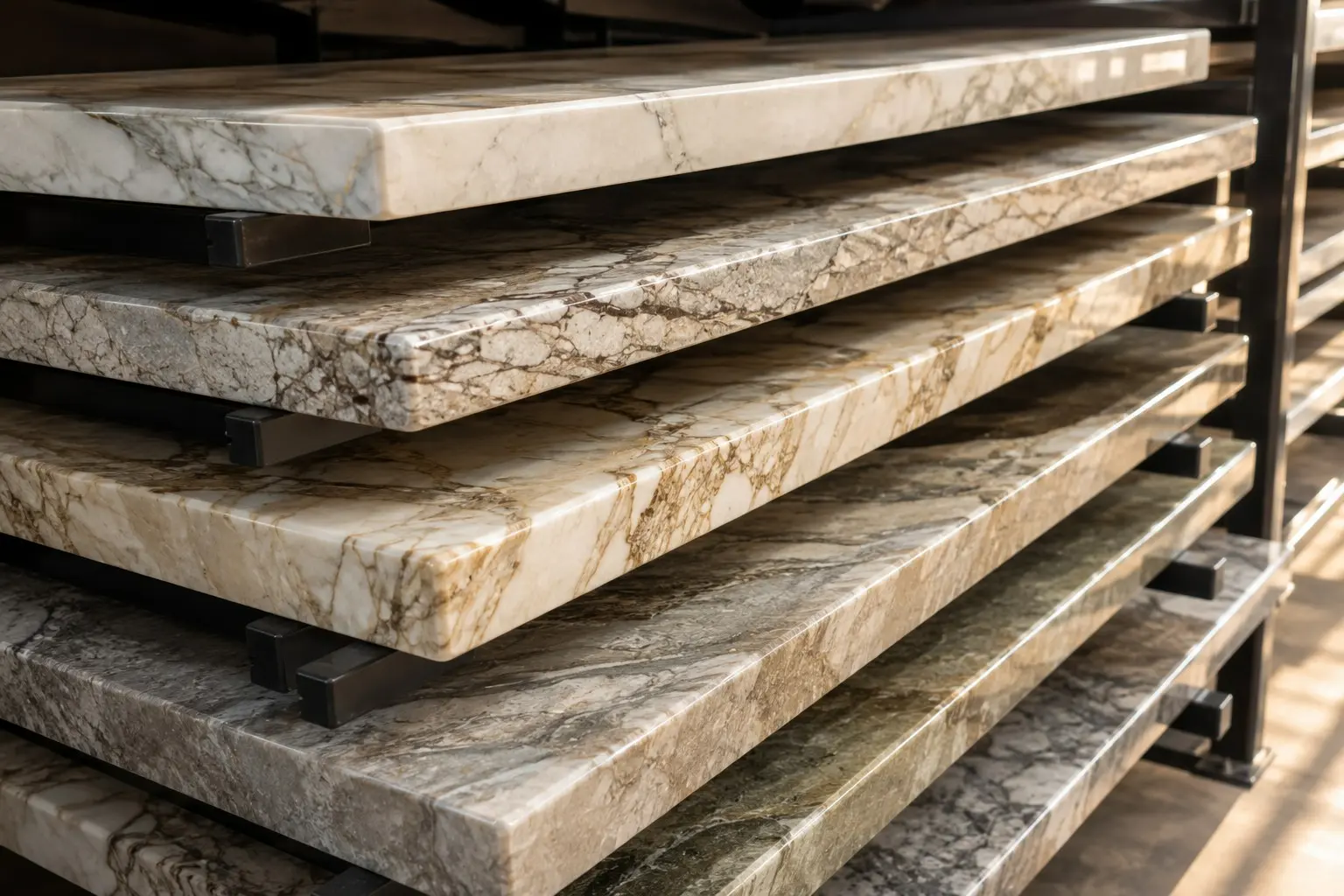
Caring for Marble and Quartzite Countertops
Ready-made marble brings a classic, veined look that many homeowners choose for bathrooms, fireplace surrounds, and other lower-traffic spaces. Because marble is more porous than granite, it benefits from sealing and quick attention to spills, especially anything acidic like citrus juice or vinegar. That same porosity is also why standing water or damp items left out for extended periods can leave a dull ring, even on a properly sealed slab.
Quartzite, despite the similar name, behaves more like granite in terms of hardness and durability. It holds up well both indoors and outdoors, and its resistance to UV exposure means an outdoor kitchen or patio bar top is less likely to show noticeable fading over time, though darker colors tend to shift more than lighter ones.
For homeowners comparing natural stone options in more depth, a general guide to natural stone countertops covers some of the broader differences between marble, quartzite, and granite. Both marble and quartzite benefit from a gentle, non-acidic cleaner and a soft cloth rather than anything abrasive.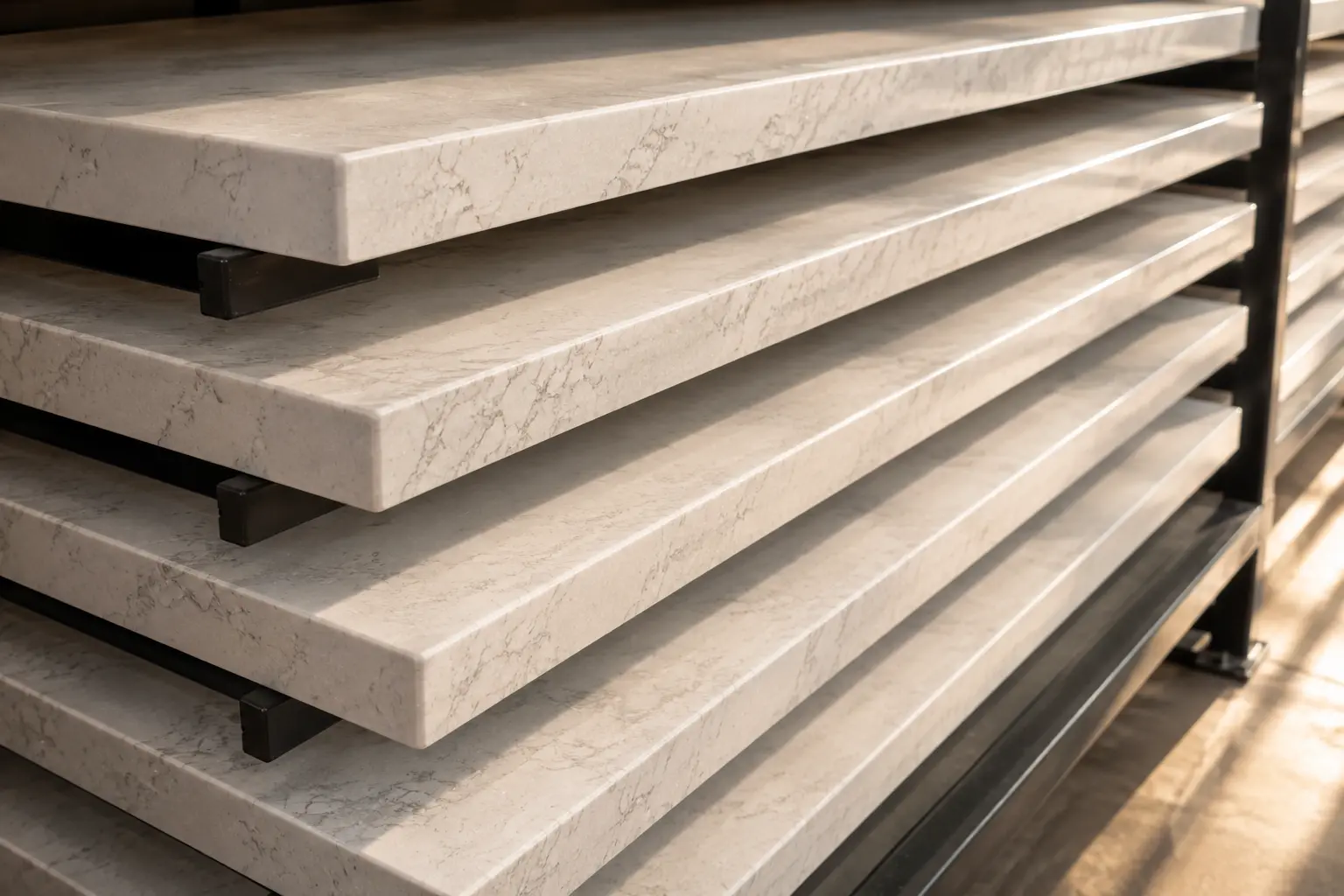
Maintaining Porcelain and Quartz Countertops
In-stock porcelain is an engineered material known for being dense and low maintenance, since the manufacturing process fuses it at high heat until it's essentially non-porous. That density means residue tends to sit on top of the surface rather than soak in, so a quick wipe-down usually clears it before it has a chance to set. Porcelain also resists fading reasonably well, though like most finishes, very dark colors can show subtle changes after years in direct sun.
Quartz, sold in ready-made sizes, is manufactured to be consistent in pattern and color from piece to piece, a result of blending natural quartz particles with resin under pressure. That same process also makes it one of the more scratch-resistant options here, though cutting directly on it can still dull a knife's edge or leave faint marks over time. Like granite, quartz is commonly used in food preparation areas, and keeping a cutting board handy protects both the countertop and the blade.
One difference worth noting is that quartz is intended for indoor use only, so it isn't the right choice for an outdoor kitchen or covered patio bar. Porcelain, on the other hand, tends to perform well in both indoor and outdoor settings when the application is matched correctly to the material.
Sealing and Long-Term Protection
Natural stone materials like granite, marble, and quartzite typically benefit from periodic sealing to help protect against staining and moisture absorption. How often resealing is needed depends on the specific stone, its finish, and how much daily use the surface gets, and a lighter, more porous finish like honed marble usually needs it more often than a dense, polished granite. A simple water-droplet test, where water beads on the surface instead of soaking in, is a quick way to check whether a sealed surface still needs attention.
Engineered surfaces such as quartz and porcelain don't require the same sealing routine, since they're manufactured to be non-porous from the start. That said, even low-maintenance materials benefit from consistent, gentle cleaning rather than occasional deep scrubbing. Quartz in particular can be more sensitive to strong bleach-based cleaners than porcelain, since the resin binder holding it together can discolor with repeated exposure over time.
Avoiding Common Countertop Care Mistakes
One of the most common mistakes with a pre-fabricated countertop is assuming every material can be treated the same way. Using an acidic cleaner on marble, for example, can lead to etching that's difficult to reverse, while the same product might be perfectly fine on quartz. Reading up on the specific material before reaching for a cleaning product goes a long way.
Another frequent issue is skipping regular maintenance until a problem shows up, like a water ring or a dull patch on natural stone. Catching a minor issue like light etching early usually means a quick polish restores the shine, while months of neglect can mean more extensive resurfacing work down the line.
Explore Countertop Options at Our Minden Showroom
Seeing how a material looks and feels in person makes a real difference when choosing a pre-fabricated countertop, especially since lighting and finish can change how a slab reads in photos. Our Minden showroom, located at 2548 Business Pkwy, Minden, NV 89423, phone (775) 783-4970, displays granite, quartzite, marble, porcelain, and quartz options side by side.
Homeowners in the area can also get directions to our Minden showroom ahead of a visit. Walking the showroom floor makes it easier to compare finishes and edge profiles up close before settling on a final material.
For anyone ready to talk through a specific project, it's easy to schedule a free design consultation with our design team. Those who already have a slab in mind can also request a quote on a specific bundle once they've found something they like.
Conclusion
Ready-made countertops offer a practical way to bring natural stone or engineered surfaces into a home without a long custom fabrication wait. The care each material needs really comes down to its structure: dense, non-porous surfaces like quartz and porcelain ask for less upkeep, while natural stone options like marble and quartzite reward a bit more attention over time.
Nova Tile and Stone's Minden showroom is a good place to compare materials side by side and ask specific care questions before making a decision. Matching a maintenance routine to the material chosen now pays off with a surface that still looks its best years down the road.
Frequently Asked Questions
This depends on the specific stone, the finish, and how much daily use the countertop sees, but many natural stone surfaces benefit from resealing every year or two. A design consultant can offer more specific guidance based on the exact material chosen.
Quartz is intended for indoor use only, since prolonged outdoor exposure isn't part of how the material is designed to perform. For outdoor countertops or bar areas, materials like granite, quartzite, or porcelain are generally better suited.
A soft cloth with warm water and a mild, pH-balanced cleaner works well for daily cleaning. Harsh chemicals and abrasive scrub pads should be avoided since they can dull the polished finish over time.
Porcelain is a dense, non-porous material that generally holds up well against everyday wear. Even so, regular cleaning and avoiding abrasive tools helps keep the surface looking its best over time.
Granite and quartz are both generally considered suitable for food preparation areas, while marble is more prone to staining and etching from acidic foods. Many homeowners reserve marble for lower-traffic spaces like bathrooms or accent areas instead.