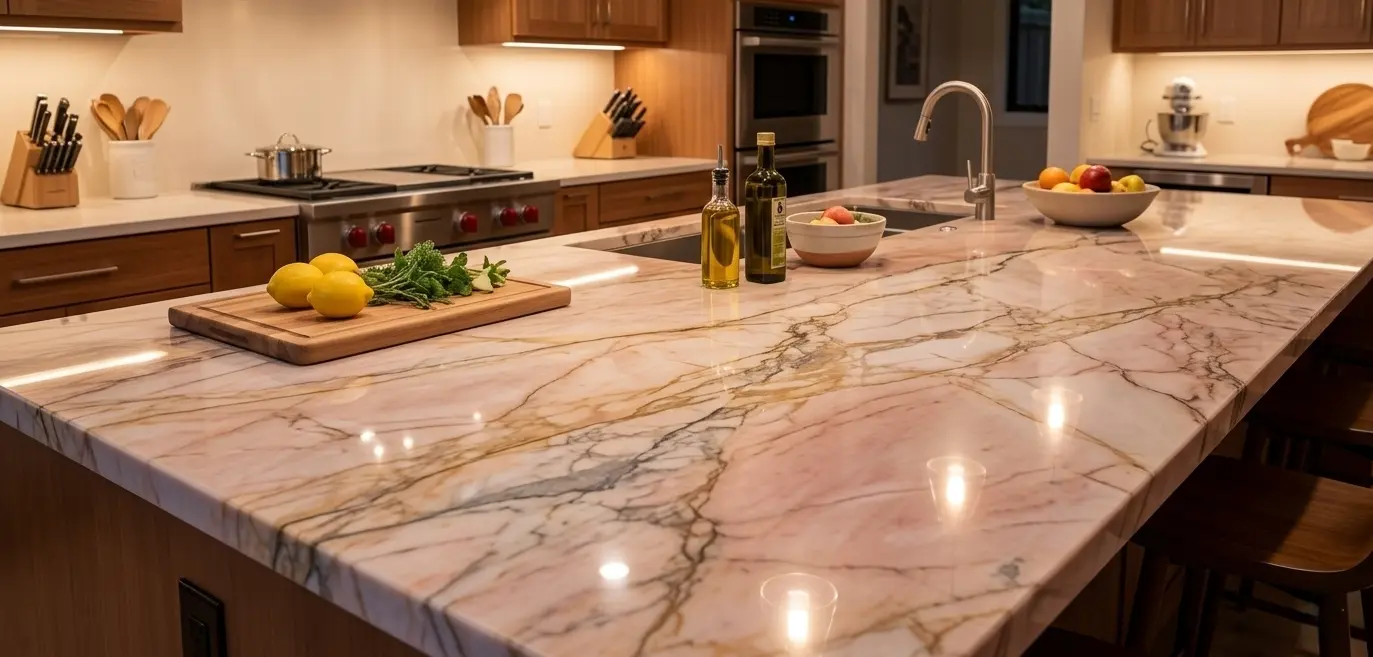
Yes, quartzite can be pink, and the color comes from trace amounts of iron oxide minerals, primarily hematite, that become trapped in the stone's quartz crystals as it forms. Depending on how much iron was present, pink quartzite ranges from a soft, barely-there blush to a deeper rose or salmon tone, with sweeping veining that makes every slab unique. For homeowners in Incline Village, NV researching natural stone near Lake Tahoe, pink quartzite offers a naturally formed alternative to the whites and grays most commonly associated with the material.
What Gives Pink Quartzite Its Color
Quartzite starts out as sandstone. Over millions of years, heat and pressure recrystallize the sand grains into a dense network of interlocking quartz crystals, eliminating the original grain boundaries in the process. That transformation from sandstone into a durable, weather-resistant dimension stone is what separates quartzite from softer sedimentary materials, and it is also why quartzite tends to outperform other natural stones in everyday wear.
The color depends on what else was present in the original sandstone. Pure quartz is colorless to white. When hematite gets trapped in the crystal structure during metamorphism, it tints the stone pink, red, or a warm rust tone. Goethite, a related iron mineral, can contribute similar warm tones with slightly different undertones. Other trace minerals produce the grays, golds, greens, and blues found in quartzite from different quarry regions around the world. Because these minerals are never distributed perfectly evenly through the original sandstone, pink quartzite slabs often show sweeping veining and movement rather than a flat, uniform color. Some well-known trade names in the stone industry, such as Cristallo Pink or Rosa Diamante, describe specific quarry blocks known for their particular shade of blush and the pattern of their veining, though the underlying geology behind the color is the same iron oxide process across all pink quartzite varieties.
Pink Quartzite vs. Pink Quartz: They Are Not the Same Material
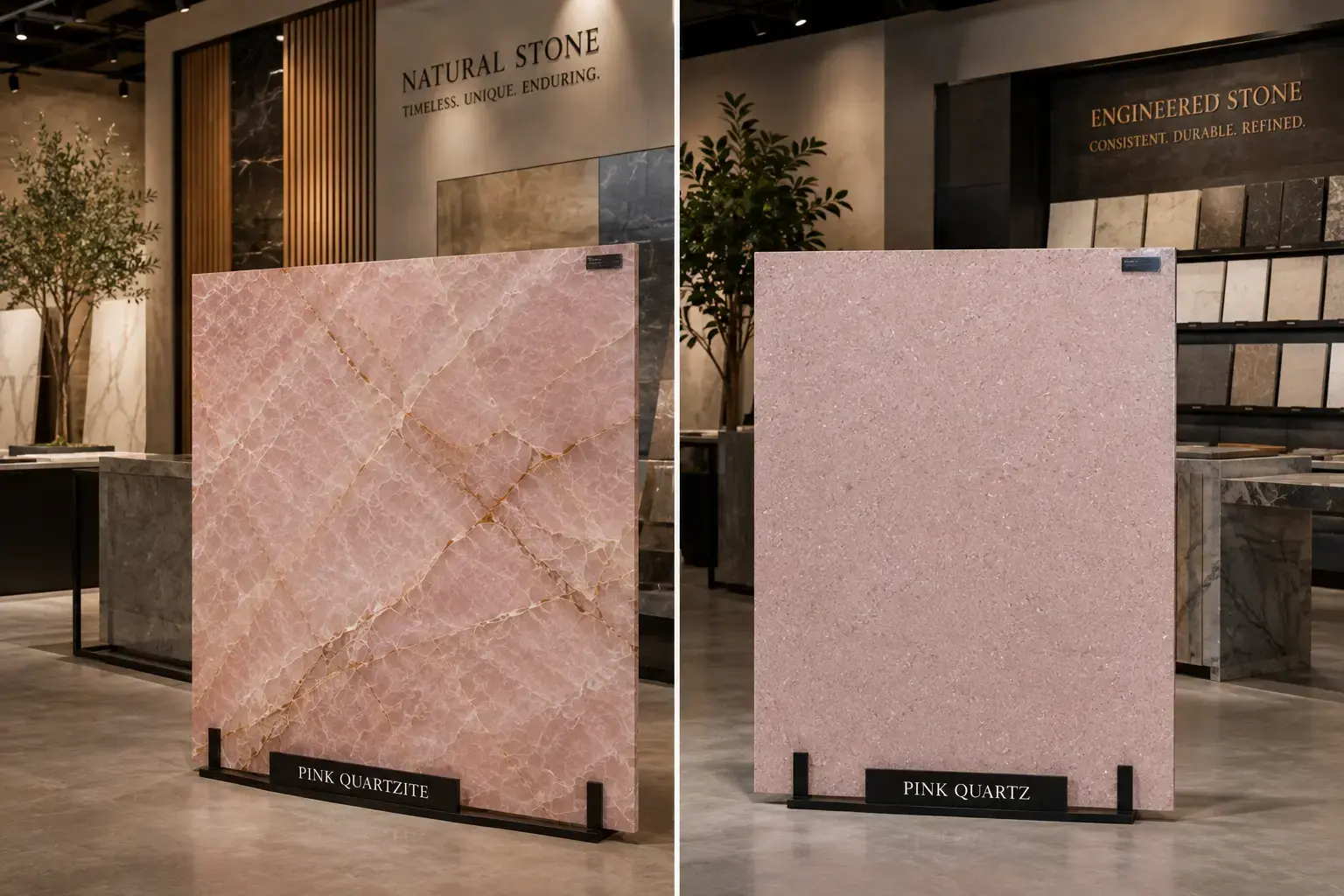
It's an easy mix-up. Pink quartzite is a natural, quarried stone formed through geological metamorphism. Engineered quartz, sometimes marketed as "rose quartz" or "pink quartz" countertops, is a manufactured surface made by combining ground quartz particles with resins and pigments. Both materials measure around 7 on the Mohs hardness scale, so hardness alone will not tell you which one you are looking at. The real difference shows up in the pattern. Engineered quartz repeats a consistent pattern across every slab from the same production run, since the color and veining are designed and manufactured. Pink quartzite, being a natural stone, has veining and color variation that shifts from one slab to the next, and sometimes across a single slab, because it reflects the exact mineral conditions present when that particular piece of sandstone metamorphosed. If a slab's veining, color variation, and one-of-a-kind pattern matter to you, that's the natural stone side of the comparison.
How Pink Quartzite Compares to Other Pink-Toned Stones
Pink quartzite is not the only natural stone that can carry a blush color. Pink and rose-toned marble exists as well, colored by similar trace minerals, but marble sits lower on the Mohs hardness scale and is more prone to etching from acidic foods and cleaners. Pink granite is another option, and while granite is durable, it tends to show a more speckled, uniform grain pattern rather than the sweeping veining typical of quartzite. Quartzite's combination of marble-like movement with granite-level hardness is part of what has made it a popular middle ground for homeowners who want a soft, natural color without giving up daily durability. When comparing pink stone options side by side, it helps to view a physical slab in person under different lighting conditions, since undertones and veining density can vary significantly even within the same stone category. To explore our complete offerings, visit our Reno showroom and see available stone options in person.
Finishes and Where It Works Best
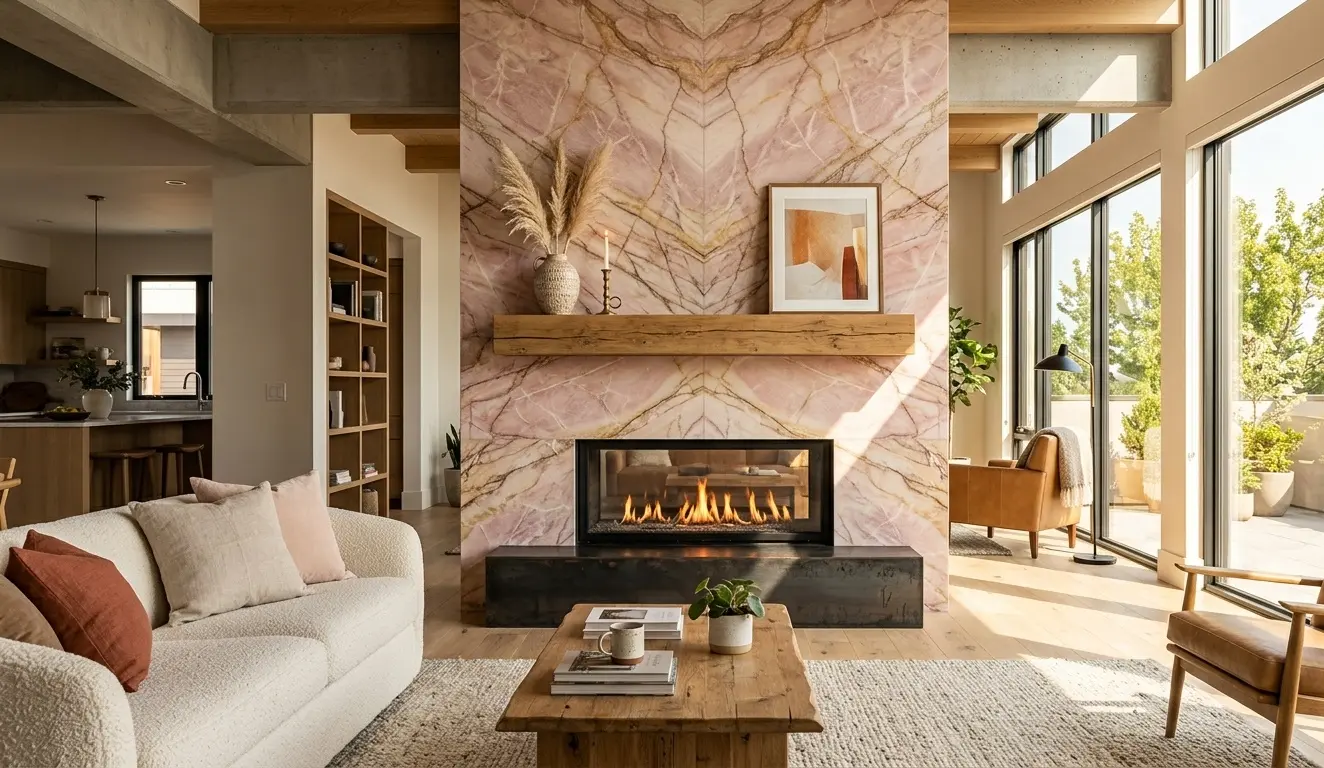
Pink quartzite is available in polished, honed, and leathered finishes. Polished brings out the stone's blush and cream tones with a high-gloss surface that reflects light well in kitchens and bathrooms. Honed delivers a soft, matte look that hides fingerprints and water spots more easily, which makes it a practical option for a busy kitchen island. Leathered adds a subtle texture that performs well in high-traffic areas and gives the surface a slightly tactile quality that some homeowners prefer for larger installations.
Because slabs run large, typically in the range of 55 by 110 inches up to 65 by 130 inches, a single piece can cover a kitchen island and surrounding counters without a seam, or run floor to ceiling on a bathroom vanity wall. That scale also opens up design techniques like bookmatching, where two adjacent slabs are cut from the same block and mirrored to create a symmetrical pattern across a fireplace surround or an entryway floor. The same qualities that make it a strong indoor material, hardness, low porosity, and heat resistance, carry over to fireplace surrounds, entryway floors, pool decks, and covered outdoor kitchens.
Pink Quartzite in an Incline Village Home
Incline Village sits above 6,350 feet on the north shore of Lake Tahoe, which means direct sun exposure is more intense here than it is at lower elevations. UV intensity increases by roughly 6 percent for every kilometer of elevation gained, and that stronger sun exposure is worth factoring into material choices for outdoor living spaces, patios, and pool decks that see direct light for much of the year.
For those applications, a honed or leathered finish on pink quartzite provides better slip resistance in wet conditions than a polished surface, and quartzite is generally freeze-thaw durable, though the exact product and installation system should be confirmed for freeze-thaw approval. Homes at this elevation also see a wider swing between daytime and nighttime temperatures than lower elevation towns nearby, which puts real stress on exterior building materials over time. Quartzite's low porosity and resistance to weathering make it a durable option for outdoor counters and living spaces exposed to those repeated seasonal swings.
Indoors, pink quartzite pairs naturally with the warm wood tones, brushed brass fixtures, and neutral palettes common in Tahoe basin homes, whether the goal is a lakefront great room or a ski chalet near Diamond Peak. The stone's blush undertone reads as warm rather than overtly colorful, which is part of why it works in both traditional mountain lodge interiors and more contemporary lake house designs without competing with other finishes in the room.
Caring for Pink Quartzite Over Time
Pink quartzite is low maintenance compared to many natural stones, but it is not entirely maintenance free. Routine cleaning with mild soap and water keeps the surface free of the grime and mineral deposits that can dull its finish over time. As a siliceous stone made mostly of quartz, it holds up better against everyday kitchen acids than calcareous stones like marble, though acidic cleaners such as vinegar or citrus-based products are still worth avoiding on any natural stone surface. Because quartzite has some porosity, even though it is low, sealing on a periodic basis helps maintain its stain resistance, particularly on kitchen counters where cooking oils, wine, and acidic foods are a regular presence. How often resealing is needed depends on the finish chosen and the amount of daily use the surface receives, with honed and leathered finishes sometimes requiring more frequent attention than polished surfaces due to their slightly more open texture. Outdoor installations in a mountain climate like Incline Village benefit from periodic inspection after winter, since seasonal temperature swings tend to wear on sealants faster than on the stone itself.
Conclusion
Pink quartzite's color is a geological accident rather than a design trend, formed by trace amounts of iron oxide locked into the stone millions of years before anyone thought about kitchen countertops. That origin is part of what makes it hold up so well over time, both in appearance and in performance. Its hardness and low porosity make it a practical choice for high-use surfaces, while its natural variation means no two installations look quite the same. For a home in Incline Village, where the elevation and mountain climate put real demands on outdoor materials, pink quartzite's durability matters just as much as its color. Understanding how the stone forms, how it differs from engineered alternatives, and how it compares to other pink natural stones makes it easier to know what you are actually choosing when a slab catches your eye.
If you're weighing pink quartzite against other natural stone options for a home in Incline Village or elsewhere around the Tahoe basin, our Reno showroom keeps current slab inventory on the floor to view in person. Schedule a free design consultation to see the stone's veining and color range firsthand before choosing a slab.
Nova Tile and Stone, Reno Showroom
12835 Old Virginia Rd, Suite 24, Reno, NV 89521
Phone: (775) 331-6682
Frequently Asked Questions
Yes. Iron oxide minerals like hematite get incorporated into the stone as it forms, producing shades that range from a soft blush to a deeper rose depending on how much iron was present.
No. Pink quartzite forms naturally through geological metamorphism, while pink or rose quartz countertops are manufactured from ground quartz mixed with resin and pigment. One reflects natural geology, and the other is a factory-made design.
It sits at roughly 7 on the Mohs hardness scale, putting it ahead of marble and in line with granite for everyday scratch and wear resistance.
Yes, particularly in a honed or leathered finish for better footing in wet or snowy conditions. Its density and low porosity also help it manage the seasonal swings that come with higher elevations.
Periodic sealing helps the stone resist staining, and how often that's needed depends on the finish and how much daily use the surface sees, with kitchen counters generally needing more frequent attention.
Note: Some images on this page may be conceptual renderings created to illustrate design possibilities and may not depict actual installations.