Blue quartz and blue quartzite are two different materials often confused with each other. Blue quartz is an engineered stone made from crushed quartz mixed with resin and blue pigment, while blue quartzite is a natural stone that gets its blue color from mineral inclusions formed underground over millions of years. The two differ in cost, durability, heat resistance, and maintenance, which matters for homeowners across North Lake Tahoe deciding between them for a kitchen or bath remodel.
North Lake Tahoe stretches along the northern crescent of the lake, taking in Tahoe City, Carnelian Bay, Tahoe Vista, Kings Beach, and Truckee just over the ridge, a region described by Visit California as centered on the lake's northern shoreline communities. The area sits at roughly 6,225 feet in elevation and is ringed by Sierra Nevada peaks, and its long winters and lake views shape a lot of what homeowners look for in a remodel, with blue tones coming up often as a way to echo the water itself. But before choosing between engineered blue quartz and natural blue quartzite for a North Shore home, it helps to understand what actually separates them.
Why Blue Tones Show Up So Often in North Shore Remodels
Kings Beach sits right at lake level and is known locally for having the largest sandy beach on the north shore, along with a reputation for catching more sun earlier and later in the day than some neighboring towns tucked behind the ridgeline. That extra light plays well with blue surfaces, since a well-lit kitchen shows off the depth and sparkle in a blue slab far better than a dim one does, which is part of why the color choice holds up so consistently in this specific stretch of the North Shore.
What buyers don't always realize going in is that "blue quartz" is really a stand-in for two very different products once you start shopping. Understanding which one you're actually looking at changes almost everything about cost, upkeep, and where it belongs in your home.
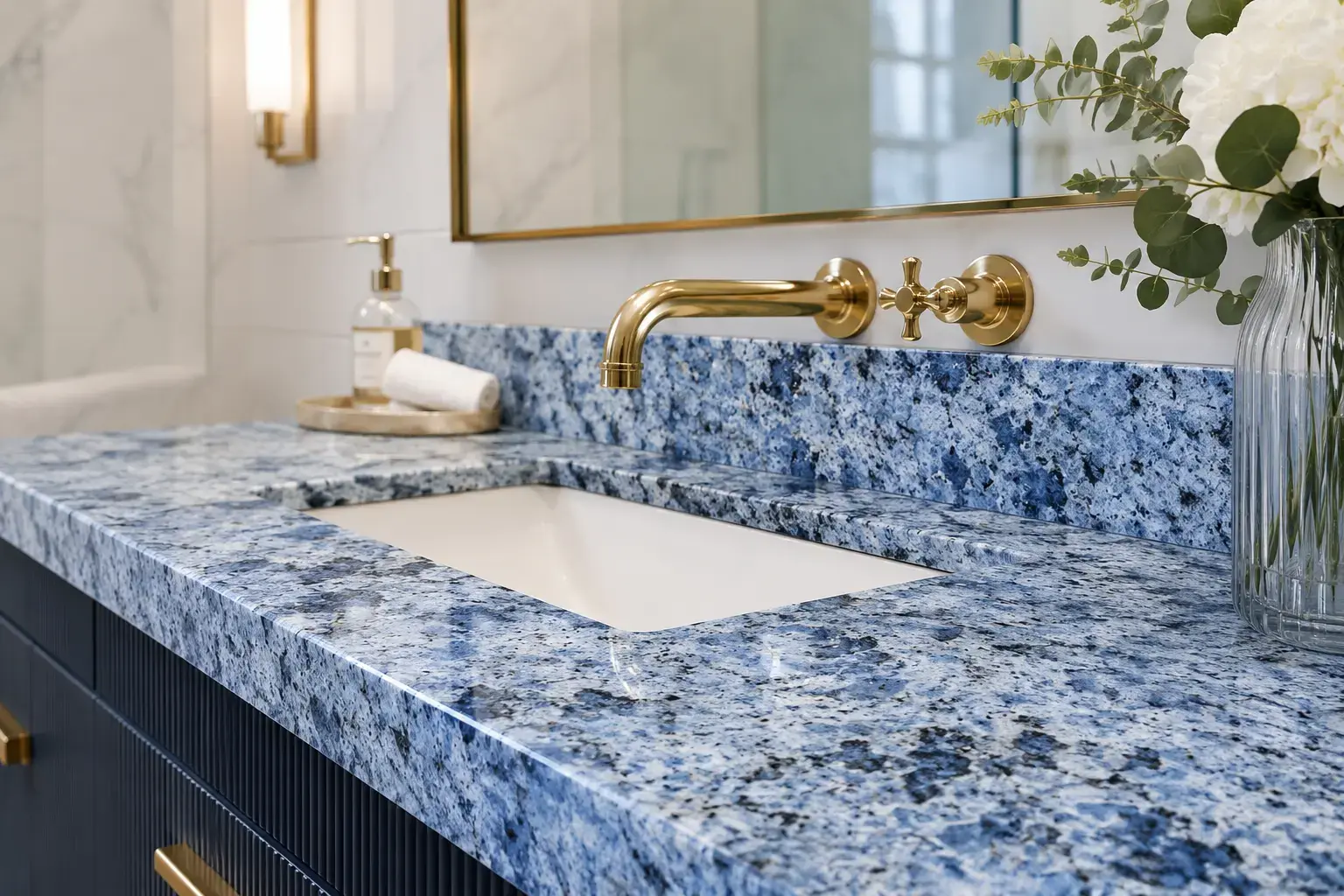
Engineered Blue Quartz: What It Is and Where It Works Best
Engineered quartz is manufactured rather than quarried. Ground quartz crystal gets combined with resin and pigment, then compressed into slabs under heat and pressure. Because the color comes from the manufacturing process rather than natural mineral content, engineered blue quartz is available in a much wider and more consistent color range than anything found in nature, everything from a soft, washed-out aqua to a near navy that reads almost black in low light. Slab-to-slab variation is minimal, which matters if you're ordering material sight unseen or trying to match an existing installation later.
The practical upside is low maintenance. Engineered quartz doesn't need sealing, ever, and it resists staining from the kinds of things that show up on a kitchen counter regularly: wine, coffee, citrus, oil. It also holds up well to daily scratching from knives and cookware, which makes it a forgiving choice for a busy kitchen that sees a lot of use.
The tradeoff is heat sensitivity. Engineered quartz can discolor, crack, or develop a permanent ring if a hot pan or pot sits directly on the surface for too long, since the resin binder that holds the material together doesn't tolerate sustained heat the way a fully natural stone does. Keeping a few trivets within reach solves this in practice, but it's worth knowing going in rather than assuming the surface can take direct heat.
Engineered quartz also isn't recommended for prolonged direct sun exposure outdoors. Materials research on engineered stone composites notes that the polymer resin used to bind these surfaces is prone to degradation from UV radiation and sustained heat, which is part of why manufacturers generally limit these products to indoor use. This holds true even in covered outdoor spaces, since indirect and reflected UV still reach the surface over years of exposure. It's best kept to interior applications, kitchen counters, vanity tops, and similar indoor surfaces, rather than an exterior kitchen or bar top.
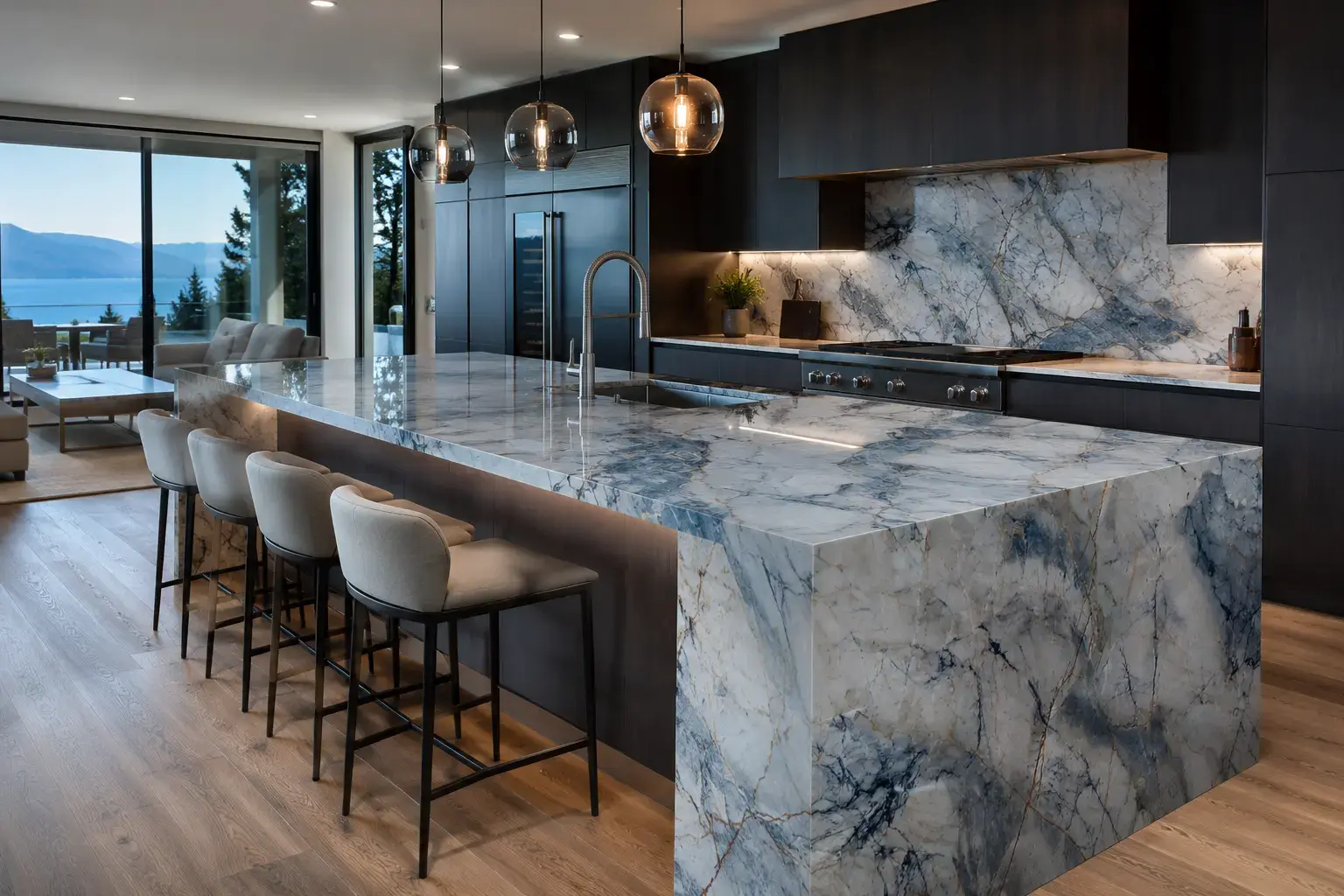
Natural Blue Quartzite: A Rarer, Harder Material
Natural blue quartzite is quarried stone, and it tells a very different story. True blue quartzite gets its color from mineral inclusions rather than added pigment, which means every slab is genuinely one of a kind. No two pieces will match perfectly, and the veining and color variation that shows up across a slab is part of the appeal for homeowners who want something that can't be replicated in a factory.
Quartzite typically rates around 7 on the Mohs hardness scale, sometimes higher, compared to granite's roughly 6 to 6.5. That gap is modest in practical terms, since both stones resist everyday scratching well, but it does show up over years of heavy use, particularly at edges and corners. Quartzite also handles heat noticeably better than engineered quartz, since it doesn't carry a resin binder that can scorch or crack, though no natural stone is fully immune to thermal stress from rapid temperature swings.
The one maintenance step engineered quartz skips that natural quartzite doesn't is sealing. Because natural stone has a more open structure at a microscopic level than a fully manufactured surface, it needs a penetrating sealer applied periodically, generally about once a year depending on the specific stone's porosity and how it's used, to keep moisture and staining agents from working their way in.
Clearing Up the "Blue Tahoe" Name
One naming detail comes up often enough in North Shore kitchens that it's worth addressing directly. A stone marketed under the name Blue Tahoe quartzite is not quarried anywhere near the lake. It's a Brazilian stone, pulled from a bedrock deposit thousands of miles away, and the name is a nod to its blue-gray coloring rather than any geographic connection to the region. Homeowners searching for a "local" stone to match their Tahoe property sometimes assume the name means the material comes from here, and it's an easy assumption to make given how well the color matches the lake itself. It's a striking stone regardless of where it's quarried, with a blue-toned, silver background and soft gray veining running through it, but it's worth knowing the actual origin before you build a design decision around the name alone.
Freeze-Thaw Considerations for Exterior Applications
For homes higher up toward Truckee, or lakefront properties in Kings Beach and Tahoe Vista that see heavy snow load and repeated freezing, freeze-thaw cycling becomes a real consideration if you're thinking about blue stone for anything outdoors, an outdoor kitchen counter, a fire pit surround, or an exterior bar top. Water that gets into small pits or fissures in natural stone expands as it freezes, and repeated cycles of freezing and thawing over a winter season can widen cracks that started out barely visible. ASTM International's dimension stone committee notes that resistance to this kind of cycling varies widely across stone types, which is why testing standards for freeze-thaw performance are still being refined industry-wide.
Denser, less porous natural quartzite generally tolerates this kind of cycling better than softer or more porous stones, but no natural stone installed outdoors at this elevation should go in without proper sealing, and it's worth having any exterior stone surface checked each fall before the snow arrives, with resealing done as needed. Engineered quartz isn't built for this kind of exterior exposure at all given the UV and temperature sensitivity covered above, so for anything outdoors in this climate, natural stone is generally the more appropriate direction regardless of color.
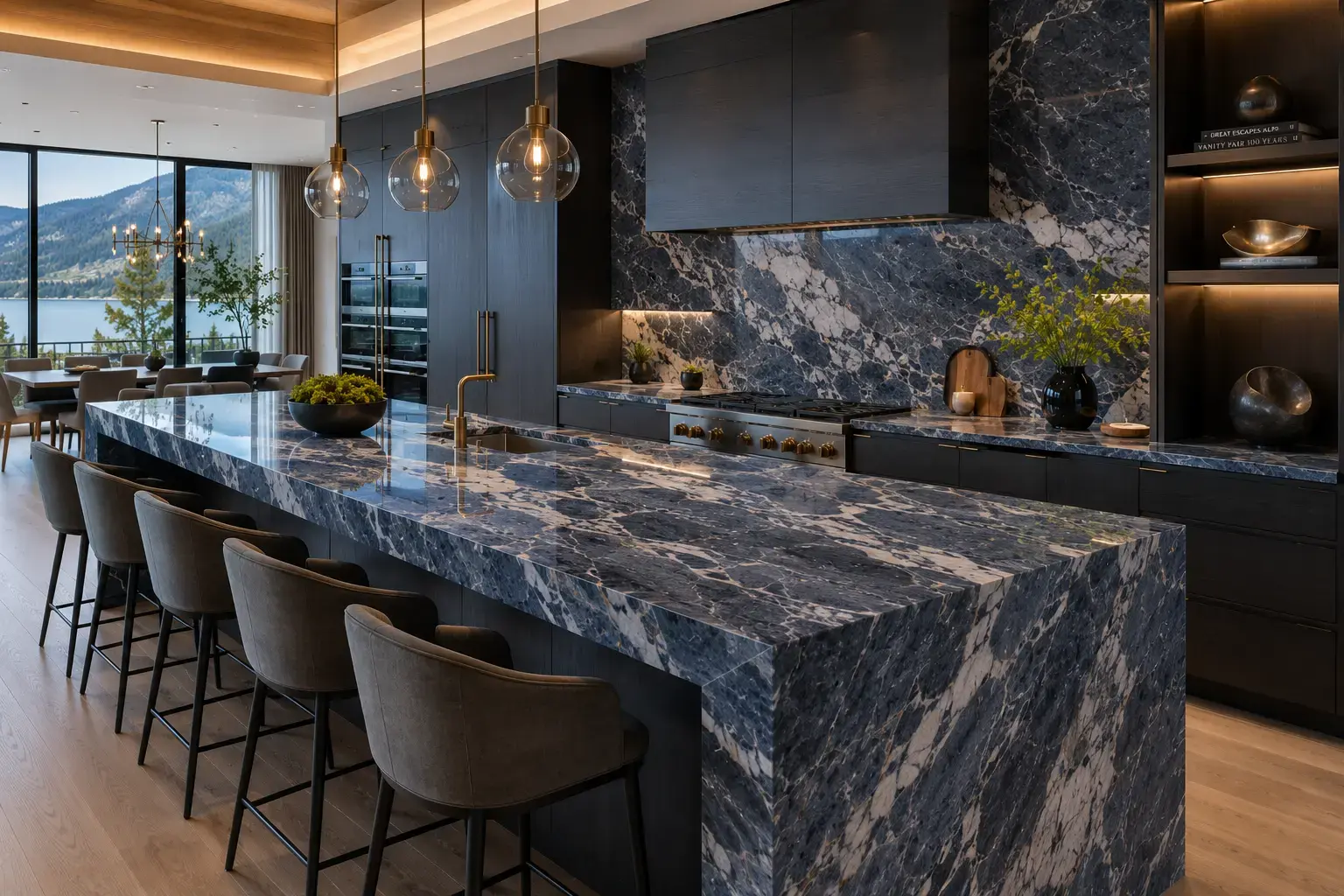
Choosing Between the Two for Your Project
If you're trying to decide between engineered blue quartz and natural blue quartzite for a North Lake Tahoe kitchen or bath, the decision usually comes down to a few practical questions rather than color preference alone, since both materials offer genuinely striking blue options. How much heat exposure will the surface actually see day to day? Is this an interior application or does it need to hold up outdoors? How much slab-to-slab consistency do you need if you're matching an island to perimeter counters, or matching a repair down the road? And how much are you willing to take on in terms of periodic sealing versus a surface that asks nothing of you once it's installed?
Homeowners who want the most consistent, lowest-maintenance option tend to land on engineered quartz. Homeowners who want a genuinely one-of-a-kind slab and better heat tolerance tend to gravitate toward natural quartzite, particularly for a statement piece like a waterfall island or a feature wall where the natural variation becomes part of the design rather than something to work around.
If you'd like to compare both materials side by side, visit our Reno showroom to explore Nova Tile and Stone's selection of quartz and quartzite slabs, along with other natural stone and porcelain slab offerings for countertops, backsplashes, fireplace surrounds, feature walls, flooring, and outdoor kitchens. You can also schedule a design consultation before your visit to discuss your project and view slabs that best match your style and application.
Working With Our Reno Showroom
Our Reno showroom carries both engineered quartz and natural stone slabs, including quartzite, so you can see and compare the two materials side by side rather than choosing between them based on photos alone. As a direct stone importer and a family-owned business, we're able to bring in a wide range of natural stone options rather than working from a limited catalog, and our team can walk you through the tradeoffs between engineered and natural material for your specific project, whether that's a kitchen remodel in Kings Beach or a bathroom vanity update in Tahoe City.
You can find us at 12835 Old Virginia Rd, Suite 24, Reno, NV 89521, or reach the showroom directly at (775) 331-6682.
Free design consultations are available if you want help narrowing down color, finish, and material before committing to a slab, and tile samples are available to take home for one dollar each so you can see how a material actually reads in your own lighting before making a final decision. For countertop and slab materials like the ones discussed here, we'd recommend visiting the showroom directly or scheduling a consultation to view full slabs in person, since natural stone in particular varies enough from piece to piece that a small sample doesn't always tell the full story.
Conclusion
The choice between blue quartz and blue quartzite in a North Lake Tahoe home comes down to where the surface will live and how it will be used day to day. Engineered quartz suits a busy interior kitchen where consistency and low upkeep matter most. Natural quartzite suits a homeowner who values a slab that can't be replicated elsewhere and who doesn't mind an annual sealing routine in exchange for better heat and weather tolerance.
Whichever direction a project takes, it's worth remembering that a name like "Blue Tahoe" describes a look, not a location, so it pays to ask a fabricator direct questions about origin, hardness, and care before settling on a slab.
Frequently Asked Questions
Ask the fabricator or supplier for the country of origin and a slab photo before ordering, since reputable dealers will readily confirm this. A quick water absorption test on a sample piece also tells you how porous the specific slab is, which matters more for sealing needs than the name on the label.
Yes. Exterior installations generally call for a breathable, enhancing sealer rated for freeze-thaw exposure, rather than the standard indoor sealers used on kitchen counters, since indoor sealers aren't formulated to handle repeated moisture freezing inside the stone.
Yes. Indoor UV degradation is slower than outdoor exposure, but a quartz counter positioned under a skylight or beside floor-to-ceiling windows facing the lake will show yellowing years before an identical counter installed away from direct sun.
Yes, typically. Blue quartzite is rarer than most granite colors, and rarity plus import costs tend to push the price higher, similar to how any uncommon natural stone color commands a premium over more widely available options.
Acidic cleaners like vinegar or citrus-based sprays can dull the polish on natural quartzite over time and should be avoided in favor of a pH-neutral stone cleaner. Engineered quartz tolerates a wider range of household cleaners, but abrasive powders or scouring pads can still dull its polished finish on either material.
Note: Some images on this page may be conceptual renderings created to illustrate design possibilities and may not depict actual installations.