The best tile sizes for a small bathroom are 12x24 inch or 24x24 inch tile for floors and 3x6 inch subway tile or 1x1 to 2x2 inch mosaic for walls and showers. Larger tile formats reduce grout lines, which can make a small Sacramento bathroom feel more open. Smaller formats add texture and traction in wet areas like shower floors. The best choice depends on where the tile goes, how much natural light the room gets, and the room's overall layout.
Sacramento bathrooms in neighborhoods like Curtis Park, East Sacramento, Natomas, and South Sacramento often have modest square footage, and homeowners renovating these spaces commonly ask whether a bigger or smaller tile makes a small bathroom look larger. Both can work, but each serves a different purpose depending on where it's placed. Homeowners who want to see current options before deciding on a size can browse tile styles online at any point while reading through these considerations.
Why Tile Size Matters More in Small Bathrooms
In a larger bathroom, tile size is mostly an aesthetic choice. In a small bathroom, it affects how the room is perceived. Grout lines create visual breaks, and more breaks in a tight space can make the room feel busier and smaller than it actually is. Fewer, larger tiles reduce that visual clutter.
At the same time, small bathrooms often include curves, corners, and fixtures that require cutting tile to fit. Very large tiles can generate more waste and more visible cuts in these situations, so the layout of the specific room matters as much as the tile dimensions themselves.
Best Tile Sizes for Small Bathroom Floors
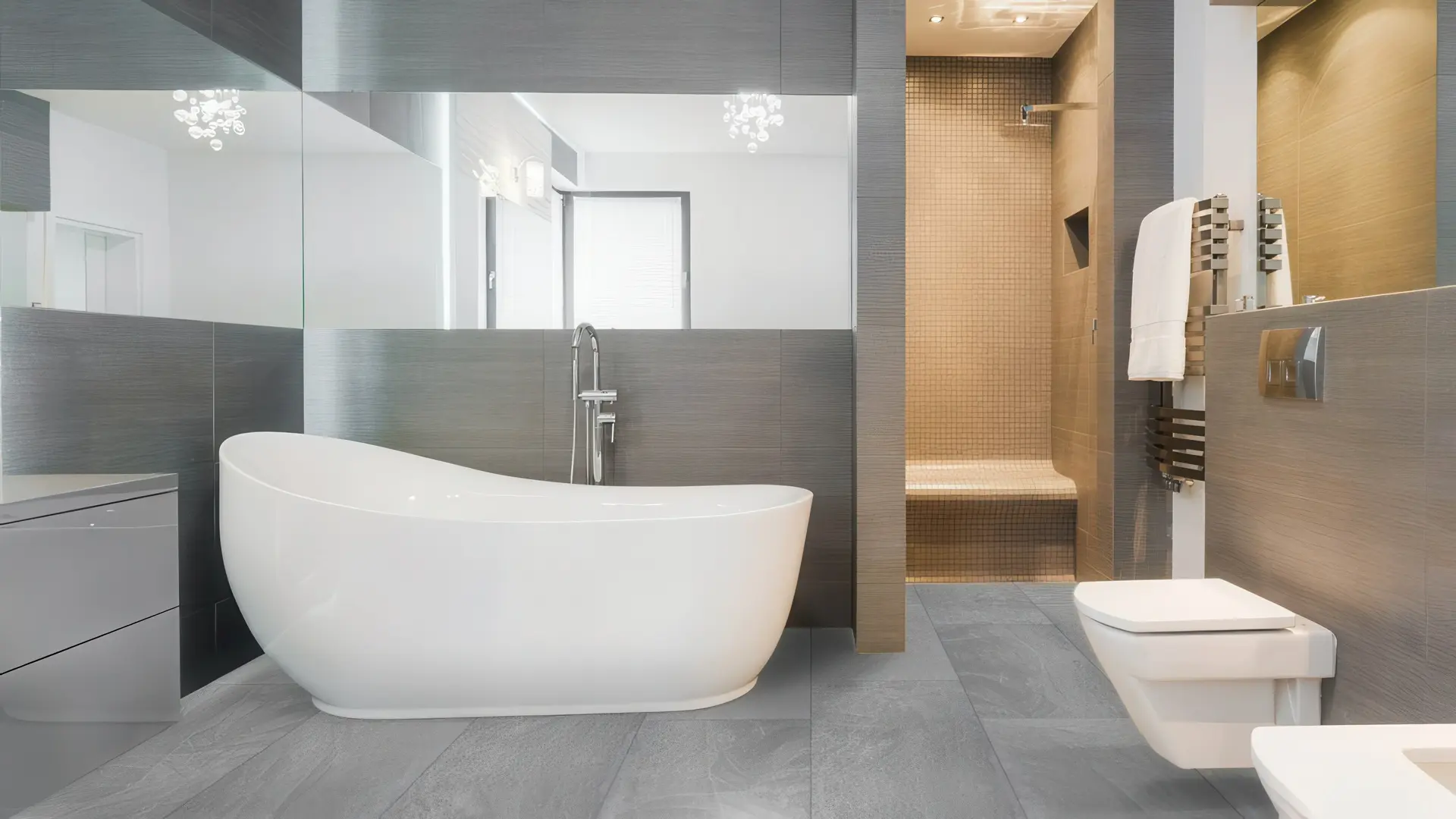
For bathroom floors, 12x24 inch tile is one of the most commonly recommended sizes for compact spaces. It is large enough to minimize grout lines but still manageable around toilets, vanities, and tub surrounds without excessive cutting. Installed in a running bond or straight lay pattern, 12x24 inch slate-look porcelain tile can visually stretch a narrow room, especially when laid lengthwise toward the room's longest sightline.
24x24 inch tile is another option gaining popularity in Sacramento bathroom remodels. This size works well in bathrooms with fewer obstructions, such as a simple layout with a single vanity and a separate shower or tub. Because it produces very few seams, 24x24 inch terrazzo-look porcelain tile tends to create a clean, uninterrupted floor plane.
Smaller formats, such as 12x12 inch tile, remain a practical choice for bathrooms with irregular shapes, angled walls, or multiple fixtures where a larger tile would require frequent cutting. This size also comes in a wide range of finishes, including textured and slip-resistant options that matter in a room that regularly gets wet.
Best Tile Sizes for Small Bathroom Walls
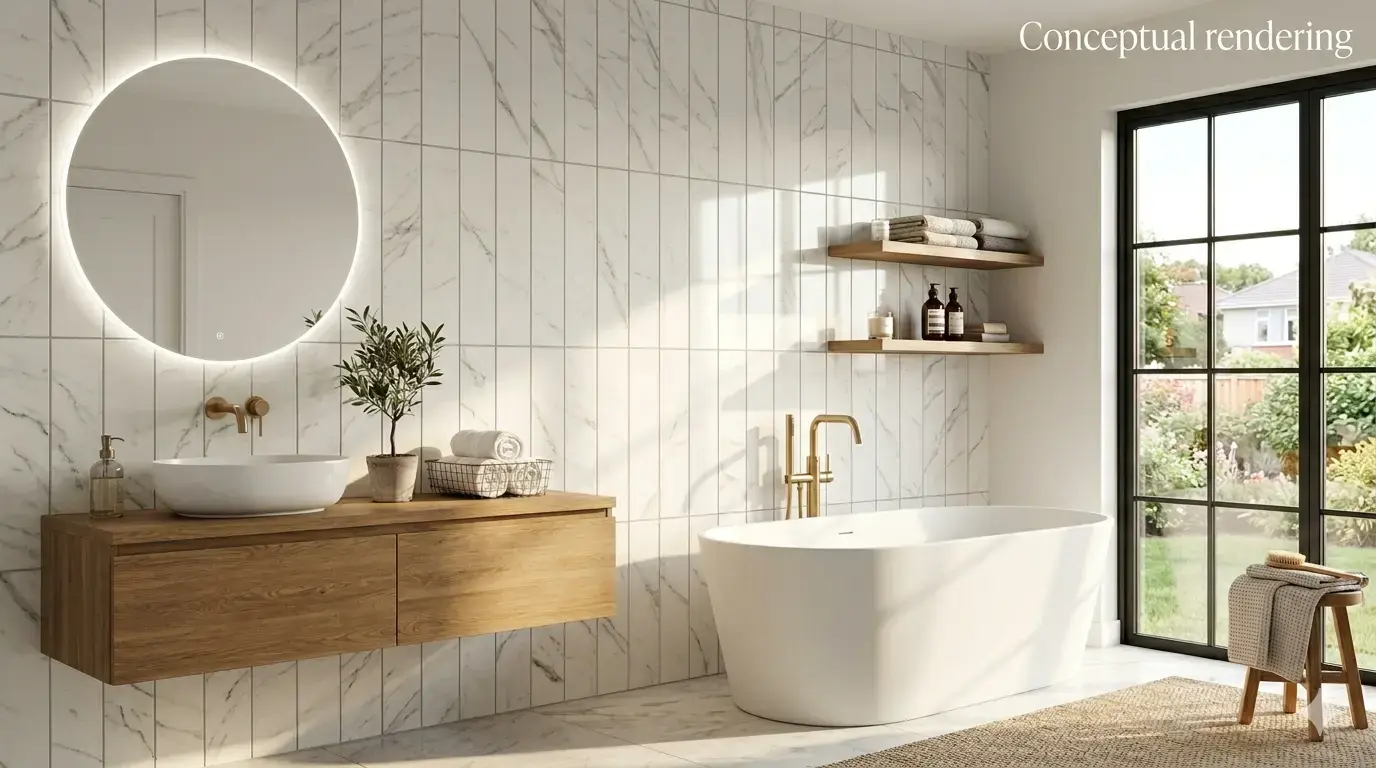
Wall tile in a small bathroom often benefits from a different approach than the floor. Classic 3x6 inch subway tile remains one of the most requested wall tile sizes, and for good reason. Its smaller scale keeps the wall visually light, and the horizontal grout lines can make a narrow bathroom feel wider when the tile is laid in a running bond pattern.
For a more contemporary look, larger format wall tile in sizes like 12x24 inch or even 24x48 inch is increasingly common. Fewer grout lines on the wall plane can make a small bathroom feel taller, particularly when the tile runs floor to ceiling. This approach works especially well in bathrooms with limited natural light, since fewer seams mean less visual interruption for the eye to track.
Mosaic tile, typically sheeted in sizes ranging from 1x1 inch to 2x2 inch chips, is well suited to accent walls and niches, particularly where a curved or irregular surface calls for a smaller, more flexible format than a larger tile can accommodate. For a niche or accent wall that calls for more visual interest than a straight mosaic, a hexagon marble-look porcelain tile offers a mid-scale option between a small mosaic chip and a full-size wall tile.

Tile Sizing for Small Showers
Shower spaces bring their own considerations. Shower floors typically call for smaller tile, such as 2x2 inch or smaller mosaic formats, because the additional grout lines improve slip resistance on a wet, sloped surface. Shower walls, by contrast, can often handle larger tile, including 12x24 inch or larger formats, since a vertical wet wall does not carry the same slip concerns as the floor underfoot.
A frequent approach in Sacramento bathroom remodels pairs a larger format tile on the shower walls with a small mosaic on the shower floor and pan. This combination balances the open, streamlined look on the walls with the practical traction needs of the floor.
How Layout and Pattern Affect the Perception of Size
Tile size is only part of the equation. The way tile is laid out also shapes how a small bathroom feels.
Diagonal layouts. Installing floor tile on a 45 degree angle can draw the eye toward the corners of the room, which can make a small floor plan feel larger than a straight grid layout.
Running bond versus stack bond. A running bond pattern, where each row is offset from the one below it, tends to feel more traditional and can help disguise minor variations in wall alignment. A stack bond, where tiles line up in a strict grid, reads as more modern and can emphasize a room's geometry, which works well in a small bathroom with clean, straight lines.
Grout color. Grout color has a significant effect on how tile size reads in a small space. A grout color that closely matches the tile minimizes the visual grid and lets the tile itself define the room. A contrasting grout color emphasizes each individual tile, which can be a deliberate design choice but tends to make a small room feel busier.
Common Mistakes When Sizing Tile for a Small Bathroom
A few sizing missteps come up often in small bathroom projects, and understanding them ahead of time can save homeowners from a redo down the line.
Going too large without checking the layout first. A 24x24 inch or larger tile can look striking in a showroom, but in a bathroom with an offset toilet, a narrow vanity wall, or an angled shower enclosure, that same tile may require so much cutting that the benefit of fewer grout lines is lost. Measuring the room and mapping out where cuts will fall before ordering tile helps avoid this.
Using the same small mosaic everywhere. Mosaic tile is well suited to showers and accent areas, but covering an entire small bathroom floor in mosaic can have the opposite effect from what most homeowners want, since the high number of grout lines can make the room feel more fragmented rather than more open.
Ignoring how the tile size interacts with the vanity and fixtures. A large-format floor tile paired with a narrow pedestal sink can look mismatched. Considering the scale of existing or planned fixtures alongside the tile size helps keep the whole room feeling proportional.
Overlooking slip resistance in wet areas. A tile that looks appropriate in a photo may not have the surface texture needed for a shower floor or a bathroom that sees frequent moisture. Checking a tile's slip resistance rating against published ANSI tile standards, not just its size, matters for shower floors and areas just outside the shower or tub.
Popular Tile Materials for Small Bathroom Projects
Tile size decisions often go hand in hand with material choice, and homeowners can explore current tile options to compare formats side by side. Porcelain tile is a frequent choice for small bathroom floors and walls because it is available in the full range of sizes discussed here, from small mosaics to large-format planks and squares, and certified porcelain tile holds up well in a room that sees regular moisture. Ceramic tile is another common option, particularly for wall applications like subway tile, and it is generally available at a lower price point than porcelain in comparable sizes.
Natural stone tile, including options like marble or travertine, is also used in small bathrooms, though it typically requires periodic sealing to help protect against staining in a wet environment. Homeowners considering natural stone tile for a small bathroom floor or shower should factor in the ongoing care that stone surfaces need compared to porcelain or ceramic.
Some homeowners also mix materials within the same small bathroom, such as a porcelain tile floor with a ceramic subway tile wall, or a natural stone accent within a porcelain shower surround. Mixing materials can work well as long as the tile sizes and grout lines are planned together so the transitions between surfaces feel intentional rather than accidental.
Working with an Existing Small Bathroom Layout
Most small bathroom remodels are not starting from a blank slate. Plumbing locations, door swings, and window placement are often fixed points that shape which tile sizes will actually work in the space. A bathroom with a shower-tub combination along one wall and a vanity along another has different sizing needs than a bathroom with a walk-in shower in one corner.
Sketching the room's actual dimensions and marking where tile seams will land, before committing to a size, is one of the more useful steps in this process. This is especially true for bathrooms with awkward angles, half-walls, or a toilet tucked into a corner, where a tile size that works well on paper may create more cut pieces than expected once it meets the real geometry of the room.
Choosing the Right Format for Your Bathroom
There is no single tile size that works best for every small bathroom. A narrow galley-style bathroom benefits from different sizing decisions than a small but squared-off powder room. Ceiling height, window placement, and the location of fixtures all factor into which tile size will perform best both visually and practically.
Homeowners weighing these decisions often find it helpful to look at physical samples in the space itself, under the room's actual lighting, before finalizing a size and finish. A tile that reads as light and airy under showroom lighting can look different once installed under a bathroom's fluorescent or LED fixtures.
Bringing It Together
Choosing tile sizes for a small bathroom comes down to balancing visual openness with the practical needs of a wet, high-traffic space. Larger formats on the floor and walls reduce grout lines and can make a compact room feel more spacious, while smaller formats and mosaics remain the right choice for showers, floors, and any surface where slip resistance and flexibility around curves and fixtures matter most.
Our team at Nova Tile and Stone works with Sacramento homeowners to think through these decisions room by room, matching tile size, pattern, and finish to the specific layout of each bathroom. Since lighting can change how a tile size and finish read once installed, we offer a $1 sample program so homeowners can order samples shipped free to their door and view options under their own bathroom lighting before deciding. We welcome the chance to schedule a design consultation in person at our showroom at 6100 Warehouse Way in Sacramento, and homeowners planning a project can reach our team at (916) 913-6682 to talk through sizing, finish, and sample options for their space.
Note: Some images on this page may be conceptual renderings created to illustrate design possibilities and may not depict actual installations.
Frequently Asked Questions
12x24 inch tile is commonly recommended for small bathroom floors because it reduces the number of grout lines compared to smaller tiles while remaining manageable to install around fixtures like toilets and vanities.
Larger tile can make a small bathroom feel more open because it creates fewer grout lines, which reduces visual clutter on the floor and walls. The effect is most noticeable when large tile is paired with a grout color close to the tile's own shade.
Small mosaic tile, typically 2x2 inches or smaller, is the standard choice for shower floors. The additional grout lines improve traction on a wet, sloped surface, which matters more for safety than it does on a flat bathroom floor.
Yes, using the same tile size on the floor and walls is a common approach and can create a cohesive, uninterrupted look, particularly when the tile runs from floor to ceiling. Many homeowners do choose a smaller format for the shower floor specifically for slip resistance, even when a larger tile is used elsewhere.
Subway tile, typically sized 3x6 inches, remains a widely used option for small bathroom walls. Its smaller scale and classic proportions work in a range of design styles, and laying it in a running bond pattern can help a narrow wall feel wider.