AT A GLANCE
- Porcelain is generally the best fit for Sparks winters.
- Porcelain absorbs 0.50% water or less (ANSI A137.1).
- Dense granite and quartzite can suit freeze-thaw areas.
- Ceramic tile fits heated indoor rooms.
- Light, textured tile stays cooler in the sun.
- Outdoor tile needs a freeze-thaw rating.
IN THIS POST
- How Does Weather Affect Tile?
- Is Porcelain Tile Good for Cold Climates?
- Does Natural Stone Crack in Winter?
- Can Ceramic Tile Be Used Outside?
- Can You Install Tile in Cold Weather?
- How Often Should You Seal Tile?
- Tile Showroom Near Sparks, NV
- Conclusion
- Frequently Asked Questions
- Sources
Porcelain tile is generally the best flooring choice for homes in Sparks, NV, because its low water absorption rate, 0.50 percent or less under ANSI A137.1, resists the cracking that freeze-thaw cycles cause in more porous materials. Dense natural stone can perform nearly as well when the specific stone suits the application, but it requires more upkeep, while ceramic tile is better reserved for climate-controlled interior rooms rather than anywhere exposed to the outdoors.
Sparks sits in the Truckee Meadows at about 4,400 feet of elevation, between the Carson Range and the Virginia Range just east of Reno. Sparks has a high desert climate, with hot, dry summers reaching an average high of 91°F in July and cold winters where average nightly lows drop below freezing from November through March. That gap between summer heat and winter freeze, more than style or budget, should guide which tile you choose for a Sparks home.
How Does Weather Affect Tile?
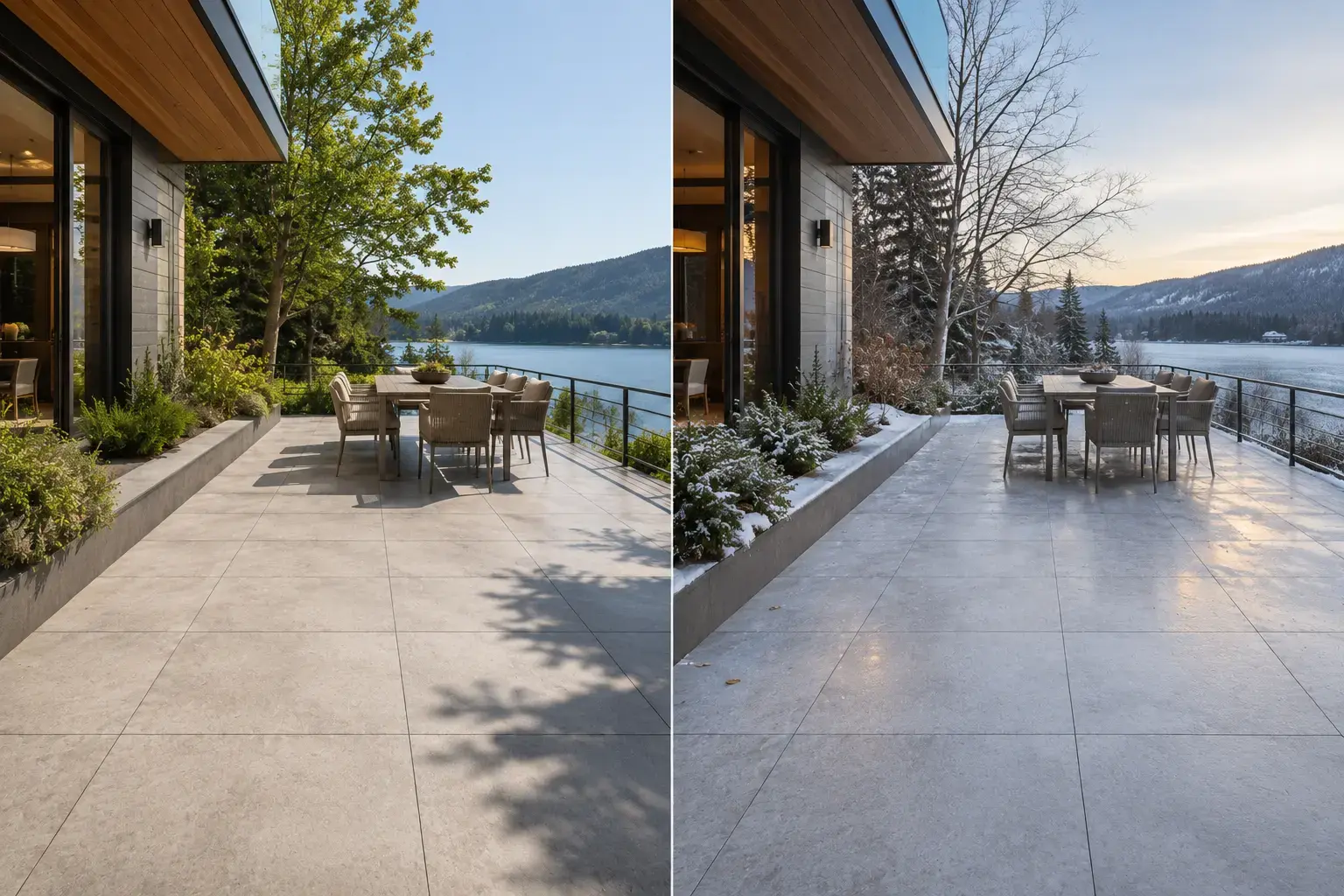
Weather affects tile in two ways: summer sun heats the surface, and winter freezes turn trapped moisture into ice that can crack tile and grout. Sparks gets both every year, and the fix for one season is not the fix for the other.
Heat itself is not the enemy. Porcelain and most ceramic tile resist fading and will not release fumes or odors the way some vinyl and synthetic flooring can when heated by direct sun. What does vary by material is how much a tile’s color and density cause it to absorb and hold onto heat. Darker, denser tile stores more solar heat and can stay uncomfortably hot after direct sun has moved off it, which matters most on an exposed south- or west-facing patio, entryway, or pool deck. Lighter, textured tile reflects more of that heat and sheds it faster once shade returns.
Winter is where the failure mode changes entirely. Every tile has some level of porosity, meaning it can absorb a small amount of moisture into its body or into the grout joints around it. When that moisture is trapped and the temperature drops below freezing, it expands as it turns to ice. That expansion pushes outward against the tile from the inside, which is what causes lifting, hairline cracking, and eventually full breakage over repeated freeze and thaw cycles.
The subfloor underneath adds a layer of stress that runs through both seasons. Concrete and wood expand and contract slightly as temperatures swing between a hot afternoon and a cold night, and that movement transfers upward into the tile and grout. A home in Sparks, with its wide gap between summer highs and winter lows, sees more of this movement over a year than a home in a milder coastal climate would.
Is Porcelain Tile Good for Cold Climates?
Yes. Porcelain tile is generally the best match for cold climates like Sparks’, because its low water absorption helps it resist freeze-thaw cracking. It suits most rooms in a Sparks home, especially entryways, mudrooms, and covered patios or other exterior spaces.
Its summer performance comes from the general tile properties already described above, but its winter performance is what’s actually backed by a specific industry standard. Porcelain that meets ANSI A137.1, American National Standard Specifications for Ceramic Tile, is tested under ASTM C373 and must show a water absorption rate of 0.50 percent or less to qualify. Industry guidance treats porcelain that meets this threshold as well suited to exterior freeze-thaw locations, provided the manufacturer rates the tile for exterior use and it is installed with proper drainage and movement joints. That low absorption is why porcelain resists the cracking described above far better than more porous tile.
The Tile Council of North America notes that a product generally needs to be rated by its manufacturer for exterior or freeze-thaw use before it should be installed anywhere exposed to those conditions, since not every porcelain or ceramic tile on the market is tested or intended for it. A tile with a technical data sheet that does not mention freeze-thaw performance should be treated as unsuitable for an exterior application, regardless of how it performs indoors.
Does Natural Stone Crack in Winter?
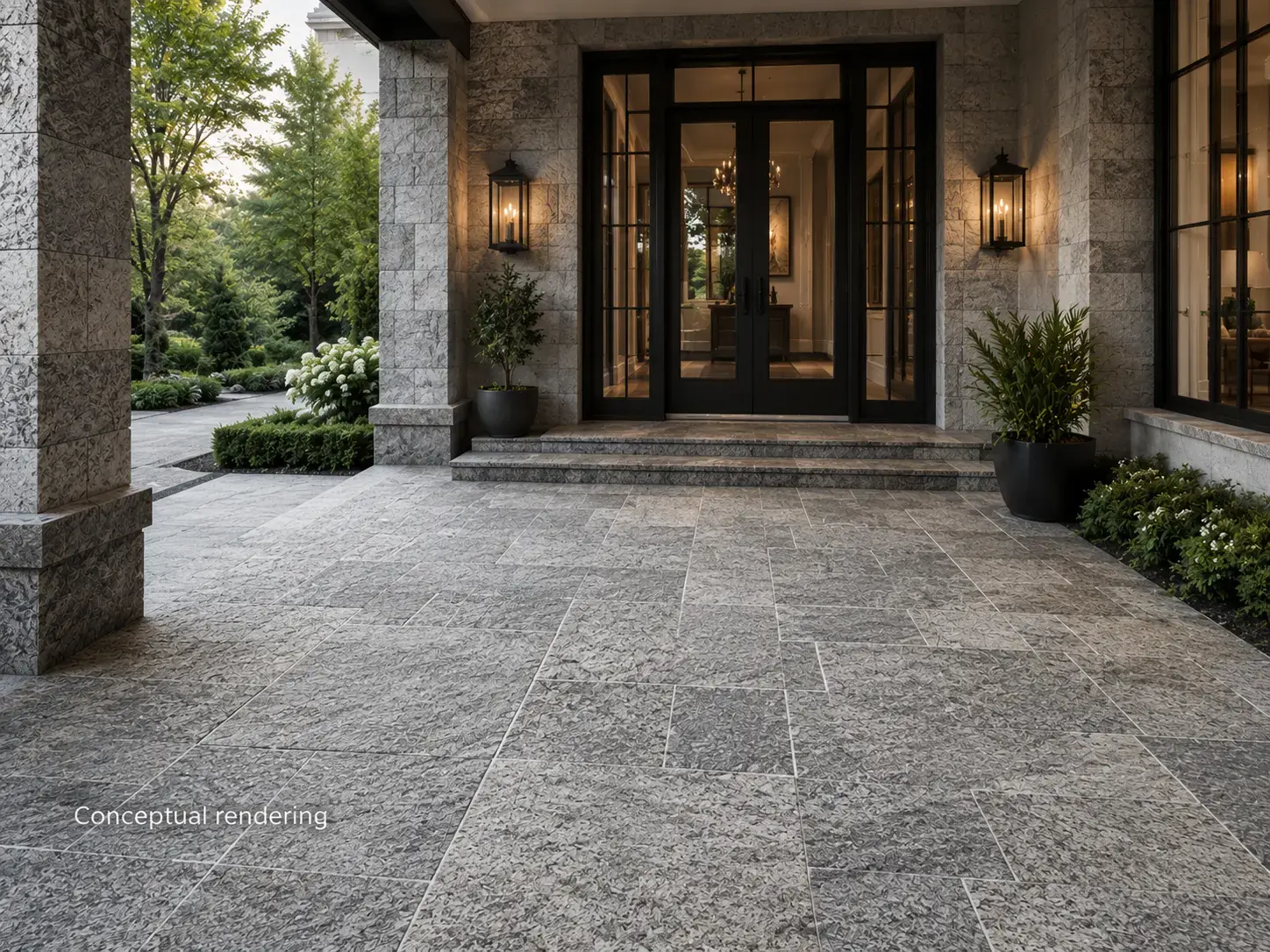
Dense natural stone such as granite and quartzite can handle Sparks winters nearly as well as porcelain when the specific stone has low water absorption and suits the application. Softer, more porous stones carry more risk of cracking.
Many homeowners want that option for a fireplace surround, an accent wall, or an entryway with more visual weight than a manufactured tile can offer. The tradeoff is maintenance. Natural stone is generally more porous than porcelain, so sealing is often recommended to help limit moisture absorption, although sealing alone does not make a stone freeze-thaw resistant. Softer, more porous stones such as some marbles and travertines carry more freeze-thaw risk where moisture exposure is regular, like an exterior walkway or a pool deck, so confirm that the specific stone suits that use.
Can Ceramic Tile Be Used Outside?
Ceramic tile is a poor fit for outdoor spaces in Sparks, since winter freezes can crack its more porous body. It works best in heated, climate-controlled rooms such as a bathroom, laundry room, or kitchen.
Ceramic is more porous than porcelain by nature, which makes it a fine and often more affordable option for those interior rooms, since indoor heating keeps temperatures stable year-round. Unheated garages and three-season rooms are a poor fit for the same reason as the outdoors, since they see Sparks’ winter swings too. The material itself is not the problem; the mismatch between where it is installed and what it is asked to withstand is.
Can You Install Tile in Hot or Cold Weather?
Yes, as long as the temperature stays within the mortar manufacturer’s range while the tile sets and cures. Summer heat creates the opposite problem by drying mortar out too fast. Picking the right material only solves half the problem, since installation conditions cut both ways across a Sparks summer and winter.
Setting-material manufacturers commonly recommend installing tile or stone between about 50 and 90 degrees Fahrenheit, and high heat with low humidity can cause cement-based mortar to dry out and skin over before the tile is even set, weakening the bond, which is why installers often work early mornings or keep materials shaded during peak summer heat. Cold weather creates the opposite problem. Most dry-set mortars require a working temperature of at least 40 degrees Fahrenheit, held for 72 hours after installation, to cure properly. A polymer-modified thin-set mortar and a polymer-enhanced grout are generally the better choice for a Sparks project, since both are designed to flex slightly with the substrate’s seasonal movement rather than resist it outright.
According to the Tile Council of North America's exterior installation guidance, expansion joints, the small gaps left between sections of tile to absorb that movement, are not optional in a climate with temperature swings like these. Skipping them can lead to cracking in a tile floor or patio.
How Often Should You Seal Tile?
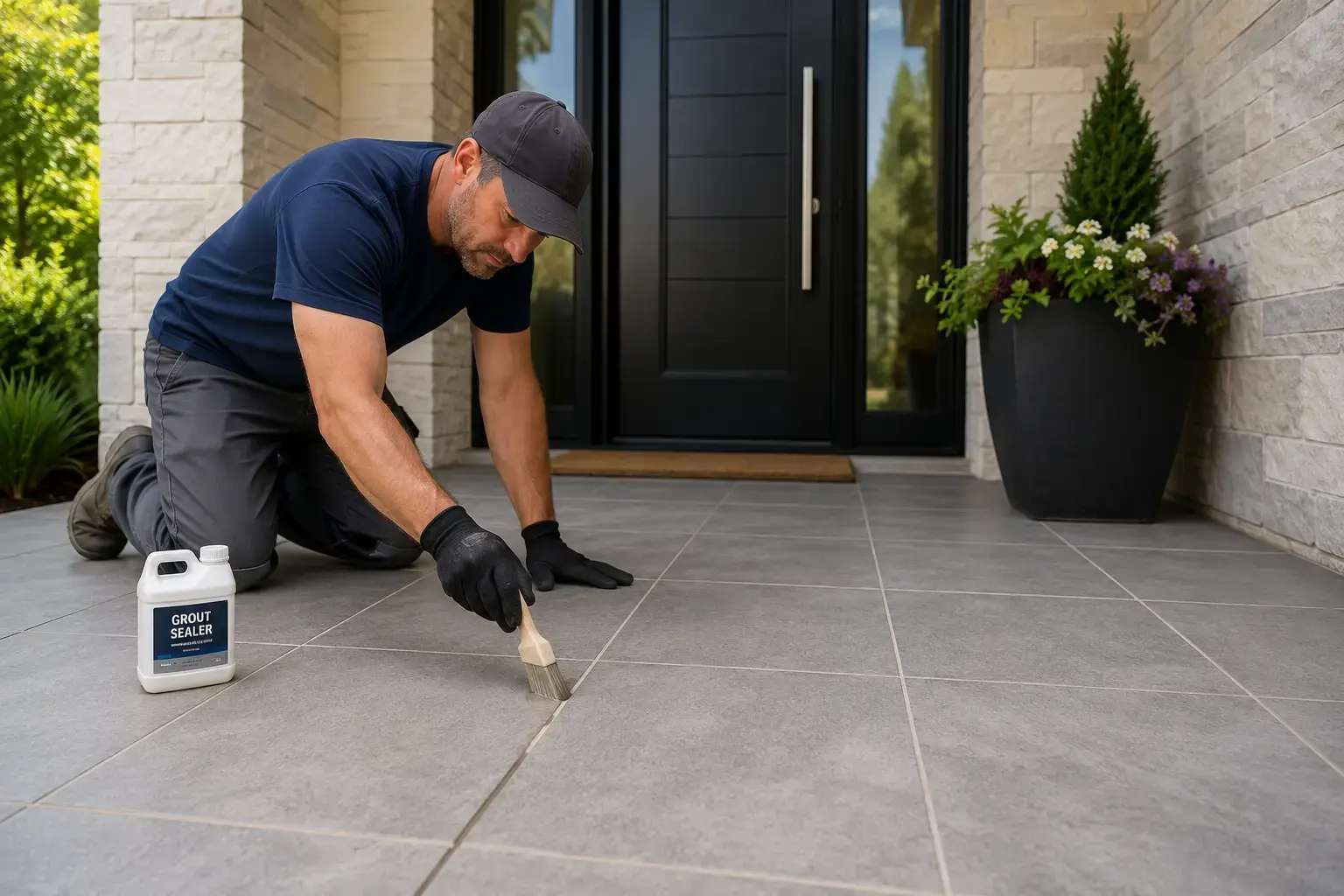
Cement-based grout is commonly resealed every one to two years on interior floors and more often outdoors, following the grout and sealer manufacturers’ guidance, while natural stone sealing needs vary by stone. Glazed porcelain tile generally does not need sealing.
A grout sealer helps reduce how much water soaks in before it has a chance to freeze, which matters more in a climate with a real winter than it would somewhere that never sees a hard freeze.
Natural stone sealing needs vary. Some stones may not need sealing at all, and for those that do, frequency depends on the stone’s natural porosity and how much foot traffic or moisture exposure an area sees, so a stone entryway or an exterior walkway generally needs resealing more often than a stone accent wall indoors. A simple water test, where a few drops are placed on the surface and timed to see how quickly they absorb, is a practical way to check whether a stone floor is due for resealing.
Sparks’ dry air and dust also affect day-to-day care. Grit tracked in from outside can act like sandpaper on a glossy or honed finish, so a regular sweep or dry mop before wet cleaning helps preserve the surface, particularly on natural stone. For exterior tile and stone, clearing snow and ice promptly rather than letting it sit and melt repeatedly on the same spot reduces how many freeze-thaw cycles that section experiences each winter.
Tile Showroom Near Sparks, NV
You can see porcelain, ceramic, and natural stone tile in person at our Reno showroom, which serves Sparks homeowners. Nova Tile and Stone serves Sparks from our Reno showroom at 12835 Old Virginia Rd, Suite 24, Reno, NV 89521, with easy access off I-580 and US-395. As a direct stone importer and family-owned retailer, we carry porcelain, ceramic, and natural stone options suited to Sparks’ climate. Free design consultations are available to help match a tile to both the room it is going in and the conditions it needs to handle. You can reach the showroom at (775) 331-6682.
Conclusion
Choosing tile for a Sparks home comes down to matching the material to the two conditions it will actually face, months of dry heat where color and density affect comfort underfoot, then hard overnight freezes once winter sets in where water absorption determines whether a tile cracks. Porcelain remains the safest default across both, natural stone is a reasonable upgrade that adds a sealing commitment, and ceramic is best kept to climate-controlled interior rooms. Just as important as the material itself is getting the installation right in whichever season the work happens, since mortar and grout fail differently in summer heat than in winter cold, and proper drainage, movement joints, and routine care afterward help keep a floor from cracking a year or two down the road.
Frequently Asked Questions
Interior tile in a heated, climate-controlled room rarely experiences the freeze-thaw cycling that causes cracking, since indoor temperatures stay well above freezing. The risk is concentrated in unheated spaces, exterior installations, and areas where moisture can reach the tile or grout and then freeze, such as an uninsulated garage or a covered but unheated patio.
Ask the retailer or manufacturer directly for the tile's technical data sheet rather than relying on the box or display sample. Look for specific language such as "frost resistant" or "rated for exterior use," and check whether the sheet references ASTM C1026, the freeze-thaw cycling test, in addition to the water absorption figure. A tile that only lists a water absorption number without any exterior or freeze-thaw language should be treated as interior-only.
Porcelain is generally the more budget-friendly option upfront and usually carries lower long-term maintenance costs, since glazed porcelain generally does not require sealing. Natural stone typically costs more initially and may add the recurring cost of resealing, though many homeowners consider that tradeoff worthwhile for the look of a specific stone.
Yes. Darker, denser tile absorbs more solar heat and stays uncomfortably hot underfoot well after direct sun moves off it, which matters most on south- or west-facing spaces. Lighter, textured tile reflects more heat and cools faster, usually the more comfortable choice for an exposed patio, pool deck, or entryway in a Sparks summer.
Yes. For an exterior application in a freeze-thaw climate, choose a grout its manufacturer rates for exterior and freeze-thaw use, such as a high-performance polymer-modified cement grout or an epoxy grout, rather than a basic cement grout. These products generally absorb less water and hold up better against repeated expansion and contraction.
SOURCES
- ANSI A137.1 porcelain water absorption, cold-weather mortar temperatures, and exterior movement joints (Ceramic Tile Education Foundation, via the National Tile Contractors Association) | https://www.tileletter.com/standards-and-methods-ensure-success-for-exterior-tile-installations/
- Tile Council of North America, Frost Resistance FAQ (ASTM C1026 and C373, manufacturer exterior ratings) | https://tcnatile.com/resource-center/faq/frost-resistance/
- Tile Council of North America, Exteriors FAQ (exterior-rated tile, freeze-thaw mortars, expansion joints) | https://tcnatile.com/resource-center/faq/exteriors/
- Natural Stone Institute, Care & Cleaning of Natural Stone | https://www.naturalstoneinstitute.org/consumers/care/
- Custom Building Products, TB78 Hot Weather Recommendations (manufacturer technical bulletin) | https://www.custombuildingproducts.com/wp-content/uploads/TB78-HOT-WEATHER-RECOMMENDATIONS.pdf
- U.S. Climate Data, Sparks, Nevada climate normals 1991–2020 | https://usclimatedata.com/climate/sparks/nevada/united-states/usnv0086
- Reno Tahoe Carson, City of Sparks | https://renothisweek.com/cityofsparks
Note: Some images on this page may be conceptual renderings created to illustrate design possibilities and may not depict actual installations.