The best tile choices for Elk Grove's indoor-outdoor living spaces are porcelain tile, porcelain pavers, natural stone such as travertine and slate, and wood-look porcelain, each suited to different combinations of climate exposure, maintenance, and indoor-outdoor coordination. Elk Grove's hot, dry summers, occasional winter freezes, and heavy patio and pool use mean outdoor tile needs to handle sun exposure, temperature swings, and slip resistance, while indoor tile is chosen more for comfort underfoot and how it ties into the rest of the home. In this guide, we walk through each of these options and how to think about choosing them for your own indoor-outdoor layout.
Why Indoor-Outdoor Tile Decisions Are Different in Elk Grove
Elk Grove's climate brings hot, dry summers, occasional heavy winter rain, and a wide swing in daily temperatures during shoulder seasons. Tile installed outdoors here is exposed to direct sun, occasional freezing temperatures, and moisture from sprinklers, pool splash, or rain. Indoor tile has different priorities: comfort underfoot, ease of cleaning, and a look that ties into the rest of the home's design.
When a space is meant to flow from indoors to outdoors, whether through a slider, French doors, or a covered patio extension, the tile choice often needs to satisfy both sets of requirements at once, or at least coordinate visually between an interior and exterior product.
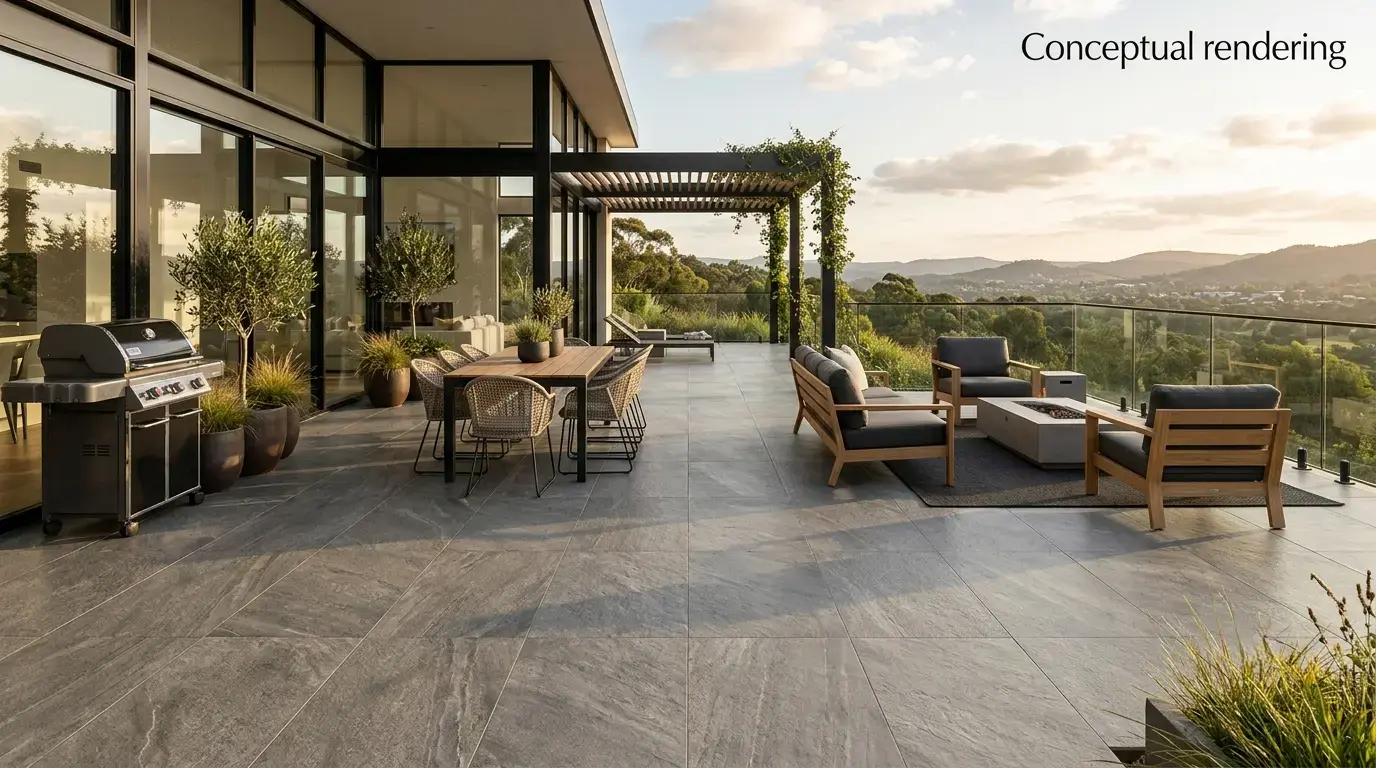
Porcelain Tile for Continuous Indoor-Outdoor Flooring
Porcelain is one of the most common choices for homeowners who want a visual transition between an interior room and an outdoor patio or covered lanai. Porcelain is manufactured to be dense and low in water absorption, meeting the criteria used to certify porcelain tile in the industry, which is why it is frequently used for exterior applications. The same visual styles are often available in both matte, textured outdoor-rated finishes and smoother indoor finishes, and homeowners can browse available tile styles online to compare options before visiting in person.
Many porcelain lines now offer matched interior and exterior formats, meaning the same color and pattern can be used inside on a living room floor and outside on a patio, with the exterior version manufactured at a different thickness and with a slip-resistant surface. This creates a visual link at the threshold between the two spaces, which is a common request among Elk Grove homeowners renovating their back patios.
Porcelain Pavers for Exterior Patios
For homeowners focused primarily on the outdoor portion of the space, porcelain pavers are worth considering separately from standard porcelain tile. These are typically thicker, often around 20mm, and designed to be installed over sand, gravel, or pedestal systems rather than requiring a mortar bed in every case. The added thickness is a factor some homeowners weigh for areas like pool decks and pathways, where paver edges see more foot traffic and exposure.
Porcelain pavers are available in styles that mimic natural stone, wood, or concrete, giving homeowners flexibility to match a patio's look to the architectural style of the home, whether that is a modern Elk Grove build or an older ranch-style property.
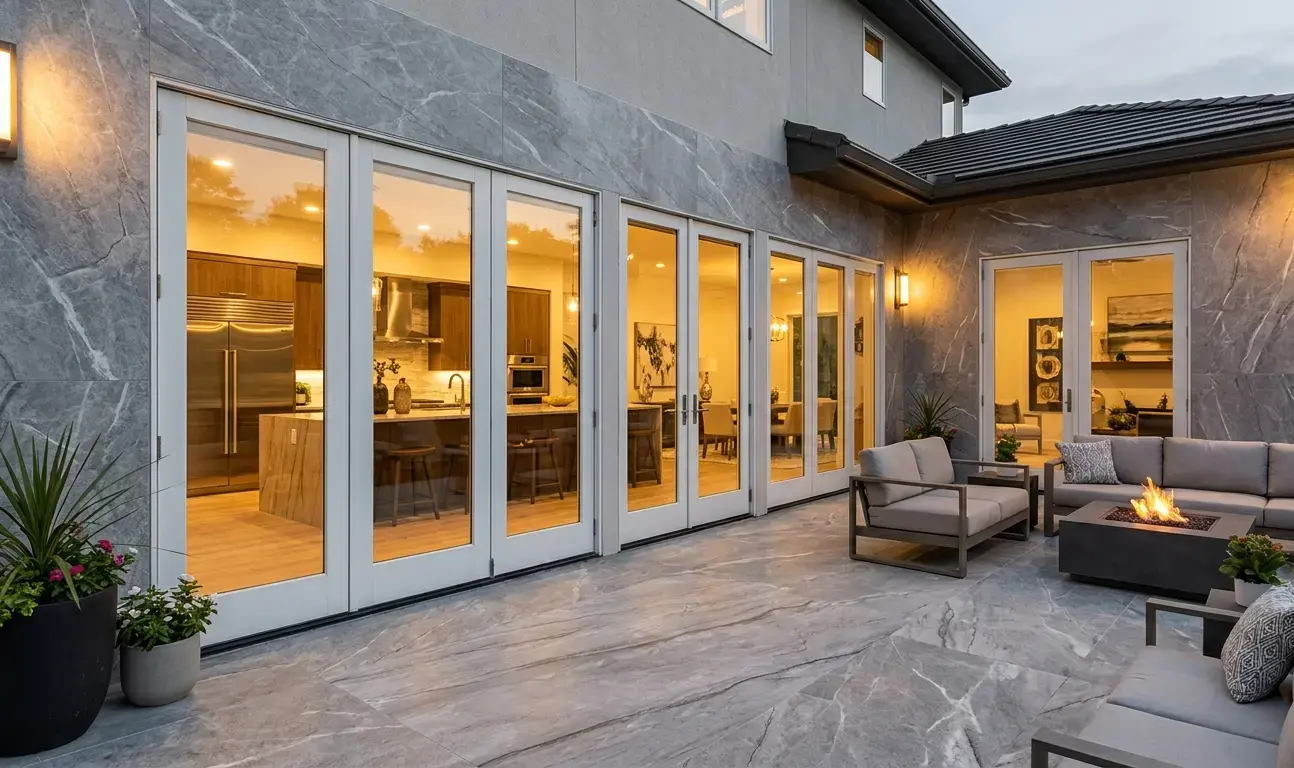
Natural Stone for Patios and Courtyards
Natural stone remains a popular choice for homeowners who want texture and variation that manufactured tile cannot fully replicate. As a family-owned business with direct import relationships for natural stone, we work with travertine and slate that are among the more common options for outdoor use because of their natural texture, though homeowners should be aware that natural stone requires sealing and periodic maintenance when used outdoors.
Travertine, in particular, is often chosen for pool decks and courtyards because it tends to stay cooler underfoot in direct sun compared to some other materials, which some homeowners consider during Elk Grove's hottest months. Slate offers a more dimensional look that suits rustic or transitional outdoor spaces.
Wood-Look Tile for a Warm Indoor-Outdoor Look
Wood-look porcelain tile is a common choice for homeowners who want the appearance of hardwood floors carried into a covered patio or sunroom without the moisture concerns that come with real wood in a semi-exposed space. These tiles replicate wood grain patterns through high-resolution printing and are available in long plank formats that mimic the proportions of natural hardwood.
Wood-look tile does not react to humidity or occasional water exposure the way hardwood does, which is a factor in transitional spaces like enclosed patios, sunrooms, or covered outdoor kitchens where some moisture exposure is likely.
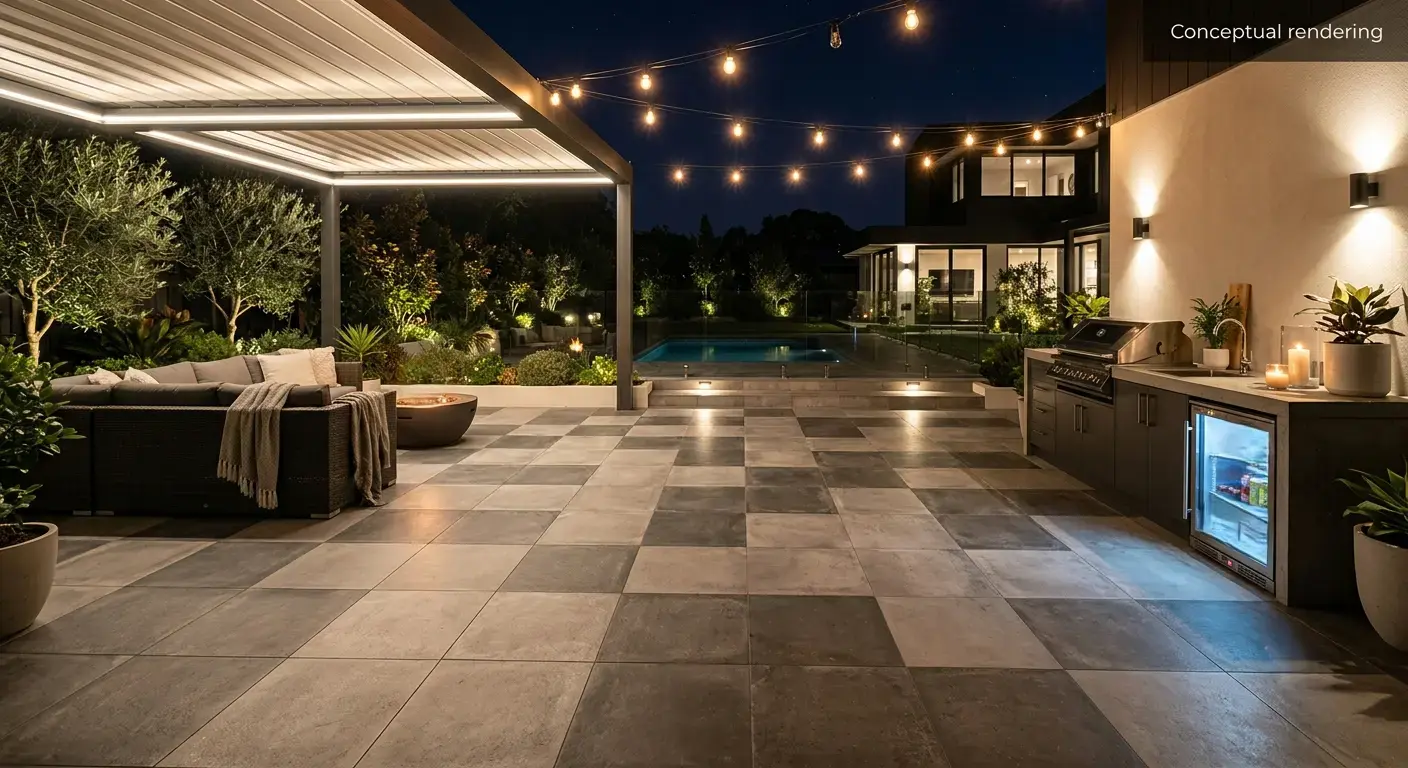
Matching Tile Sizes and Layouts Across Spaces
Beyond material choice, homeowners planning indoor-outdoor flow often ask about matching tile size and layout between the two areas. Larger format tiles, generally 24 inches or larger, are popular for this kind of project because fewer grout lines create a cleaner sightline when looking from an interior room out toward the patio. Comparing sizes side by side is easier when looking through our full inventory of tile, stone, and flooring options, and keeping the same tile orientation, whether it's a straight lay or a running bond pattern, on both sides of the threshold also helps reinforce the sense of one continuous space.
Grout color is worth planning carefully as well. A grout that closely matches the tile color tends to support the continuous look homeowners are typically after, while a contrasting grout can highlight the pattern and layout instead. Neither approach is right or wrong, but it is worth deciding intentionally before the project begins.
Slip Resistance Considerations
Because outdoor tile gets wet from rain, sprinklers, or pool use, slip resistance is an important factor separate from the material itself. Manufacturers typically rate exterior tile using a dynamic coefficient of friction, a method defined under ANSI standards for tile and often noted on product specifications, and higher-traction finishes are generally recommended for pool surrounds, entryways, and any tile near an exterior water feature. Texture and finish play a bigger role in slip resistance than the base material, so a textured porcelain and a honed natural stone can perform quite differently even if they share a similar look.
Maintenance Considerations Across Indoor and Outdoor Areas
Maintenance needs can differ quite a bit between the interior and exterior portions of a connected space, and it's worth planning for that difference up front rather than after installation. Indoor porcelain tile typically needs routine sweeping and damp mopping, while the same tile outdoors may need occasional pressure washing to clear dust, pollen, or algae that can build up in shaded or damp corners of a patio.
Natural stone carries additional upkeep in both settings. Sealing schedules vary by stone type and by how much sun or foot traffic an area receives, and homeowners who choose travertine or slate outdoors should plan to reseal more frequently than they would for the same material used indoors, since sun and weather exposure accelerate wear on the sealer. Grout maintenance is another area to plan for, as exterior grout lines are more exposed to the elements and may need resealing on a different schedule than interior grout.
Thinking through these differences before installation, rather than assuming one maintenance routine will apply evenly across an entire indoor-outdoor space, helps set realistic expectations for the upkeep involved and can inform which materials make the most sense for how much time a household wants to spend on care.
Bringing It All Together for Your Elk Grove Home
Choosing tile for an indoor-outdoor space in Elk Grove often comes down to balancing three things: how closely you want the interior and exterior areas to visually match, how much long-term maintenance you're comfortable with, and how the space will actually be used day to day. A busy family with a pool and frequent outdoor entertaining may lean toward porcelain pavers for their lower upkeep, while a homeowner focused on a courtyard retreat may lean toward the texture and character of natural travertine or slate.
Taking time to compare samples side by side, indoors and outdoors, in the actual lighting of your space is one useful step before making a final decision. We're happy to help you work through those comparisons at our Sacramento showroom, and you're welcome to schedule a design consultation to think through what fits the way your household uses its indoor and outdoor areas.
Conclusion
Elk Grove's warm, sun-heavy climate and love of outdoor living make tile selection for indoor-outdoor spaces a bit more involved than a standard interior flooring choice. Porcelain tile and pavers, natural stone, and wood-look options each bring different characteristics to the table, whether that is a coordinated indoor-outdoor look, cooler underfoot temperatures, or added texture and character. By thinking through slip resistance, tile size, layout, and long-term maintenance alongside the look you want, you can choose a tile suited to both settings. Our Sacramento showroom at 6100 Warehouse Way, Sacramento, CA 95826 (get directions) is available for homeowners who want to see and feel these options firsthand before committing to a final choice, and our team can be reached at (916) 913-6682 or through our contact page with any questions.
Frequently Asked Questions
Some porcelain tile lines offer matching interior and exterior versions in the same color and pattern, though the outdoor version is usually made with a different thickness and a slip-resistant finish suited to exterior conditions.
Natural stone such as travertine or slate can be used outdoors and offers texture that manufactured tile does not fully replicate, though it typically requires sealing and periodic maintenance when installed in an exterior setting.
Wood-look porcelain tile is commonly used in covered patios, sunrooms, and other spaces with some moisture exposure since it does not react to humidity the way real hardwood does.
Slip resistance is an important factor for any tile near pools, entryways, or exterior water features, and it depends more on the texture and finish of the tile than on the base material itself.
Larger format tiles, generally 24 inches or larger, are often used to reduce grout lines and support a cleaner visual transition between an interior room and an adjoining outdoor space.