Tile and slab walls are a practical way to update a Minden home, whether the project is a kitchen, a bathroom, or a fireplace. A wall surface deals with moisture, heat, and constant visibility in a way that calls for a different material decision than a floor does.
Tile and slab walls work well in kitchens, bathrooms, fireplaces, and accent features throughout a home in Carson Valley. The right material for a wall project depends on the room, the finish, and how much upkeep a homeowner is willing to take on.
At Nova Tile and Stone, homeowners in Minden have access to natural stone slabs, porcelain, and quartz, each with its own strengths for wall applications. Some homeowners already know the look they want and just need help narrowing down the material, while others are starting from scratch and weighing natural stone against an engineered surface for the first time.
This guide breaks down which tile and slab wall options tend to hold up well in a Minden home, what each one looks like in a finished room, and where it fits best.
What Makes a Wall Application Different From a Floor
A wall does not carry foot traffic the way a floor does, so scratch resistance matters less than it would for flooring. What counts more on a wall is how the material handles splashes, steam, and in some rooms, direct heat from a fireplace insert.
The overall look is also worth considering early in the design process. A full slab wall reads as one continuous surface with no visible seams, while a tiled wall built from smaller pieces has grout lines and a different texture. The layout and purpose of a room often point toward one look over the other.
Homeowners planning a wall project can browse tile by type to compare porcelain, ceramic, mosaic, and natural stone options side by side. Performance on a wall still depends on correct installation, so the finish and setting method should always match the room and its conditions.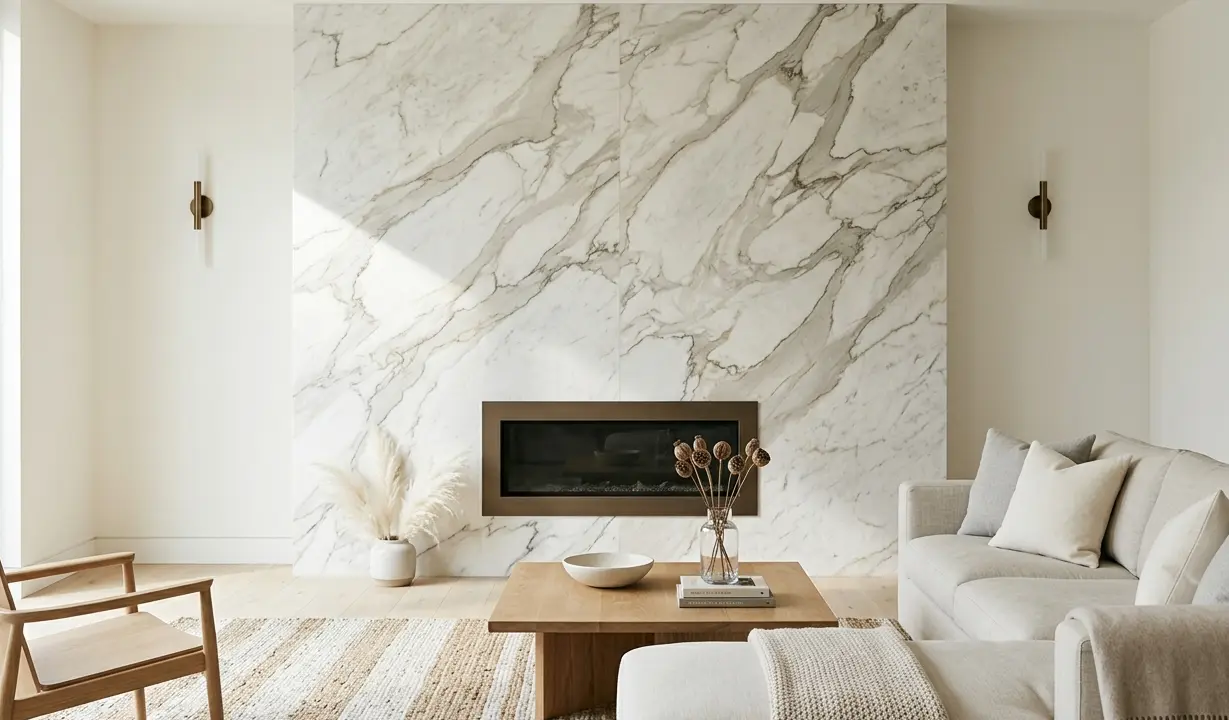
Natural Stone Slabs That Perform Well on Walls
Granite, marble, dolomite, quartzite, and travertine are all suitable for wall applications, and each is available in polished, honed, or leathered finishes depending on the look a homeowner wants. A polished finish brings out shine and depth in the veining, while a honed finish gives a flatter, matte appearance that hides fingerprints and water marks more easily. Leathered finishes add texture and are often chosen for a more organic, tactile feel on an accent wall.
Granite tends to have a speckled or flecked pattern that reads as busy and durable at the same time, and it is a suitable choice for fireplace walls. Marble leans toward soft, flowing veining and a classic look, while dolomite offers a similar visual character with its own mineral makeup. Quartzite offers a similar veined appearance to marble with a different mineral composition, and travertine brings a warmer, earthier tone with natural pitting that reads as more casual and organic.
Semi-precious stone is another option worth considering for a wall feature, though it is typically reserved for specialty accent applications rather than large-scale coverage. Even in a smaller accent placement, these slabs are durable, but proper care will help preserve their appearance over time.
Homeowners can browse our live slab inventory to see current bundles before requesting a quote, and each quote accounts for the specific dimensions of a wall project. For anyone comparing natural stone against engineered options, this guidance on environmental and health product labels for natural stone is a useful resource for understanding how these materials are sourced and rated.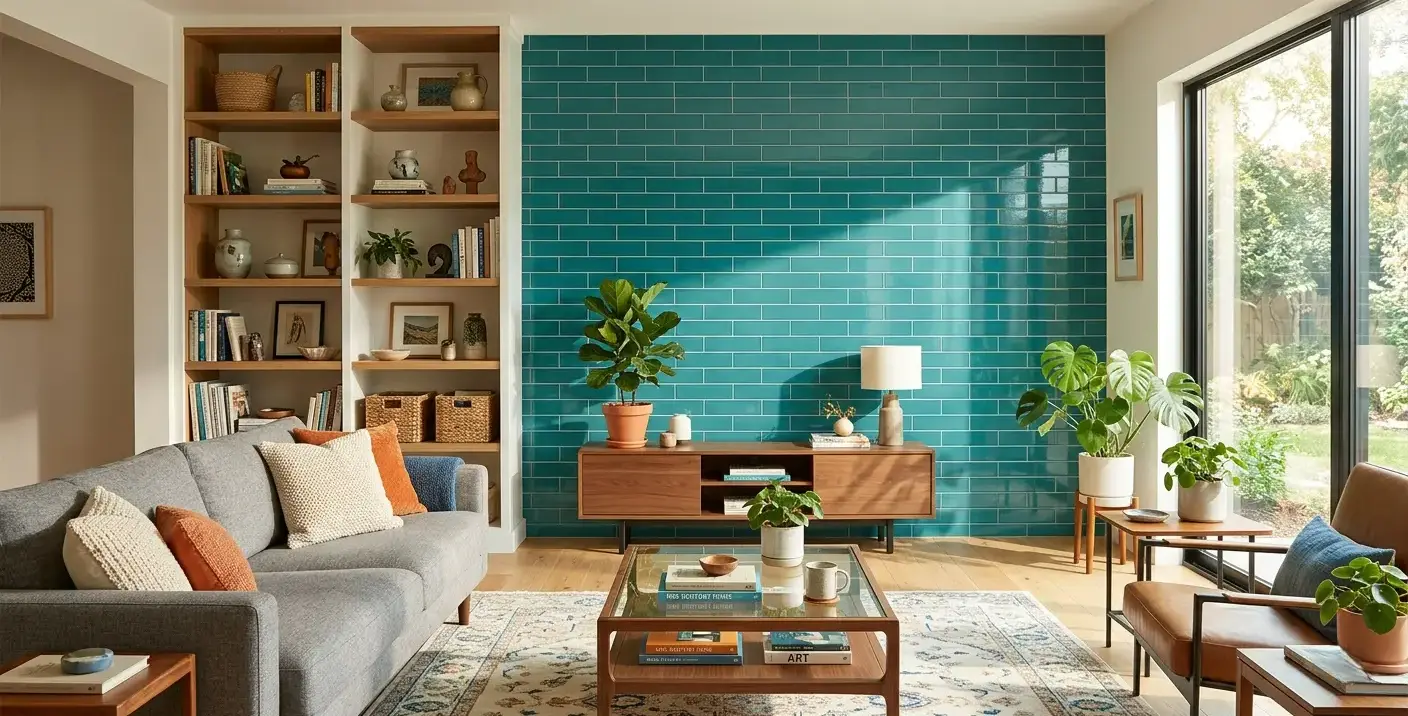
Porcelain and Quartz Wall Options
Porcelain is one of the more flexible choices for a wall project because it comes in so many looks, from marble, travertine, and onyx to slate, wood, and concrete styles. Large-format porcelain panels can also reduce the number of grout lines on a wall, which gives a cleaner, more continuous appearance in a shower or behind a range. Porcelain itself needs little more than routine wiping since it is non-porous, though any grout lines that are present will need more regular attention to stay looking clean. Porcelain also resists fading, but performance can vary by color and finish.
Quartz is another engineered option that works well on interior walls, particularly in kitchens where a consistent color helps it read as a clean, unified backdrop for the rest of the room. Its coloring tends to be more consistent from piece to piece than natural stone, which appeals to homeowners who want a uniform look across a large wall. It is suitable for daily use, but correct installation is essential to get the best long-term result. Quartz is best kept to interior applications and is not recommended for fireplace surrounds.
Homeowners who want to compare looks side by side can shop tile online or browse tile by style to narrow down options before visiting a showroom in person.
Where Tile and Slab Walls Make the Most Impact
Nearly every material covered above works well as a kitchen backsplash, from porcelain and quartz to granite, marble, quartzite, and travertine. Carrying a full-height slab up the wall behind a range or sink is one way to create a clean, seamless backsplash with no grout lines to interrupt the surface.
Bathroom walls and shower surrounds are another application worth considering, since granite, marble, dolomite, quartzite, and travertine are all suitable for indoor wall use. A powder room accent wall is a lower-commitment way to try a bolder material, since it covers less square footage than a full shower or kitchen wall.
Granite, marble, dolomite, quartzite, travertine, and porcelain all work well as fireplace surrounds. For an exterior accent wall or outdoor living space, granite, quartzite, travertine, and porcelain are suitable for outdoor use, though installation must match the application and local climate.
Tile Wall
Slab Wall
Note: Some images on this page may be conceptual renderings created to illustrate design possibilities and may not depict actual installations.
Caring for Tile and Slab Walls
Care requirements vary by material, but a few general habits go a long way no matter what is installed. Spills should be cleaned promptly, and strong or abrasive cleaners are best avoided on both natural stone and engineered surfaces. Natural stone walls generally benefit from periodic sealing, while porcelain and quartz rely more on routine wiping since both are non-porous by nature.
For homeowners who want more detail on long-term upkeep, this care and maintenance guidance from the Natural Stone Institute covers sealing, everyday cleaning, and what to avoid on polished or honed surfaces.
Seeing These Materials in Person at Our Minden Showroom
Photos and product pages only tell part of the story, since color, veining, and finish can shift depending on the lighting in a room. Homeowners can take home a free tile sample to see how a material looks in their own space before committing to a wall project, which helps avoid surprises once a slab or tile is installed.
A design consultation is another way to work through options without pressure, since it gives a homeowner a chance to talk through room layout, finish, and material pairing with our design team. Our Minden showroom page has more detail on what is available locally, and homeowners can get directions to our Minden showroom if they would rather map out a visit ahead of time. For anyone ready to talk through a specific project, it helps to book a free design consultation before finalizing a material.
The Minden showroom is located at 2548 Business Pkwy, Minden, NV 89423, and can be reached at (775) 783-4970.
Conclusion
Tile and slab walls give a Minden home a finished, intentional look, whether the project is a kitchen backsplash, a bathroom shower surround, or a fireplace feature wall. Natural stone slabs offer variation and depth, while porcelain and quartz bring consistency and a wider range of looks to choose from.
Matching the material to the room, and to how that room gets used day to day, makes the biggest difference in how a wall project performs over time. Homeowners who want to explore the full lineup can look through our full range of tile and stone options and narrow down a shortlist before a showroom visit. A little planning ahead of time makes the in-person visit faster and less overwhelming, especially when a project touches more than one room.
Frequently Asked Questions
Porcelain, quartz, and several natural stone options such as granite, marble, quartzite, and travertine all work well as bathroom wall surfaces. The right choice usually comes down to the finish and the overall look a homeowner wants for the space.
No. Quartz is not recommended for fireplace surrounds. Granite, marble, dolomite, quartzite, travertine, and porcelain are better suited to that application.
Yes, in the right material. Granite, quartzite, and travertine are suitable for outdoor use, so they can work well on an exterior accent wall, though installation should always match the application and local climate.
A honed finish has a smooth, matte surface, while a leathered finish has a more textured surface with a slight ripple, though it does not feel rough or sharp underhand. Both finishes are available on several natural stone slabs, including granite, marble, dolomite, quartzite, and travertine.
Homeowners can take home a free tile sample from our Minden showroom to see how a material looks in their own lighting before making a final decision.