Granite and quartzite are the two most reliable natural stone choices for a fireplace surround because both are noncombustible materials that satisfy the clearance-to-combustibles principle behind fireplace safety codes. That principle is codified most directly for masonry and solid-fuel fireplaces under the NFPA 211 standard, while gas and pellet units are typically governed instead by their own manufacturer listing requirements. Either way, granite and quartzite hold their appearance under repeated heat exposure far better than wood trim or painted drywall placed too close to a firebox. Granite offers a wider range of bold color and veining, while quartzite tends toward a softer, more layered look with less contrast, so the choice between them usually comes down to style rather than performance.
Carson City's mix of housing stock makes this a genuinely local decision: the West Side Historic District carries 1800s-era Victorian and Craftsman homes built around original masonry fireplaces, while newer master-planned neighborhoods like Silver Oak and Schulz Ranch have contemporary, factory-built fireplace units that suit a different visual approach. Our showroom in Minden, about 15 miles and a 20-minute drive south on US-395, carries both stones suited to either situation.
Why Fireplace Surrounds Call for Noncombustible Materials
A fireplace opening radiates a meaningful amount of heat outward, and building codes require the material immediately surrounding that opening to be noncombustible for a set distance before any wood trim, mantel, or painted surface can begin. This is why stone and brick have remained the default choices for generations, while fabric, wallpaper, and untreated wood are kept well clear of the opening.
This requirement applies whether the fireplace burns wood, gas, or pellets, since the concern is heat transfer through the surrounding wall and framing rather than just visible flame. A masonry fireplace and a factory-built, prefabricated unit can carry different specific requirements, since a factory-built unit is tested and listed with its own manufacturer instructions that may differ from general masonry code language. This distinction matters in Carson City specifically, since older homes in the West Side Historic District were generally built around true masonry fireboxes, while most newer construction relies on a factory-built unit instead.
Exact clearance distances are set by local building code and can vary by fireplace type, so anyone planning new construction on this front should confirm the specifics with a local building department or the fireplace manufacturer's documentation rather than relying on a general rule of thumb. Code reference sites that compile these requirements by jurisdiction are a useful starting point for understanding what a given project will need to meet.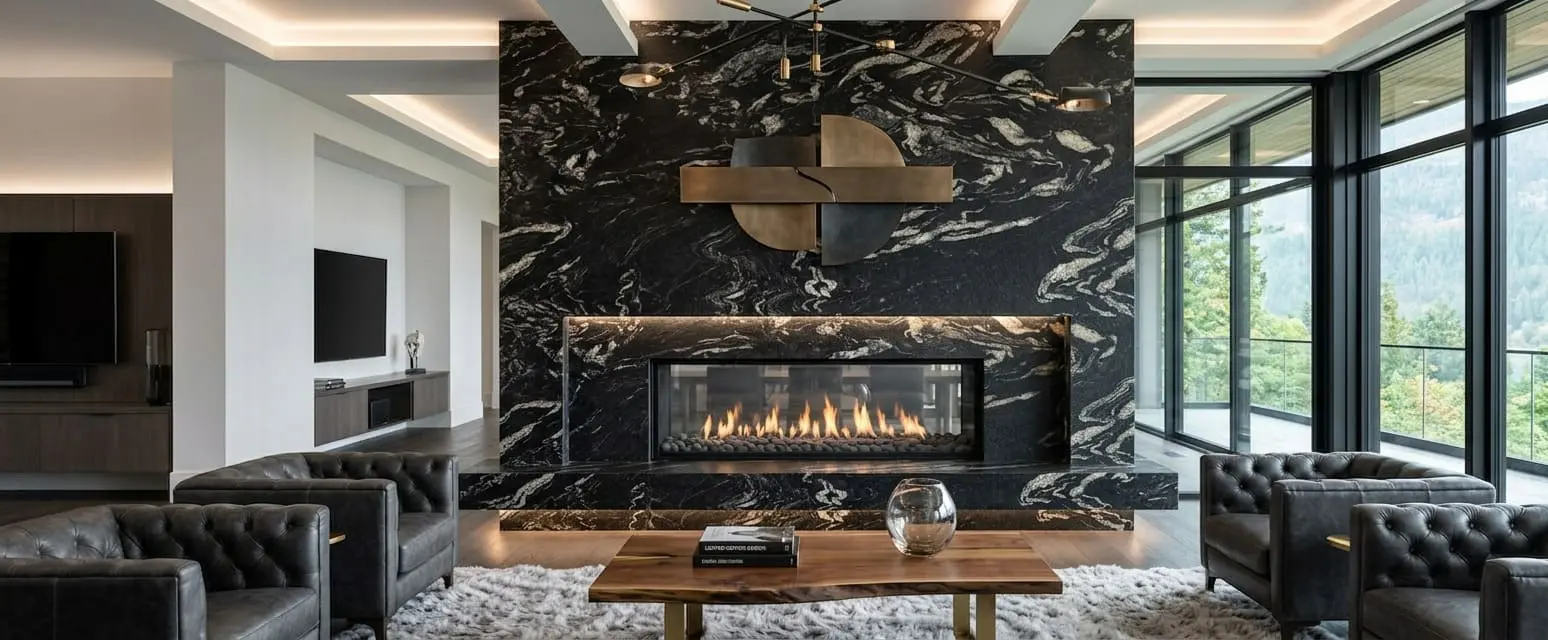
Granite: Density, Color Range, and Fabrication
Granite is an igneous stone with a crystalline structure that makes it dense and naturally heat-tolerant, a combination that has kept it in steady use as a fireplace facing material for generations. Its color range is wide, spanning near-black and deep brown tones through soft grays and whites, and the crystalline flecking that runs through most granite reads as more formal when polished and more textural when honed or leathered.
A floor-to-ceiling granite surround usually requires more than one slab pieced together, since a single quarry block only yields slabs up to a certain height. Where that seam falls, and how closely the veining is matched across it, is worth discussing directly with a fabricator before cutting begins, since a well-matched seam reads as nearly invisible while a mismatched one becomes a permanent focal point in the wrong way. Contractors coordinating this kind of multi-slab layout on a client's behalf can look into our trade account program for material sourcing and delivery support, while homeowners considering a granite surround can review current slab inventory to see full bundles and get a sense of how a specific lot's veining would carry across a multi-slab layout.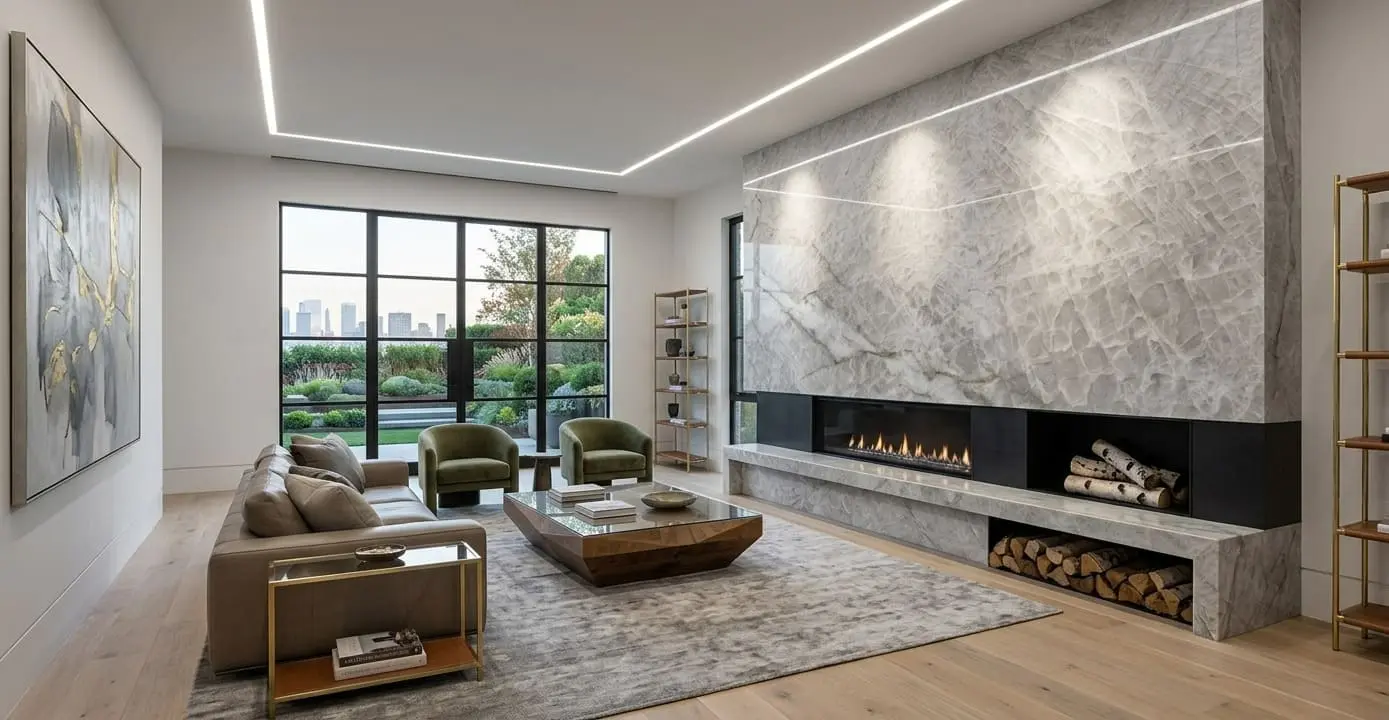
Quartzite: A Softer-Looking, Equally Durable Alternative
Quartzite forms when sandstone is subjected to intense heat and pressure underground, which gives it a hardness close to granite along with a softer, more layered visual character. Where granite tends to show bold, high-contrast flecking, quartzite more often shows subtle movement and banding, which some homeowners find better suited to a room that already has a lot of visual activity elsewhere.
The slab is durable, but proper care will help preserve its appearance, particularly around a firebox opening where repeated heat cycles can gradually affect how a high-gloss polish holds its shine, since sustained warmth and dry air pull moisture out of any polish-enhancing sealant faster than in a room without daily heat exposure. According to the Natural Stone Institute, stone selection should also account for how a specific quarry lot's mineral composition affects long-term performance, which is one more reason to look at an actual slab rather than a small sample chip before finalizing a decision.
Matching Surround Material to the Home's Style
A fireplace surround tends to set the tone for an entire room, since it is usually the most visually prominent surface in the space. In the West Side Historic District, many homes still have their original masonry fireplace, and a surround update there often works best when it respects the Victorian or Craftsman character of the house rather than introducing a starkly modern material. A leathered or fieldstone-look granite tends to sit more comfortably in that context than a glossy, minimal slab would.
Newer construction in neighborhoods like Silver Oak and Schulz Ranch generally starts from a blank slate, since these homes were built with contemporary open floor plans and factory-built fireplace units rather than historic masonry fireboxes. That gives more freedom to lean toward a honed or polished granite with minimal veining, or a quartzite with quiet, even movement, since there is no existing architectural style to work around. Homes with vaulted or high ceilings, common in several of these newer subdivisions, also tend to draw the eye upward toward a fireplace wall. Filling that vertical space intentionally, rather than leaving it bare above a shorter, traditional mantel height, is the main reason floor-to-ceiling surrounds have become so popular in this kind of construction.
Scale plays a role here as well. A floor-to-ceiling surround makes the fireplace a dominant feature and works best in a room with enough height and wall space to support it. A more modest surround confined to the area directly around the firebox keeps the fireplace as one element among several instead of the room's clear focal point. Comparing a few slab options side by side makes the scale difference between a bold, high-contrast granite and a quieter, more uniform quartzite easier to judge than scrolling through single product photos.
Color Considerations Near a Firebox
Color affects how a surround shows wear over time near an active firebox. Lighter stone tends to show soot dust and ash residue more readily than a mid-tone or darker material, particularly on the section directly above the opening where rising heat carries fine particles upward and settles on anything above it. This is worth weighing against the room's existing palette, since a lighter granite or quartzite that fits the space beautifully in a showroom may need more frequent wiping down once it is installed above an active firebox.
Both granite and quartzite are strong, but edges and corners require extra care, especially where a mantel shelf or hearth edge sees repeated contact from fireplace tools, logs, or cleaning equipment. Choosing a slightly eased or rounded edge profile in that specific spot can reduce the visible wear that builds up on a sharp square edge over years of use.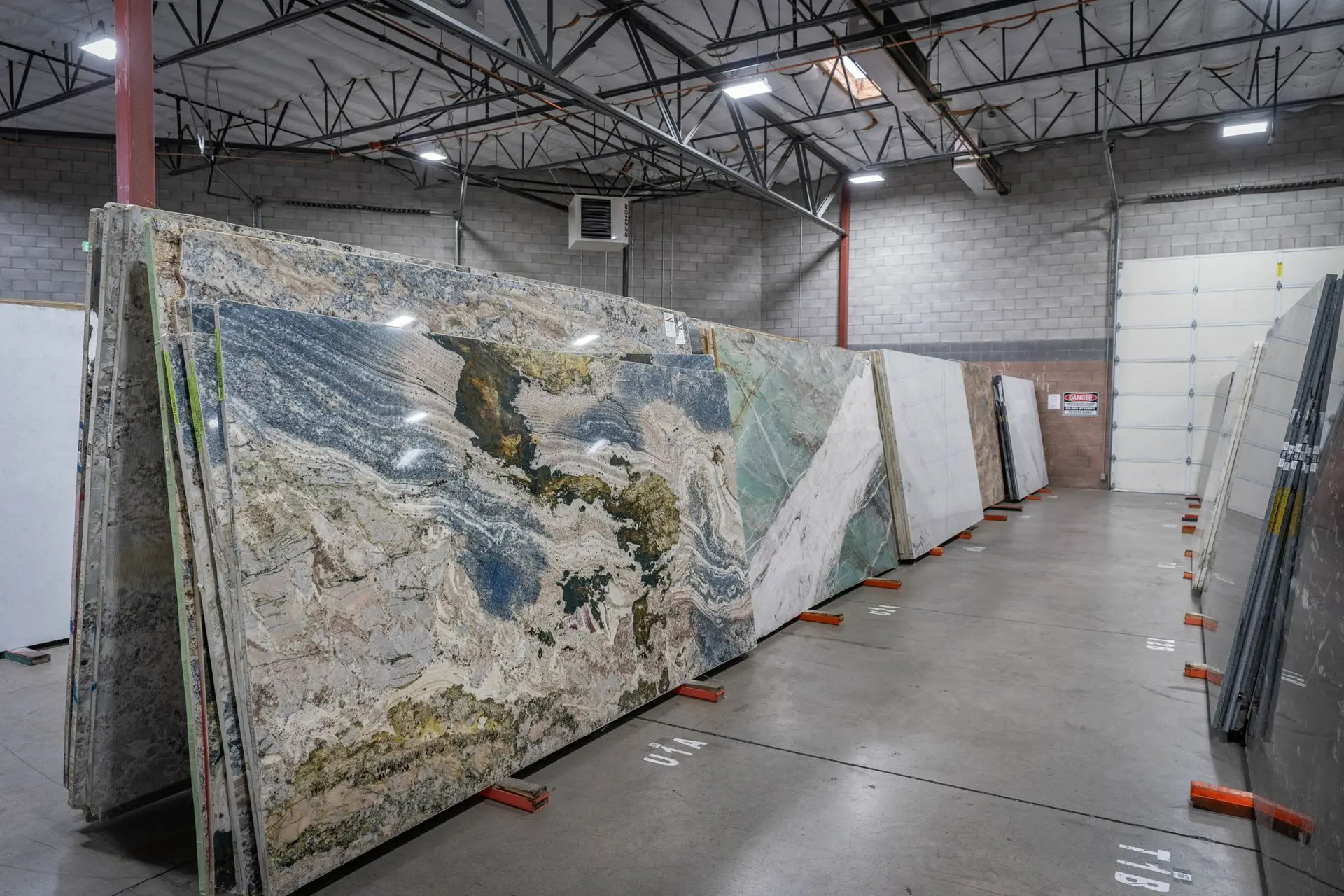
Comparing Options at Our Minden Showroom
Photos of fireplace surrounds rarely capture how a stone will look once it is lit by firelight rather than daylight, since warm, flickering light changes how veining and texture read on a vertical surface. Visiting our Minden showroom, a short drive south of Carson City on US-395, gives homeowners a chance to see full slabs under different lighting conditions before committing to a material for a feature this visible. For anyone who wants a preview before making the drive, our website shows current inventory that can help narrow down a shortlist ahead of time.
For anyone planning a full surround and wanting help matching a material to their room's proportions and existing finishes, scheduling a complimentary design consultation is a straightforward way to get input without any obligation. Our design team can walk through granite and quartzite options together and talk through how each tends to perform near an active firebox.
Conclusion
A fireplace surround has to satisfy two different demands at once: it needs to be genuinely noncombustible near the firebox opening, and it needs to look intentional as one of the most visible surfaces in the room. Granite brings a wider color range and bolder veining options, while quartzite offers a similar level of heat tolerance with a quieter, more layered look. Whether the project is a Victorian-era home along the Kit Carson Trail or a newer build in one of Carson City's master-planned neighborhoods, Nova Tile and Stone carries granite and quartzite suited to either direction. Comparing samples under real lighting, paired with a conversation with our design team, gives homeowners the clearest sense of which stone will hold up and look right for years around an active fireplace.
Frequently Asked Questions
Both are noncombustible and heat-tolerant, so the choice usually comes down to look rather than performance. Granite tends to offer bolder color and veining options, while quartzite generally shows a softer, more layered pattern with less contrast.
Yes, most jurisdictions require noncombustible material within a set distance of the firebox opening before any combustible trim or finish can begin. The exact distance depends on the fireplace type and local code, so it's worth confirming with a local building department for any new construction.
Both stones are naturally heat-tolerant and resist warping or cracking under normal fireplace use. Both are durable, but sealant longevity, not the stone itself, is the more relevant maintenance factor near a firebox, since daily warmth and dry air wear through a polish-enhancing sealant faster than elsewhere in the home.
In most cases, yes, since a single quarry block only yields slabs up to a certain height. Where the seam falls and how well the veining is matched across it are both worth discussing with a fabricator before the stone is cut.
Lighter colors tend to show soot and ash dust more readily than mid-tone or darker finishes, particularly on the section directly above the firebox opening. This is worth factoring in early, since a color that reads beautifully in a showroom can show residue faster once it is installed above daily fireplace use.