The best flooring options for Carson City, NV homes are porcelain tile, engineered hardwood, luxury vinyl plank (LVP), and natural stone tile. Porcelain tile and LVP suit most homes regardless of age, engineered hardwood works well in homes with forced-air heating, and natural stone tile fits larger custom homes and entries. The right choice depends more on a home's age and construction type than on personal style alone.
Carson City's housing stock spans a wide range: roughly 71% of homes were built between 1970 and 1999, according to Nevada Housing Division tabulations of U.S. Census Bureau American Community Survey data, while a smaller share dates to the 1860s Victorian core downtown or to newer subdivisions built in the past two decades. A flooring choice that works well in a century-old Westside home won't necessarily suit a 2000s tract home in Empire Ranch, and vice versa.
The city sits at roughly 4,800 feet in a high desert valley along the eastern edge of the Sierra Nevada, about 30 miles south of Reno. The elevation and dry climate affect wood-based flooring more than they affect tile, stone, or vinyl. The sections below walk through each flooring category, starting with the option that handles the widest range of home ages.
Porcelain Tile
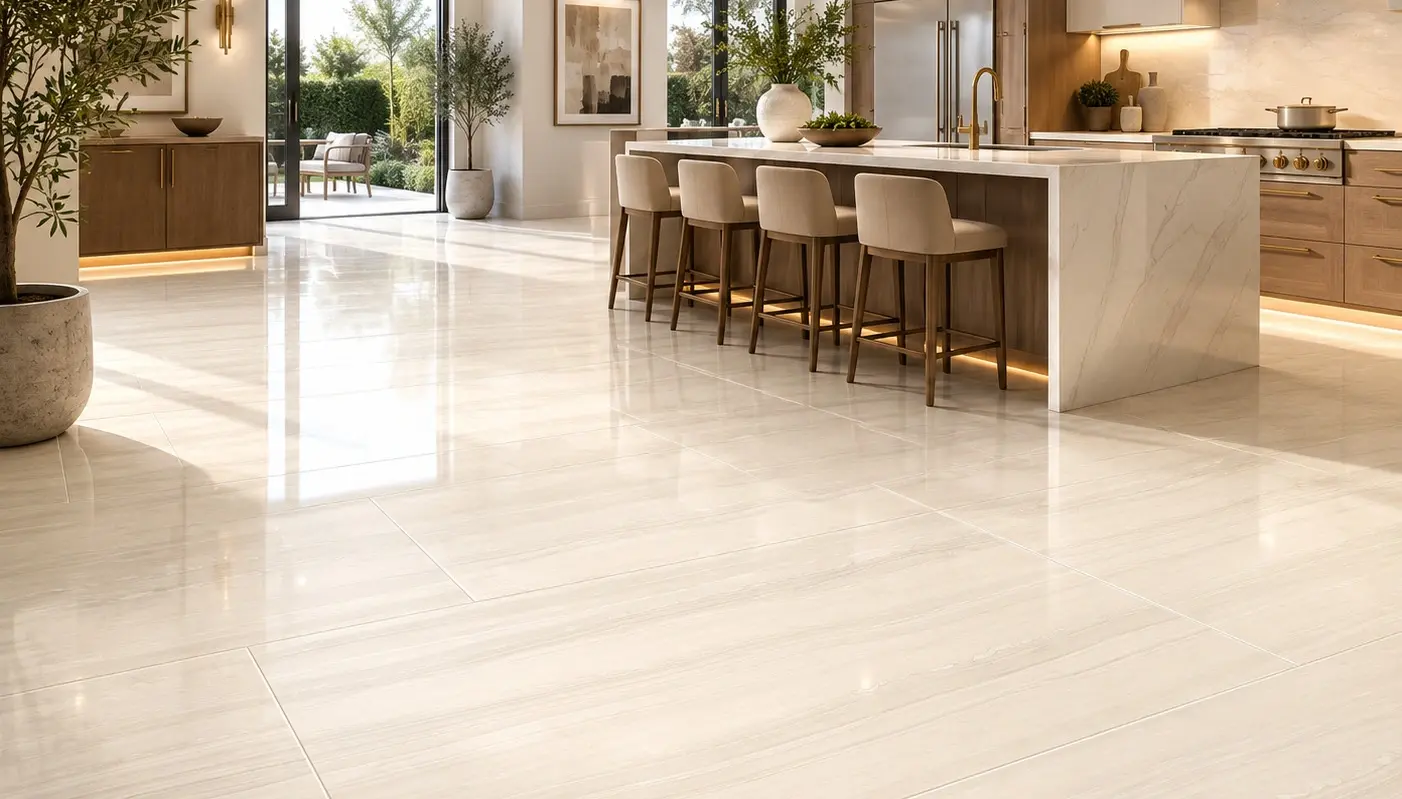
Porcelain tile is a strong fit across nearly every era of home in the area, from historic downtown properties to newer construction. It resists moisture, holds up to foot traffic, and comes in formats that read as wood, stone, or concrete depending on the room. Because porcelain is fired at high temperatures and has low water absorption, it performs consistently regardless of a home's age, which makes it one of the more universally reliable choices in a market with this much construction variety.
In older homes with original subfloors, tile installation typically requires more prep work to address unevenness, so it's worth having the subfloor checked before committing to a layout. Uneven or settled subfloors, more common in homes built before the 1980s, can cause tile to crack over time if the surface isn't leveled first, since industry flatness standards call for tighter substrate tolerances as tile size increases. Newer subdivisions built on more consistent slab foundations usually require less prep before installation.
Large-format porcelain tile has become a common choice for kitchens and entries in both historic and newer homes, since it reduces the number of grout lines and gives a cleaner look in smaller, more traditional room layouts common in older construction. Smaller-format tile remains a practical option for bathrooms and mudrooms, where slip resistance and drainage slope matter more than a seamless look.
Maintenance is minimal compared to natural materials. Regular sweeping and occasional mopping with a pH-neutral cleaner keeps the surface in good condition, and grout lines benefit from periodic sealing to resist staining, particularly in kitchens and entries that see more foot traffic and moisture.
Engineered Hardwood
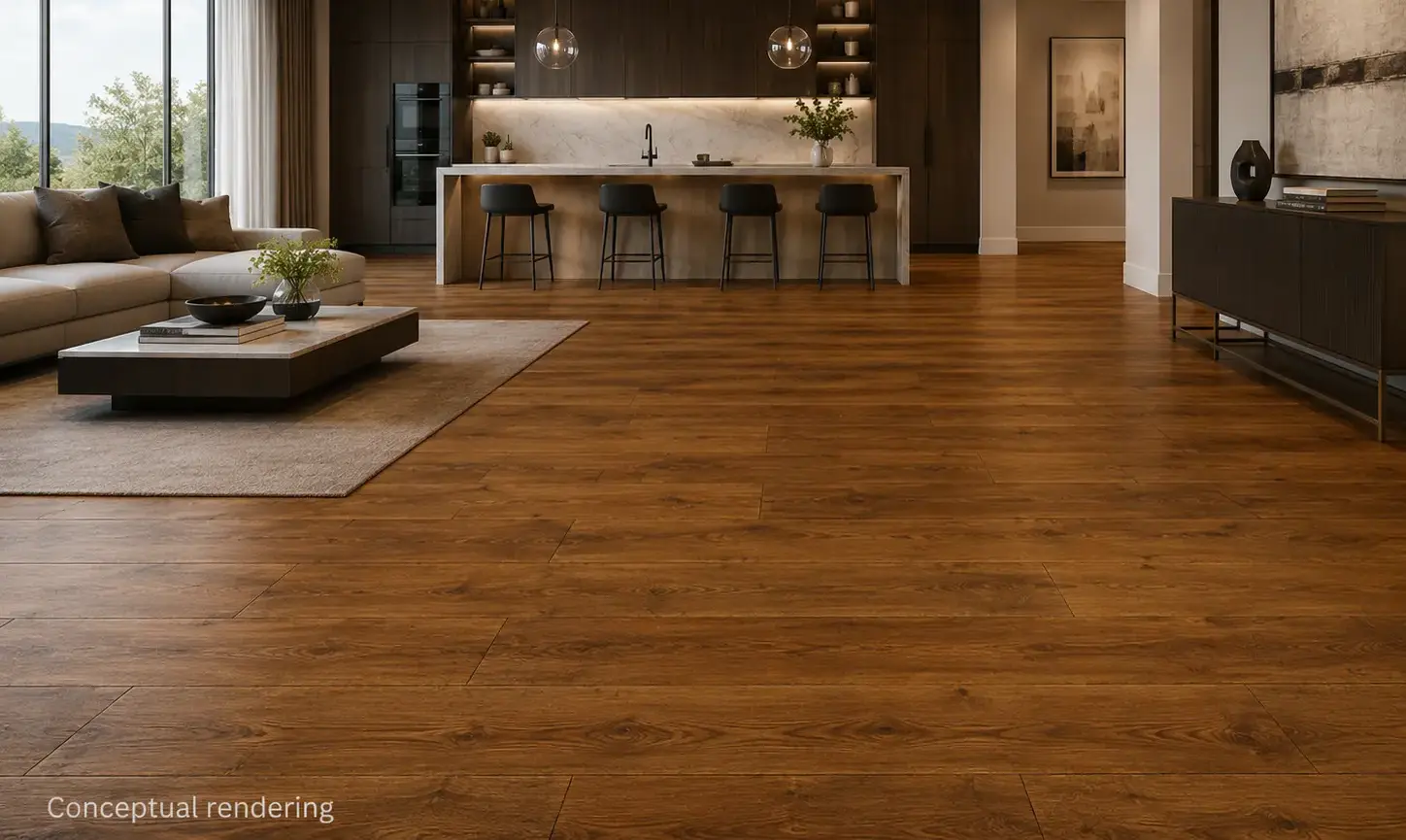
Where porcelain performs about the same regardless of climate, engineered hardwood is more sensitive to the seasonal humidity swings that come with living at elevation. Its layered construction, a hardwood veneer over cross-layered plywood or high-density fiberboard, resists the expansion and contraction that solid hardwood can experience with temperature and moisture changes. That matters in a high desert climate, where indoor humidity often drops well below ideal levels during winter heating season. Industry moisture and wood guidelines address regional climate variations and jobsite conditions that affect how wood flooring performs after installation.
Homes with forced-air heating, common across mid-century and newer subdivisions in the area, benefit from monitoring indoor humidity levels to help protect any wood flooring product long-term. The EPA recommends keeping indoor relative humidity between 30 and 50 percent, and a basic humidity monitor, along with a portable humidifier in drier months, can reduce the risk of gapping or minor board movement over time.
Homes in the Westside Historic District carry a separate consideration in addition to humidity. Development within the district, created in 1982, is overseen by the Historic Resources Commission, which reviews exterior work rather than interior remodeling. Homeowners planning exterior-adjacent flooring transitions, such as replacing an entryway that ties into a porch or threshold, should confirm whether that specific work falls under district review before starting.
Engineered hardwood also tends to suit homes where the subfloor includes both wood joist sections and slab additions, a layout that shows up in older properties that have been added onto over the decades. The flexibility of engineered construction allows it to be installed over a wider variety of subfloor types than solid hardwood, which is typically limited to wood subfloors above grade.
If you're comparing flooring materials or exploring options for an upcoming renovation, visit our website to browse our selection and learn more about us before planning your project.
Luxury Vinyl Plank (LVP)
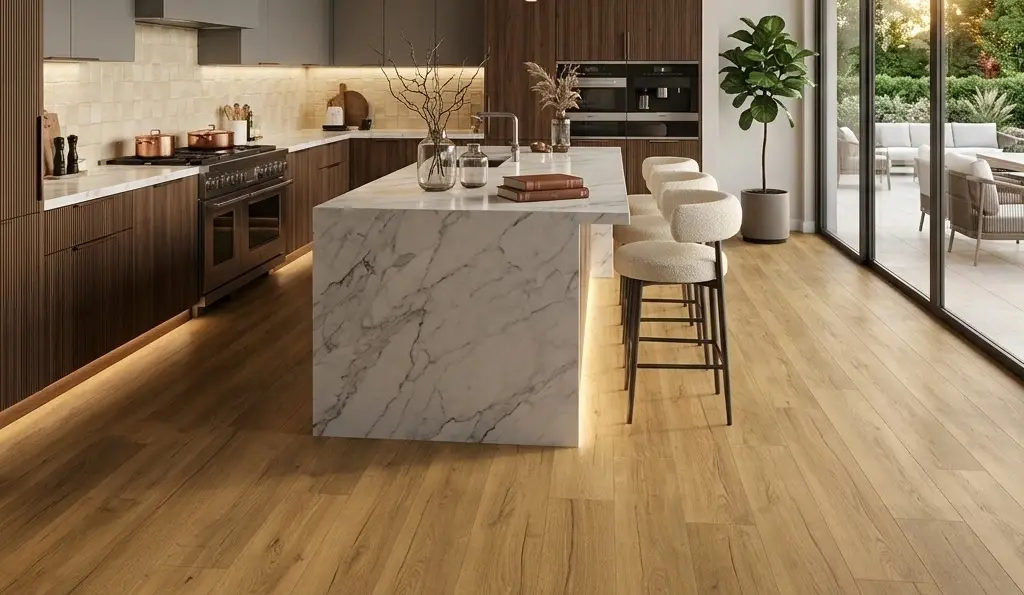
For homeowners who want wood-look flooring without the humidity sensitivity of engineered hardwood, LVP is the more forgiving alternative. It has become a popular choice in rental properties, mid-century ranch homes, and newer subdivisions alike, largely because it performs consistently across a wide range of subfloor conditions and handles moisture better than hardwood or laminate. That makes it a common pick for entries, mudrooms, and homes with pets or kids.
In older homes with less predictable subfloor leveling, LVP's flexibility in installation format, click-lock or glue-down, gives more room to work around minor imperfections than tile or solid wood would allow. Click-lock LVP floats above the subfloor and can bridge small variations in flatness, while glue-down formats offer a more solid feel underfoot and work well over concrete slabs common in newer construction. Since every natural stone tile is different, many homeowners choose to visit our Reno showroom to compare materials side by side before making a final decision.
Wear layer thickness is worth checking closely when comparing LVP products, since it directly affects how long the floor holds up under daily use. Thicker wear layers generally perform better in higher-traffic rooms like kitchens and entries, while thinner wear layers may be a reasonable trade-off for lower-traffic bedrooms where budget is a bigger factor. LVP also tends to be a practical choice for basement-level rooms in homes with crawlspace foundations, since it handles the moisture variability of below-grade spaces better than solid wood.
Natural Stone Tile
At the other end of the spectrum from LVP's practicality is natural stone, chosen less for convenience than for the look of the material itself. Travertine, slate, and limestone tile suit entries, sunrooms, and transitional spaces in larger custom homes and foothill properties, including newer construction in the western hillside neighborhoods. Stone tile requires periodic sealing and is heavier to install than porcelain, so it's typically reserved for spaces where the look and feel of natural material is the priority rather than the primary living areas throughout a home.
Because natural stone is a quarried material rather than a manufactured product, each tile carries some natural variation in color and veining. Homeowners who want a more uniform look often lean toward more consistently patterned stones like slate, while those who want more visual movement gravitate toward travertine or limestone with more pronounced natural variation.
Stone tile's weight also means it holds up structurally in homes with slab foundations, which describes much of the area's mid-century and newer housing stock. In older homes with wood joist subfloors, a structural check is worth doing before installing natural stone over a larger area, since the added weight is more of a factor than it would be with porcelain or LVP.
Putting It Together by Home Type
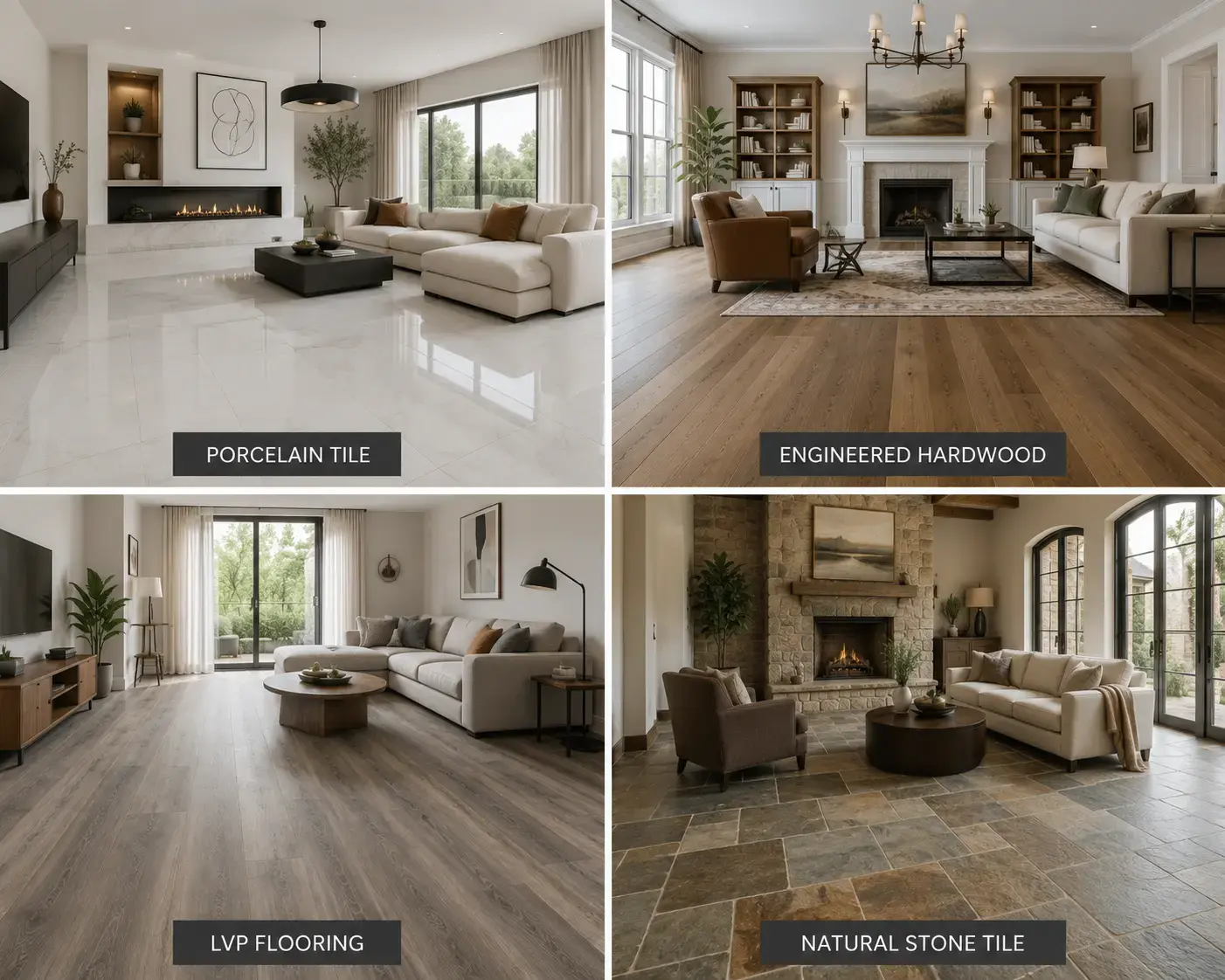
With those four materials in mind, the practical question becomes which one, or which combination, fits a specific house. In the historic core, mixing materials by room usually works better than picking one flooring type for the whole home. Porcelain or natural stone works well in entries and bathrooms, engineered hardwood suits living spaces, and LVP handles secondary rooms, so each material is doing the job it's best suited for. In newer subdivisions with more uniform slab construction, subfloor conditions are consistent enough from room to room that standardizing on one or two materials throughout is a reasonable approach.
Before finalizing any of these choices, it's worth having the specific home's subfloor checked rather than assuming a decade of construction tells the whole story, since additions, past remodels, and foundation repairs can all change the picture within the same neighborhood.
Conclusion
The flooring that works best for a Carson City home comes down to that home's specific conditions more than any single style trend. Once a material and room plan start coming together, the next step is seeing it in the actual space: tile and stone can look different under a home's actual lighting than they do in a showroom, so ordering a physical sample before committing to a full order is worth the small upfront step. Tile samples are available for $1 each, which makes it easy to compare a few finish options side by side in the room before placing a larger order.
Nova Tile and Stone's Reno showroom, located at 12835 Old Virginia Rd, Suite 24, Reno, NV 89521, (775) 331-6682, carries porcelain tile, engineered hardwood, LVP, and natural stone for homeowners throughout the region, including Carson City. Visit the Reno showroom page to see current selections in person.
Frequently Asked Questions
Older and newer homes can benefit from different flooring materials depending on the room and existing construction. Porcelain tile, engineered hardwood, luxury vinyl plank (LVP), and natural stone each offer unique advantages. Visit the Nova Tile and Stone Reno showroom to compare options and choose the material that best fits your project.
Industry guidelines generally recommend keeping indoor conditions between 60°F and 80°F with relative humidity between 30% and 50% for wood flooring to perform well. Carson City's high desert climate and elevation make winter indoor air drier than many other regions, so homes with wood or engineered wood floors often benefit from a humidifier during heating season to stay within that range.
Engineered hardwood generally requires less subfloor leveling work than solid hardwood, which can lower installation costs in homes with irregular older subfloors. The trade-off is that engineered hardwood typically can't be sanded and refinished as many times over its lifespan as solid hardwood, since only the top veneer layer can be refinished.
Below-grade porcelain tile installations typically need a moisture-mitigation underlayment even in a finished, conditioned space, since ground moisture can migrate upward regardless of interior climate control. Solid hardwood is not recommended for below-grade installation at all, while LVP and engineered hardwood generally handle below-grade conditions with standard installation methods.
Yes. Newer subdivisions sometimes use engineered subfloor systems or radiant heating that require specific underlayments or manufacturer-approved installation methods, and skipping that check can affect product warranties even when the subfloor itself is in good condition.
Note: Some images on this page may be conceptual renderings created to illustrate design possibilities and may not depict actual installations.