Best Flooring for Allergies: What Fallon Homeowners Should Know
Hard, non-porous surfaces make up the best flooring for allergies because they do not trap dust, pollen, or pet dander the way carpet fibers do. Porcelain tile and natural stone can be damp-mopped rather than vacuumed, which helps remove fine particles instead of stirring them back into the air. For allergy-sensitive households in Fallon, this distinction matters throughout the year, especially during dry, dusty seasons common to northern Nevada.
Stone and tile materials and finishes vary widely, so the right choice depends on the room, the finish, and the household's cleaning routine. Bedrooms, living areas, kitchens, and bathrooms each have different needs. A material that performs well underfoot in a hallway may not be the best fit for a shower floor or an outdoor patio. Reviewing options by room helps narrow the decision before comparing specific finishes and applications in more detail below.
Northern Nevada's dry climate and seasonal dust add another layer to the conversation for Fallon, Silver Springs, and Stagecoach households. Homes near open desert terrain often deal with fine particulate that settles indoors through open windows, doors, and everyday foot traffic. Flooring that can be cleaned quickly and thoroughly plays a bigger role in day-to-day comfort than it might in a milder, more humid climate.
Why Non-Porous Materials Support Allergy-Friendly Homes
Carpet fibers hold onto dust mites, pollen, and pet hair long after vacuuming, while dense, non-porous flooring gives those particles fewer places to settle. That single difference is why many allergy-conscious households move toward tile and stone for main living areas.
Flooring choice is only one part of a broader indoor air quality picture. Household filtration, ventilation, and regular dusting all play a role, but hard flooring removes one of the largest reservoirs for airborne particles in a typical home. Pairing tile and stone floors with a consistent cleaning routine tends to produce the most noticeable difference for allergy-sensitive household members.
- Non-porous surfaces limit dust, pollen, and pet dander buildup, though regular sweeping and damp-mopping still support the healthiest results.
- Damp cleaning lifts allergens more effectively than a vacuum, which can recirculate fine particles into the air.
- A wide range of stone and tile materials and finishes allows every room to be matched to its own traffic and moisture needs.
- Properly maintained tile and stone can last for many years, though non-abrasive cleaners and prompt spill cleanup help preserve their appearance.
Independent testing frameworks such as the TCNA ANSI standards give manufacturers and retailers a consistent way to evaluate tile performance before it reaches a showroom floor. Choosing materials that have been evaluated against established criteria adds a layer of confidence for households prioritizing indoor air quality alongside everyday durability.
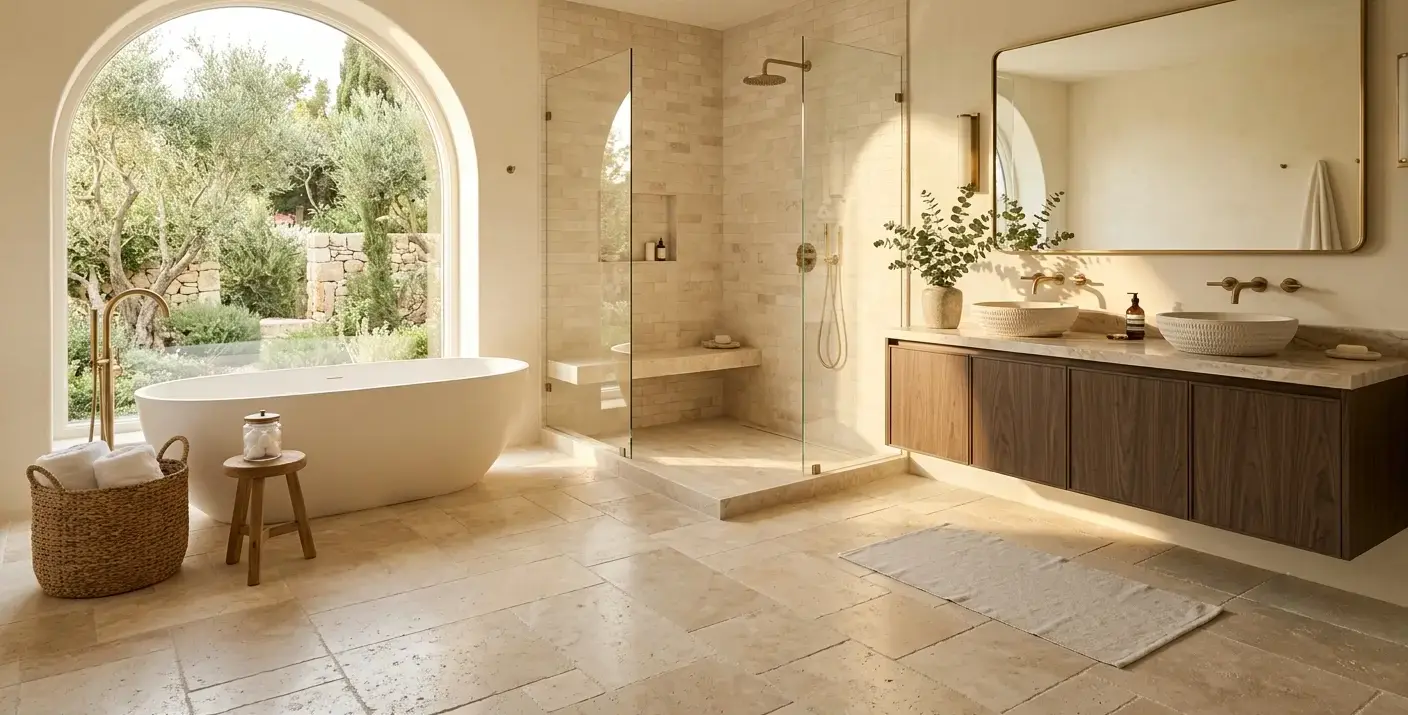 Conceptual rendering
Stone and Tile Materials and Finish Options for Every Room
Selecting flooring for allergy relief is not a one-material decision. Fallon homes benefit from mixing tile and stone across different rooms, matching each space to a finish suited for its traffic level, moisture exposure, and maintenance routine.
Living Areas and Bedroom Designs
Bedrooms and living rooms typically see moderate foot traffic and benefit from matte or honed finishes, which tend to show fewer surface marks over time. Porcelain tile in these spaces offers a non-porous surface that supports easy dusting and mopping. For households replacing wall-to-wall carpet, pairing hard flooring with washable, low-pile area rugs in seating zones keeps the allergy-friendly benefit intact while still adding warmth to the room.
Kitchens and Bathrooms
Kitchens and bathrooms combine moisture and higher use, so finish selection matters. Polished finishes can become slick when wet, so many households reserve them for countertops or lower-traffic accent walls rather than shower and bathroom floors. Matte and honed finishes are generally easier to keep dry underfoot in these rooms, reducing slip risk while still resisting dust and residue buildup between cleanings.
Slab Surfaces for Countertops
Slab surfaces complete the material palette in kitchens and bathrooms. Granite and quartz countertops resist moisture absorption when properly sealed, which limits the conditions that support mold and bacterial growth near sinks and food prep areas. Pairing a non-porous countertop with allergy-friendly flooring creates a more consistent, easier-to-clean environment throughout these high-use rooms.
Quartzite is another slab option worth considering for busy kitchens, since it combines a dense, non-porous surface with a natural stone appearance. Households weighing granite against quartzite often base the decision on desired color variation and finish, since both perform similarly for everyday moisture resistance when properly sealed.
The table below outlines how common stone and tile materials compare across finish, application, and outdoor suitability.
Material | Common Finish | Best Application |
Outdoor Suitability
|
Granite | Polished, honed | Floors, countertops | Full-sun outdoor and indoor |
Quartzite | Honed, leathered | Floors, walls | Full-sun outdoor and indoor |
Porcelain Tile | Matte, polished | Floors, walls | Full-sun outdoor and indoor |
Marble | Honed, polished | Indoor floors, walls | Indoor only |
Travertine | Honed, matte | Indoor floors | Indoor or outdoor |
Quartz | Polished | Indoor countertops | Indoor only |
Design preferences shift from year to year as well. Recent interior design trends point toward natural material palettes and softer, matte-finish surfaces, which happen to align closely with allergy-conscious flooring choices already favored for their easy-clean qualities.
Advantages and Considerations
Advantages
- Limits allergen buildup compared with carpet fiber, provided regular cleaning is maintained
- Wide selection of stone and tile materials and finishes for every room
- Slab countertops complement flooring for a cohesive, easy-clean material palette
- Long-lasting performance when cared for with non-abrasive products
Considerations
- Hard flooring feels cooler underfoot without supplemental heating
- Grout lines need regular cleaning to prevent debris buildup
- Natural stone benefits from periodic sealing to preserve its non-porous surface
- Polished finishes are better suited to countertops or dry areas than wet floors
Steps to Choose Allergy-Friendly Flooring
- Walk through each room and note where dust, pet dander, or pollen tend to collect most.
- Compare non-porous materials such as porcelain tile, granite, and quartzite for main living spaces.
- Match finish types, matte or polished, to each room's traffic level and moisture exposure.
- Coordinate slab surfaces for countertops with flooring choices for a unified material palette.
- Schedule a design consultation to review samples and finalize selections for the home.
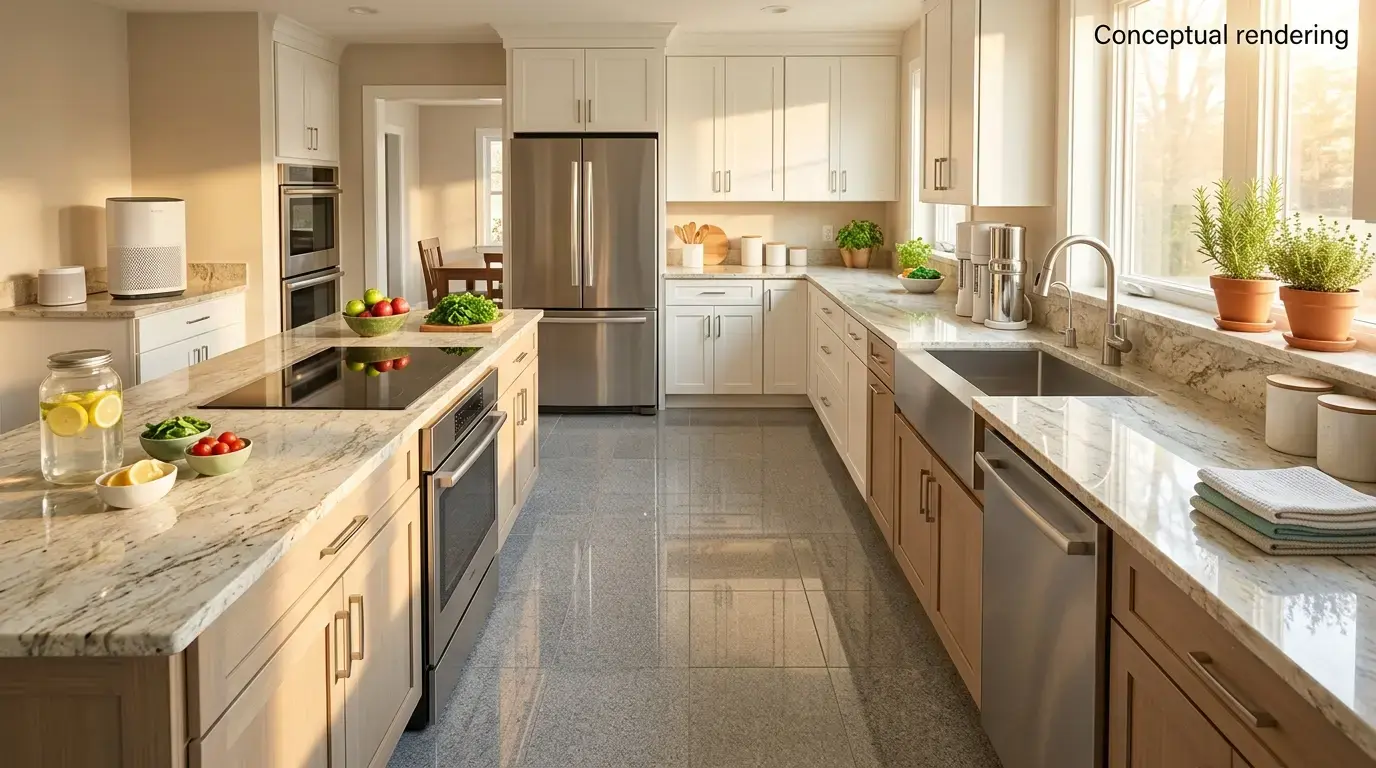 Conceptual rendering
Explore Tile and Stone Options at Nova
Choosing between stone and tile materials and finishes is easier with guidance from someone familiar with how each option performs in Fallon-area homes. Nova's design specialists can walk through room-by-room recommendations, from bedroom flooring to kitchen countertop pairings, based on household needs and cleaning habits.
Every household's allergy triggers and cleaning routines differ, so a general recommendation only goes so far. Discussing specific rooms, current flooring, and daily habits with a design specialist tends to produce a more tailored material plan than browsing finishes alone.
Homeowners can browse slab collections online before narrowing down options in person. Free tile samples are also available to bring home, making it easier to see how a finish looks under actual lighting conditions before deciding on a full room. For a closer look at the team behind these recommendations, Nova's design specialists page shares more about the showroom's background.
Fallon, Silver Springs, Wadsworth, and Stagecoach households can visit the Fernley showroom to see samples in person. Recent coverage of flooring innovation updates highlights how surface technology continues to evolve across the industry.
Homeowners further from Fallon still have nearby options. The Reno showroom location carries the same stone and tile materials and finishes for households across the wider region. The Minden showroom location supports Douglas County homeowners with comparable guidance on allergy-friendly flooring. The Sacramento showroom location extends these same options into Northern California for households who split time between regions.
Schedule a free consultation to start narrowing down the right materials for a healthier, easier-to-clean home.
Conclusion
Tile and stone remain strong contenders for the best flooring for allergies, thanks to non-porous surfaces that resist dust, pollen, and pet dander buildup better than carpet. For a broader look at available materials and finishes, explore Nova's full collection before comparing rooms in more detail. Pairing the right flooring with complementary slab countertops rounds out an allergy-conscious material plan for any Fallon home.
Our latest content
Check out what's new in our company !
Frequently Asked Questions
Hard, non-porous surfaces like porcelain tile and natural stone limit dust and pollen buildup compared with carpet. Regular cleaning helps maintain a healthier indoor environment for allergy-sensitive households.
Sealed natural stone resists moisture and dust absorption, but grout lines and unsealed surfaces can collect debris over time. Routine cleaning and periodic resealing help reduce buildup.
Yes, porcelain tile has a non-porous, low-maintenance surface that can be damp-mopped rather than vacuumed, reducing lingering dust, pet dander, and pollen commonly trapped in carpet fibers.
Non-porous slab surfaces like granite and quartz resist bacteria and mold growth when properly sealed, complementing allergy-conscious flooring choices throughout Fallon homes.
Fallon-area homeowners have access to tile and stone options through nearby Nova showrooms, including the Fernley location, offering a range of allergy-conscious material choices.