Finding the Right Slabs for Fernley Kitchens
Selecting a countertop material defines the character and functionality of a kitchen or bathroom for years. Kitchen surfaces absorb heat, resist daily cutting, and face chemical exposure from cleaning products and food acids. Bathroom vanities require moisture tolerance, consistent upkeep, and compatibility with high-humidity conditions. Slabs for Fernley kitchens carry an added layer of regional context: temperature swings between seasons, hard water, and extended UV exposure for outdoor surfaces. The TCNA Handbook provides professional benchmarks for stone and tile surface performance, and those standards are a practical starting point for Nevada homeowners.
Full-slab countertops have grown in appeal because they reduce visible seams, create a continuous visual field, and simplify cleaning routines. A single-slab kitchen island reads as a finished, intentional surface rather than a tiled patchwork.
Top Slab Materials and Their Real-World Benefits
Five slab materials appear consistently in Fernley kitchens, bathrooms, and outdoor spaces: granite, quartzite, quartz, marble, and porcelain. Each carries a distinct combination of visual character, hardness, maintenance requirements, and outdoor suitability.
Granite is a naturally occurring igneous stone. Its crystalline surface resists scratches and handles heat from cookware without immediate surface degradation. Granite is UV-stable and rated for full-sun outdoor contexts. Periodic sealing is required to maintain stain resistance, and the schedule varies by finish and usage level.
Quartzite is a metamorphic stone harder than granite, with a veining pattern that resembles marble at a glance. UV-stable and approved for outdoor surfaces, quartzite performs in high-traffic kitchens and on exposed patios alike. Like granite, it requires sealing to prevent moisture absorption into the stone matrix over time.
Quartz is an engineered surface made from crushed quartz bound with polymer resin. The non-porous composition resists staining without requiring periodic sealing. Quartz is best suited to interior applications; sustained UV exposure degrades the resin binder and causes color shift.
Marble offers unmatched veining patterns and a classic visual profile, but it is a softer, more reactive stone. Marble is best reserved for shaded or interior surfaces. Acidic cleaners and heavy daily use will etch the finish and dull the surface over time, and resealing is required on a regular schedule.
Porcelain slabs are fired ceramic panels available in large-format sizes. The porcelain tile certification program confirms UV-stable and freeze-thaw resistant ratings for qualifying products. Porcelain suits kitchens, bathrooms, and exposed outdoor surfaces with minimal ongoing maintenance.
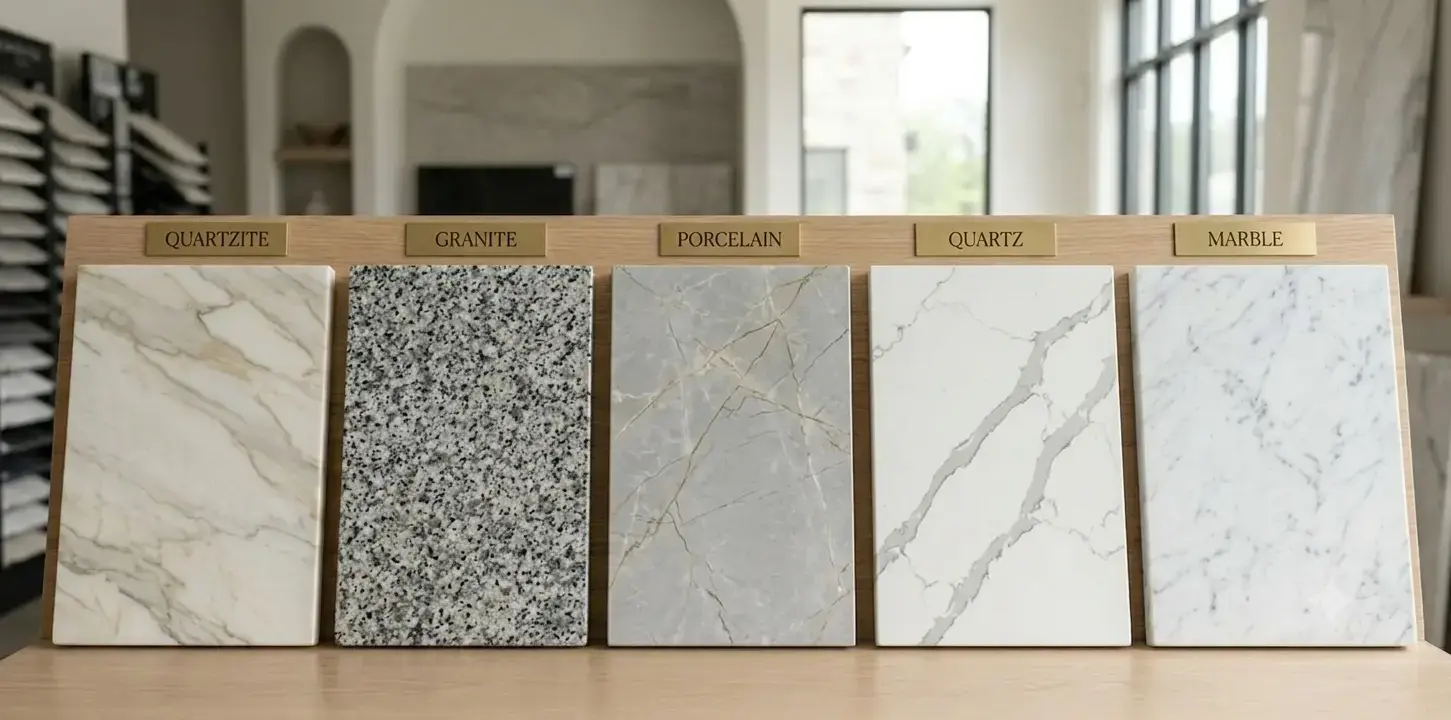
Countertop Slab Comparison
MATERIAL | HARDNESS | UV-STABLE | SEALING REQUIRED | BEST APPLICATION |
Granite | High | Yes | Yes | Kitchen, Outdoor |
Quartzite | Very High | Yes | Yes | Kitchen, Outdoor |
Quartz | High | No | No | Kitchen, Bath |
Marble | Medium | No | Yes | Bath, Shaded Interior |
Porcelain | Very High | Yes | No | Kitchen, Bath, Outdoor |
Pros and Cons at a Glance
Granite:
Durable, heat-resistant, uniquely patterned; requires periodic sealing, surface etching possible with harsh chemical exposure.
Porcelain:
UV-stable, freeze-thaw resistant, low maintenance; thinner slab profiles require careful fabrication handling, edge profile options are more limited compared to natural stone.
Quartz:
Non-porous, consistent appearance, no sealing required; not rated for full-sun outdoor use, heat-sensitive resin surface.
Marble:
Refined aesthetic, distinctive patterns; softer and prone to etching and staining, limited to interior or shaded settings.
Quartzite:
Harder than granite, striking natural veining, UV-stable; requires sealing, cost typically higher than granite.
Slab Applications for Kitchens, Bathrooms, and Outdoor Spaces
Matching material to application is the first practical step toward ensuring a successful project outcome. The Nova slab collection provides customers with full‑size examples across all five major categories, carefully displayed in showroom conditions that replicate real environments. This setup allows for accurate side‑by‑side comparison under natural and artificial lighting, helping designers and homeowners evaluate tone, finish, and variation. By experiencing slabs in true scale and context, clients gain confidence in selecting the right material for their specific project needs.
Kitchen Countertops
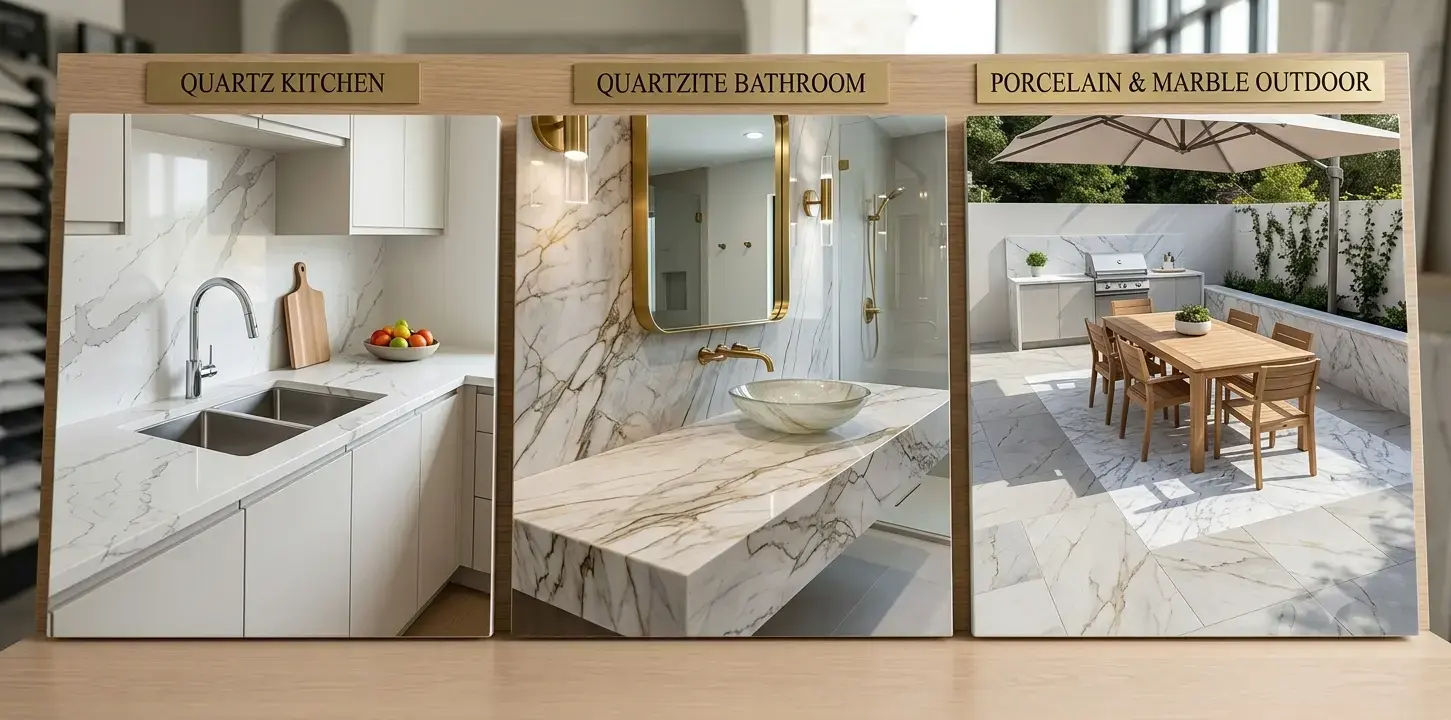
Kitchen countertops face the highest daily stress of any interior stone and tile surface. Heat from pots and pans, repeated cutting and chopping, acidic spills from citrus and vinegar, and constant moisture exposure all affect long-term material performance. Granite and quartzite handle these conditions reliably, provided sealing schedules are maintained. Quartz suits kitchens where a non-porous, sealing-free surface is the priority and where trivets are used consistently to protect the resin surface from direct heat.
Porcelain is gaining ground in kitchen contexts because of its hardness, UV resistance, and availability in large slab formats suited to long countertop runs. Bostik's 2026 innovations reflect the industry's continued investment in professional-grade adhesive and setting systems that support thinner, larger-format slab panels at scale.
Bathroom Vanities and Wet Areas
Bathroom surfaces require materials that resist moisture without demanding excessive upkeep. Quartz is a standard recommendation for vanity tops and wet areas because the non-porous surface does not absorb water or support mold development without additional treatment. Marble can be used in bathroom settings where use is moderate and product exposure is managed, but it requires regular resealing.
Quartzite and porcelain are strong options for shower surrounds, wet floors, and wall surfaces. Both materials offer sufficient hardness, and when paired with appropriate setting materials, they perform reliably in sustained moisture exposure.
Patio and Landscape Designs
Fernley's outdoor surfaces face direct sun, temperature shifts, and occasional freeze conditions. Granite and quartzite handle patio and landscape designs in full-sun settings without surface fading or structural degradation. Porcelain slabs are equally suited to outdoor contexts, offering a consistent visual result across large outdoor expanses.
Marble and travertine are not recommended for Fernley outdoor surfaces. Both materials weather under UV exposure and are vulnerable to freeze-thaw cycling. Restricting these materials to covered or interior contexts extends surface life and reduces the frequency of corrective maintenance.
How to Choose the Right Countertop Slab: A 5-Step Guide
Define the environment
Determine whether the surface is interior, semi-covered, or in direct outdoor sun. UV exposure and moisture level establish which materials are viable before any other factors are weighed.
Set a realistic maintenance threshold.
Natural stones like granite, quartzite, and marble require periodic resealing. Engineered and fired materials like quartz and porcelain do not. Match the material to the household's actual maintenance capacity, not an idealized one.
Evaluate finish options
Honed and leathered finishes reduce surface glare and provide grip in wet areas. Polished finishes amplify veining and mineral detail but show fingerprints and surface scratches more readily in daily use.
Confirm edge profile compatibility
Thinner slab formats, particularly porcelain, limit available edge profile options. Thicker natural stone slabs allow more variety. Confirm fabrication capabilities before committing to a material.
Request samples before deciding
Viewing full-size slabs under the actual lighting of the intended room is the most reliable comparison method. Lighting conditions, wall color, and cabinet finishes all affect how a material reads at full scale.
Discover Nova's Countertop Slab Collection in Fernley
Nova Tile and Stone offers hands-on slab inventory and regional expertise. Homeowners can meet the Nova team at the Fernley showroom and work through material comparisons with staff familiar with granite, quartzite, quartz, marble, and porcelain across a range of project types. Trade professionals working on new construction or renovation projects can apply for trade access to access dedicated support and project-level resources.
For homeowners planning ahead, the process begins with a material and dimension review. Use the online form to request a slab quote before visiting. Ready to view slabs in context? Book a showroom visit and bring reference photos, cabinet samples, or flooring swatches for a more productive on-site comparison. Nova encourages Fernley buyers to shop local first and take advantage of in-person expertise before making a final surface selection.
Conclusion
The best countertop slab is the result of aligning material properties with actual use conditions. Granite and quartzite perform in high-traffic kitchens and full-sun outdoor surfaces. Quartz delivers interior performance with minimal maintenance demands. Marble serves shaded and interior contexts where aesthetics take priority over durability. Porcelain covers the full range from kitchen countertops to exposed outdoor contexts. Fernley homeowners ready to take the next step can connect with Fernley's stone specialists to view the full slab collection and receive hands-on guidance through every phase of the project.
Note: Some images on this page may be conceptual renderings created to illustrate design possibilities and may not depict actual installations.
Frequently Asked Questions
Granite and quartzite are the leading choices for Fernley kitchen countertops. Both materials resist scratches and heat effectively and handle the demands of daily kitchen use. Both materials require periodic sealing to maintain stain resistance over time.
Quartzite is a natural stone offering unique veining and a very hard surface that performs well in bathroom settings with regular sealing. Quartz is engineered and non-porous, requiring no sealing and resisting moisture absorption without maintenance. The better choice depends on maintenance preference and the level of daily use in the space.
Yes. Granite is UV-stable and approved for full-sun outdoor applications including patios and landscape surfaces. Consistent sealing protects it from moisture intrusion and surface degradation across seasonal temperature changes.
Honed and leathered finishes offer better grip and conceal surface wear more effectively in kitchen settings. Polished finishes amplify natural veining and crystalline detail but show scratches and daily contact marks more readily.
Yes. Porcelain slabs carry UV-stable and freeze-thaw resistant ratings, making them suitable for outdoor surfaces in Fernley's climate. Minimal maintenance requirements and consistent color make porcelain a reliable choice for patio and landscape designs.
Curious About Something Else?