Porcelain, ceramic, and mosaic tile are the strongest choices for Gardnerville, NV bathrooms because each resists water damage and mold growth in a room the EPA identifies as one of the highest-risk spaces for trapped humidity. Porcelain works best for floors and shower surrounds due to its density and low water absorption, ceramic suits accent walls and decorative detail, and mosaic tile fits shower floors and curbs where a smaller format follows slopes and drains more easily. Gardnerville sits about 1.2 miles from Minden along US-395, roughly a three-minute drive, right next to the separate, adjacent community of Gardnerville Ranchos, where many homes were built on private well water rather than a municipal system. That distinction matters for bathroom tile choices: USGS groundwater testing in Douglas County has found iron and manganese above standard levels in a meaningful share of area wells, and homeowners on well water sometimes see that mineral content leave rust-toned residue on lighter grout faster than treated municipal water does. At Nova Tile and Stone, our nearby Minden showroom carries all three tile types suited to this kind of high-moisture, high-traffic space.
Why Bathrooms Call for a Different Standard
A bedroom or living room floor rarely deals with standing water, but a bathroom floor is built around it. Showers, tubs, and sinks introduce moisture on a daily basis, and a material that performs beautifully elsewhere in the home can struggle once it faces this kind of repeated exposure. Ventilation also plays a role in how a bathroom holds up over time, since trapped humidity affects grout, caulk, and any surface that is not fully sealed.
The National Kitchen and Bath Association publishes planning guidelines that address moisture control, ventilation, and flooring surfaces specifically for bathrooms, reflecting just how differently this space needs to be approached compared to the rest of a home. Choosing a tile built for wet conditions from the outset tends to save homeowners from dealing with avoidable issues later on.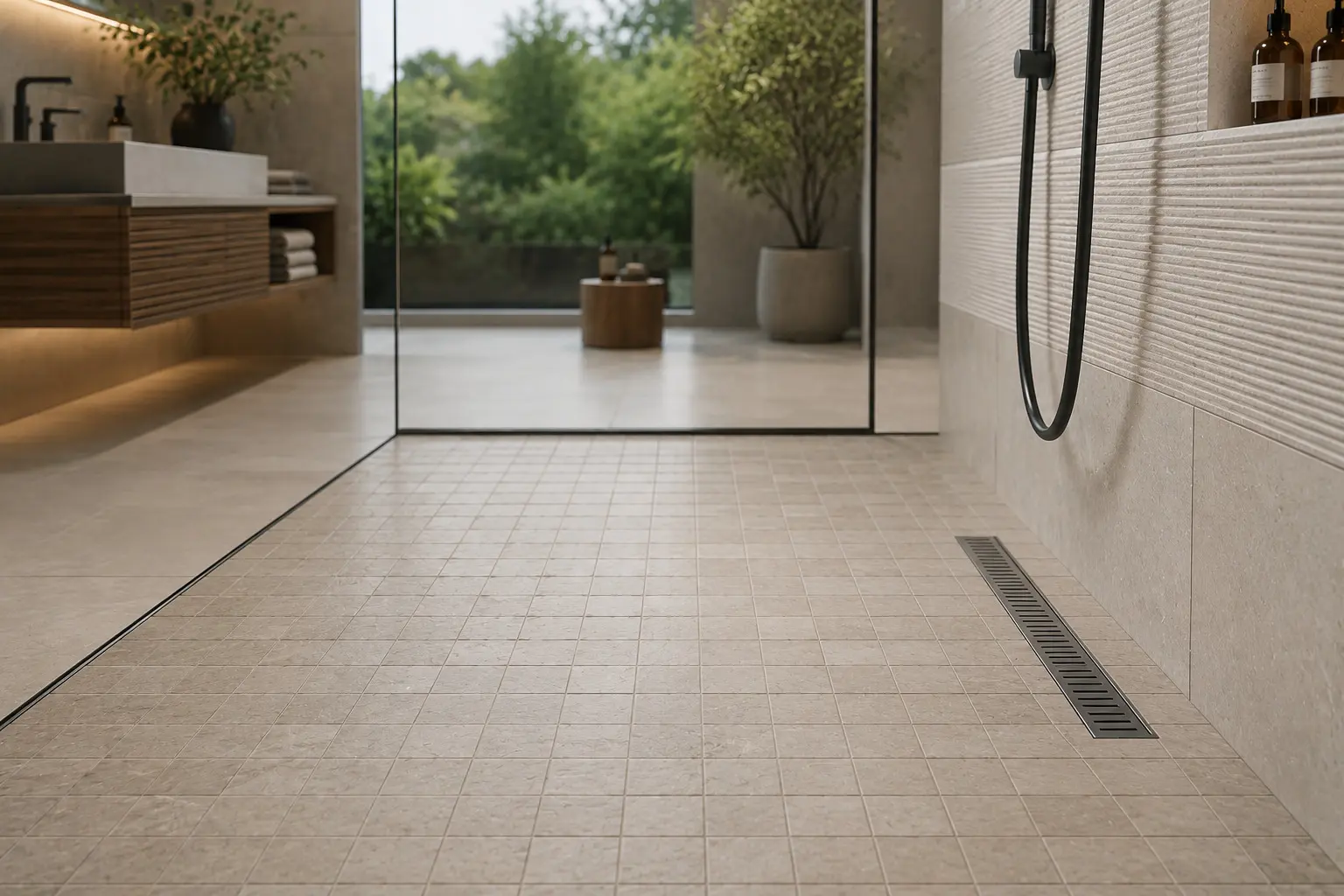
Porcelain Tile as the Primary Choice for Wet Areas
When it comes to standing water, steam, and daily cleaning products, porcelain holds up better than nearly any other tile material, which is a large part of why it dominates bathroom floor and wall installations. The manufacturing process fires the material at high temperatures, which results in a surface with very low water absorption compared to many alternatives. The surface is stain resistant, but spills should be cleaned promptly, particularly around a vanity where soaps, lotions, and hair products tend to collect over time.
Because porcelain resists moisture so effectively, it works well on shower walls, tub surrounds, and bathroom floors alike, giving homeowners the option to carry one material through the entire space for a cohesive look. Large-format porcelain panels have also become popular for shower walls, since fewer grout lines mean less area where mildew or soap scum can build up.
Where Ceramic and Mosaic Tile Fit In
Ceramic tile shares many of porcelain's practical advantages, though it is generally softer and easier to cut, which makes it a popular choice for accent walls, decorative borders, and areas that call for more intricate shapes. It also tends to offer a wider range of colors and glaze finishes, giving homeowners more flexibility for a feature wall or a bold pattern behind a vanity.
Mosaic tile, often made from small pieces of porcelain, ceramic, or glass, is frequently used on shower floors and curbs because the smaller format allows the surface to follow slopes and drainage angles more easily than large-format tile. The material offers good resistance to wear, but long-term performance depends on maintenance, particularly around grout lines where smaller tile naturally has more seams. Mosaic is also a popular way to introduce a contrasting color or texture in a niche, border, or accent strip without covering an entire wall in a bold pattern. Homeowners comparing these options can browse available tile types to see porcelain, ceramic, and mosaic side by side, or look through the complete tile selection for a broader starting point before narrowing down a direction.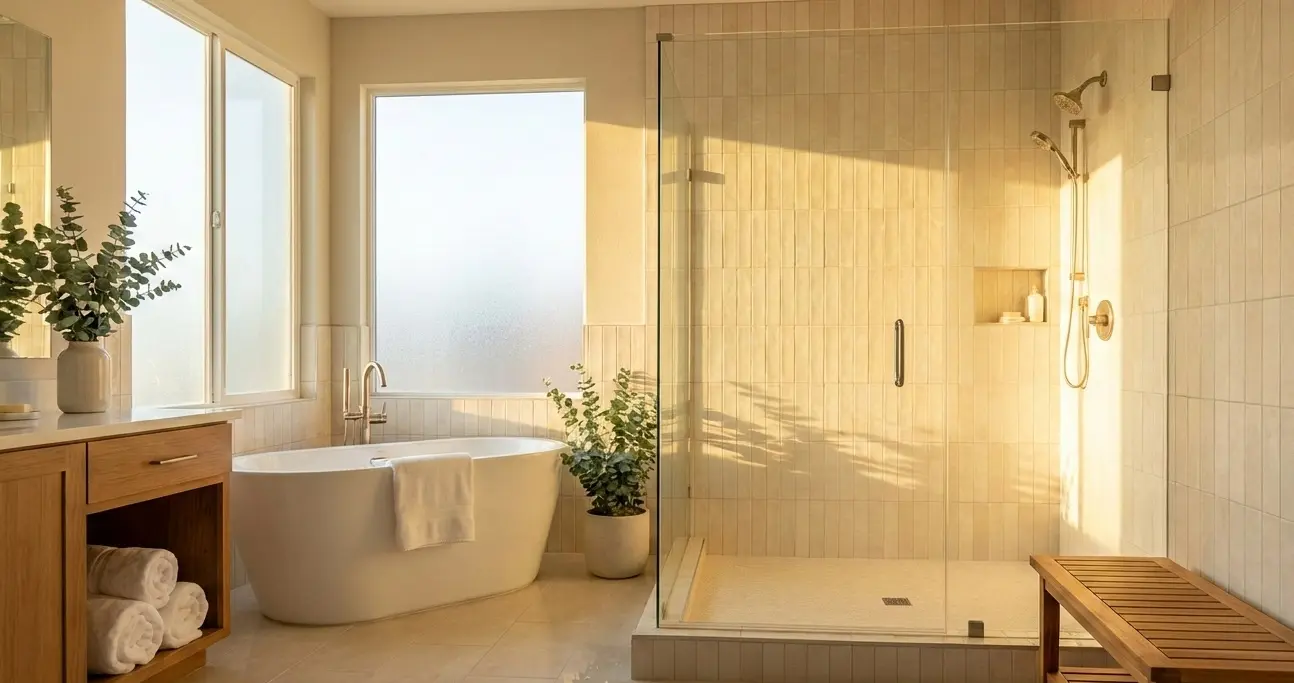
Slip Resistance for Shower and Bathroom Floors
Water resistance only answers half the safety question in a bathroom, since a floor also has to stay stable underfoot once it is wet. Manufacturers quantify this with a wet-traction test called DCOF, or dynamic coefficient of friction, standardized by the Tile Council of North America, where a higher score means more resistance against a sliding foot. Bathroom floors and shower pans are exactly the kind of surface this rating was built for, since they see standing water on a near-daily basis rather than the occasional wet moment an entryway or kitchen floor deals with.
A matte or textured finish typically offers more secure footing than a glossy one, which is worth keeping in mind for a walk-in shower or a floor near a tub where water is likely to pool briefly. Smaller tile with more grout lines can also add a bit of extra traction compared to a single large-format sheet in the same finish.
Design Considerations for a Cohesive Bathroom
Scale plays a noticeable role in how a bathroom feels once tile is installed. A large-format tile on the floor of a smaller bathroom can make the space feel more open, since fewer grout lines reduce visual clutter. A guest bathroom or powder room, on the other hand, often has more room for a bolder pattern or a smaller mosaic since the space is used less frequently and can handle a more dramatic look.
Grout color deserves the same attention as the tile itself. Lighter grout can brighten a small space but shows soap residue and mildew more readily than a mid-tone or darker option, which is part of why many bathroom installations lean toward grout that blends closely with the tile color. The style-based browsing tool on our site groups finishes by look rather than material, which makes it easier to shortlist a few tile-and-grout pairings before a showroom visit.
Matching Tile to Vanity and Fixture Choices
Bathroom tile rarely stands alone, since it usually needs to coordinate with the rest of the room, including cabinet color and fixture finish. A tile with rich veining or a bold pattern pairs naturally with a simpler, more neutral vanity surface, while a plain or subtle tile leaves more room to introduce color or pattern through cabinetry, hardware, or accessories elsewhere in the space. Thinking through this balance early tends to keep a bathroom feeling planned as a whole rather than assembled piece by piece.
Metal finishes on faucets, shower fixtures, and cabinet hardware also influence which tile tones read best in the room. Warmer metals such as brushed brass or bronze tend to pair well with cream, beige, or warm gray tile, while cooler finishes like chrome or matte black often suit cooler-toned tile more naturally. Lighting adds one more layer to this decision, since a bathroom with mostly artificial lighting can read a tile color differently than one with strong natural light through a window, so it helps to view samples at different times of day whenever possible before finalizing a choice.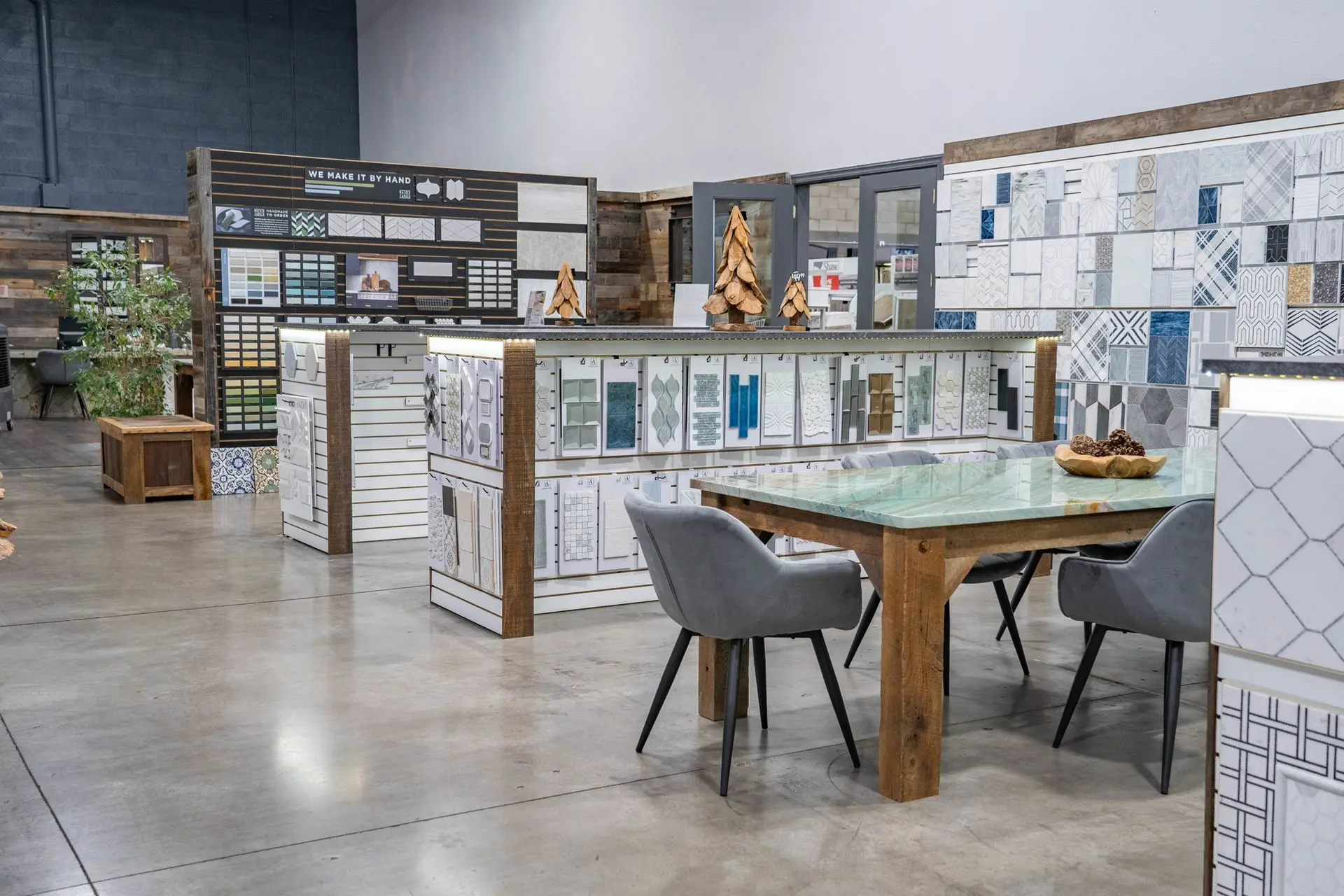
Comparing Options at Our Minden Showroom
Bathroom tile is difficult to judge from a photo alone, since finish, scale, and how a color reads under different lighting all shift once a tile is out of a listing photo and in a physical space. Visiting our Minden showroom, just a short drive from Gardnerville, gives homeowners a chance to see full tile samples in person and compare textures against one another before committing to a direction. Browsing our website ahead of a visit can also help narrow down a few favorites to look at first.
For anyone who wants guidance specific to their bathroom's layout, lighting, and fixture choices, scheduling a complimentary design consultation is a straightforward way to get input without any obligation. Our design team can walk through porcelain, ceramic, and mosaic options together and help match a tile selection to the rest of the room.
Conclusion
A bathroom asks more of its flooring and wall materials than nearly any other room in a Gardnerville home, and porcelain tile continues to be one of the most reliable answers to that challenge. Ceramic and mosaic tile round out the picture for accents, borders, and shower floors where a different scale or texture is useful. For homes in Gardnerville Ranchos running on well water, choosing a grout that resists mineral staining is worth raising directly with our design team before finishing a remodel. Since bathroom tile has to perform under conditions no other room in the house matches, seeing samples under real light and talking through the specifics with our design team is worth the extra step before finalizing a choice.
Frequently Asked Questions
Porcelain is generally denser and more water-resistant, making it a strong choice for floors and shower surrounds. Ceramic works well for walls, accents, and areas with lighter moisture exposure, and it often offers more color and glaze variety.
DCOF is the industry's wet-traction rating for tile, and it carries more weight in a bathroom than in almost any other room since the floor is wet on a near-daily basis rather than only occasionally. Look for a higher wet DCOF number specifically on shower floor and bath floor tile, since those surfaces face standing water far more often than a hallway or kitchen floor would.
Grout color has a real practical impact in a bathroom specifically, since the residue it deals with is soap scum and mildew rather than the salt and tracked-in dirt an entryway floor faces. Mid-tone or darker grout tends to hide that particular kind of buildup better, which is part of why it shows up so often in showers and around tubs.
Using a closely related tile across the floor and walls often creates a more unified look. Floors typically call for a smaller format or more textured finish for slip resistance, while walls can use larger panels since traction is less of a concern.
Bringing a photo of the fixture finishes to a design consultation makes it easier to compare tile samples in the same setting. Warmer metal finishes tend to pair well with warmer tile tones, while cooler finishes often suit cooler-toned tile.