A remodel almost always comes down to two decisions: what covers the vertical surfaces and what sits underfoot. These two elements shape how a bathroom feels day to day, how it handles daily moisture, and how it reads visually the moment someone steps inside. For homeowners in Minden planning a refresh, understanding the range of materials available can turn an overwhelming project into a manageable one.
This guide walks through common wall and floor materials, how they compare, and what to weigh before settling on a final pairing. Nova Tile and Stone works with homeowners who want a bathroom that feels considered rather than thrown together, and the goal here is simply to help you think through the options with clarity.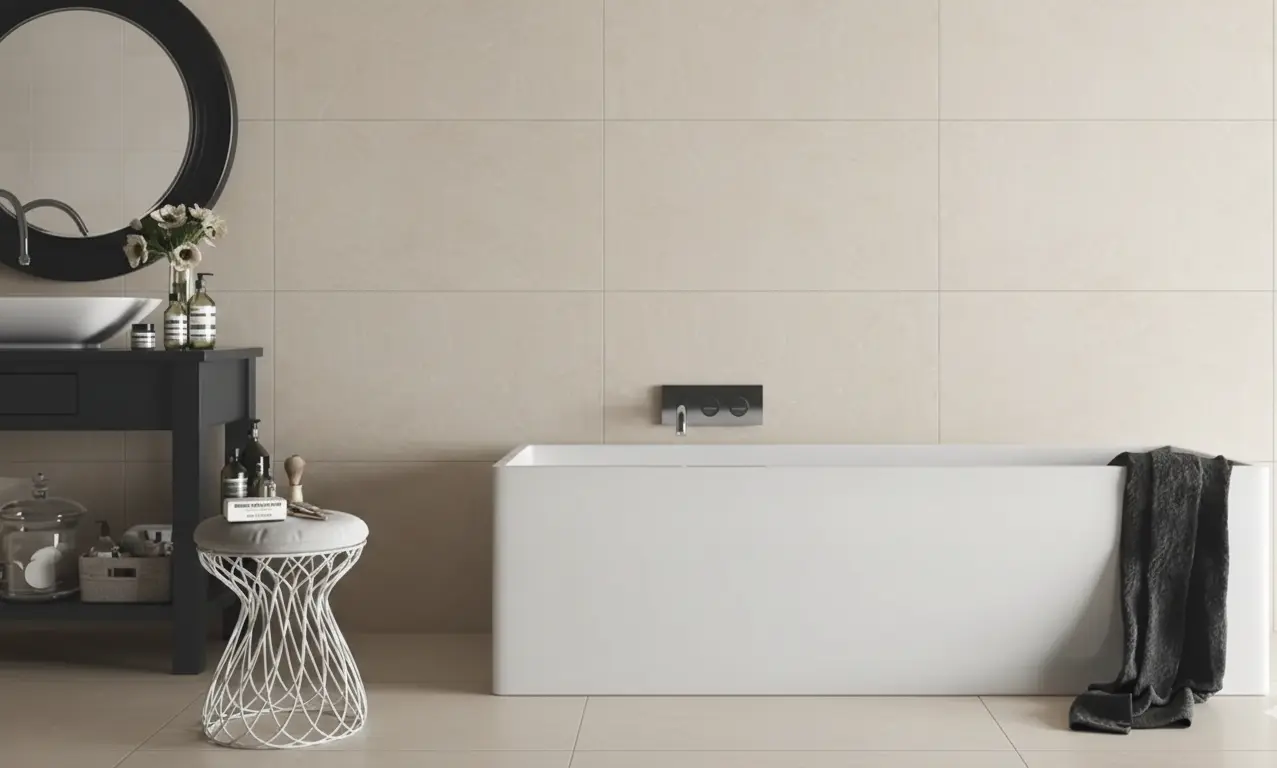
Understanding Wall Surface Options
Vertical surfaces in a bathroom take on a different job than walls elsewhere in a house. They face constant humidity, occasional splashing, and repeated cleaning, so the material chosen has to hold its appearance under those conditions. Porcelain remains a popular pick: it's dense, low in absorption, and available in a wide range of finishes, from matte to a glossier sheen. Ceramic offers a similar look at a lighter weight, which can matter for larger vertical installations.
Natural stone brings a different character. Marble, travertine, and quartzite each carry their own veining and tonal range, with natural variation from piece to piece. It handles daily moisture well, though standing water shouldn't sit for long stretches near tub surrounds or shower niches. Because finish affects both grip and appearance, it helps to understand how polished, honed, and textured finishes perform differently before narrowing down a selection; the natural stone industry has published useful guidance on selecting the ideal finish for various applications.
Glass and mosaic accents are worth mentioning too, usually as a complement rather than a primary surface. A band of mosaic along a shower wall or behind a vanity can introduce color or texture without covering the entire room in a bold pattern. Browsing our tile shop in person often makes these smaller accent decisions easier, since color and sheen can look different under natural light than they do in a photograph.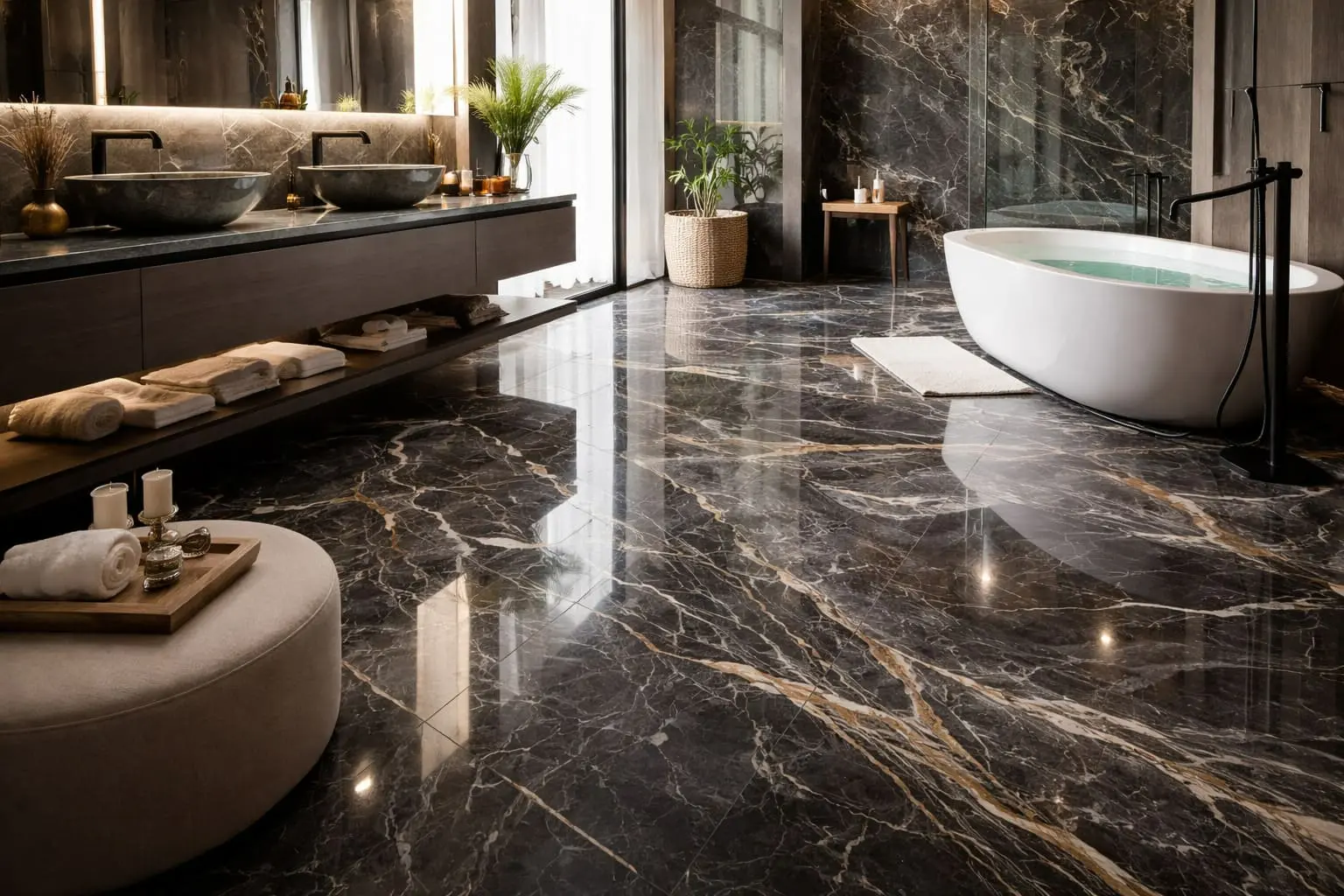
Choosing Flooring That Handles Daily Use
Underfoot surfaces face a slightly different set of demands. Traction matters more here than on a wall, since a bathroom floor is frequently wet. Textured porcelain and certain honed stone finishes are often selected for this reason, since a smoother polished surface can feel slicker when damp. Larger format floor tile has also grown popular because fewer grout lines can make a small room read as more open.
Slab surfaces are increasingly used for flooring as well as countertops, and browsing our slab collection can make the differences in veining and tone far easier to judge than comparing photos on a screen. Spills should still be cleaned up promptly to protect the finish over time, and in a bathroom that gets strong sun through a skylight or a large window, it's worth asking how a given slab's color and sheen hold up under UV exposure some finishes fade or shift less than others.
Radiant warmth, drainage slope, and transition strips are all part of a flooring conversation too, but those fall more under a contractor's scope than a material selection guide, so we'll leave the technical planning to the professionals handling your specific project.
Pairing Walls and Floors for a Cohesive Look
Once individual materials are chosen, the next question is how they work together. Some homeowners prefer a matching approach, where the same stone or tile continues from floor to wall for a seamless, almost sculptural look. Others prefer contrast, pairing a neutral floor with a more dramatic accent wall, or vice versa.
Pattern is another variable worth considering early. A herringbone layout, for instance, can add movement to an otherwise simple material, and there are plenty of herringbone pattern ideas that show how the same layout reads differently depending on tile size and grout color. Subway-style rectangles, hexagons, and large-format squares each bring a distinct rhythm to a room, so it helps to picture the pattern at full scale rather than judging from a small sample.
Grout color deserves a mention as well, since a contrasting grout line can highlight a pattern while a matching grout tends to let the material itself take center stage.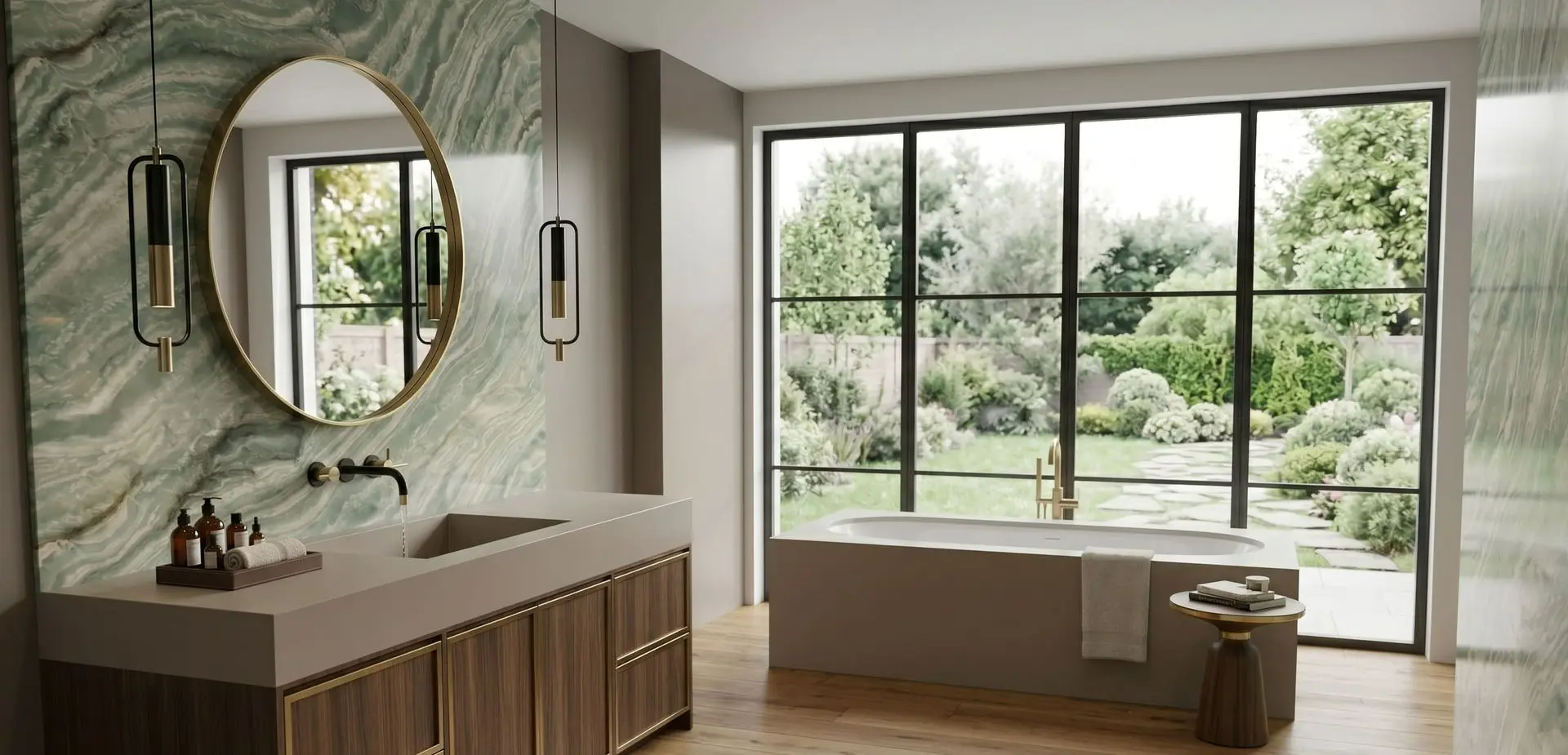
Why Natural Stone Continues to Draw Interest
Stone remains a consistent favorite for bathroom projects because each slab has natural variation in tone, veining, and movement, giving each installation its own distinct character. It resists wear well, but long-term performance still depends on maintenance and how the space is used day to day. Homeowners drawn to a calmer, more monochromatic palette often lean toward quartzite or a lightly veined marble, while those wanting more visual energy might choose a stone with bolder movement.
It's worth noting that stone selection also intersects with lighting. A bathroom with strong natural light will show veining and color shift more dramatically than one lit primarily by fixtures, so viewing a sample under conditions similar to the actual room can prevent surprises later. This matters more than usual in Minden, where the high-desert sun throws a brighter, cooler light than homeowners coming from cloudier climates might expect a marble that looks warm and soft under a showroom's fixtures can read starker once it's installed under that light.
Finish selection carries its own weight in this decision. A polished surface amplifies depth and reflection, which can make veining look more dramatic, while a honed or leathered finish softens that same movement into something quieter and more understated. Neither approach is inherently better - it depends on whether the room calls for a bolder focal point or a calmer backdrop for other design elements.
Matching Materials to Room Size, Layout, and Local Conditions
Room dimensions influence material selection just as much as personal taste does. In a compact bathroom, oversized tile can make the space feel more open, since fewer grout lines create a continuous surface for the eye to follow without interruption. A smaller-scale mosaic, on the other hand, can add texture to a powder room without overwhelming limited square footage.
Layout also affects where bolder choices make the most sense. A statement wall behind a vanity or within a shower niche lets a homeowner introduce a dramatic stone pattern without covering every surface, keeping the overall look balanced rather than busy. Ceiling height matters too. A vertical, stacked layout can draw the eye upward in a room with lower ceilings, while a horizontal arrangement tends to widen the visual footprint of a narrower space.
Local climate adds one more consideration. The Carson Valley's dry, high-desert air means Minden bathrooms aren't fighting the outdoor humidity some regions deal with, but a hot shower raises the humidity in that one room no matter where the house sits, so low-absorption surfaces and proper sealing still earn their keep here. What the dry climate actually changes is smaller and more practical: surfaces dry out faster between uses, and textured finishes tend to collect a bit more dust from the dry air, which is worth building into a regular cleaning routine.
Getting Guidance Before You Decide
Because so many variables come into play, from finish to pattern to how a space is lit, seeing materials firsthand tends to settle decisions that photos alone can't. A free consultation lets a homeowner walk through options with someone familiar with the full range available, ask questions specific to their layout, and compare samples side by side instead of guessing from a screen. Our full collection gives a clearer sense of scale, texture, and how light plays across a surface than any photo can and pulling up map directions ahead of time makes planning that visit simple.
Conclusion
Choosing wall and floor materials for a bathroom is less about finding a single "best" option and more about matching material characteristics to how the room will actually be used and how it should feel. Porcelain and ceramic offer consistency and a wide range of finishes, while natural stone brings variation and a more organic character. Floors carry additional demands around traction and daily wear, while walls face more consistent moisture exposure. Pattern, grout color, and lighting all shape the final result just as much as the material itself. Taking time to compare a few options side by side, ideally in person, tends to lead to a result that still feels right years down the road.
Frequently Asked Questions
Porcelain is manufactured, so color and pattern repeat consistently across every tile in the box, handy if you want a uniform look or may need to match tile for a repair years down the road. Natural stone like marble or quartzite is cut from real slabs, so no two pieces are identical; that variation is part of the appeal, but it also means it's worth ordering a bit extra up front, since a later batch may not match exactly.
It can be, especially in a honed or textured finish, which grips better underfoot than a polished one. Just make sure your installer builds in proper slope toward the drain on a stone floor. Drainage does more of the traction work than the stone itself, so a well-sloped honed floor will outperform a poorly sloped polished one every time.
Start with the room's size and how much natural light it gets. A monochromatic, matching scheme tends to make small or dim bathrooms feel bigger, since there's no visual break between surfaces. A contrasting pairing works better in larger bathrooms or ones with good light, where the eye has room to appreciate the transition rather than feeling like the space is being cut in half.
Yes, and it's one of the cheapest ways to change a room's whole feel without changing the tile itself. A dark grout on white tile reads modern and graphic; a grout close to the tile's own color reads calmer and more traditional. If you're unsure, ask to see a sample board with two or three grout options against your chosen tile before installation, it's a five-minute comparison that's hard to undo once it's grouted.
Yes a free design consultation lets you compare tile, stone, and slab in person, which matters because both color and sheen can look noticeably different under a showroom's lighting versus your own bathroom's light. Bring a paint chip or photo of your existing fixtures if you have them; it makes the comparison much more accurate than judging tile in isolation.
Curious About Something Else?