The best tile for a bathroom in Woodland, CA depends on the surface and the home, but most projects use a combination of materials:
- Porcelain tile for shower walls and bathroom floors, due to low water absorption and durability
- Ceramic tile for bathroom walls in lower-traffic areas, at a lower cost than porcelain
- Large-format tile (12x24 inches or larger) for shower enclosures, to reduce grout lines and simplify cleaning
- Natural stone tile, such as marble or travertine, for accent niches, borders, or feature walls
- Mosaic tile for shower floors, where smaller pieces improve slip resistance on sloped surfaces
Homeowners in Woodland are often working with one of two very different starting points: a smaller, original bathroom in one of the city's historic homes, or a larger primary bathroom shell in a newer Spring Lake construction. Whichever situation applies, our full range of tile, stone, and flooring products covers most bathroom design needs. Below, we walk through how tile material, shower layout, and design choices should shift depending on which situation applies, along with the practical factors that affect any bathroom tile project in Yolo County, including water exposure, slip resistance, and ventilation.
Why Bathroom Tile Choices Matter in Woodland
Woodland's housing stock spans a wide range, from homes in the historic downtown district to newer construction in communities like Spring Lake. That mix means bathroom projects here vary quite a bit. A century-old home in the historic district may have a smaller original bathroom footprint and older plumbing, while a newer Spring Lake home may already have a larger primary bathroom shell ready for a design update. In both cases, tile plays a functional and aesthetic role. Bathrooms deal with constant moisture, temperature changes, and daily wear, so tile selection needs to balance appearance with water resistance and durability. Our family-owned team has worked through these same material tradeoffs with homeowners across Northern California and Northern Nevada for years.
Yolo County's hot, dry summers and cooler winters do not place unusual demands on interior tile, but they do make it worth considering slip resistance for bathroom floors, particularly in households with kids or older adults.
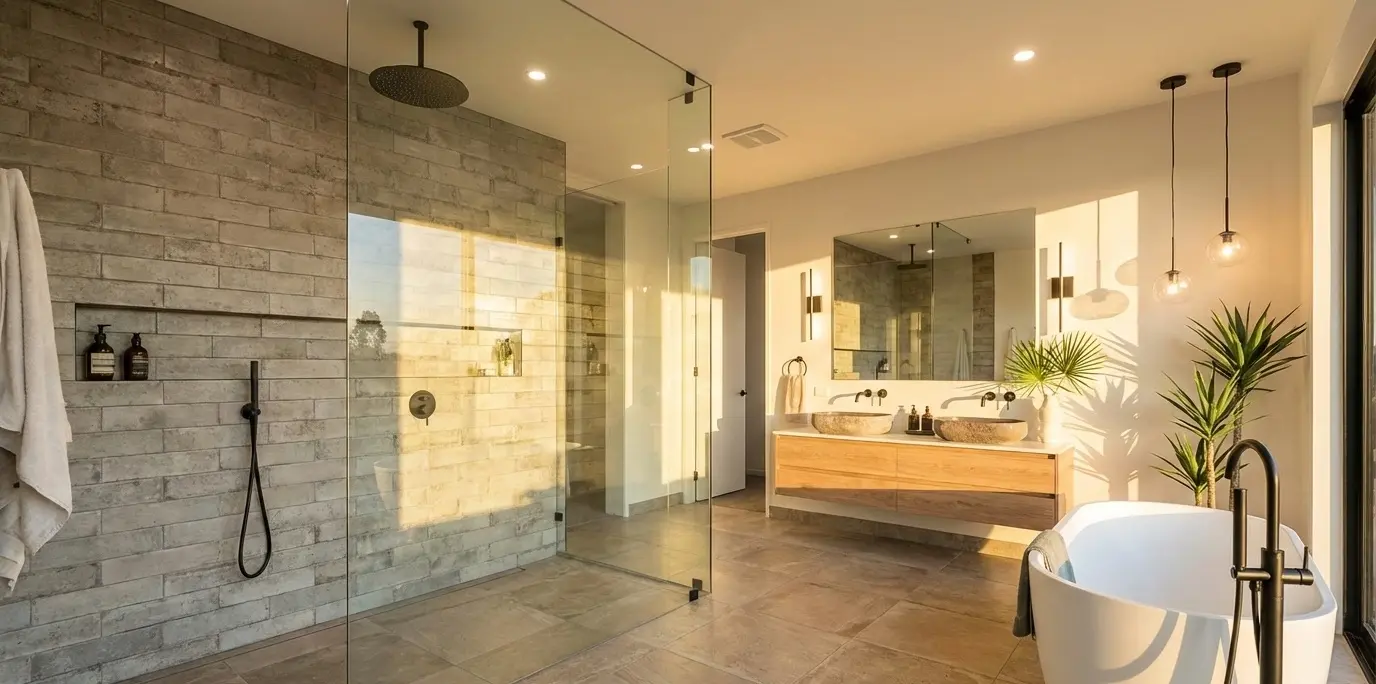
Shower Design Trends for Woodland Bathrooms
Shower design has shifted over the past few years, and the trends we see most often at our Sacramento showroom include:
- Large-format tile: Tiles in the 12x24 inch and larger range reduce the number of grout lines in a shower, which can simplify cleaning and give the space a more uniform look. A slate-look porcelain tile in a 12x24 format is a common example of this trend.
- Minimal curb or curbless entries: Walk-in showers without a raised curb are increasingly common in remodels, particularly for homeowners planning to stay in their home long term.
- Accent niches and shelving: Built-in tiled niches are used in place of freestanding shower caddies.
- Contrasting grout or trim: Some homeowners choose grout that contrasts with the tile instead of blending in, which highlights the tile layout.
- Vertical stacked or herringbone patterns: These patterns add visual variation to a single-color tile without introducing multiple colors.
For smaller bathrooms, which are common in Woodland's older homes, carrying a single large-format tile from the floor up the shower wall can make the room feel more open, since it removes the visual break between surfaces.
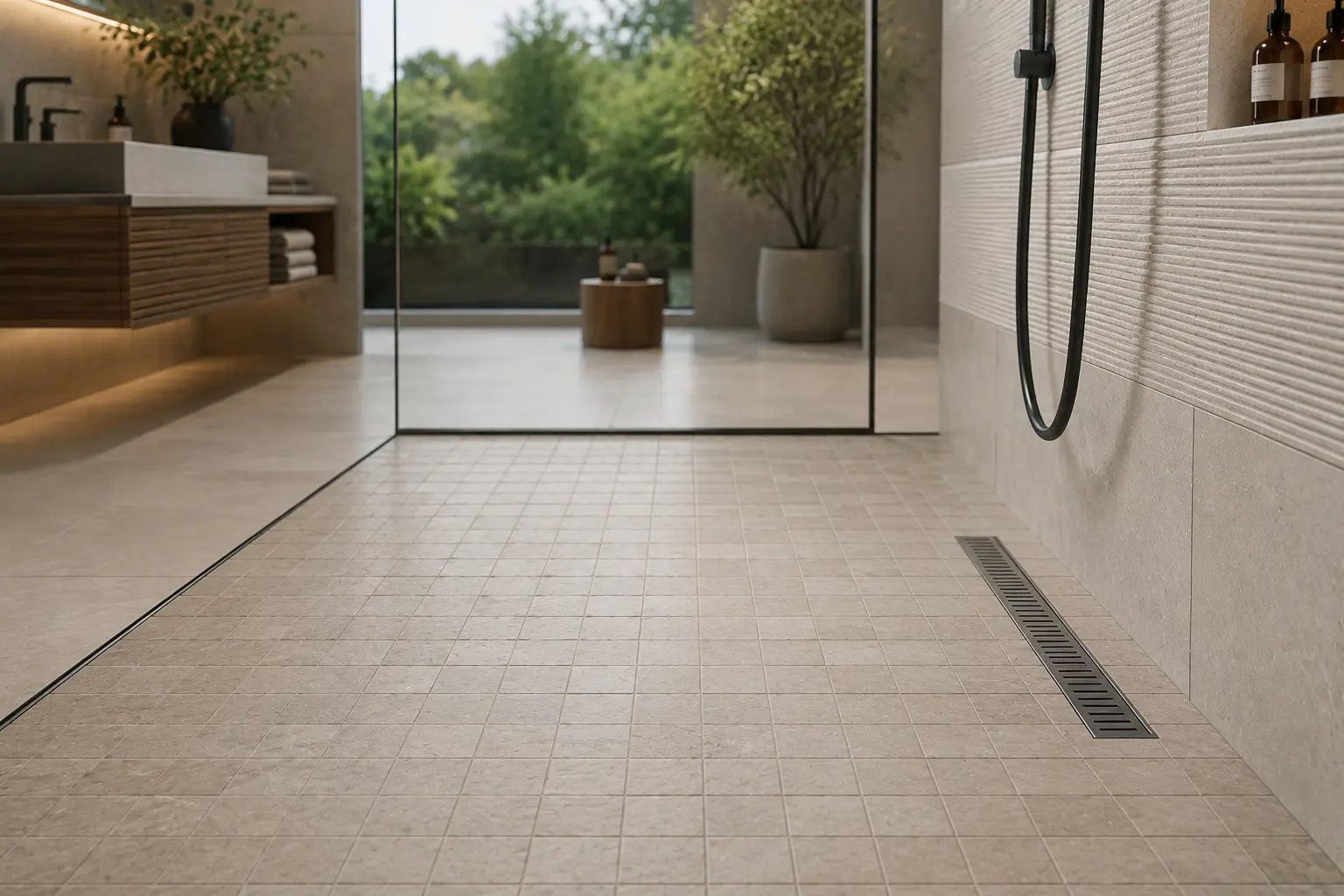
Choosing the Right Tile Material
Bathroom tile generally falls into a few material categories, each with different characteristics:
- Porcelain tile: Dense and low-absorption, and used on both floors and shower walls. It is commonly selected for bathrooms that see daily use.
- Ceramic tile: A lower-cost option that is used on bathroom walls, though it is generally softer than porcelain and more commonly used on vertical surfaces than heavy-traffic floors.
- Natural stone tile: Materials like marble or travertine have a natural, varied appearance but require sealing and more regular maintenance to resist staining and etching in a wet environment.
- Mosaic tile: Often used for shower floors, accent bands, or niches, since smaller tile pieces provide better slip resistance on sloped surfaces.
For many Woodland bathroom projects, a combination approach is used. Porcelain tile is applied to the floor and main shower walls, while a natural stone or mosaic accent is used for a niche, border, or feature wall. You can browse our full tile selection online to compare colors, finishes, and formats before visiting in person.
Designing for Older Woodland Homes vs. New Construction
Bathrooms in Woodland's historic homes often come with smaller square footage, older layouts, and sometimes non-standard tub or shower dimensions. When working within these constraints, we generally recommend:
- Using a single tile size and color throughout to visually expand the space.
- Choosing lighter tile tones on floors and walls to keep the room from feeling closed in.
- Considering a frameless glass shower enclosure, since it takes up less visual space than a framed one.
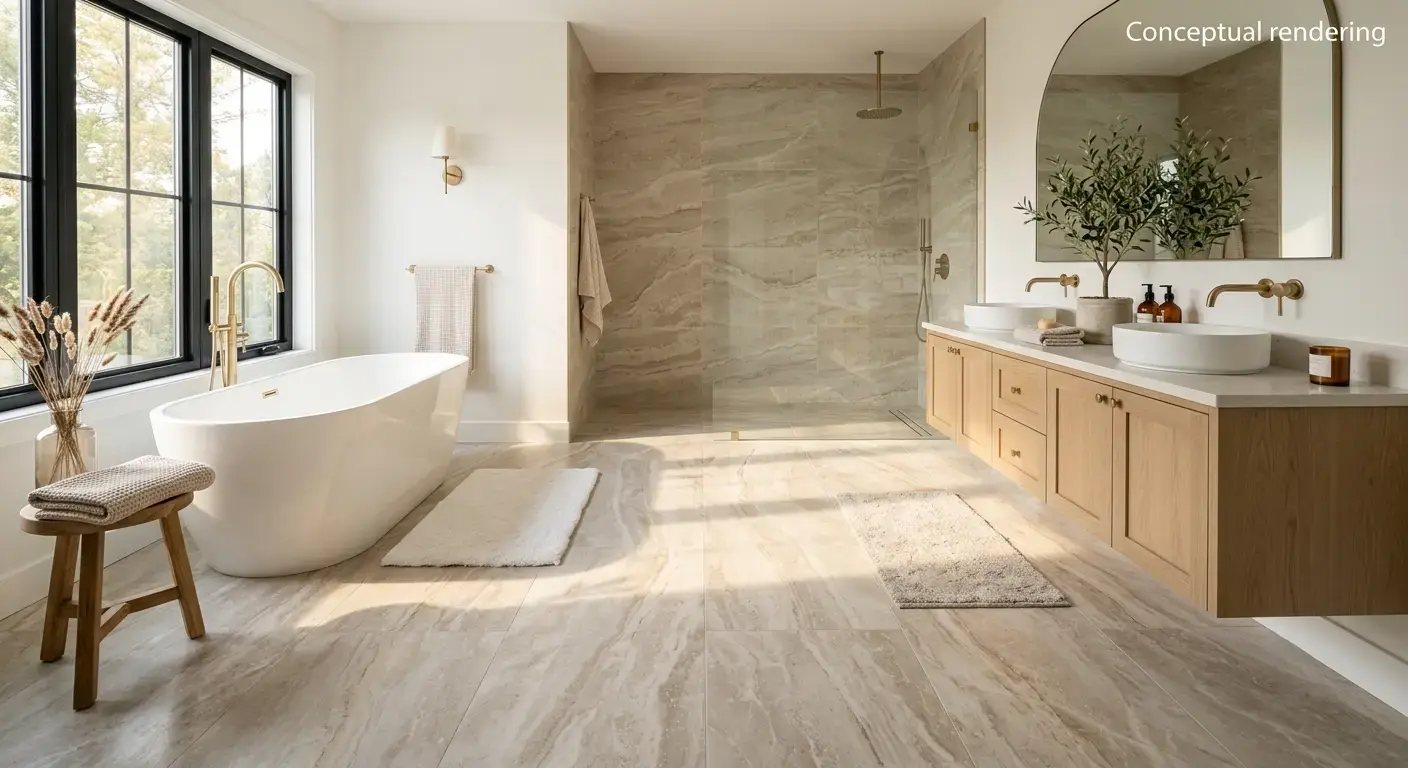
In newer Spring Lake homes, bathrooms tend to be larger and already framed for a walk-in shower or a separate tub and shower. This gives homeowners more flexibility to introduce bolder patterns, larger format tile, or a two-tone design without the same space constraints.
Practical Considerations Before Starting a Bathroom Tile Project
A few factors are worth thinking through before selecting tile for a bathroom or shower remodel:
- Water exposure: Shower floors and walls need tile with a suitable water absorption rating, while a powder room or half bath has more flexibility.
- Slip resistance: Look for tile with an appropriate coefficient of friction rating for wet floor areas, especially shower floors. The Tile Council of North America's ANSI standards define the testing and classification methods used to rate tile for these conditions.
- Grout maintenance: Larger tile means less grout to maintain, which is a factor worth weighing against the visual appeal of a patterned smaller tile.
- Ventilation: Tile performs differently in a bathroom with adequate exhaust ventilation versus one without, regardless of material, since ventilation affects how much moisture the tile and grout are exposed to over time.
Conclusion
Bathroom tile and shower design decisions come down to matching material and layout to the realities of the space, whether that is a compact bathroom in one of Woodland's historic homes or a larger primary suite in a newer Spring Lake build. Porcelain is a durable option for many bathroom applications, large-format tile is a common choice for showers, and natural stone or mosaic accents can be used to add variation without overwhelming the room. If you are planning a bathroom or shower project in Woodland, our Sacramento showroom carries a selection of tile and natural stone options, and our team is available for a design consultation to help you choose materials in person. Our Sacramento showroom is located at 6100 Warehouse Way, Sacramento, CA 95826. You can also reach our team directly with any questions before your visit.
Frequently Asked Questions
Porcelain tile is a common option for shower walls and floors because of its low water absorption. Natural stone and mosaic tile are often used as accents within a shower rather than as the primary material.
Large-format tile reduces the number of grout lines in a small bathroom, which can make the space feel more open and can simplify cleaning compared to smaller tile with more grout joints.
Not always, but shower floors typically benefit from tile with better slip resistance, such as a smaller mosaic or textured tile, since sloped, wet surfaces need more traction than vertical walls.
Using one tile size and a lighter color throughout the floor and shower walls can help a small, older bathroom feel larger. A frameless glass shower enclosure can also reduce visual bulk in the space.
Natural stone tile can be used in a bathroom, but it requires sealing and more regular maintenance than porcelain or ceramic tile to resist staining and moisture damage, particularly in shower applications.