A Sacramento bathroom remodel typically involves three categories of material: tile for floors and walls, natural stone or porcelain slab for shower surrounds, and a countertop material for the vanity. Porcelain and ceramic are the most common tile choices because of their water resistance. Marble, travertine, and quartzite are the natural stone options used most often for shower surrounds and accent walls. Quartz, granite, and marble are the materials most frequently selected for bathroom vanity countertops.
Below, we break down each of these material categories, what to consider for each, and how they tend to work together in a finished bathroom. Many of these materials can also be viewed in person at our Sacramento showroom, where physical samples make it easier to compare color and texture firsthand.
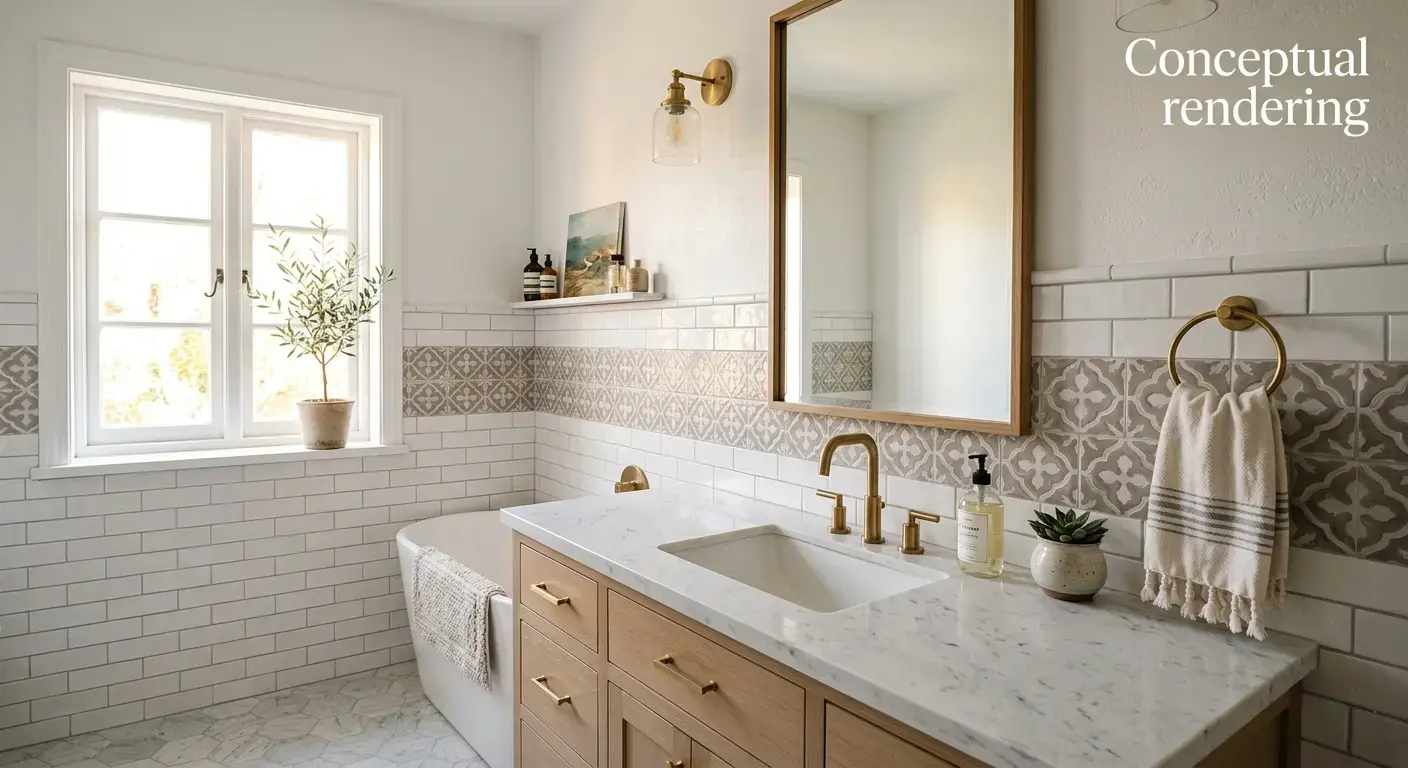
Tile Options for Bathroom Floors and Walls
Tile is usually the starting point for a bathroom remodel because it covers the largest surface area and sets the tone for the rest of the room.
Porcelain tile is a frequent choice for bathroom floors. It has a low water absorption rate, which makes it suitable for wet environments. Porcelain tile is manufactured under high heat and pressure, giving it a dense composition that holds up to daily moisture exposure in a bathroom setting. Industry porcelain tile certification standards classify true porcelain as having a water absorption rate of 0.5 percent or less.
Ceramic tile is another common option, particularly for shower walls and backsplashes. Ceramic tile is generally less dense than porcelain, so it is more often used on vertical surfaces rather than floors, though glazed ceramic floor tile is also available.
When selecting floor tile for a bathroom, slip resistance is worth keeping in mind. The dynamic coefficient of friction (DCOF), measured under ANSI A326.3, is a standard reference point for how a tile performs underfoot when wet. Tile with a higher DCOF rating is generally considered more appropriate for bathroom floors, especially shower floors, compared to tile intended for dry areas.
Tile size and layout also affect how a bathroom feels. Larger format tile creates fewer grout lines and can make a smaller bathroom feel more open, while smaller mosaic tile is often used for shower floors or as an accent on a feature wall, since smaller pieces can follow the slope needed for drainage. Browsing tile options online can be a useful starting point for narrowing down formats and finishes before viewing samples in person.
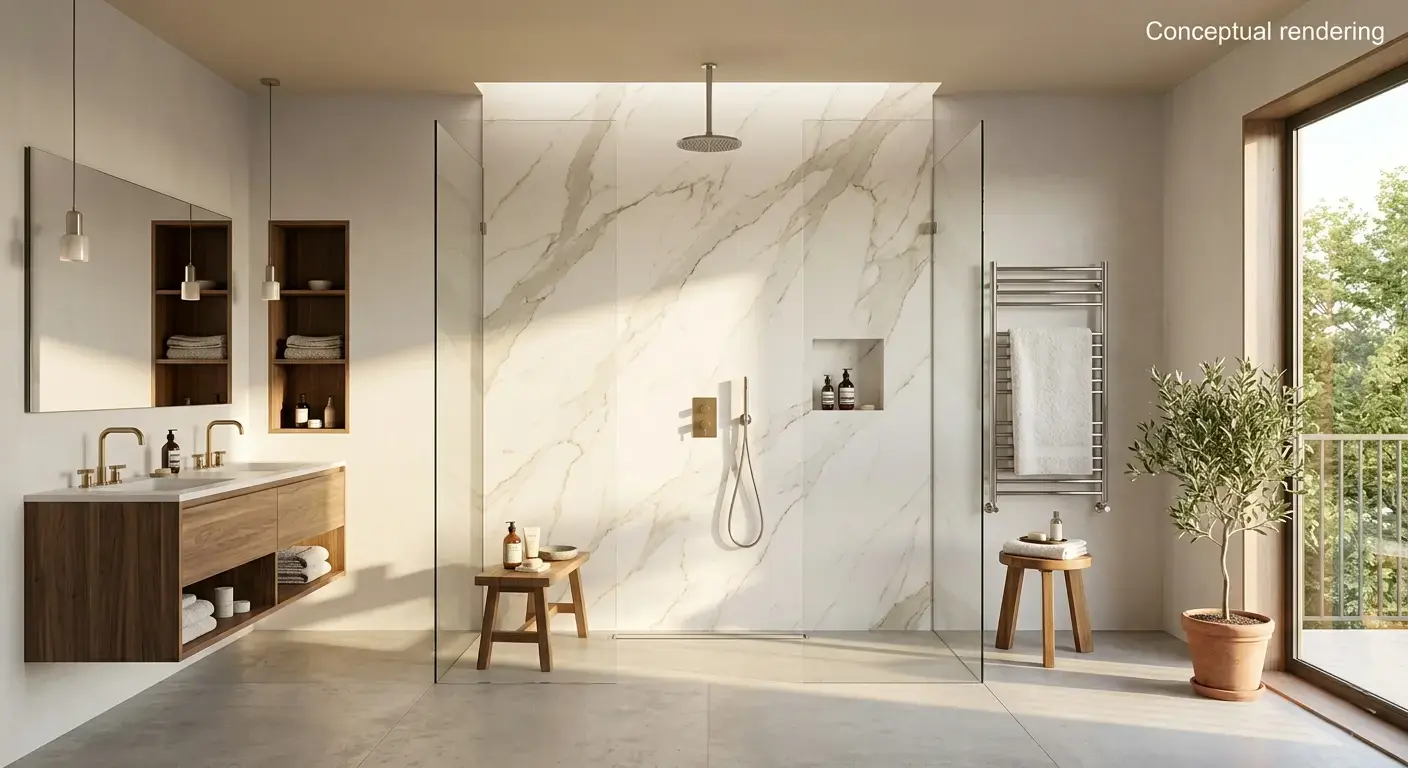
Natural Stone for Shower Surrounds and Accent Walls
Natural stone brings a different visual texture to a bathroom compared to tile, with variation in veining, color, and pattern that comes from the stone itself rather than a printed or glazed surface.
Marble is a common choice for bathroom walls and shower surrounds because of its veining patterns. Marble is a calcium-based stone, which means it is more reactive to acidic substances than some other stone types, so it is typically sealed and requires routine maintenance to manage etching and staining over time.
Travertine has a more uniform, earthy appearance with visible pitting that is sometimes filled during fabrication. It is often used in bathrooms designed around a warmer, more organic palette.
Quartzite is a metamorphic stone that is generally more resistant to scratching and etching than marble, which makes it a consideration for bathroom applications where durability is a priority alongside the look of natural veining.
Natural stone water absorption is tested under ASTM C97, which measures the percentage of water a stone absorbs by weight after immersion. Different stone types have different absorption benchmarks under this standard, granite is generally expected to test at a lower absorption rate than marble, for example, and stone with lower water absorption is generally considered better suited to wet areas like shower floors and surrounds. Reviewing a sample's absorption rate is worth doing before finalizing a stone for a wet area of the bathroom. Checking our live slab inventory ahead of a visit can also give a sense of available veining and color variation across current bundles.
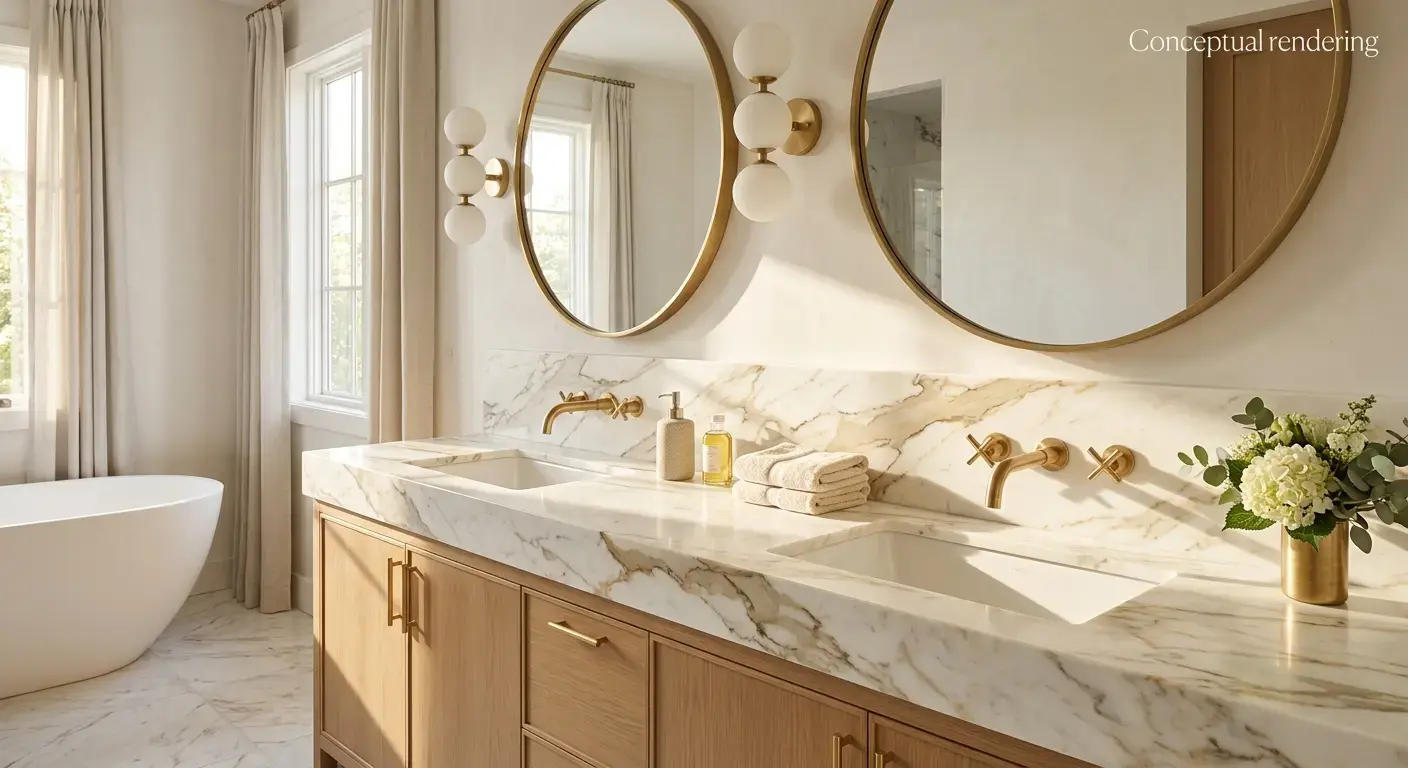
Countertop Materials for Bathroom Vanities
The vanity countertop is a smaller surface area than the floor or shower walls, but it sees frequent contact with water, toiletries, and cleaning products, so material selection matters here as well.
Quartz is an engineered material made from crushed quartz combined with resin binders. Because it is non-porous, it does not require sealing in the way natural stone does, and it offers a more uniform, consistent pattern across slabs compared to natural stone.
Granite is a natural igneous stone known for its mineral flecking and overall durability. It is resistant to heat and scratching, and when properly sealed, it holds up well in a bathroom vanity application.
Marble is also used for vanity tops, particularly in bathrooms where the goal is to match marble used elsewhere in the room, such as on the shower walls or floor. Since bathroom vanities see less direct exposure to acidic substances than a kitchen counter, marble is sometimes considered more practical for this application than it would be in a kitchen.
Porcelain slab is a newer option for vanity countertops. It shares the same water and stain resistance properties as porcelain tile, scaled up to a slab format, and it is often selected for a more contemporary bathroom design.
Matching Materials to Bathroom Style
Different bathroom styles tend to pair with different material combinations.
A spa-style bathroom often uses a limited material palette, such as a single stone or tile type carried across the floor, shower walls, and sometimes the vanity, to create a more cohesive, calming look. Quartzite or marble with subtle veining is frequently used in this approach.
A traditional bathroom might combine a patterned mosaic floor tile with a marble or granite vanity top, along with classic subway tile on the shower walls.
A contemporary bathroom design often leans toward large-format porcelain tile on the floor and walls, paired with a quartz or porcelain slab vanity top, to keep grout lines and visual texture to a minimum.
A transitional bathroom can blend natural stone accents, such as a stone mosaic shower floor, with a more neutral large-format tile elsewhere in the room, along with a quartz countertop for low maintenance. Visiting one of our showrooms in person makes it easier to see how these material combinations look together at full scale.
Practical Considerations for Sacramento Homes
Sacramento's climate includes hot, dry summers and a wet season in the winter months, which is generally less of a direct factor for interior bathroom material selection than it would be for exterior applications. That said, a few practical points are still relevant for local homeowners working through a remodel.
Ventilation matters for any material choice in a bathroom, since trapped moisture and humidity can affect grout, sealants, and even stone surfaces over time regardless of the climate outside. A bathroom fan rated for the room's square footage is generally recommended alongside any new tile or stone installation.
Many Sacramento homes, particularly older ones, have bathrooms with limited natural light. Lighter tile and stone tones, along with larger-format tile, can help a smaller or dimmer bathroom feel more open, while darker stone or tile is often reserved for accent areas rather than full coverage in these spaces.
Because tile and stone vary by lot and by batch, viewing physical samples under the lighting conditions of the actual bathroom is a useful step before finalizing material selections, particularly for natural stone where veining and color can differ noticeably between slabs. Our showroom at 6100 Warehouse Way is set up to show tile and stone under a range of lighting conditions, which can help with this kind of comparison.
Conclusion
A bathroom remodel in Sacramento generally comes down to a few core material decisions: tile for the floor and walls, natural stone or porcelain for shower surrounds, and a countertop material for the vanity. Porcelain and ceramic tile offer water resistance and a wide range of design options, natural stone options like marble, travertine, and quartzite bring distinct veining and texture, and countertop materials such as quartz, granite, and marble each come with their own maintenance considerations. Reviewing water absorption ratings, slip resistance standards, and physical samples ahead of time can help match these materials to the specific layout, lighting, and style of a given bathroom. The full range of tile, stone, and countertop materials is available to explore online, and our team is available to answer questions about any of the options covered above.
Note: Some images on this page may be conceptual renderings created to illustrate design possibilities and may not depict actual installations.
Frequently Asked Questions
Porcelain tile is commonly used for bathroom floors because of its low water absorption rate and durability. Tile with a higher DCOF rating, which measures slip resistance, is generally considered more suitable for wet areas like bathroom floors and shower floors.
Natural stone can be used in a shower, though water absorption varies by stone type. Water absorption is tested under ASTM C97, and stone with a lower absorption rate is generally better suited to wet shower environments than stone with a higher absorption rate.
Quartz is an engineered material made from crushed quartz and resin binders, while quartzite is a natural metamorphic stone. Quartz is non-porous and does not require sealing, while quartzite is a natural stone that typically requires sealing to manage staining.
Marble is used in bathrooms for both shower surrounds and vanity tops. Since bathrooms generally see less exposure to acidic substances than kitchens, marble is sometimes considered a practical option for this application, though it still requires sealing and routine maintenance to manage etching.
The choice often depends on budget priorities, desired maintenance level, and design goals. Tile, including porcelain and ceramic, generally offers more consistency and a wider range of price points, while natural stone provides unique veining and pattern variation that comes from the material itself.